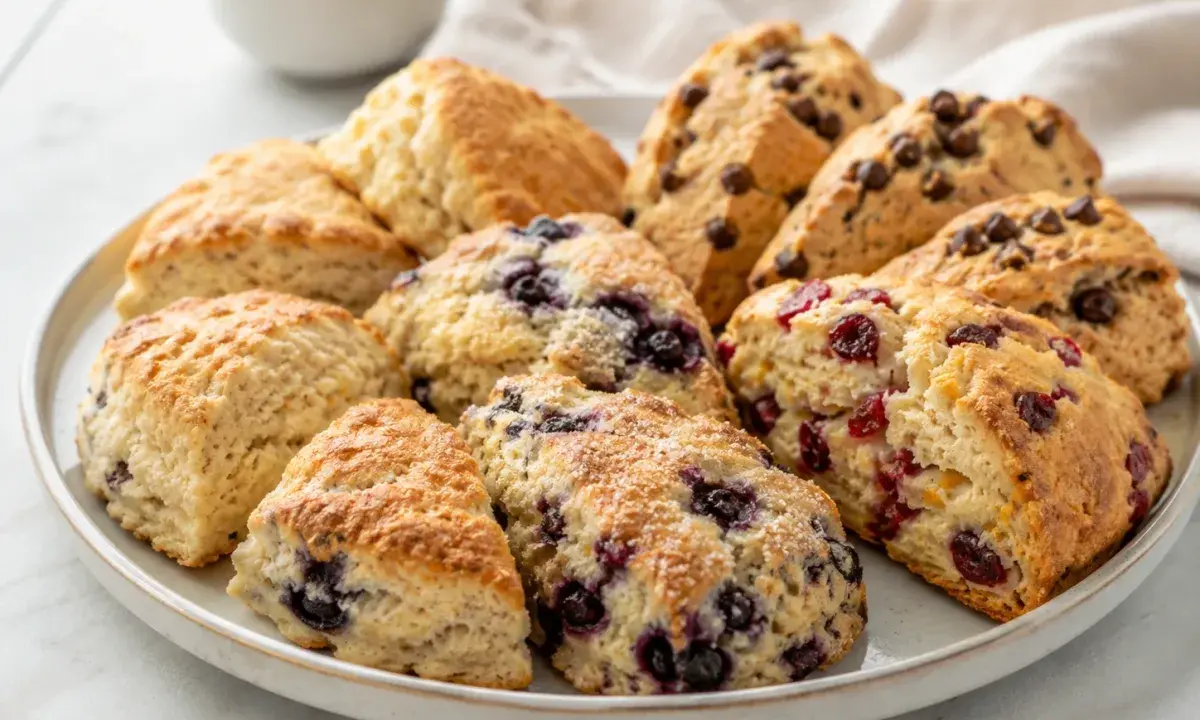
This recipe makes four scone flavors from one base dough: plain, blueberry, cranberry-orange, and chocolate chip. The method is designed for variety without four separate batches. The main constraint is temperature—cold butter and minimal handling create flaky layers instead of a dense biscuit-like crumb.
Keep Butter Cold and Visible
Cut cold butter into the flour until most pieces are pea-size, with a few larger flakes remaining. Those pieces melt in the oven and release steam, creating pockets and layers. If the butter becomes glossy or soft while mixing, chill the bowl for 10 minutes before adding cream.

Make a Shaggy Dough, Not a Smooth One
Whisk eggs, cream, and vanilla separately, then stir them into the flour just until loose clumps form. A polished, elastic dough has been overworked. Turn the mixture onto a lightly floured surface and press it together rather than kneading repeatedly.
Divide Before Adding Flavors
Divide the base into four equal portions with a scale if available. Leave one plain; fold blueberries into the second, cranberries and orange zest into the third, and mini chocolate chips into the fourth. Frozen blueberries should stay frozen so they bleed less color into the dough.

Shape, Chill, and Bake
Pat each portion into a 1-inch-thick round and cut with a sharp bench scraper or knife. A 15-minute chill firms the butter and helps the wedges hold their shape. Brush only the tops with cream; liquid running down the cut sides can seal layers together.
- Flat scones: the butter warmed or the dough was pressed too thin.
- Dry crumb: too much flour was added during shaping or the scones overbaked.
- Fruit leaks: handle frozen berries gently and keep them frozen.
- Uneven bake: make wedges similar in size and rotate the pan if your oven has hot spots.
Pair the scones with coffee cake muffins or homemade bagels for a brunch spread. Browse Breakfast Recipes. For accurate flour measurement, use the King Arthur ingredient weight chart, and avoid tasting raw dough per FDA flour safety guidance.
Scone Varieties
A buttery base scone dough divided into several flavors including plain, blueberry, cranberry-orange, and chocolate chip.
Prep Time: 20 minutes
Cook Time: 18 minutes
Total Time: 53 minutes
Servings: 12 scones
Ingredients
- 3 cups all-purpose flour
- 1/3 cup granulated sugar
- 1 tablespoon baking powder
- 1/2 teaspoon fine salt
- 3/4 cup unsalted butter, cold and cubed
- 2 large eggs
- 3/4 cup heavy cream, plus more for brushing
- 1 teaspoon vanilla extract
- 1 cup fresh or frozen blueberries
- 3/4 cup dried cranberries
- 1 tablespoon orange zest
- 3/4 cup mini chocolate chips
- 2 tablespoons coarse sugar, optional for topping
Instructions
- Mix the dry ingredients: In a large bowl, whisk together the flour, sugar, baking powder, and salt.
- Cut in the butter: Add the cold butter and cut it into the flour mixture with a pastry cutter or your fingertips until the mixture resembles coarse crumbs with some larger buttery pieces still visible.
- Add the wet ingredients: In a small bowl, whisk together the eggs, heavy cream, and vanilla extract. Pour into the dry mixture and stir gently until a shaggy dough forms.
- Divide the dough: Turn the dough out onto a lightly floured surface and divide it into four roughly equal portions.
- Flavor each portion: Leave one portion plain. Gently knead blueberries into the second portion, dried cranberries with orange zest into the third, and mini chocolate chips into the fourth. Work lightly so the dough stays tender.
- Shape the scones: Pat each dough portion into a 1-inch-thick round. Cut each round into 3 wedges, or 4 smaller wedges if you prefer.
- Chill briefly: Transfer the scones to a parchment-lined baking sheet and chill for 15 minutes. This helps them hold their shape and bake up taller.
- Bake: Preheat the oven to 400°F (200°C). Brush the tops with a little heavy cream and sprinkle with coarse sugar if using. Bake for 16 to 18 minutes, until the tops are golden and the centers are set.
- Cool slightly and serve: Let the scones cool for a few minutes on the baking sheet before serving warm or at room temperature.
Notes
For the best texture, handle the dough lightly and keep the butter cold all the way through shaping.