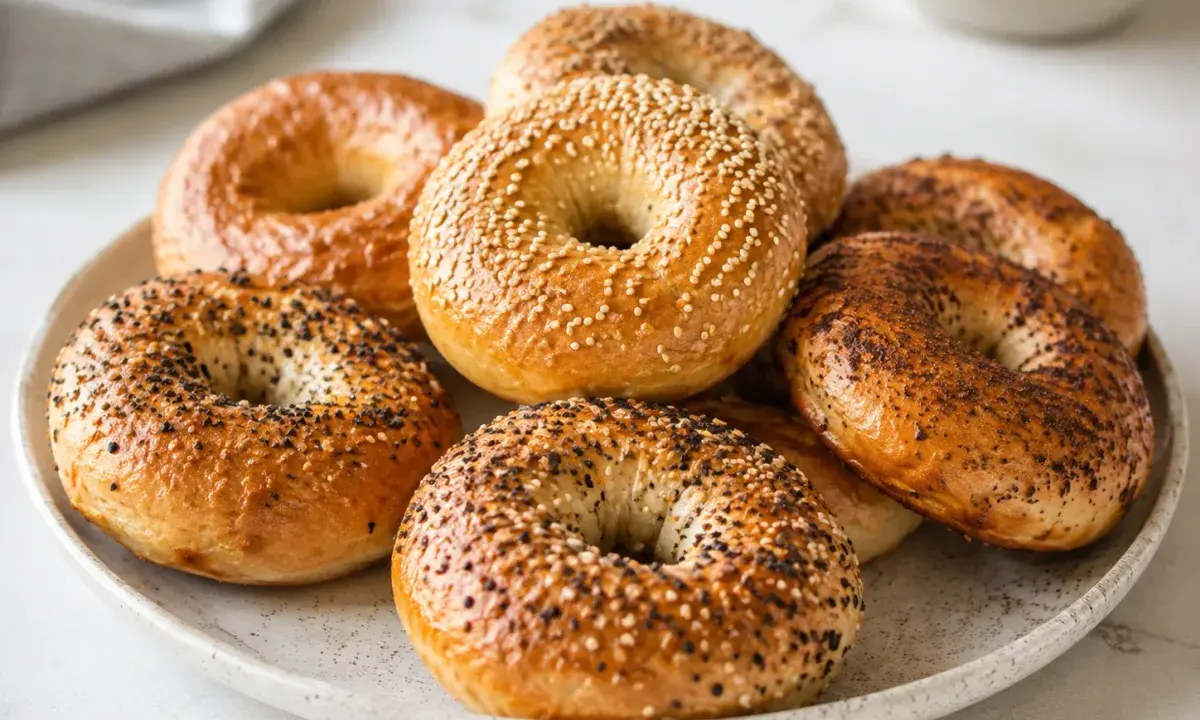
Homemade bagels are defined by two things: a firm, well-developed dough and a short boil before baking. The dough should feel noticeably stiffer than sandwich-bread dough. That resistance helps the rings keep their shape and produces the dense, springy crumb people expect from a bagel.
This version makes eight medium bagels and uses bread flour for extra gluten strength. Honey works in both the dough and the boiling water; barley malt syrup is a good substitute when you want a more traditional malty flavor.
What the Dough Should Feel Like
Measure flour by weight if possible, or spoon it into the cup and level it rather than packing it. The finished dough should be smooth, firm, and only faintly tacky after kneading. If it is dry enough to crack, add water one teaspoon at a time. If it smears across the work surface, knead for another minute before deciding whether it needs a small dusting of flour.
Shaping and Boiling Without Deflating
Divide the dough with a scale so the bagels bake evenly. Shape each portion into a tight ball, poke through the middle, and stretch the opening to roughly 1½ inches; it will contract during resting and baking. Keep the water at a gentle boil, not a violent rolling boil. Thirty seconds per side gives a chewy crust without making the outside excessively thick.
Let excess water drain from the boiled rings before returning them to parchment. Brush with egg wash and add toppings while the surface is still damp. Bake until the crust is a deep golden brown rather than pale beige; underbaked bagels can remain gummy around the center.
Troubleshooting
- Flat bagels: the dough may have over-proofed. Shape as soon as the first rise makes it puffy rather than waiting for it to double dramatically.
- Wrinkled surface: drain the boiled rings well and handle them gently before baking.
- Dense, raw-looking center: make the center hole wider and cool the baked bagels for at least 15 minutes before slicing.
- Toppings fall off: apply them immediately after the egg wash and press very lightly.
For another make-ahead breakfast, try our breakfast burritos, or explore more breakfast recipes. The King Arthur ingredient weight chart is a useful reference when converting cups to grams for more consistent baking.
Storage and Reheating
Cool completely before storing so trapped steam does not soften the crust. Keep bagels sealed at room temperature for up to two days, or slice and freeze them individually for longer storage. Toast from frozen, adding a little extra time, or thaw briefly before warming in a 350°F (175°C) oven.
Homemade Chewy Bagels
Glossy homemade bagels with a chewy crust, tender center, and optional seed toppings.
Prep Time: 25 minutes
Cook Time: 25 minutes
Rise and Rest: 1 hour 20 minutes
Total Time: 2 hours 10 minutes
Servings: 8 bagels
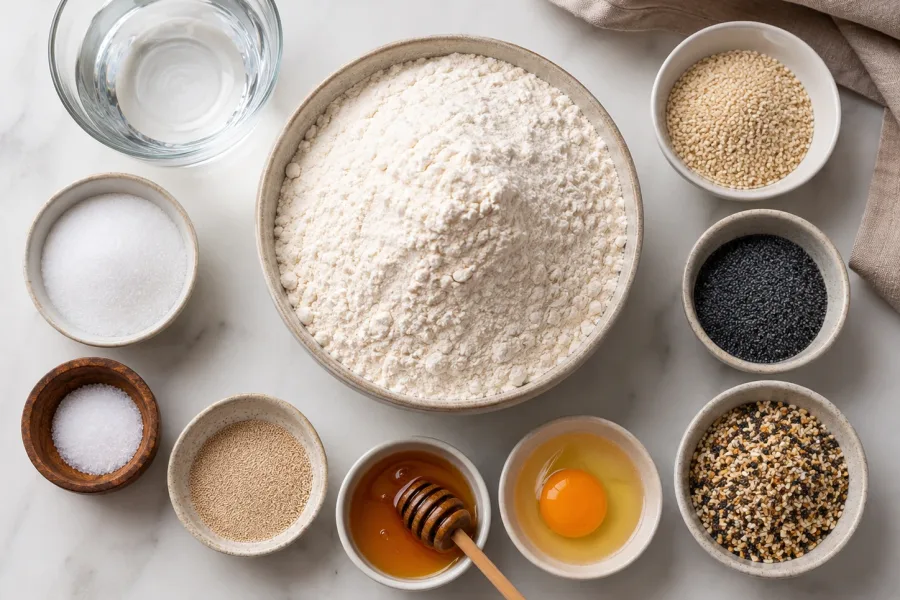
Ingredients
- 4 cups bread flour, plus more for shaping
- 1 tablespoon granulated sugar
- 2 1/4 teaspoons instant yeast
- 1 1/2 teaspoons fine salt
- 1 1/3 cups warm water
- 2 tablespoons honey or barley malt syrup, divided
- 1 large egg, beaten, for egg wash
- Sesame, poppy, or everything seasoning, optional
Instructions
- Combine flour, sugar, yeast, and salt. Add warm water and 1 tablespoon honey; mix to a shaggy dough.
- Knead for 8 to 10 minutes until smooth, firm, and springy.
- Cover in a lightly oiled bowl and rise about 1 hour, until puffy.
- Divide into 8 equal pieces. Shape into balls, poke through each center, and stretch into rings.
- Rest the rings on parchment for 15 to 20 minutes. Heat the oven to 425°F (220°C).
- Bring a large pot of water to a gentle boil and add the remaining honey. Boil bagels in batches for 30 seconds per side; drain well.
- Brush with egg, add toppings, and bake 20 to 25 minutes until deeply golden.
- Cool on a rack at least 15 minutes before slicing.
Notes
Stretch the center holes wider than the final size you want because they shrink during boiling and baking.