

This halibut borrows Ina Garten's approach: keep the fish whole, season it early, and let a lemon-herb butter do the work. The fillet bakes at 200°C (400°F) and finishes in under twenty minutes.
Weigh the fish first. A 180 g portion cooks in the same time as a 200 g one, but a 250 g slab needs four extra minutes. Use a thermometer and pull it at 54°C (130°F).
The butter is not decoration. It carries salt, acid, and aromatics into the flesh, and it keeps the surface from drying while the center comes up to temperature.
Why You'll Love This Recipe
About the Ingredients
6 halibut fillets, 170-200 g each (about 1.1 kg total), skin on
Ask for center-cut fillets of even thickness. Cod or striped bass works as a substitute at the same weight.
85 g (6 tbsp) unsalted butter, softened
Softened butter spreads evenly; cold butter tears the fish. Salted butter works if you cut the added salt to a pinch.
2 tbsp (30 ml) fresh lemon juice, plus 1 lemon sliced thin
Bottled juice is flatter; squeeze fresh. Lime juice substitutes but tastes sharper.
2 garlic cloves, 8 g, minced fine
Minced fine so it does not burn on the surface. Garlic paste from a tube substitutes at 1 tsp.
1 tbsp (4 g) fresh dill, chopped
Dill is classic here. Tarragon or flat-leaf parsley substitutes at the same weight.
1 tsp (2 g) fresh thyme leaves
Strip leaves from the stem; dried thyme substitutes at 1/2 tsp.
1 1/4 tsp (7 g) fine sea salt
Fine sea salt dissolves into the butter. Kosher salt substitutes at 1 1/2 tsp.
1/2 tsp (1 g) black pepper, freshly ground
Grind coarse for texture. White pepper substitutes for a milder bite.
Tips & Tricks
Dry the fillets well
Pat both sides with paper towel before seasoning, because surface water steams the fish instead of roasting it.
Check temperature early
Start probing at 12 minutes, since a thin tail section reaches 54°C (130°F) several minutes before a thick center cut.
Rest before serving
Let the tray sit 3 minutes so juices redistribute; cutting immediately loses them to the pan.
Pro Tips
Step-by-Step Instructions
1. Heat the oven
Set a rack in the middle and heat the oven to 200°C (400°F). [A fully heated oven roasts the surface before the center overcooks.]
2. Dry the fillets
Pat 6 fillets dry on both sides with paper towel. [Dry skin browns; wet skin steams and sticks.] The surface should look matte, with no sheen.
3. Season the fish
Sprinkle 1 1/4 tsp salt and 1/2 tsp pepper over both sides of the fillets. [Seasoning now, not later, gives the salt time to penetrate.]
4. Mix the herb butter
Mash 85 g softened butter with 2 minced garlic cloves, 1 tbsp dill, 1 tsp thyme, and 2 tbsp lemon juice. [Mixing first distributes the aromatics evenly.] The butter should be smooth and pale green.
5. Coat the fillets
Spread half the butter on the skin side of each fillet and place them buttered-side down on a lined sheet pan. [Butter underneath prevents sticking and carries flavor up.]
6. Top and add lemon
Spread the remaining butter over the top of each fillet and lay 4 to 5 thin lemon slices on the surface. [The lemon slices protect the herbs from direct heat.]
7. Bake until set
Bake 14 to 18 minutes at 200°C (400°F), until the fish flakes at the edge and reads 54°C (130°F) at the center. [Carryover heat raises it to about 57°C (135°F) during rest.] The butter should bubble at the pan edges.
8. Rest and serve
Rest the tray 3 minutes, then lift fillets off with a thin spatula. [Resting lets juices settle so the flesh stays moist.] The flesh should separate into clean flakes.
Delicious Variations
Mediterranean Version
Swap dill for oregano and add 40 g chopped Kalamata olives to the butter.
Spicy Version
Add 1/2 tsp red pepper flakes and 1 tsp smoked paprika to the butter for heat.
Caper Version
Stir 1 tbsp drained capers into the butter and skip the lemon slices on top.
How to Store Perfect Halibut Recipe: Ina Garten's Dinner Idea
Refrigerator
Store cooled fillets in a sealed container up to 2 days; keep the butter and juices with the fish.
Freezer
Freeze cooked fillets up to 1 month, wrapped tight; texture softens on thaw, so use for salads.
Reheating
Reheat covered at 150°C (300°F) for 8 to 10 minutes, or until 50°C (122°F) at the center.
Frequently Asked Questions
Q: What is the best internal temperature for baked halibut?
Pull halibut from the oven at 54°C (130°F) and let it rest to about 57°C (135°F). Higher temperatures dry the flesh and make it chalky. Use an instant-read thermometer at the thickest point.
Q: How long does halibut take to bake at 400°F?
Bake fillets 2.5 cm thick for 14 to 18 minutes at 200°C (400°F). Thicker center-cut pieces need up to 22 minutes. Always confirm with a thermometer rather than the clock.
Q: Can I use frozen halibut for this recipe?
Yes, but thaw it fully overnight in the refrigerator and dry it well before seasoning. Frozen fish releases water that steams the surface and prevents browning, so pat it twice.
Q: What can I substitute for halibut?
Cod, striped bass, or thick haddock fillets work at the same weight and timing. Avoid thin flounder, which overcooks in under 10 minutes at this temperature.
Q: Why did my halibut turn out dry?
Dry halibut was almost certainly overcooked past 57°C (135°F) or baked without butter on the underside. Check the temperature early and pull the tray while the center still looks slightly translucent.
Weigh the fillets, set the thermometer, and bake this tonight. The butter does the rest, and the timing stays honest. Weigh, watch, repeat.
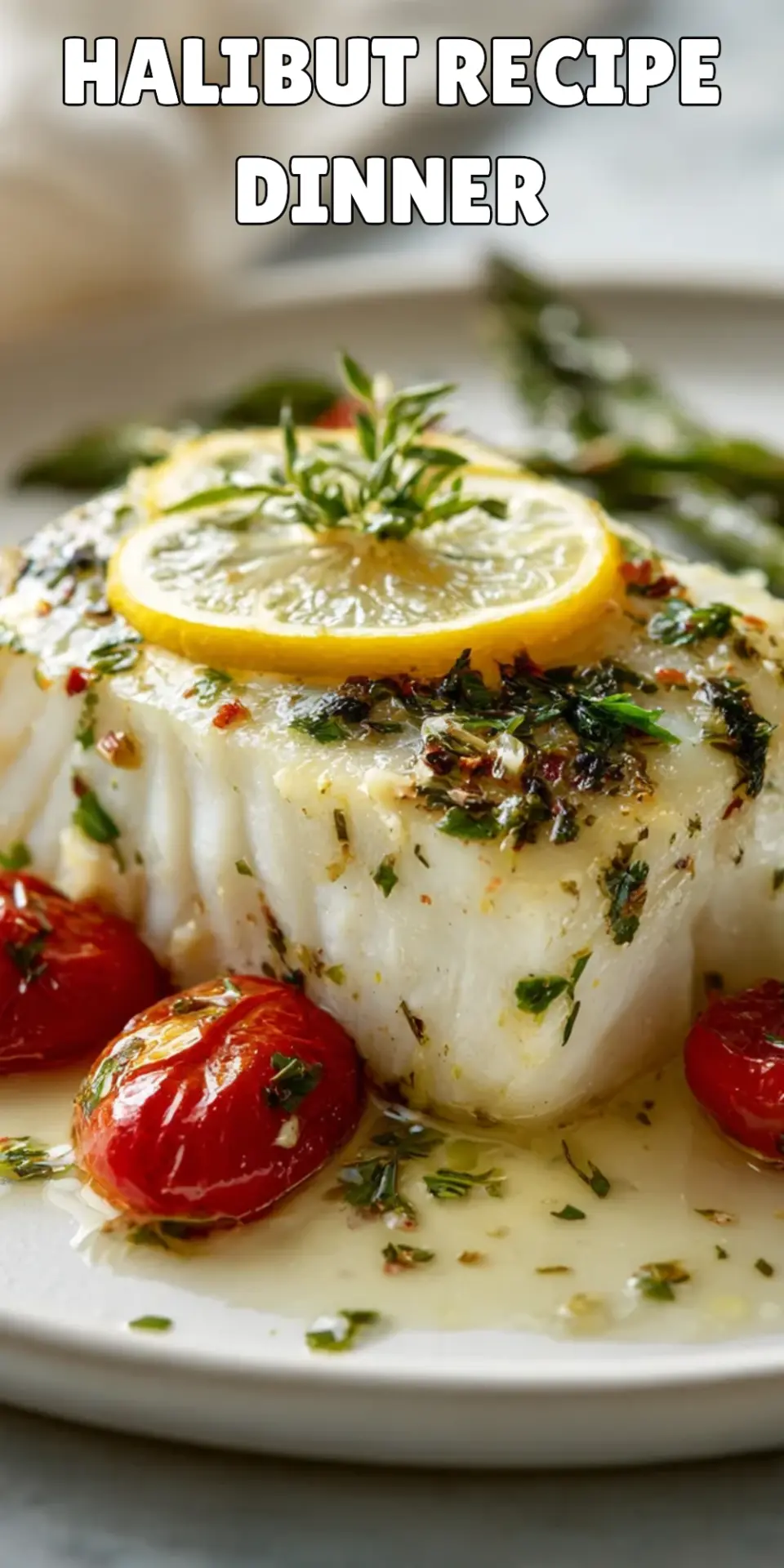
Perfect Halibut Recipe: Ina Garten's Dinner Idea
Perfect Halibut Recipe: Ina Garten's Dinner Idea bakes firm white fish in lemon-herb butter for a 50-minute dinner that stays moist.
🧂 Ingredients
- 6 halibut fillets, 170-200 g each (about 1.1 kg total), skin on
- 85 g (6 tbsp) unsalted butter, softened
- 2 tbsp (30 ml) fresh lemon juice, plus 1 lemon sliced thin
- 2 garlic cloves, 8 g, minced fine
- 1 tbsp (4 g) fresh dill, chopped
- 1 tsp (2 g) fresh thyme leaves
- 1 1/4 tsp (7 g) fine sea salt
- 1/2 tsp (1 g) black pepper, freshly ground
📋 Instructions
- 1Heat the oven — Set a rack in the middle and heat the oven to 200°C (400°F). [A fully heated oven roasts the surface before the center overcooks.]
- 2Dry the fillets — Pat 6 fillets dry on both sides with paper towel. [Dry skin browns; wet skin steams and sticks.] The surface should look matte, with no sheen.
- 3Season the fish — Sprinkle 1 1/4 tsp salt and 1/2 tsp pepper over both sides of the fillets. [Seasoning now, not later, gives the salt time to penetrate.]
- 4Mix the herb butter — Mash 85 g softened butter with 2 minced garlic cloves, 1 tbsp dill, 1 tsp thyme, and 2 tbsp lemon juice. [Mixing first distributes the aromatics evenly.] The butter should be smooth and pale green.
- 5Coat the fillets — Spread half the butter on the skin side of each fillet and place them buttered-side down on a lined sheet pan. [Butter underneath prevents sticking and carries flavor up.]
- 6Top and add lemon — Spread the remaining butter over the top of each fillet and lay 4 to 5 thin lemon slices on the surface. [The lemon slices protect the herbs from direct heat.]
- 7Bake until set — Bake 14 to 18 minutes at 200°C (400°F), until the fish flakes at the edge and reads 54°C (130°F) at the center. [Carryover heat raises it to about 57°C (135°F) during rest.] The butter should bubble at the pan edges.
- 8Rest and serve — Rest the tray 3 minutes, then lift fillets off with a thin spatula. [Resting lets juices settle so the flesh stays moist.] The flesh should separate into clean flakes.

Tomasz writes precise, method-first recipes for breads, ferments, and slow braises, drawing on Polish and Central European home cooking. He cares about weights, temperatures, and timing, and explains the reason behind each step so cooks can repeat results. His angle is turning fussy techniques into clear, checkable instructions.