

Weekend dinner needs a sauce that tolerates timing. This version uses rigatoni, spinach, Parmesan, and lemon.
Prepare the sauce while the pasta cooks. Reserved water controls the final thickness. Weigh, watch, repeat.
Why You'll Love This Recipe
About the Ingredients
5000g (5 liters) water
Use filtered water if your tap water tastes strongly of chlorine; bottled water is a suitable substitute.
10g (1 3/4 teaspoons) fine sea salt
Fine sea salt dissolves quickly; use table salt as a direct substitute.
450g (1 pound) dried rigatoni
Choose ridged pasta for better sauce coverage; penne works when rigatoni is unavailable.
30g (2 tablespoons) unsalted butter
Unsalted butter gives precise seasoning control; substitute olive oil for a dairy-free base.
20g (4 cloves) garlic, finely minced
Buy firm, dry bulbs; use 6g jarred minced garlic per clove if needed.
30g (1/4 cup) all-purpose flour
Plain flour thickens the sauce reliably; use 15g cornstarch mixed with cold milk as a gluten-free substitute.
360g (1 1/2 cups) whole milk
Whole milk gives the sauce body; evaporated milk can replace it for a firmer result.
240g (1 cup) heavy cream
Choose cream containing about 35% fat; half-and-half can substitute but produces a thinner sauce.
120g (1 1/4 cups) finely grated Parmesan
Buy a wedge and grate it yourself; Pecorino Romano substitutes with a saltier finish.
150g (5 ounces; 5 packed cups) baby spinach
Choose leaves without dark edges; frozen spinach works after thawing and squeezing it dry.
20g (1 1/2 tablespoons) fresh lemon juice
Use a firm lemon with glossy skin; bottled lemon juice substitutes when fresh is unavailable.
2g (1 teaspoon) freshly ground black pepper
Grind pepper just before cooking; use 1/2 teaspoon pre-ground pepper as a substitute.
Tips & Tricks
Broken sauce
Keep the base below 185°F (85°C) after adding dairy, then add Parmesan at 170°F (77°C).
Flat flavor
Salt the water with 10g salt, then taste the finished sauce before serving.
Thick sauce
Reserve 200g pasta water and add it in 20g increments until the sauce flows.
Soft pasta
Stop cooking at 10 minutes when the center remains firm and chalk-free.
Pro Tips
Step-by-Step Instructions
1. Boil the water
1. Bring 5000g water and 10g salt to 212°F (100°C) for 8 minutes; the surface must show a rolling boil. [This seasons the pasta and prevents a starchy, flat finish.]
2. Cook the rigatoni
2. Cook 450g rigatoni at 212°F (100°C) for 10 minutes; the center should remain barely firm. [Firm pasta withstands the final toss without becoming soft.]
3. Melt the butter
3. Melt 30g butter at 325°F (163°C) for 2 minutes; the butter should foam without browning. [Moderate heat prevents milk solids from burning.]
4. Cook the garlic
4. Cook 20g garlic at 300°F (149°C) for 90 seconds; it should look pale gold and smell sweet. [Brief cooking removes raw bite without bitterness.]
5. Toast the flour
5. Whisk in 30g flour at 300°F (149°C) for 2 minutes; the paste should look sandy and smell lightly toasted. [This cooks out the flour taste before adding liquid.]
6. Simmer the base
6. Whisk in 360g milk and 240g cream, then hold 185°F (85°C) for 5 minutes; slow bubbles should form at the edges. [Gentle heat thickens the sauce without curdling the dairy.]
7. Finish the sauce
7. Stir in 150g spinach and 120g Parmesan at 170°F (77°C) for 2 minutes; the spinach should wilt and the sauce should coat a spoon. [Lower heat protects the cheese emulsion.]
8. Drain the pasta
8. Drain the rigatoni, reserving 200g pasta water; the noodles should steam and remain firm. [Reserved water gives precise control over sauce thickness.]
9. Combine the pasta
9. Toss the rigatoni with the sauce and 20g lemon juice for 2 minutes, adding reserved water as needed; the pasta should look glossy. [Tossing distributes sauce inside the ridges.]
10. Rest before serving
10. Rest the pasta for 3 minutes; the sauce should settle and cling without pooling. [A short rest improves coating and serving stability.]
Delicious Variations
- Add 120g sliced mushrooms after the garlic, cooking them until their edges turn brown.
- Replace spinach with 120g chopped kale, simmering it for 3 additional minutes.
- Add 1g smoked paprika and 80g crisp pancetta for a deeper savory profile.
How to Store Creamy Garlic Spinach Pasta
Refrigerator
Refrigerate covered for up to 3 days at 4°C (40°F) or below.
Freezer
Freeze cooled portions for up to 1 month; thaw overnight in the refrigerator because cream sauces may separate.
Reheating
Reheat gently in a skillet at 160°F (71°C) for 6 minutes with 30g milk per portion, stirring until glossy.
Frequently Asked Questions
Q: Can I use penne instead of rigatoni?
Yes, penne works in the same 450g quantity. Cook it for 9 to 10 minutes, stopping when the center remains firm.
Q: How do I keep creamy pasta sauce from breaking?
Keep the sauce below 185°F (85°C) and add Parmesan at 170°F (77°C). Avoid boiling after the cheese enters the pan.
Q: Can I make this pasta ahead for guests?
Yes, prepare it up to 2 hours ahead and hold it covered. Loosen it with 30g warm milk per portion before serving.
Q: What can I use instead of heavy cream?
Use 240g half-and-half for a lighter sauce. Simmer it for one extra minute and add pasta water cautiously.
Q: How much pasta water should I add?
Start with 20g and increase gradually to 80g total. Stop when the sauce coats the pasta without pooling.
Make this for your next weekend dinner and serve it directly from the skillet. Grate the cheese, reserve the water, and watch the sauce closely.
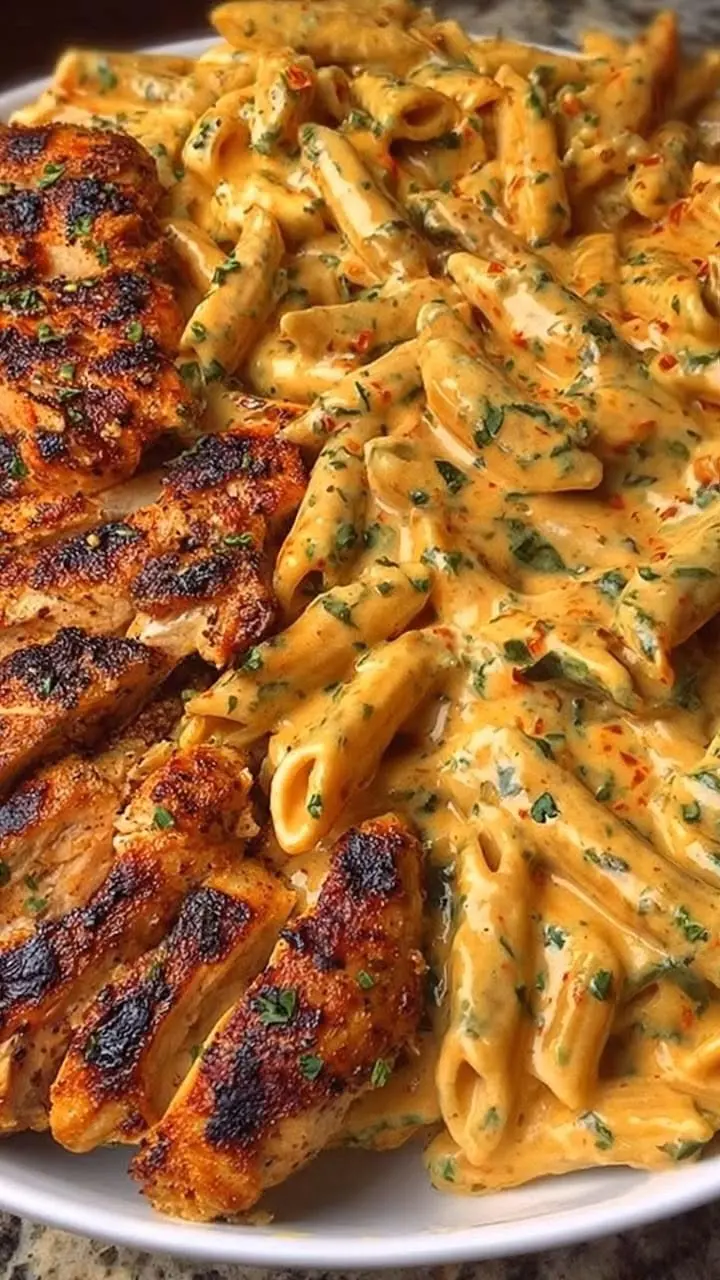
Creamy Garlic Spinach Pasta
Creamy Garlic Spinach Pasta delivers a smooth parmesan sauce and tender greens in one skillet, giving weekend dinners a fast, balanced finish.
🧂 Ingredients
- 5000g (5 liters) water
- 10g (1 3/4 teaspoons) fine sea salt
- 450g (1 pound) dried rigatoni
- 30g (2 tablespoons) unsalted butter
- 20g (4 cloves) garlic, finely minced
- 30g (1/4 cup) all-purpose flour
- 360g (1 1/2 cups) whole milk
- 240g (1 cup) heavy cream
- 120g (1 1/4 cups) finely grated Parmesan
- 150g (5 ounces; 5 packed cups) baby spinach
- 20g (1 1/2 tablespoons) fresh lemon juice
- 2g (1 teaspoon) freshly ground black pepper
📋 Instructions
- 1Boil the water — 1. Bring 5000g water and 10g salt to 212°F (100°C) for 8 minutes; the surface must show a rolling boil. [This seasons the pasta and prevents a starchy, flat finish.]
- 2Cook the rigatoni — 2. Cook 450g rigatoni at 212°F (100°C) for 10 minutes; the center should remain barely firm. [Firm pasta withstands the final toss without becoming soft.]
- 3Melt the butter — 3. Melt 30g butter at 325°F (163°C) for 2 minutes; the butter should foam without browning. [Moderate heat prevents milk solids from burning.]
- 4Cook the garlic — 4. Cook 20g garlic at 300°F (149°C) for 90 seconds; it should look pale gold and smell sweet. [Brief cooking removes raw bite without bitterness.]
- 5Toast the flour — 5. Whisk in 30g flour at 300°F (149°C) for 2 minutes; the paste should look sandy and smell lightly toasted. [This cooks out the flour taste before adding liquid.]
- 6Simmer the base — 6. Whisk in 360g milk and 240g cream, then hold 185°F (85°C) for 5 minutes; slow bubbles should form at the edges. [Gentle heat thickens the sauce without curdling the dairy.]
- 7Finish the sauce — 7. Stir in 150g spinach and 120g Parmesan at 170°F (77°C) for 2 minutes; the spinach should wilt and the sauce should coat a spoon. [Lower heat protects the cheese emulsion.]
- 8Drain the pasta — 8. Drain the rigatoni, reserving 200g pasta water; the noodles should steam and remain firm. [Reserved water gives precise control over sauce thickness.]
- 9Combine the pasta — 9. Toss the rigatoni with the sauce and 20g lemon juice for 2 minutes, adding reserved water as needed; the pasta should look glossy. [Tossing distributes sauce inside the ridges.]
- 10Rest before serving — 10. Rest the pasta for 3 minutes; the sauce should settle and cling without pooling. [A short rest improves coating and serving stability.]

Tomasz writes precise, method-first recipes for breads, ferments, and slow braises, drawing on Polish and Central European home cooking. He cares about weights, temperatures, and timing, and explains the reason behind each step so cooks can repeat results. His angle is turning fussy techniques into clear, checkable instructions.