

Thai coconut shrimp curry is a weeknight pan dish built on red curry paste, full-fat coconut milk and raw shrimp. The sauce thickens in the pan while the shrimp cook through, so the whole thing lands on the table in under an hour.
I weigh everything. Gram weights drive the recipe; volume measures are there for convenience. The shrimp go in last because they need three minutes, not thirty.
Read the steps once before you start. Curry paste burns fast at high heat, and the difference between a good sauce and a bitter one is a single minute of attention.
Why You'll Love This Recipe
About the Ingredients
680 g (1 1/2 lb) large raw shrimp, peeled and deveined
Buy frozen shrimp labeled 21/25 count and thaw overnight in the fridge. If you only have cooked shrimp, add them at the very end for 60 seconds only.
400 ml (1 can, 13.5 oz) full-fat coconut milk
Full-fat matters here; light coconut milk thins the sauce and never coats the shrimp. Shake the can hard before opening to blend the cream layer.
60 g (3 tbsp) Thai red curry paste
Mae Ploy or Maesri brands are consistent and salty. If you use a milder paste, taste after step 4 and add another 15 g.
15 g (1 tbsp) neutral oil, such as canola
Use an oil with a high smoke point; olive oil turns bitter at this heat. Avocado oil works as a direct swap.
20 g (1 tbsp) palm sugar or light brown sugar
Palm sugar rounds the paste's sharp edge. Light brown sugar is a fine substitute at the same weight.
15 ml (1 tbsp) fish sauce
Fish sauce is the salt in this dish. If you skip it, add 3 g (1/2 tsp) fine salt and taste again.
200 g (1 cup) canned crushed tomatoes
Crushed tomatoes add body without sweetness. Do not substitute tomato paste; it is too concentrated at this volume.
1 red bell pepper, about 150 g, sliced 5 mm thick
Cut strips to even thickness so they soften at the same rate. A green bell pepper gives a sharper, more bitter note.
1 small onion, about 120 g, sliced thin
Yellow onion is the default; shallots give a sweeter result at the same weight. Slice against the grain for softer pieces.
10 g (2 tsp) fresh lime juice, plus wedges to serve
Add lime off the heat; boiling kills the aroma. Bottled lime juice is acceptable but flatter.
15 g (1/4 cup) fresh cilantro, chopped
Stems carry more flavor than leaves. Chop stems finely and stir them in with the sauce.
240 g (1 1/2 cups) jasmine rice, cooked, to serve
Cook rice before you start the pan; the curry waits for nothing. Basmati works, but jasmine absorbs the sauce better.
Tips & Tricks
Do Not Boil the Coconut Milk
Keep the sauce at a bare simmer; a rolling boil splits the fat and the sauce turns grainy.
Add Shrimp Last
Shrimp go in only after the sauce is finished; three minutes at 95 C (203 F) is enough for 21/25 count.
Taste Before Serving
Curry paste brands vary in salt; adjust fish sauce and lime only after the sauce is complete.
Dry the Shrimp
Pat shrimp dry with paper towel; surface water steams them instead of letting them firm up in the sauce.
Pro Tips
Step-by-Step Instructions
1. Cook the Rice
Bring 480 g (2 cups) water and 240 g (1 1/2 cups) jasmine rice to a boil in a covered pot at 100 C (212 F). Reduce to low and cook 15 minutes, then rest covered 5 minutes off the heat. [Rice holds heat well, so it waits for the curry, not the reverse.]
2. Dry the Shrimp
Pat 680 g (1 1/2 lb) shrimp dry on both sides with paper towel and set them on a plate. [Dry surfaces brown and firm; wet surfaces steam and turn rubbery.] The shrimp should look matte, with no visible water film.
3. Bloom the Paste
Heat 15 g (1 tbsp) oil in a 30 cm (12 in) skillet over medium heat to 175 C (350 F). Add 60 g (3 tbsp) curry paste and fry 60 seconds, stirring constantly. [The oil carries the aromatics; a short fry removes the raw paste taste.] The paste is done when it darkens slightly and smells toasted, not raw.
4. Build the Sauce
Add 400 ml (13.5 oz) coconut milk, 200 g (1 cup) crushed tomatoes, 20 g (1 tbsp) sugar and 15 ml (1 tbsp) fish sauce. Stir and bring to a bare simmer at 95 C (203 F), then cook 8 minutes. [A bare simmer keeps the fat emulsified; a hard boil splits it.] The sauce is ready when it coats a spoon and bubbles only at the edges.
5. Soften the Vegetables
Add the sliced onion and 150 g red bell pepper and cook 6 minutes at 95 C (203 F), stirring twice. [Even slices soften at the same rate; thin pieces would collapse before the pepper is tender.] The onion turns translucent and the pepper bends without snapping.
6. Add the Shrimp
Lay the shrimp in a single layer in the sauce and cook 3 minutes at 95 C (203 F), turning once at 90 seconds. [Shrimp overcook in seconds past done; a single layer prevents uneven cooking.] The shrimp are done when they curl into a loose C shape and read 60 C (140 F) at the thickest part.
7. Finish Off Heat
Remove the pan from the heat and stir in 10 g (2 tsp) lime juice and the chopped cilantro stems. [Acid and herbs fade with heat; off-heat addition keeps them bright.] Taste and add fish sauce in 5 ml (1 tsp) increments if needed.
8. Serve
Spoon the curry over the rice and scatter the cilantro leaves on top. Serve with lime wedges on the side. [The rice absorbs sauce; a wetter curry is correct here.] Serve immediately while the shrimp are still firm.
Delicious Variations
Green Curry Version
Swap red paste for green at the same 60 g weight; the sauce turns sharper and more herbal.
Vegetable Only
Replace shrimp with 400 g firm tofu, pressed and cubed, and simmer 8 minutes instead of 3.
Extra Heat
Add 2 sliced bird's eye chilies with the vegetables; remove them before serving if you want aroma only.
How to Store Thai Coconut Shrimp Curry
Refrigerator
Store in a sealed container up to 3 days; shrimp toughen each day, so reheat gently.
Freezer
Freeze the sauce without shrimp up to 2 months; add fresh shrimp when reheating.
Reheating
Warm over low heat at 70 C (158 F) for 4 minutes, adding 30 ml (2 tbsp) water to loosen the sauce.
Frequently Asked Questions
Q: Can I use frozen shrimp for this curry?
Yes, thaw frozen shrimp fully and pat them dry before cooking. Wet shrimp steam instead of firming, and the sauce turns watery. Thaw overnight in the fridge for the best texture.
Q: Why did my coconut curry sauce split?
The sauce split because it boiled hard instead of simmering. Keep the pan at 95 C (203 F) and stir the coconut milk in before it reaches a boil. A split sauce can be rescued by whisking in 30 ml (2 tbsp) warm water off the heat.
Q: How do I know when the shrimp are cooked?
Shrimp are cooked when they curl into a loose C shape and reach 60 C (140 F) internally. A tight O shape means they are overcooked. They need about 3 minutes at a bare simmer for 21/25 count.
Q: Can I make Thai coconut shrimp curry ahead of time?
Make the sauce up to 2 days ahead and refrigerate it; cook the shrimp fresh when serving. Shrimp held in sauce overnight turn rubbery. Reheat the sauce to 95 C (203 F), then add raw shrimp for 3 minutes.
Q: Is red curry paste very spicy?
Red curry paste is moderately spicy, and 60 g in this volume gives a warm, not hot, result. Brands differ widely, so taste after step 4. Add 15 g more paste for a stronger kick.
Cook the sauce first, add the shrimp last, and taste before you serve. Weigh, watch, repeat.
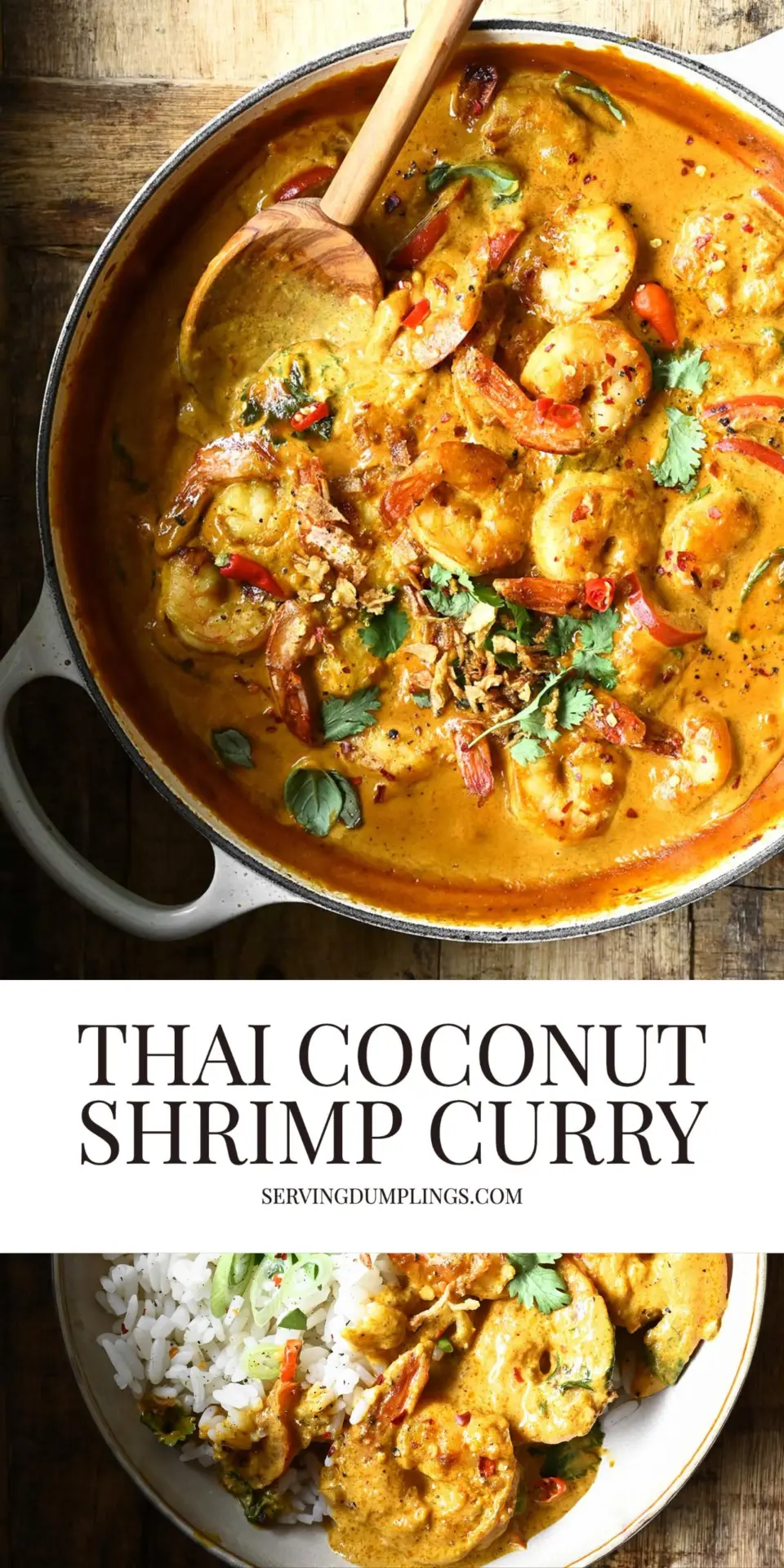
Thai Coconut Shrimp Curry
Thai Coconut Shrimp Curry is a creamy one-pan dinner with plump shrimp, red curry paste and lime, ready in about 50 minutes for six.
🧂 Ingredients
- 680 g (1 1/2 lb) large raw shrimp, peeled and deveined
- 400 ml (1 can, 13.5 oz) full-fat coconut milk
- 60 g (3 tbsp) Thai red curry paste
- 15 g (1 tbsp) neutral oil, such as canola
- 20 g (1 tbsp) palm sugar or light brown sugar
- 15 ml (1 tbsp) fish sauce
- 200 g (1 cup) canned crushed tomatoes
- 1 red bell pepper, about 150 g, sliced 5 mm thick
- 1 small onion, about 120 g, sliced thin
- 10 g (2 tsp) fresh lime juice, plus wedges to serve
- 15 g (1/4 cup) fresh cilantro, chopped
- 240 g (1 1/2 cups) jasmine rice, cooked, to serve
📋 Instructions
- 1Cook the Rice — Bring 480 g (2 cups) water and 240 g (1 1/2 cups) jasmine rice to a boil in a covered pot at 100 C (212 F). Reduce to low and cook 15 minutes, then rest covered 5 minutes off the heat. [Rice holds heat well, so it waits for the curry, not the reverse.]
- 2Dry the Shrimp — Pat 680 g (1 1/2 lb) shrimp dry on both sides with paper towel and set them on a plate. [Dry surfaces brown and firm; wet surfaces steam and turn rubbery.] The shrimp should look matte, with no visible water film.
- 3Bloom the Paste — Heat 15 g (1 tbsp) oil in a 30 cm (12 in) skillet over medium heat to 175 C (350 F). Add 60 g (3 tbsp) curry paste and fry 60 seconds, stirring constantly. [The oil carries the aromatics; a short fry removes the raw paste taste.] The paste is done when it darkens slightly and smells toasted, not raw.
- 4Build the Sauce — Add 400 ml (13.5 oz) coconut milk, 200 g (1 cup) crushed tomatoes, 20 g (1 tbsp) sugar and 15 ml (1 tbsp) fish sauce. Stir and bring to a bare simmer at 95 C (203 F), then cook 8 minutes. [A bare simmer keeps the fat emulsified; a hard boil splits it.] The sauce is ready when it coats a spoon and bubbles only at the edges.
- 5Soften the Vegetables — Add the sliced onion and 150 g red bell pepper and cook 6 minutes at 95 C (203 F), stirring twice. [Even slices soften at the same rate; thin pieces would collapse before the pepper is tender.] The onion turns translucent and the pepper bends without snapping.
- 6Add the Shrimp — Lay the shrimp in a single layer in the sauce and cook 3 minutes at 95 C (203 F), turning once at 90 seconds. [Shrimp overcook in seconds past done; a single layer prevents uneven cooking.] The shrimp are done when they curl into a loose C shape and read 60 C (140 F) at the thickest part.
- 7Finish Off Heat — Remove the pan from the heat and stir in 10 g (2 tsp) lime juice and the chopped cilantro stems. [Acid and herbs fade with heat; off-heat addition keeps them bright.] Taste and add fish sauce in 5 ml (1 tsp) increments if needed.
- 8Serve — Spoon the curry over the rice and scatter the cilantro leaves on top. Serve with lime wedges on the side. [The rice absorbs sauce; a wetter curry is correct here.] Serve immediately while the shrimp are still firm.

Tomasz writes precise, method-first recipes for breads, ferments, and slow braises, drawing on Polish and Central European home cooking. He cares about weights, temperatures, and timing, and explains the reason behind each step so cooks can repeat results. His angle is turning fussy techniques into clear, checkable instructions.