

Jennifer Garner's favorite way to eat scrambled eggs is not a trick. It is low heat, a spatula that never stops, and butter added at the end. The result is a soft, glossy curd that sits somewhere between custard and cloud.
I weighed the eggs for this version because volume measures of beaten egg vary by 15 grams per egg. That difference decides whether your curds stay creamy or turn dry. Use 200 g of beaten egg, about four large eggs, and a nonstick pan you trust.
The technique is French-style: gentle heat, small curds, and a pinch of salt added after cooking. It takes eight minutes from cold pan to plate, which is why it works on a weekday.
Why You'll Love This Recipe
About the Ingredients
200 g (4 large) eggs, beaten until uniform
Weigh beaten egg, not shelled eggs, for consistency. Substitute 200 g of liquid whole egg from a carton if you prefer.
20 g (1 1/2 tbsp) unsalted butter, divided
Use fresh unsalted butter so you control the salt. Salted butter works but reduce the finishing salt to a pinch.
15 g (1 tbsp) heavy cream
Cream slows curd setting and adds richness. Substitute whole milk for a lighter result, or creme fraiche for tang.
1 g (1/4 tsp) fine sea salt, plus more to finish
Add most of the salt after cooking; early salt can make curds weep. Kosher salt is fine, but use half the volume.
0.5 g (1/8 tsp) freshly ground black pepper
Grind pepper just before cooking for aroma. White pepper gives a cleaner look if you serve these to guests.
5 g (1 tbsp) fresh chives, finely sliced
Chives add onion notes without heat. Substitute the green tops of scallions or a pinch of dried dill.
2 g (1 tsp) olive oil, for the pan
A thin oil layer protects the nonstick coating. Any neutral oil works; skip it if your pan is new.
Tips & Tricks
Keep the heat low
Medium-low on most stoves is 120 C to 135 C pan temperature. If the eggs sizzle loudly, pull the pan off the burner for ten seconds.
Stir without pause
A silicone spatula moving in slow circles builds small curds. Stopping for thirty seconds lets the bottom set into a rubbery sheet.
Pull early
Remove the pan when the eggs look slightly wetter than you want. Carryover heat finishes them in the thirty seconds before plating.
Pro Tips
Step-by-Step Instructions
1. Beat the eggs cold
Whisk 200 g beaten egg with 15 g cream and 0.5 g pepper for 20 seconds until no streaks remain. [Mixing cold keeps the proteins relaxed before heat hits them.] The mixture should look uniform and pale yellow.
2. Warm the pan gently
Set a 24 cm nonstick pan over medium-low heat, about 120 C (250 F), and add 2 g oil and 10 g butter. [A low starting temperature prevents a browned crust from forming on the first pour.] The butter should melt and foam softly without browning.
3. Pour and wait
Pour in the egg mixture and leave it undisturbed for 20 seconds. [This brief pause lets the base set slightly so the first stir creates curds instead of a slurry.] The edges will just begin to look opaque.
4. Stir in slow circles
Push a silicone spatula through the eggs in slow circles for 3 minutes, scraping the pan bottom. [Constant movement keeps curd size small and even.] Curds should be soft, glossy, and still slightly wet.
5. Pull the pan off heat
Move the pan off the burner at 4 minutes total cooking time, when the eggs look looser than you want. [Carryover heat finishes the set within 30 seconds off the burner.] The surface should look creamy, not dry.
6. Finish with butter
Stir in the remaining 10 g butter and 1 g salt until just absorbed, about 15 seconds. [Cold butter stops the cooking and adds shine.] The eggs should look glossy and hold soft mounds on the spatula.
7. Plate and garnish
Slide the eggs onto warm plates and scatter 5 g sliced chives over the top. [Warm plates slow cooling so the curds stay soft at the table.] Serve immediately, within 2 minutes.
Delicious Variations
Smoked salmon version
Fold 40 g cold-smoked salmon strips in off the heat for a brunch plate.
Cheese curd version
Stir 25 g grated Gruyere in at the finish for a nutty, stretchy texture.
Herb and lemon version
Swap chives for 3 g chopped tarragon and 2 g lemon zest for a bright finish.
How to Store Jennifer Garner's Favorite Way to Eat Scrambled Eggs
Refrigerator
Store cooled eggs in a sealed container for up to 2 days. Reheat gently; texture will be firmer than fresh.
Freezer
Do not freeze cooked scrambled eggs; the curds weep and turn grainy after thawing.
Reheating
Reheat in a nonstick pan over low heat, 90 C (195 F), for 90 seconds with a splash of cream.
Frequently Asked Questions
Q: Can I make these scrambled eggs ahead of time?
You can cook them up to 2 days ahead and reheat gently, but fresh is best. Reheat over low heat with a splash of cream to restore softness.
Weigh your eggs, keep the heat low, and stir without rushing. Try this method once and your old high-heat scramble will feel wrong. Weigh, watch, repeat.
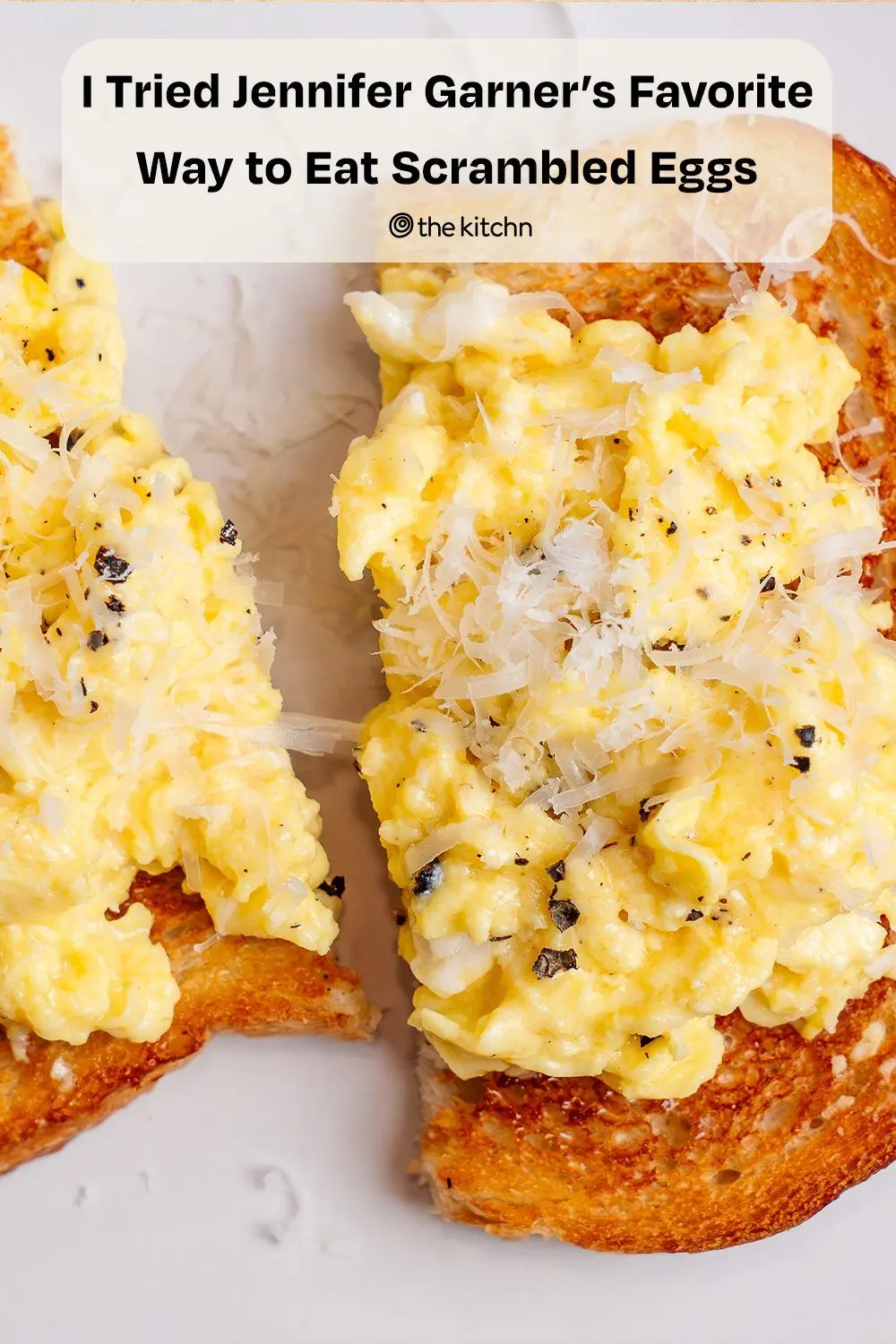
Jennifer Garner's Favorite Way to Eat Scrambled Eggs
Jennifer Garner's favorite scrambled eggs use low heat, constant stirring, and a late butter finish for soft, creamy curds that never turn rubbery.
🧂 Ingredients
- 200 g (4 large) eggs, beaten until uniform
- 20 g (1 1/2 tbsp) unsalted butter, divided
- 15 g (1 tbsp) heavy cream
- 1 g (1/4 tsp) fine sea salt, plus more to finish
- 0.5 g (1/8 tsp) freshly ground black pepper
- 5 g (1 tbsp) fresh chives, finely sliced
- 2 g (1 tsp) olive oil, for the pan
📋 Instructions
- 1Beat the eggs cold — Whisk 200 g beaten egg with 15 g cream and 0.5 g pepper for 20 seconds until no streaks remain. [Mixing cold keeps the proteins relaxed before heat hits them.] The mixture should look uniform and pale yellow.
- 2Warm the pan gently — Set a 24 cm nonstick pan over medium-low heat, about 120 C (250 F), and add 2 g oil and 10 g butter. [A low starting temperature prevents a browned crust from forming on the first pour.] The butter should melt and foam softly without browning.
- 3Pour and wait — Pour in the egg mixture and leave it undisturbed for 20 seconds. [This brief pause lets the base set slightly so the first stir creates curds instead of a slurry.] The edges will just begin to look opaque.
- 4Stir in slow circles — Push a silicone spatula through the eggs in slow circles for 3 minutes, scraping the pan bottom. [Constant movement keeps curd size small and even.] Curds should be soft, glossy, and still slightly wet.
- 5Pull the pan off heat — Move the pan off the burner at 4 minutes total cooking time, when the eggs look looser than you want. [Carryover heat finishes the set within 30 seconds off the burner.] The surface should look creamy, not dry.
- 6Finish with butter — Stir in the remaining 10 g butter and 1 g salt until just absorbed, about 15 seconds. [Cold butter stops the cooking and adds shine.] The eggs should look glossy and hold soft mounds on the spatula.
- 7Plate and garnish — Slide the eggs onto warm plates and scatter 5 g sliced chives over the top. [Warm plates slow cooling so the curds stay soft at the table.] Serve immediately, within 2 minutes.

Tomasz writes precise, method-first recipes for breads, ferments, and slow braises, drawing on Polish and Central European home cooking. He cares about weights, temperatures, and timing, and explains the reason behind each step so cooks can repeat results. His angle is turning fussy techniques into clear, checkable instructions.