

The moment these meatballs hit the hot pan, your kitchen fills with the smell of garlic, parsley, and browning beef – it's the smell of dinner being taken seriously.
Ina's trick is simple: a panade of fresh white bread soaked in milk, plus a generous hand with Parmesan, keeps every bite impossibly tender. You'll simmer them low and slow in a bright tomato sauce until the meatballs sigh and the sauce turns glossy.
This is the recipe to make on a Sunday when the house feels cold, or on a Tuesday when you need something to look forward to. Serve them over spaghetti, tucked into a roll, or straight from the pot with a spoon.
Why You'll Love This Recipe
About the Ingredients
1 lb (450g) ground beef, 80/20 blend
The 20% fat is what keeps these meatballs juicy; ground turkey works but add an extra tablespoon of olive oil to the mix.
1/2 lb (225g) ground pork
Pork adds a savory richness beef alone can't match; sweet Italian sausage with the casings removed is a great swap.
2 slices white sandwich bread, crusts removed
Fresh bread makes the softest panade; in a pinch, use 1/3 cup panko soaked in the same milk.
1/3 cup (80ml) whole milk
Whole milk gives the richest panade; half-and-half or even plain yogurt thinned with water works fine.
1/2 cup (50g) freshly grated Parmesan
Grate it yourself – pre-shredded cheese has anti-caking starch that won't melt smoothly; Pecorino is a sharper substitute.
1 large egg, lightly beaten
The egg binds everything; if you're out, 3 tablespoons of ricotta does the same job with extra tenderness.
1/4 cup fresh flat-leaf parsley, finely chopped
Flat-leaf parsley tastes brighter than curly; fresh basil or a teaspoon of dried oregano is a fine stand-in.
2 garlic cloves, minced
Fresh garlic only here – the jarred stuff turns bitter when it hits the hot pan; garlic paste works in a pinch.
1 teaspoon kosher salt and 1/2 teaspoon black pepper
Kosher salt seasons more evenly than table salt; if using fine salt, cut the amount to 3/4 teaspoon.
2 tablespoons olive oil, for frying
Regular olive oil handles the heat better than extra-virgin; avocado oil is a neutral-tasting substitute.
3 cups (720ml) good marinara sauce
Use a jarred sauce you'd eat on its own; a 28-ounce can of crushed San Marzano tomatoes simmered 10 minutes is even better.
Tips & Tricks
Don't overmix
Stop the second the ingredients come together, or the meatballs turn dense and bouncy instead of tender.
Wet your hands
Damp palms keep the meat mixture from sticking so you can roll uniform, crack-free balls quickly.
Sear, don't cook through
Brown the meatballs only 2 minutes per side – they finish in the sauce and stay juicy.
Simmer gently
Keep the sauce at a bare bubble; a rolling boil will break the meatballs apart.
Pro Tips
Step-by-Step Instructions
1. Soak the bread
Tear the bread into small pieces and toss them with the milk in a large bowl. Let it sit 5 minutes until the bread is soft and mushy – this is your panade, the secret to tender meatballs.
2. Mix the meat
Add the beef, pork, Parmesan, egg, parsley, garlic, salt, and pepper to the bowl. Mix with a fork just until combined, about 20 seconds – you should still see streaks of meat, not a paste.
3. Roll the balls
With damp hands, roll the mixture into 1 3/4-inch balls (about 2 tablespoons each); you'll get roughly 24. Set them on a parchment-lined sheet as you go.
4. Sear in batches
Heat the olive oil in a large Dutch oven over medium-high heat (about 375°F / 190°C) until it shimmers. Brown the meatballs in batches, 2 minutes per side, until deeply golden – they'll finish cooking in the sauce. Transfer to a plate.
5. Build the sauce
Lower the heat to medium, pour the marinara into the pot, and scrape up the browned bits with a wooden spoon. Bring it to a gentle simmer, about 3 minutes, until the surface shimmers and small bubbles pop at the edges.
6. Simmer together
Nestle the meatballs back into the sauce in a single layer. Cover and simmer on low (about 200°F / 95°C) for 20 minutes, turning once, until the sauce is bubbling gently and a meatball reads 160°F (71°C) on an instant-read thermometer.
7. Rest and serve
Take the pot off the heat and let it rest 5 minutes – the sauce will thicken and cling to the meatballs. Spoon over spaghetti, into rolls, or straight onto a plate with extra Parmesan.
Delicious Variations
Spicy Arrabbiata
Swap the marinara for a spicy tomato sauce and add a pinch of red pepper flakes to the meat mixture.
Meatball Subs
Pile three meatballs into a toasted hoagie roll, ladle on sauce, and broil with mozzarella until bubbly.
Turkey-Spinach Version
Use ground turkey and fold in 1 cup of chopped frozen spinach (squeezed dry) for a lighter take.
How to Store Ina Garten's Real Meatballs
Refrigerator
Store meatballs and sauce in an airtight container for up to 4 days; the flavor actually deepens by day two.
Freezer
Freeze meatballs submerged in sauce in a freezer-safe container for up to 3 months; thaw overnight in the fridge.
Reheating
Rewarm gently in a covered pot over low heat with a splash of water, about 10 minutes, until steaming – never microwave on high or they'll toughen.
Frequently Asked Questions
Q: Can I make these meatballs ahead of time?
Yes, you can assemble and sear the meatballs up to a day ahead and refrigerate them, then simmer in sauce before serving. You can also fully cook them and reheat gently the next day – they taste even better.
Q: Why are my meatballs falling apart?
Your mixture is probably too wet or under-bound. Add 2 tablespoons of panko and chill the mixture 15 minutes before rolling so the bread and egg can set.
Q: Can I use ground turkey instead of beef and pork?
Absolutely, but choose 93% lean turkey and add an extra tablespoon of olive oil so they stay moist. The flavor will be milder, so bump the Parmesan to 2/3 cup.
Q: Do I have to brown the meatballs before simmering?
No, but browning builds a deeper flavor and a nicer crust. If you skip it, simmer the meatballs 5 minutes longer and expect a slightly softer texture.
Q: What should I serve with Ina Garten's meatballs?
Spaghetti is the classic, but creamy polenta, crusty bread, or a pile of garlicky mashed potatoes all soak up the sauce beautifully. A simple green salad balances the richness.
Make a double batch – you'll thank yourself on a busy night when a container of these is waiting in the freezer. Taste as you go, then taste again.
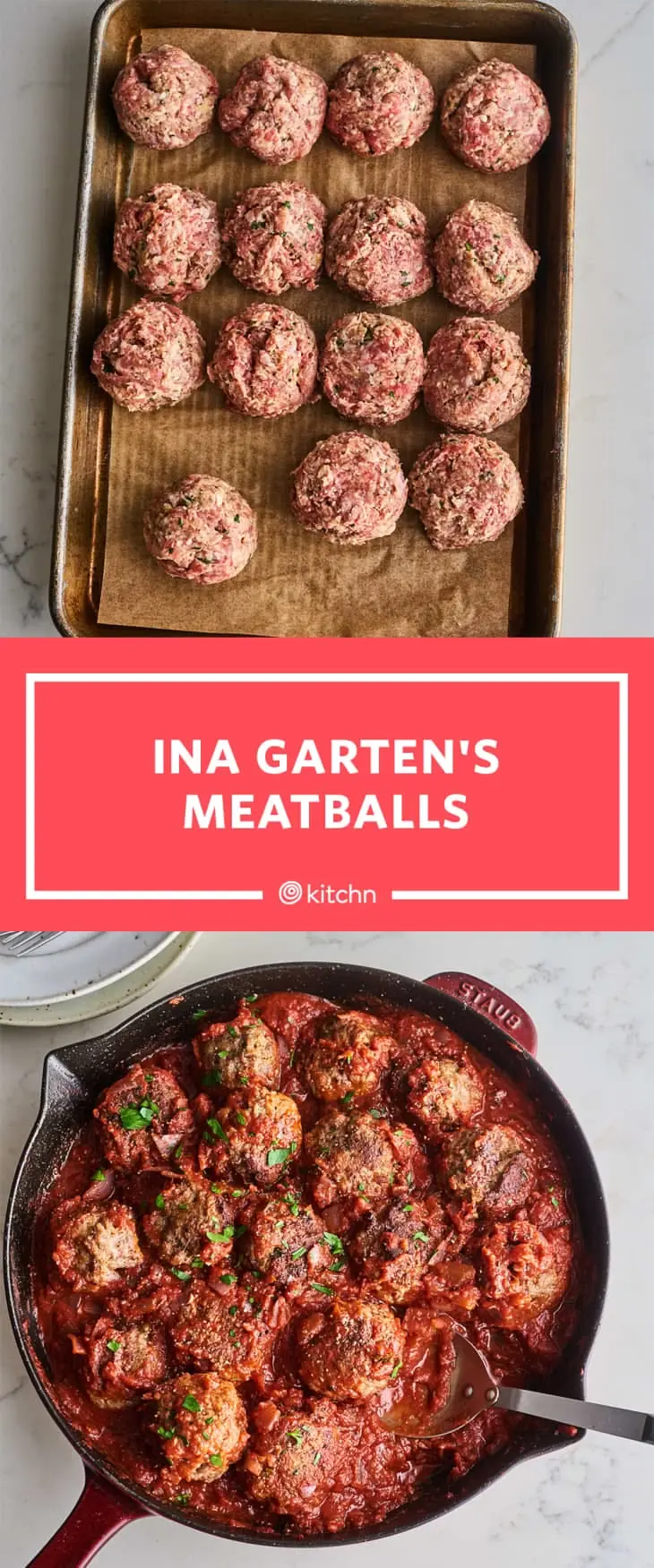
Ina Garten's Real Meatballs
Ina Garten's real meatballs are tender, juicy, and simmered in rich tomato sauce – a 50-minute comfort dinner your whole family will devour.
🧂 Ingredients
- 1 lb (450g) ground beef, 80/20 blend
- 1/2 lb (225g) ground pork
- 2 slices white sandwich bread, crusts removed
- 1/3 cup (80ml) whole milk
- 1/2 cup (50g) freshly grated Parmesan
- 1 large egg, lightly beaten
- 1/4 cup fresh flat-leaf parsley, finely chopped
- 2 garlic cloves, minced
- 1 teaspoon kosher salt and 1/2 teaspoon black pepper
- 2 tablespoons olive oil, for frying
- 3 cups (720ml) good marinara sauce
📋 Instructions
- 1Soak the bread — Tear the bread into small pieces and toss them with the milk in a large bowl. Let it sit 5 minutes until the bread is soft and mushy – this is your panade, the secret to tender meatballs.
- 2Mix the meat — Add the beef, pork, Parmesan, egg, parsley, garlic, salt, and pepper to the bowl. Mix with a fork just until combined, about 20 seconds – you should still see streaks of meat, not a paste.
- 3Roll the balls — With damp hands, roll the mixture into 1 3/4-inch balls (about 2 tablespoons each); you'll get roughly 24. Set them on a parchment-lined sheet as you go.
- 4Sear in batches — Heat the olive oil in a large Dutch oven over medium-high heat (about 375°F / 190°C) until it shimmers. Brown the meatballs in batches, 2 minutes per side, until deeply golden – they'll finish cooking in the sauce. Transfer to a plate.
- 5Build the sauce — Lower the heat to medium, pour the marinara into the pot, and scrape up the browned bits with a wooden spoon. Bring it to a gentle simmer, about 3 minutes, until the surface shimmers and small bubbles pop at the edges.
- 6Simmer together — Nestle the meatballs back into the sauce in a single layer. Cover and simmer on low (about 200°F / 95°C) for 20 minutes, turning once, until the sauce is bubbling gently and a meatball reads 160°F (71°C) on an instant-read thermometer.
- 7Rest and serve — Take the pot off the heat and let it rest 5 minutes – the sauce will thicken and cling to the meatballs. Spoon over spaghetti, into rolls, or straight onto a plate with extra Parmesan.

Priya writes about South Indian home cooking and the improvisation that happens in real kitchens, from quick weekday tiffins to slow weekend spreads. She is interested in how a single tempering of spices changes a dish and in adapting familiar recipes to what a cook has on hand. Her angle is playful, sensory recipe writing that treats cooking as something to tinker with.