

Ina Garten's perfect scrambled eggs are not fast eggs. They are slow eggs. You melt butter over low heat, pour in seasoned eggs, and stir with a rubber spatula until large soft curds form.
The method is deliberately gentle. High heat makes eggs rubbery and watery. Low heat, constant stirring, and a short rest off the burner produce the creamy texture that made this version famous.
Weigh the butter and milk, crack the eggs into a bowl, and keep the heat low. The whole process takes about ten minutes and rewards patience over speed.
Why You'll Love This Recipe
About the Ingredients
8 large eggs (about 400 g), at room temperature
Room-temperature eggs blend more evenly and cook faster. Substitution: use 6 eggs plus 2 extra yolks for a richer, denser curd.
60 ml (1/4 cup) whole milk
Whole milk adds creaminess without thinning the eggs. Substitution: use half-and-half for a richer result or water for a lighter one.
30 g (2 tbsp) unsalted butter
Butter coats the pan and flavors the eggs. Buying tip: choose a European-style butter with 82% fat for better browning control.
2 g (1/2 tsp) fine sea salt
Salt seasons the eggs before cooking so it dissolves evenly. Substitution: use kosher salt and add 1/4 tsp more by volume.
1 g (1/4 tsp) freshly ground black pepper
Fresh pepper gives a sharper aroma than pre-ground. Buying tip: grind whole peppercorns just before mixing.
15 g (1 tbsp) crème fraîche or sour cream, optional
A spoonful stirred in off the heat stops the cooking and adds tang. Substitution: use full-fat Greek yogurt for a similar effect.
10 g (1 tbsp) fresh chives, finely snipped, for serving
Chives add a mild onion note and color. Substitution: use 1 tsp finely chopped tarragon or parsley.
Tips & Tricks
Keep the heat low
eggs cooked above medium heat tighten and release water, so stay at low and stir constantly.
Salt before cooking
seasoning the raw eggs lets the salt dissolve evenly instead of sitting in pockets.
Pull the pan off early
remove the eggs while they still look slightly wet, because residual heat finishes them.
Use a rubber spatula
it scrapes the pan clean and folds curds gently instead of breaking them apart.
Pro Tips
Step-by-Step Instructions
1. Crack and whisk
Crack 8 eggs into a medium bowl and add 60 ml milk, 2 g salt, and 1 g pepper. Whisk for 30 seconds until the yolks and whites are fully combined and no streaks remain (uniform color means even cooking).
2. Warm the pan
Place a 25 cm nonstick skillet over low heat and add 30 g butter. Wait 2 to 3 minutes until the butter melts, foams, and coats the pan without browning (brown butter means the heat is too high).
3. Pour in the eggs
Pour the egg mixture into the pan and wait 20 seconds without stirring (this lets the base set slightly so curds can form).
4. Stir low and slow
Stir with a rubber spatula in a figure-eight for 4 to 5 minutes, scraping the bottom and sides (constant motion keeps the curds small and creamy). The eggs are done when large soft curds hold together and the surface still looks glossy and slightly wet.
5. Finish off the heat
Slide the pan off the burner and stir in 15 g crème fraîche if using. Let the eggs rest 30 seconds (residual heat carries them to a soft set without drying).
6. Plate and garnish
Spoon the eggs onto warm plates and scatter 10 g snipped chives over the top. Serve immediately (eggs continue to firm as they sit).
Delicious Variations
Smoked Salmon Fold
stir 80 g flaked cold-smoked salmon in off the heat for a brunch version.
Cheese Curd Eggs
fold 40 g grated Gruyère in during the last 30 seconds for a stretchy, savory result.
Herb and Chive Eggs
swap the chives for 1 tbsp chopped dill and 1 tbsp parsley for a fresher finish.
How to Store Ina Garten's Perfect Scrambled Eggs
Refrigerator
Store cooled eggs in an airtight container for up to 2 days. Reheat gently, because high heat makes them rubbery.
Freezer
Freezing is not recommended. Cooked eggs turn watery and grainy after thawing.
Reheating
Reheat in a nonstick pan over low heat with 1 tsp butter for 1 to 2 minutes, stirring until just warm.
Frequently Asked Questions
Q: Why are Ina Garten's scrambled eggs so creamy?
They are creamy because they cook over low heat with constant stirring and a small amount of milk. Gentle heat keeps the proteins from tightening, so the curds stay soft and moist.
Q: Do you add milk or water to scrambled eggs?
Milk is the better choice here because its fat and protein add body and a softer texture. Water thins the eggs and can make them weep in the pan.
Q: How do you keep scrambled eggs from getting rubbery?
Cook them over low heat and pull them off the burner while they still look slightly wet. Overcooking at high heat is the main cause of rubbery, dry curds.
Q: Can you make scrambled eggs ahead of time?
You can whisk the raw eggs with milk and salt up to 12 hours ahead and keep them covered in the refrigerator. Cook them fresh, since cooked eggs lose their texture quickly.
Q: What pan is best for scrambled eggs?
A 25 cm nonstick skillet works best because it releases the curds cleanly and needs less butter. A well-seasoned carbon steel pan is a good alternative.
Weigh the butter and milk, keep the burner low, and stir in figure-eights until the curds just hold. Serve the eggs warm with chives and toast. Weigh, watch, repeat.
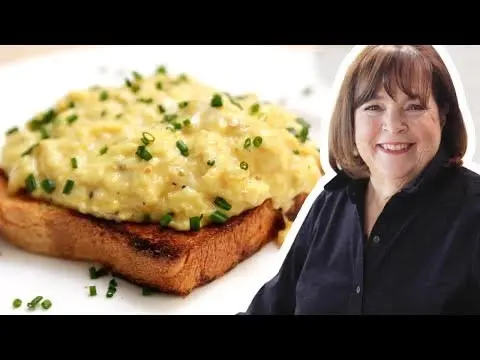
Ina Garten's Perfect Scrambled Eggs
Ina Garten's perfect scrambled eggs are soft, creamy curds made low and slow with butter, milk, and a pinch of salt. Ready in 10 minutes flat.
🧂 Ingredients
- 8 large eggs (about 400 g), at room temperature
- 60 ml (1/4 cup) whole milk
- 30 g (2 tbsp) unsalted butter
- 2 g (1/2 tsp) fine sea salt
- 1 g (1/4 tsp) freshly ground black pepper
- 15 g (1 tbsp) crème fraîche or sour cream, optional
- 10 g (1 tbsp) fresh chives, finely snipped, for serving
📋 Instructions
- 1Crack and whisk — Crack 8 eggs into a medium bowl and add 60 ml milk, 2 g salt, and 1 g pepper. Whisk for 30 seconds until the yolks and whites are fully combined and no streaks remain (uniform color means even cooking).
- 2Warm the pan — Place a 25 cm nonstick skillet over low heat and add 30 g butter. Wait 2 to 3 minutes until the butter melts, foams, and coats the pan without browning (brown butter means the heat is too high).
- 3Pour in the eggs — Pour the egg mixture into the pan and wait 20 seconds without stirring (this lets the base set slightly so curds can form).
- 4Stir low and slow — Stir with a rubber spatula in a figure-eight for 4 to 5 minutes, scraping the bottom and sides (constant motion keeps the curds small and creamy). The eggs are done when large soft curds hold together and the surface still looks glossy and slightly wet.
- 5Finish off the heat — Slide the pan off the burner and stir in 15 g crème fraîche if using. Let the eggs rest 30 seconds (residual heat carries them to a soft set without drying).
- 6Plate and garnish — Spoon the eggs onto warm plates and scatter 10 g snipped chives over the top. Serve immediately (eggs continue to firm as they sit).

Tomasz writes precise, method-first recipes for breads, ferments, and slow braises, drawing on Polish and Central European home cooking. He cares about weights, temperatures, and timing, and explains the reason behind each step so cooks can repeat results. His angle is turning fussy techniques into clear, checkable instructions.