

Ina Garten's halibut and potatoes earns a permanent spot in my weekly rotation because it looks like a dinner-party showstopper but comes together on one sheet pan with almost no fuss. The fish stays tender and buttery while the potatoes turn golden and crisp underneath, so you get two textures from one oven.
I keep the seasoning simple on purpose: good olive oil, lemon, garlic, and fresh rosemary do all the heavy lifting. If you can find halibut at the counter, grab it; if not, thick cod or sea bass fillets work beautifully in the same time.
This is the kind of meal I make on a Tuesday and serve to guests on a Saturday without changing a thing. Everything roasts at one temperature, and the fish goes in only for the last stretch so it never dries out.
Why You'll Love This Recipe
About the Ingredients
2 pounds (900g) Yukon Gold potatoes, cut into 1-inch wedges
Yukon Golds turn creamy inside and crisp at the edges; baby red potatoes or fingerlings are an easy swap, no peeling needed either way.
1/4 cup (60ml) good olive oil, divided
Use an oil you actually like the taste of, since it carries the whole dish; avocado oil works if you prefer a neutral flavor.
4 garlic cloves, minced
Fresh garlic gives the best bite; jarred minced garlic (1 teaspoon per clove) is a fine shortcut on a busy night.
2 teaspoons fresh rosemary, finely chopped
If rosemary isn't on hand, use 1 teaspoon dried or swap in fresh thyme for a softer, lemony note.
1 1/2 teaspoons kosher salt, plus more for the fish
Kosher salt seasons evenly and is forgiving; if using fine table salt, cut the amount by about a third.
1/2 teaspoon freshly ground black pepper
Grind it fresh for the best aroma; white pepper is a milder substitute if you dislike the flecks.
6 halibut fillets (about 6 ounces / 170g each), 1 to 1 1/2 inches thick
Ask the fish counter for center-cut fillets of even thickness; thick cod, sea bass, or mahi-mahi are excellent stand-ins.
1 lemon, half sliced into thin rounds and half juiced
Pick a lemon that feels heavy for its size; a lime works in a pinch but tastes sharper, so use half.
2 tablespoons unsalted butter, cut into small pieces
Butter bastes the fish as it roasts; olive oil can replace it for a dairy-free version, though you lose a little richness.
2 tablespoons fresh parsley, chopped, for serving
Flat-leaf parsley adds a fresh finish; chopped dill or chives are lovely alternatives.
Tips & Tricks
- Dry the potatoes well before they hit the oil. Any water on the surface steams them instead of roasting them crisp, so pat them thoroughly with a clean towel.
- Give the potatoes a head start. They need about 15 minutes alone in the oven before the fish goes in, or you'll end up with raw potatoes and overcooked halibut.
- Pull the fish at 130F (54C). Carryover heat brings it to a perfect flake, and an instant-read thermometer is the only way to be sure.
- Don't crowd the pan. If your fillets are large, use two sheet pans so the potatoes roast rather than steam.
Pro Tips
Step-by-Step Instructions
1. Heat the oven
Set a rack in the upper third of the oven and preheat to 425F (220C). A hot oven is what gives the potatoes their crisp edges.
2. Toss the potatoes
On a large sheet pan, toss the potato wedges with 3 tablespoons of the olive oil, the garlic, rosemary, 1 teaspoon of the salt, and the pepper until every piece is coated.
3. Roast the potatoes
Spread the potatoes in a single layer and roast for 20 minutes at 425F (220C), until the edges are golden brown and a knife slides in with no resistance. Toss once halfway through.
4. Season the halibut
While the potatoes roast, pat the halibut dry and season both sides with the remaining 1/2 teaspoon salt and a little pepper. Drizzle with the remaining 1 tablespoon olive oil.
5. Nestle the fish
Push the potatoes to the edges of the pan to make room, then lay the fillets in the center. Top each with a piece of butter and a lemon slice.
6. Bake until flaky
Return the pan to the oven and bake for 12 to 15 minutes at 425F (220C), until the fish is opaque and flakes easily, registering 130F (54C) at the thickest point.
7. Finish with lemon
Squeeze the lemon juice over the pan, scatter the parsley on top, and serve right away with the pan juices spooned over each fillet.
Delicious Variations
Mediterranean Style
Scatter a handful of pitted Kalamata olives and cherry tomatoes over the potatoes before the second roast for a briny, juicy twist.
Herb Butter Finish
Mash the butter with a little grated lemon zest and dill, then dot it over the fish for a richer, restaurant-style sauce.
Crispy Smashed Potatoes
Boil baby potatoes first, smash them flat, and roast them for extra-crispy edges that hold up beautifully under the fish.
How to Store Ina Garten's Halibut and Potatoes Recipe
Refrigerator
Store leftovers in an airtight container for up to 2 days; keep the fish separate from the potatoes if you can so the potatoes stay firm.
Freezer
Freeze cooked halibut in a sealed container for up to 1 month; the potatoes don't freeze well and are best eaten fresh.
Reheating
Reheat gently at 300F (150C) for 8 to 10 minutes, or flake the cold fish into a salad; high heat will dry it out.
Frequently Asked Questions
Q: What is the best fish to use instead of halibut?
Thick, firm white fish like cod, sea bass, or mahi-mahi are the best substitutes. Choose fillets about 1 to 1 1/2 inches thick so the timing stays the same, and check them a couple of minutes early.
Q: How do I know when halibut is done?
Halibut is done when it reaches 130F (54C) at the thickest point and flakes easily with a fork. It should look opaque all the way through, never translucent in the center.
Q: Can I make this halibut and potatoes ahead of time?
You can roast the potatoes up to a day ahead and reheat them on the pan before adding the fish. Bake the halibut fresh, since it's at its best straight from the oven.
Q: Why did my potatoes turn out soggy?
Soggy potatoes usually mean they were wet or crowded on the pan. Pat them completely dry, use a large pan, and give them space so the heat circulates and browns them.
Q: Do I need to peel the potatoes?
No, leave the skins on for this recipe. They add texture and flavor, and thin-skinned Yukon Golds or baby potatoes don't need peeling at all.
Give this one-pan halibut and potatoes a try this week and let the oven do the work while you set the table. Cook it your way, and tell me how it went.
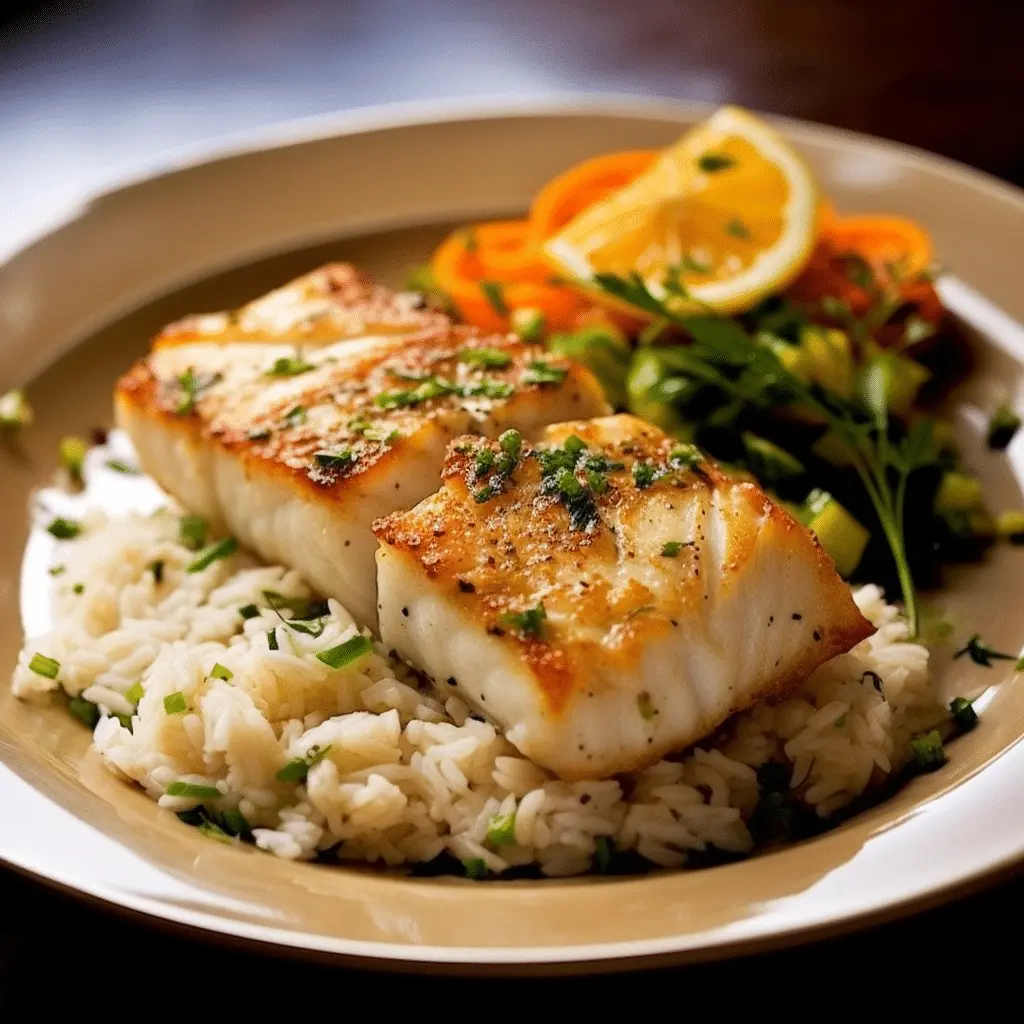
Ina Garten's Halibut and Potatoes Recipe
Ina Garten's halibut and potatoes bakes flaky white fish over crispy rosemary potatoes for an elegant one-pan dinner ready in under an hour.
🧂 Ingredients
- 2 pounds (900g) Yukon Gold potatoes, cut into 1-inch wedges
- 1/4 cup (60ml) good olive oil, divided
- 4 garlic cloves, minced
- 2 teaspoons fresh rosemary, finely chopped
- 1 1/2 teaspoons kosher salt, plus more for the fish
- 1/2 teaspoon freshly ground black pepper
- 6 halibut fillets (about 6 ounces / 170g each), 1 to 1 1/2 inches thick
- 1 lemon, half sliced into thin rounds and half juiced
- 2 tablespoons unsalted butter, cut into small pieces
- 2 tablespoons fresh parsley, chopped, for serving
📋 Instructions
- 1Heat the oven — Set a rack in the upper third of the oven and preheat to 425F (220C). A hot oven is what gives the potatoes their crisp edges.
- 2Toss the potatoes — On a large sheet pan, toss the potato wedges with 3 tablespoons of the olive oil, the garlic, rosemary, 1 teaspoon of the salt, and the pepper until every piece is coated.
- 3Roast the potatoes — Spread the potatoes in a single layer and roast for 20 minutes at 425F (220C), until the edges are golden brown and a knife slides in with no resistance. Toss once halfway through.
- 4Season the halibut — While the potatoes roast, pat the halibut dry and season both sides with the remaining 1/2 teaspoon salt and a little pepper. Drizzle with the remaining 1 tablespoon olive oil.
- 5Nestle the fish — Push the potatoes to the edges of the pan to make room, then lay the fillets in the center. Top each with a piece of butter and a lemon slice.
- 6Bake until flaky — Return the pan to the oven and bake for 12 to 15 minutes at 425F (220C), until the fish is opaque and flakes easily, registering 130F (54C) at the thickest point.
- 7Finish with lemon — Squeeze the lemon juice over the pan, scatter the parsley on top, and serve right away with the pan juices spooned over each fillet.

Mireille writes about weeknight cooking built around what is already in the pantry, with a focus on Haitian and Caribbean home dishes made simpler for busy kitchens. She favors short ingredient lists, honest substitutions, and recipes that forgive a missed step. Her angle is feeding a household well without a second trip to the store.