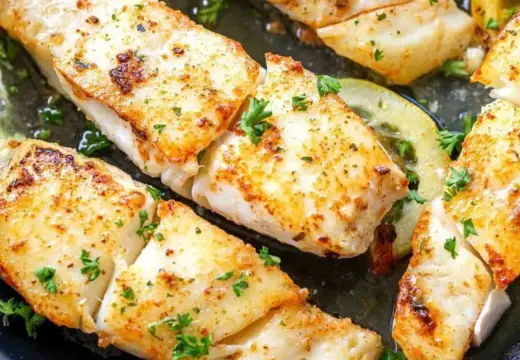
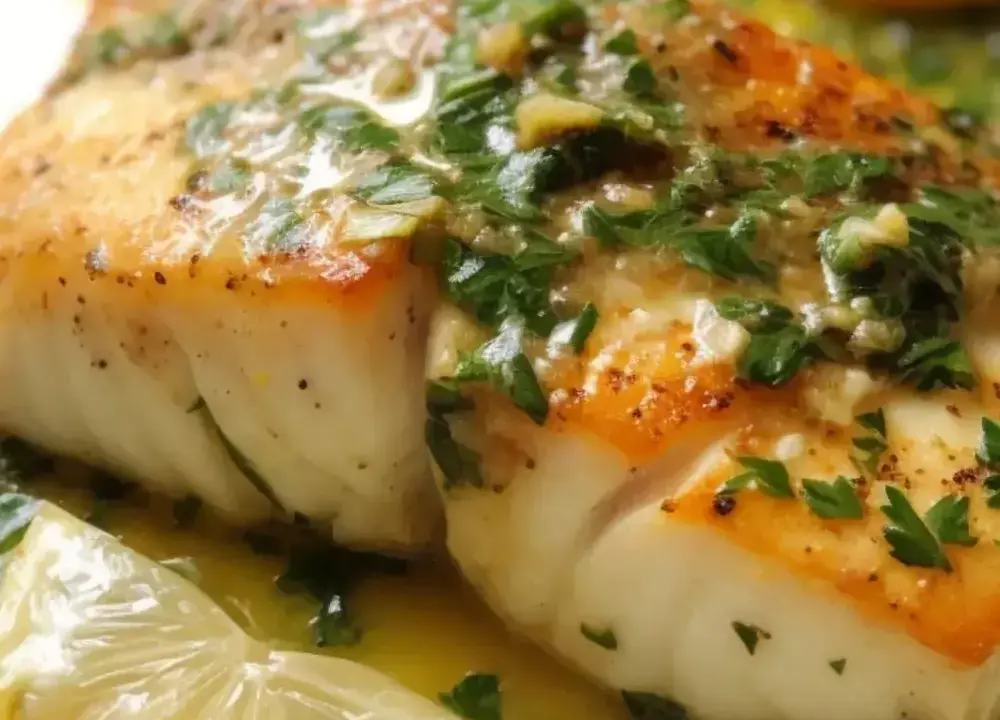
This halibut recipe follows the Ina Garten approach: few ingredients, exact temperatures, no fuss. You get 6 portions of firm white fish with a lemon-butter finish that tastes expensive and cooks in one pan.
The fish goes onto a sheet pan at 218°C (425°F) for 12 to 14 minutes. The butter browns at the edges, the lemon softens, and the fillets pull apart in clean flakes at 63°C (145°F) internal.
Weigh everything. Halibut is expensive, and a 20-gram error in butter or salt shows up on the plate. The numbers below are tested, not estimated.
Why You'll Love This Recipe
About the Ingredients
6 halibut fillets, about 170 g (6 oz) each, 1 kg (2¼ lb) total
Ask for center-cut fillets of even thickness so they finish together. Cod, haddock or striped bass substitute well at the same weight and time.
45 g (3 tbsp) unsalted butter, melted
Melt gently so it does not brown before it hits the fish. Salted butter works; reduce the added salt to ½ tsp.
30 g (2 tbsp) extra-virgin olive oil
Olive oil carries heat better than butter alone and keeps the lemon from sticking. Avocado oil is a neutral swap.
2 lemons, 1 sliced into 6 rounds, 1 juiced (about 45 g / 3 tbsp juice)
Choose thin-skinned lemons that feel heavy for their size. Bottled juice is a last resort; it tastes flatter.
4 garlic cloves, 12 g, minced
Fresh garlic only here; the granules burn and turn bitter at 218°C. One small shallot, minced, is a milder substitute.
6 g (1 tbsp) fresh thyme leaves, stripped from stems
Dried thyme at 1 tsp is the substitute, but add it to the butter rather than on top so it softens. Oregano works too.
8 g (1½ tsp) fine sea salt
Fine sea salt dissolves evenly; flaky salt sits on the surface and over-salts single bites. Kosher salt: use 2 tsp.
2 g (½ tsp) freshly ground black pepper
Grind coarse for texture. White pepper is a quieter substitute if black specks bother you.
15 g (¼ cup) fresh flat-leaf parsley, chopped
Stir it in after baking, never before, or it blackens. Dill or chervil are good swaps.
Tips & Tricks
Do Not Overbake
Halibut goes from silky to chalky in two minutes. Pull it at 63°C (145°F) and let carryover heat finish the job.
Dry the Surface
Pat fillets bone-dry with paper towel so the butter and oil cling instead of sliding off.
Even Thickness Matters
Fold the thin tail end under itself so every fillet is roughly 2.5 cm (1 in) thick.
Salt Just Before Baking
Salting early draws moisture out and leaves the fish watery. Ten minutes ahead is enough.
Pro Tips
Step-by-Step Instructions
1. Heat the oven
Set a rack in the center and heat the oven to 218°C (425°F) for 15 minutes. (A fully heated oven keeps the butter from pooling before the fish sets.) A thermometer clipped inside should read 218°C.
2. Line the sheet pan
Line a 45 x 33 cm (18 x 13 in) rimmed sheet pan with parchment. (Parchment stops the lemon from welding to the metal.) The paper should lie flat with no curls at the corners.
3. Dry the fillets
Pat all 6 fillets dry with paper towel on both sides. (Surface moisture steams the fish instead of roasting it.) The fish should feel tacky, not wet, under your fingers.
4. Season the fish
Lay the fillets on the pan, tuck any thin ends under, and sprinkle with 8 g (1½ tsp) salt and 2 g (½ tsp) pepper. (Even thickness means even cooking.) The surface should look evenly dusted, with no bare patches.
5. Build the topping
Stir 45 g (3 tbsp) melted butter with 30 g (2 tbsp) olive oil, 12 g (4 cloves) minced garlic and 6 g (1 tbsp) thyme. (The oil raises the smoke point so the garlic sweetens instead of burning.) The mixture should smell sharp and raw.
6. Coat and top
Spoon the butter mixture over each fillet, then lay one lemon round on each. (The lemon shields the garlic from direct heat.) Every fillet should be glossy and covered.
7. Bake
Bake at 218°C (425°F) for 12 to 14 minutes. (Thin fillets finish at 12; thick center cuts need 14.) The butter should bubble at the pan edges and the fish should flake at 63°C (145°F) internal.
8. Finish and rest
Squeeze the juice of 1 lemon (45 g / 3 tbsp) over the pan and scatter 15 g (¼ cup) parsley. (Acid at the end stays bright; acid at the start fades.) Rest 3 minutes, then serve with the pan juices.
Delicious Variations
Mediterranean Version
Swap thyme for oregano and add 60 g (½ cup) halved cherry tomatoes around the fillets.
Citrus-Herb Version
Use orange slices and 4 g (2 tsp) chopped dill in place of lemon and thyme.
Spicy Butter Version
Add 2 g (½ tsp) red pepper flakes and 3 g (1 tsp) smoked paprika to the butter mixture.
How to Store Ina Garten Halibut Recipe – Easy Kitchen Guide
Refrigerator
Store in an airtight container up to 2 days; keep the pan juices with the fish so it does not dry out.
Freezer
Freeze cooked fillets in individual portions with juices for up to 2 months; thaw overnight in the refrigerator.
Reheating
Reheat covered at 150°C (300°F) for 8 to 10 minutes, or gently in a covered skillet over low heat until 60°C (140°F).
Frequently Asked Questions
Q: What temperature should halibut be cooked to?
Halibut is done at 63°C (145°F) internal temperature. Measure at the thickest center with an instant-read thermometer. It will flake cleanly and look opaque throughout.
Q: How long does halibut take in the oven at 425°F?
A 2.5 cm (1 in) fillet takes 12 to 14 minutes at 218°C (425°F). Thinner tail pieces need 10 to 12 minutes. Start checking at 10 minutes so you do not overshoot.
Q: Can I use frozen halibut for this recipe?
Yes, but thaw it fully overnight in the refrigerator and pat it dry. Frozen fish releases extra water and will steam instead of roast if baked from frozen. Add 2 to 3 minutes if any chill remains.
Q: Why did my halibut turn out dry?
Dry halibut was baked past 63°C (145°F) or cooked from a wet surface. Pull it at temperature and rest 3 minutes. Carryover heat finishes the center without drying the edges.
Q: What can I substitute for halibut?
Cod, haddock, striped bass and turbot all work at the same weight and time. Choose firm white fillets of similar thickness. Avoid delicate fish like sole, which falls apart at this temperature.
Buy the thickest center-cut fillets you can find, weigh the butter, and set a timer for 12 minutes. Then tell me how the pan juices tasted. Weigh, watch, repeat.
Ina Garten Halibut Recipe – Easy Kitchen Guide
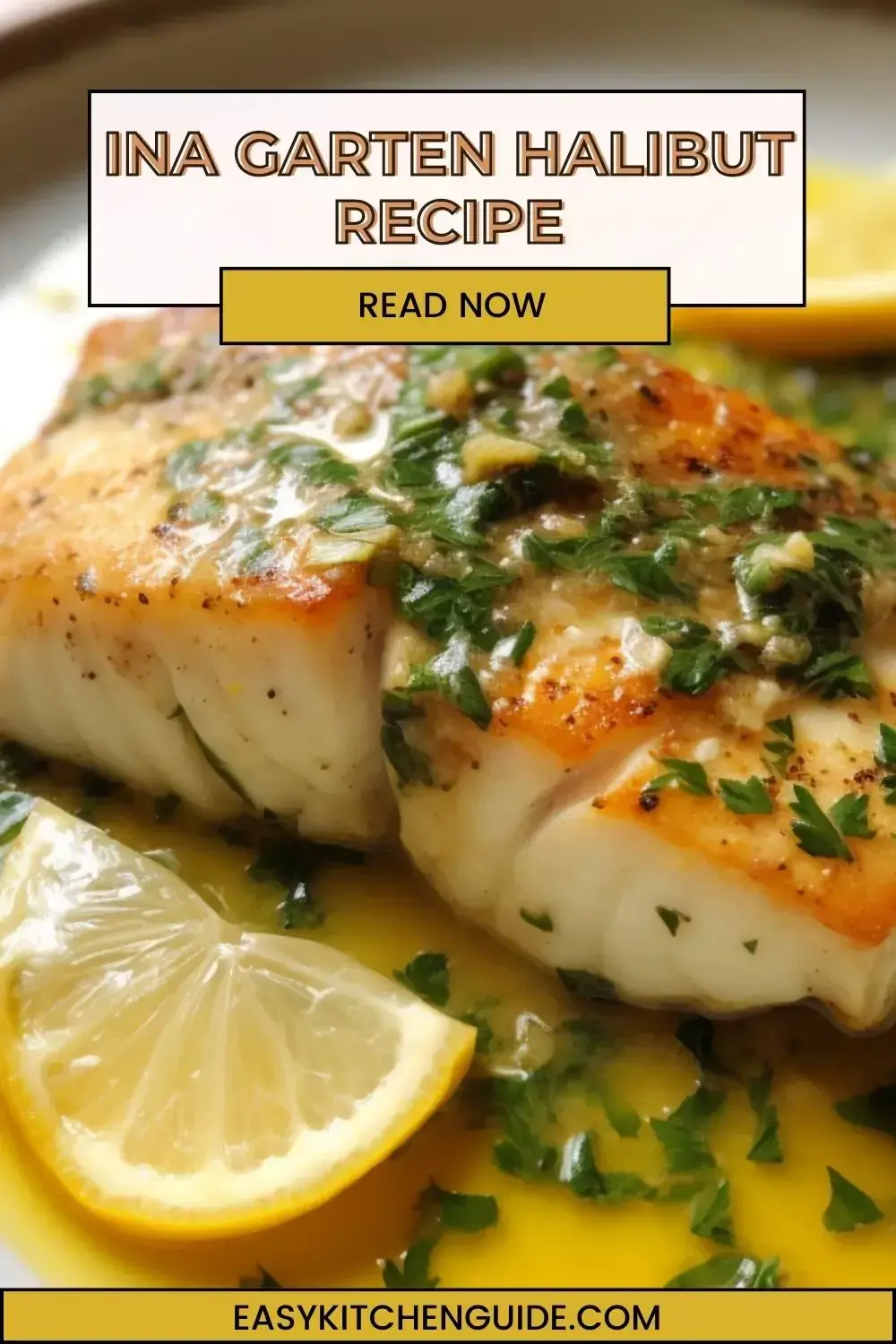
Ina Garten halibut recipe bakes firm white fillets with lemon, butter and herbs in 20 minutes for a tender, flaky dinner with almost no cleanup.
🧂 Ingredients
- 6 halibut fillets, about 170 g (6 oz) each, 1 kg (2¼ lb) total
- 45 g (3 tbsp) unsalted butter, melted
- 30 g (2 tbsp) extra-virgin olive oil
- 2 lemons, 1 sliced into 6 rounds, 1 juiced (about 45 g / 3 tbsp juice)
- 4 garlic cloves, 12 g, minced
- 6 g (1 tbsp) fresh thyme leaves, stripped from stems
- 8 g (1½ tsp) fine sea salt
- 2 g (½ tsp) freshly ground black pepper
- 15 g (¼ cup) fresh flat-leaf parsley, chopped
📋 Instructions
- 1Heat the oven — Set a rack in the center and heat the oven to 218°C (425°F) for 15 minutes. (A fully heated oven keeps the butter from pooling before the fish sets.) A thermometer clipped inside should read 218°C.
- 2Line the sheet pan — Line a 45 x 33 cm (18 x 13 in) rimmed sheet pan with parchment. (Parchment stops the lemon from welding to the metal.) The paper should lie flat with no curls at the corners.
- 3Dry the fillets — Pat all 6 fillets dry with paper towel on both sides. (Surface moisture steams the fish instead of roasting it.) The fish should feel tacky, not wet, under your fingers.
- 4Season the fish — Lay the fillets on the pan, tuck any thin ends under, and sprinkle with 8 g (1½ tsp) salt and 2 g (½ tsp) pepper. (Even thickness means even cooking.) The surface should look evenly dusted, with no bare patches.
- 5Build the topping — Stir 45 g (3 tbsp) melted butter with 30 g (2 tbsp) olive oil, 12 g (4 cloves) minced garlic and 6 g (1 tbsp) thyme. (The oil raises the smoke point so the garlic sweetens instead of burning.) The mixture should smell sharp and raw.
- 6Coat and top — Spoon the butter mixture over each fillet, then lay one lemon round on each. (The lemon shields the garlic from direct heat.) Every fillet should be glossy and covered.
- 7Bake — Bake at 218°C (425°F) for 12 to 14 minutes. (Thin fillets finish at 12; thick center cuts need 14.) The butter should bubble at the pan edges and the fish should flake at 63°C (145°F) internal.
- 8Finish and rest — Squeeze the juice of 1 lemon (45 g / 3 tbsp) over the pan and scatter 15 g (¼ cup) parsley. (Acid at the end stays bright; acid at the start fades.) Rest 3 minutes, then serve with the pan juices.

Tomasz writes precise, method-first recipes for breads, ferments, and slow braises, drawing on Polish and Central European home cooking. He cares about weights, temperatures, and timing, and explains the reason behind each step so cooks can repeat results. His angle is turning fussy techniques into clear, checkable instructions.