

This curry uses full-fat coconut milk and Thai red curry paste as the base. Both are shelf-stable, so the dish works on a weeknight without a shopping trip. Shrimp cook in five minutes, which keeps the total time near 35 minutes.
Weight first, volume second: 680 g shrimp, 400 ml coconut milk, 70 g curry paste. The order matters because the paste controls heat and the milk controls richness. Taste after the paste goes in, before the shrimp.
The sauce thickens by reduction, not by starch. Simmer until it coats a spoon, then add the shrimp. Weigh, watch, repeat.
Why You'll Love This Recipe
About the Ingredients
680 g (1 1/2 lb) large shrimp, peeled and deveined, tails off
Buy frozen raw shrimp and thaw overnight in the fridge; frozen shrimp are frozen at peak freshness. Substitute 680 g firm white fish cut into 4 cm cubes, cooked 2 minutes longer.
400 ml (1 can, 13.5 oz) full-fat coconut milk
Full-fat gives body; light coconut milk turns the sauce thin. Substitute 400 ml coconut cream for a thicker sauce and reduce the simmer by 3 minutes.
70 g (3 tbsp) Thai red curry paste
Check the label for shrimp paste if cooking for shellfish allergies; many brands contain it. Substitute 60 g massaman curry paste for a milder, sweeter sauce.
15 ml (1 tbsp) neutral oil, such as canola
Neutral oil carries heat without flavor. Substitute coconut oil, but keep the pan at 180 C so it does not smoke.
1 medium onion, 150 g, sliced 5 mm thick
Yellow onion melts into the sauce; red onion stays firm. Substitute 2 shallots, 80 g, sliced, for a sweeter base.
3 garlic cloves, 12 g, minced
Fresh garlic is sharper than jarred. Substitute 1 tsp garlic powder added with the curry paste.
20 g (1 tbsp) fresh ginger, grated
Grate on a microplane so the fibers disappear. Substitute 1 tsp ground ginger added with the paste.
15 ml (1 tbsp) fish sauce
Fish sauce supplies salt and umami. Substitute 15 ml soy sauce plus a pinch of salt for a vegetarian version.
8 g (1 tbsp) brown sugar
Brown sugar rounds the paste's acidity. Substitute 8 g palm sugar or 5 ml honey.
200 g (1 cup) cherry tomatoes, halved
Halving releases juice that balances the coconut fat. Substitute 200 g canned diced tomatoes, drained.
15 g (1/4 cup) fresh cilantro, chopped
Add stems to the pan for aroma and leaves at the end. Substitute Thai basil for a licorice note.
1 lime, 45 ml (3 tbsp) juice, plus wedges
Add lime off the heat; boiling kills the brightness. Substitute 30 ml rice vinegar mixed with 5 ml water.
Tips & Tricks
Do not boil the coconut milk
keep it at a bare simmer, 95 C, or the fat separates and the sauce turns grainy.
Pat the shrimp dry before cooking
surface water steams instead of sears, so the shrimp stay pale.
Taste before salting
fish sauce and curry paste are both salty, so season at the very end.
- Add the lime juice after the pan leaves the heat: heat flattens the citrus aroma within a minute.
Pro Tips
Step-by-Step Instructions
1. Prep the shrimp
Pat 680 g shrimp dry with paper towels and refrigerate. Dry shrimp sear instead of steam, and the surface browns in the hot pan.
2. Heat the pan
Heat 15 ml oil in a 30 cm skillet over medium-high heat to 180 C (355 F), about 2 minutes. A drop of water should sizzle and vanish immediately.
3. Soften the onion
Add 150 g sliced onion and cook 4 minutes, stirring twice, until the edges turn translucent. Translucent edges mean the moisture has cooked off.
4. Bloom the paste
Add 12 g garlic, 20 g ginger and 70 g curry paste and stir 60 seconds until the mixture darkens and smells fragrant. Do not let it brown or it turns bitter.
5. Build the sauce
Pour in 400 ml coconut milk and stir to dissolve the paste. Bring to a bare simmer at 95 C (203 F) and cook 8 minutes until the sauce coats a spoon.
6. Add tomatoes
Stir in 200 g halved cherry tomatoes, 15 ml fish sauce and 8 g brown sugar. Simmer 5 minutes at 95 C (203 F) until the tomatoes soften and the edges bubble.
7. Cook the shrimp
Lay the shrimp in one layer in the sauce and cook 3 minutes per side at 95 C (203 F). They are done when opaque and curled, with an internal temperature of 60 C (140 F).
8. Finish and rest
Remove the pan from the heat and stir in 45 ml lime juice and 15 g cilantro. Rest 3 minutes so the sauce thickens, then taste and adjust salt.
Delicious Variations
Green Curry Version
swap 70 g green curry paste for red and add 100 g frozen peas in the last 3 minutes.
Vegetable Swap
replace shrimp with 400 g firm tofu cubes, pressed and seared 4 minutes per side before the sauce.
Extra Rich
stir 60 ml coconut cream into the finished sauce off the heat for a thicker, sweeter finish.
How to Store Easy Thai Coconut Shrimp Curry
Refrigerator
Store in a sealed container at 4 C for up to 2 days; shrimp toughen past that.
Freezer
Freeze the sauce without shrimp for up to 2 months; add fresh shrimp when reheating.
Reheating
Reheat gently at 70 C (158 F) for 5 minutes; boiling will overcook the shrimp.
Frequently Asked Questions
Q: Can I use frozen shrimp for this curry?
Yes, thaw 680 g frozen shrimp overnight in the fridge and pat them dry before cooking. Do not add them frozen, because the water dilutes the sauce and drops the pan temperature.
Q: Why did my coconut curry sauce split?
The coconut milk boiled, which separates the fat from the water. Keep the pan at a bare simmer, 95 C (203 F), and stir before the paste goes in.
Q: How spicy is Thai red curry paste?
Red curry paste is moderately hot, roughly medium on a restaurant scale. Use 50 g for mild heat and 70 g for a fuller burn, and taste after the paste blooms.
Q: Can I make this curry dairy-free?
Yes, the recipe is already dairy-free because coconut milk replaces cream. Check that your curry paste contains no shrimp paste if you also need it shellfish-free.
Q: What do I serve with coconut shrimp curry?
Serve it over 600 g cooked jasmine rice or 400 g rice noodles. Both absorb the sauce, and rice keeps the plate balanced against the richness.
Cook the paste until it smells sweet, not raw, and pull the shrimp at 60 C. Weigh your ingredients once and the timing takes care of itself. Weigh, watch, repeat.
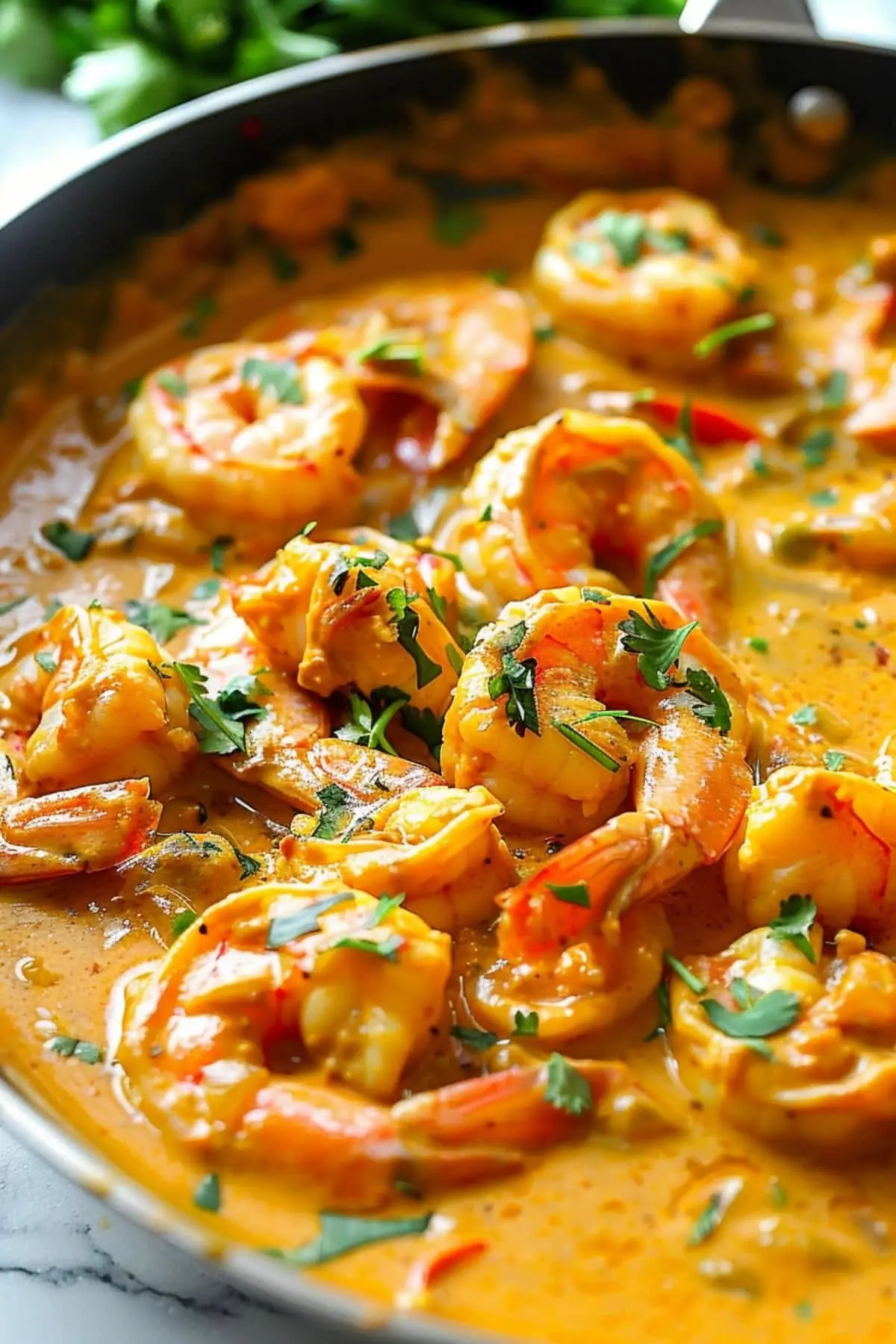
Easy Thai Coconut Shrimp Curry
Easy Thai Coconut Shrimp Curry is a creamy one-pan dinner with sweet shrimp, red curry paste and lime. Ready in 35 minutes with pantry staples.
🧂 Ingredients
- 680 g (1 1/2 lb) large shrimp, peeled and deveined, tails off
- 400 ml (1 can, 13.5 oz) full-fat coconut milk
- 70 g (3 tbsp) Thai red curry paste
- 15 ml (1 tbsp) neutral oil, such as canola
- 1 medium onion, 150 g, sliced 5 mm thick
- 3 garlic cloves, 12 g, minced
- 20 g (1 tbsp) fresh ginger, grated
- 15 ml (1 tbsp) fish sauce
- 8 g (1 tbsp) brown sugar
- 200 g (1 cup) cherry tomatoes, halved
- 15 g (1/4 cup) fresh cilantro, chopped
- 1 lime, 45 ml (3 tbsp) juice, plus wedges
📋 Instructions
- 1Prep the shrimp — Pat 680 g shrimp dry with paper towels and refrigerate. Dry shrimp sear instead of steam, and the surface browns in the hot pan.
- 2Heat the pan — Heat 15 ml oil in a 30 cm skillet over medium-high heat to 180 C (355 F), about 2 minutes. A drop of water should sizzle and vanish immediately.
- 3Soften the onion — Add 150 g sliced onion and cook 4 minutes, stirring twice, until the edges turn translucent. Translucent edges mean the moisture has cooked off.
- 4Bloom the paste — Add 12 g garlic, 20 g ginger and 70 g curry paste and stir 60 seconds until the mixture darkens and smells fragrant. Do not let it brown or it turns bitter.
- 5Build the sauce — Pour in 400 ml coconut milk and stir to dissolve the paste. Bring to a bare simmer at 95 C (203 F) and cook 8 minutes until the sauce coats a spoon.
- 6Add tomatoes — Stir in 200 g halved cherry tomatoes, 15 ml fish sauce and 8 g brown sugar. Simmer 5 minutes at 95 C (203 F) until the tomatoes soften and the edges bubble.
- 7Cook the shrimp — Lay the shrimp in one layer in the sauce and cook 3 minutes per side at 95 C (203 F). They are done when opaque and curled, with an internal temperature of 60 C (140 F).
- 8Finish and rest — Remove the pan from the heat and stir in 45 ml lime juice and 15 g cilantro. Rest 3 minutes so the sauce thickens, then taste and adjust salt.

Tomasz writes precise, method-first recipes for breads, ferments, and slow braises, drawing on Polish and Central European home cooking. He cares about weights, temperatures, and timing, and explains the reason behind each step so cooks can repeat results. His angle is turning fussy techniques into clear, checkable instructions.