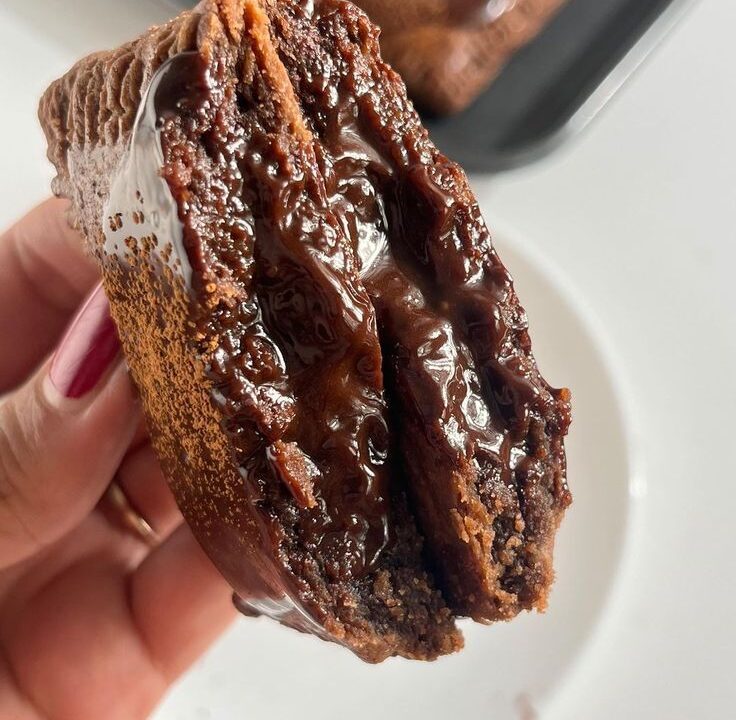
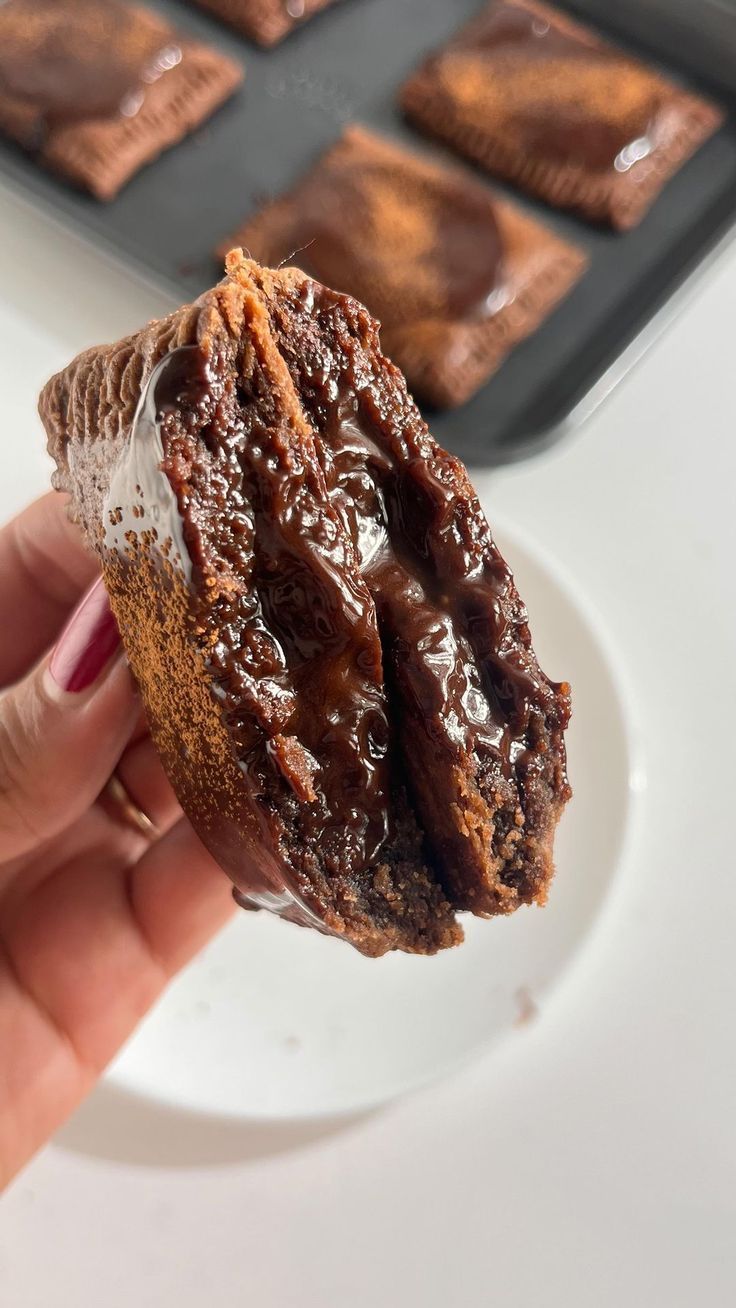
These pastries start with a cold butter dough, rolled thin and folded once. That single fold creates layers that separate when baked, so the crust stays crisp under the fudge.
The filling is a cooked fudge, not a smear of jam. Chocolate, butter, and a little corn syrup are heated until glossy and thick, then chilled so it holds its shape inside the pastry.
Weigh everything in grams. Pastry rewards precision, and a dough that is too wet will tear at the seams.
Why You'll Love This Recipe
About the Ingredients
300 g (2 1/2 cups) all-purpose flour
Use a flour with 10-11% protein for a tender crust. Bread flour makes the pastry tough, so avoid it.
225 g (1 cup) cold unsalted butter, cubed
Butter should be fridge-cold, around 4 C (39 F). Margarine or a butter-flavored block works but will taste flatter.
60 g (1/4 cup) ice water
Add one tablespoon at a time; you may not need all of it. Keep a spare 30 g (2 tbsp) in reserve.
30 g (2 tbsp) granulated sugar
Fine sugar dissolves faster into the dough. Caster sugar is a direct swap.
3 g (1/2 tsp) fine sea salt
Fine sea salt blends evenly. If using table salt, drop to 1/4 teaspoon.
200 g (7 oz) dark chocolate, 60-70% cocoa, chopped
Buy a bar, not chips; chips contain stabilizers that resist melting. Semisweet chocolate works for a sweeter filling.
40 g (3 tbsp) unsalted butter, for the filling
Room-temperature butter emulsifies into the fudge. Do not substitute oil, which separates.
60 g (3 tbsp) light corn syrup
Corn syrup keeps the fudge pliable. Honey is a substitute but browns faster in the oven.
120 g (1 cup) powdered sugar
Sift it or the glaze will be lumpy. For a cocoa glaze, replace 15 g (2 tbsp) with cocoa powder.
15-20 g (1-1 1/2 tbsp) whole milk, for the glaze
Whole milk gives the best sheen. Oat milk works; water makes a dull glaze.
Tips & Tricks
Keep the butter cold
warm butter melts into the flour and kills the flaky layers, so chill the bowl and your hands.
Seal the edges twice
press with a fork, then crimp; an unsealed seam opens and the fudge leaks onto the tray.
Chill before baking
20 minutes in the freezer firms the pastry so it holds its shape and puffs evenly.
Do not overfill
25 g (about 1 1/2 tbsp) of fudge per pastry is the limit before the seams fail.
Pro Tips
Step-by-Step Instructions
1. Make the fudge filling
1. Heat 200 g chopped chocolate, 40 g butter, and 60 g corn syrup over low heat, stirring, until smooth, about 4 minutes at 60-65 C (140-150 F). [Low heat prevents the chocolate from seizing.] Stop when the mixture coats the spatula in a thick ribbon.
2. Chill the fudge
2. Scrape the fudge onto parchment, press flat to 1 cm (1/2 inch), and chill 20 minutes. [Firm fudge is easier to portion and will not tear the dough.] It is ready when it holds a fingerprint without sticking.
3. Cut the butter in
3. Whisk 300 g flour, 30 g sugar, and 3 g salt, then rub in 225 g cold butter until pea-sized pieces remain. [Visible butter flecks become the flaky layers.] Stop when the mixture looks like coarse sand with lumps.
4. Bring the dough together
4. Add 60 g ice water one tablespoon at a time, tossing, until the dough holds when squeezed. [Too much water makes a tough crust.] The bowl should look shaggy but press into a ball cleanly.
5. Fold and chill
5. Pat the dough into a rectangle, fold it in thirds like a letter, wrap, and chill 30 minutes. [The fold builds layers without extra work.] The dough is ready when firm but still bends without cracking.
6. Roll and fill
6. Roll the dough to 3 mm (1/8 inch) on floured parchment and cut twelve 9 x 12 cm (3.5 x 4.75 inch) rectangles. [Thin dough bakes crisp, not bready.] Place 25 g fudge on six rectangles, leaving a 1 cm border.
7. Seal the pastries
7. Top with the remaining rectangles, press the edges with a fork, then crimp. [Two seals stop the filling from escaping.] Poke three holes in each top and freeze 20 minutes.
8. Bake until golden
8. Bake at 190 C (375 F) for 22-25 minutes on a lined tray. [A hot oven sets the layers before the butter melts out.] They are done when the edges are deep golden and the tops feel dry; internal temperature near the seam should read about 95 C (203 F).
9. Glaze and set
9. Whisk 120 g powdered sugar with 15-20 g milk and spread over cooled pastries. [Cool pastries keep the glaze opaque.] The glaze is right when it ribbons off the spoon and settles in 10 seconds.
Delicious Variations
S'mores Version
swap 30 g of the fudge for marshmallow creme and add crushed graham cracker to the glaze.
Salted Caramel Fudge
stir 20 g (1 tbsp) caramel sauce and a pinch of flaky salt into the cooled fudge.
Raspberry Dark Chocolate
press 3 g (1/2 tsp) seedless raspberry jam under the fudge layer for a tart center.
How to Store Decadent Chocolate Fudge Pop Tarts
Refrigerator
Store baked pastries in an airtight container at room temperature for 3 days, or refrigerate up to 5 days.
Freezer
Freeze unbaked, sealed pastries flat for up to 2 months; bake from frozen at 190 C (375 F) for 28-30 minutes.
Reheating
Reheat at 160 C (320 F) for 5-6 minutes to crisp the crust; microwave for 15 seconds if you want a soft, gooey center.
Frequently Asked Questions
Q: Why did my pop tarts leak filling in the oven?
The seams were not sealed or the pastry was overfilled. Press the edges with a fork, crimp them, and keep the fudge to 25 g per pastry. Chilling before baking also helps the seams hold.
Q: Can I use store-bought pie crust instead of making dough?
Yes, two rounds of refrigerated pie crust will make six pastries. Roll each round to 3 mm (1/8 inch) and follow the same filling and sealing steps. The crust will be slightly less flaky but still good.
Q: How do I know when the pastries are fully baked?
The edges should be deep golden and the tops dry to the touch, about 22-25 minutes at 190 C (375 F). If the tops still look shiny and pale, give them 3 more minutes. An instant-read thermometer near the seam should read about 95 C (203 F).
Q: Can I make these chocolate fudge pop tarts ahead of time?
Yes, assemble them and freeze unbaked for up to 2 months. Bake straight from frozen at 190 C (375 F) for 28-30 minutes. Glaze after baking and cooling so it sets properly.
Q: Why is my fudge filling grainy or hard?
The chocolate was overheated or water got into the pan. Melt over low heat at 60-65 C (140-150 F) and stir constantly. If it seizes, stir in 10 g (2 tsp) warm milk until smooth again.
Roll the dough thin, weigh the fudge, and seal every edge twice. Bake one tray tonight and freeze the rest for a weekday breakfast. Weigh, watch, repeat.
Decadent Chocolate Fudge Pop Tarts
Decadent Chocolate Fudge Pop Tarts: flaky pastry wrapped around a thick dark chocolate fudge filling, baked golden and glazed. Better than the box, made at home.
🧂 Ingredients
- 300 g (2 1/2 cups) all-purpose flour
- 225 g (1 cup) cold unsalted butter, cubed
- 60 g (1/4 cup) ice water
- 30 g (2 tbsp) granulated sugar
- 3 g (1/2 tsp) fine sea salt
- 200 g (7 oz) dark chocolate, 60-70% cocoa, chopped
- 40 g (3 tbsp) unsalted butter, for the filling
- 60 g (3 tbsp) light corn syrup
- 120 g (1 cup) powdered sugar
- 15-20 g (1-1 1/2 tbsp) whole milk, for the glaze
📋 Instructions
- 1Make the fudge filling — 1. Heat 200 g chopped chocolate, 40 g butter, and 60 g corn syrup over low heat, stirring, until smooth, about 4 minutes at 60-65 C (140-150 F). [Low heat prevents the chocolate from seizing.] Stop when the mixture coats the spatula in a thick ribbon.
- 2Chill the fudge — 2. Scrape the fudge onto parchment, press flat to 1 cm (1/2 inch), and chill 20 minutes. [Firm fudge is easier to portion and will not tear the dough.] It is ready when it holds a fingerprint without sticking.
- 3Cut the butter in — 3. Whisk 300 g flour, 30 g sugar, and 3 g salt, then rub in 225 g cold butter until pea-sized pieces remain. [Visible butter flecks become the flaky layers.] Stop when the mixture looks like coarse sand with lumps.
- 4Bring the dough together — 4. Add 60 g ice water one tablespoon at a time, tossing, until the dough holds when squeezed. [Too much water makes a tough crust.] The bowl should look shaggy but press into a ball cleanly.
- 5Fold and chill — 5. Pat the dough into a rectangle, fold it in thirds like a letter, wrap, and chill 30 minutes. [The fold builds layers without extra work.] The dough is ready when firm but still bends without cracking.
- 6Roll and fill — 6. Roll the dough to 3 mm (1/8 inch) on floured parchment and cut twelve 9 x 12 cm (3.5 x 4.75 inch) rectangles. [Thin dough bakes crisp, not bready.] Place 25 g fudge on six rectangles, leaving a 1 cm border.
- 7Seal the pastries — 7. Top with the remaining rectangles, press the edges with a fork, then crimp. [Two seals stop the filling from escaping.] Poke three holes in each top and freeze 20 minutes.
- 8Bake until golden — 8. Bake at 190 C (375 F) for 22-25 minutes on a lined tray. [A hot oven sets the layers before the butter melts out.] They are done when the edges are deep golden and the tops feel dry; internal temperature near the seam should read about 95 C (203 F).
- 9Glaze and set — 9. Whisk 120 g powdered sugar with 15-20 g milk and spread over cooled pastries. [Cool pastries keep the glaze opaque.] The glaze is right when it ribbons off the spoon and settles in 10 seconds.

Tomasz writes precise, method-first recipes for breads, ferments, and slow braises, drawing on Polish and Central European home cooking. He cares about weights, temperatures, and timing, and explains the reason behind each step so cooks can repeat results. His angle is turning fussy techniques into clear, checkable instructions.