

These cinnamon scones are the kind you find behind the glass at a good bakery: craggy, golden, and shatteringly tender, with a ribbon of cinnamon sugar swirled through every bite. The secret is cold butter worked into the flour until it looks like coarse sand, plus a light hand at the end so the dough stays soft instead of tough.
A hot 400F (200C) oven does the heavy lifting, setting the layers fast so the butter steams and pushes the dough upward into tall, flaky wedges. A final brush of cream and a generous shower of cinnamon sugar gives each scone a crackly, caramelized top that makes the whole kitchen smell like a Sunday morning.
They come together in one bowl with pantry staples, need no mixer, and freeze beautifully, which makes them an easy make-ahead breakfast for holidays, brunches, or a slow weekend coffee.
Why You'll Love This Recipe
About the Ingredients
2 1/2 cups (313g) all-purpose flour, plus extra for dusting
Spoon flour into the cup and level it off, or weigh it, since packed flour makes dry scones. For a lighter crumb, swap 1/2 cup of the all-purpose for cake flour.
1/3 cup (67g) granulated sugar
This sweetens the dough without making it cakey. If you prefer a deeper flavor, use light brown sugar and reduce the cream by 1 tablespoon.
2 1/2 teaspoons baking powder
Check the date on the can, because expired baking powder is the top reason scones bake flat. Aluminum-free baking powder avoids any metallic aftertaste.
1/2 teaspoon fine sea salt
Salt balances the sweetness and strengthens the gluten structure. Kosher salt works too, but use 3/4 teaspoon since the crystals are larger.
1 1/2 teaspoons ground cinnamon, divided
Use fresh, fragrant cinnamon such as Ceylon or Vietnamese cassia for the strongest aroma. Shake a little into your palm first; if it smells dusty, replace it.
1/2 cup (113g) cold unsalted butter, cut into 1/2-inch cubes
Freeze the butter for 10 minutes before cutting it in for the flakiest layers. Salted butter works in a pinch, but then skip the added salt.
2/3 cup (160ml) cold heavy cream, plus 2 tablespoons for brushing
Cold cream keeps the butter from melting before baking. Half-and-half or whole milk can substitute, though the scones will be slightly less rich.
1 large egg, cold
The egg adds tenderness and structure. For an egg-free version, use 1/4 cup extra cream plus 1 tablespoon plain yogurt.
1 teaspoon vanilla extract
Pure vanilla rounds out the cinnamon. Bourbon or maple extract makes a cozy seasonal swap at the same amount.
3 tablespoons (37g) granulated sugar mixed with 1 teaspoon ground cinnamon, for topping
Turbinado sugar gives extra crunch on top. Mix the topping just before brushing so it stays evenly distributed.
Tips & Tricks
Keep Everything Cold
Warm butter melts into the flour instead of forming pockets, so chill your bowl, cube the butter, and freeze it 10 minutes before starting.
Do Not Overwork the Dough
Stop mixing the moment the dough holds together, because extra kneading develops gluten and turns flaky scones tough and bready.
Pat, Do Not Roll
Shape the dough by patting it into a 1-inch-thick round, since a rolling pin compresses the layers and flattens the rise.
Cut Straight Down
Press the bench scraper or knife straight through without twisting, so the edges stay open and the scones climb tall in the oven.
Pro Tips
Step-by-Step Instructions
1. Heat the oven and prepare
Preheat the oven to 400F (200C) and line a rimmed baking sheet with parchment paper. Position a rack in the center so the scones brown evenly on top and bottom.
2. Whisk the dry ingredients
In a large bowl, whisk together the flour, 1/3 cup sugar, baking powder, salt, and 1 teaspoon of the cinnamon until no streaks remain. This ensures the leavener is evenly spread so every scone rises the same.
3. Cut in the cold butter
Add the cubed cold butter and toss to coat, then cut it in with a pastry cutter or your fingertips until the mixture looks like coarse sand with a few pea-sized butter lumps. Those lumps are what create the flaky layers.
4. Mix the wet ingredients
Whisk the 2/3 cup cold cream, egg, and vanilla in a small bowl until smooth. Pour it over the flour mixture and fold with a fork just until a shaggy dough forms, stopping before it looks smooth.
5. Shape the dough
Turn the dough onto a lightly floured surface and pat it into a 7-inch round about 1 inch thick, dusting with flour only if it sticks. Work quickly and gently so the butter stays cold.
6. Cut into wedges
Cut the round into 8 wedges with a bench scraper or sharp knife, pressing straight down without twisting. Transfer the wedges to the prepared sheet, leaving 2 inches between them.
7. Brush and top
Brush the tops with the remaining 2 tablespoons cream, then sprinkle generously with the cinnamon sugar topping. The cream helps the sugar adhere and deepens the golden color.
8. Bake until golden
Bake at 400F (200C) for 18 to 22 minutes, until the scones are deep golden brown and an instant-read thermometer in the center reads 200F (93C). The edges should look crisp and the cinnamon sugar should be bubbling slightly.
9. Cool before serving
Let the scones rest on the baking sheet for 5 minutes, then transfer to a wire rack to cool for 10 minutes. Serve warm, when the crust is crisp and the interior is at its most tender.
Delicious Variations
Maple Pecan Cinnamon Scones
Fold 1/2 cup toasted chopped pecans into the dough and drizzle cooled scones with a maple glaze made from 1/2 cup powdered sugar and 2 tablespoons maple syrup.
Cinnamon Roll Scones
Spread the dough round with 2 tablespoons softened butter and a cinnamon sugar mixture, roll it up, and cut into spirals before baking for a swirled center.
Apple Cinnamon Scones
Add 3/4 cup peeled diced apple tossed with 1 teaspoon cinnamon to the dry ingredients and bake 3 to 4 minutes longer for a fruity autumn version.
How to Store Cinnamon Scones Recipe | Buttery Bakery Style Breakfast Scones
Refrigerator
Store cooled scones in an airtight container at room temperature for up to 2 days, or refrigerate for up to 5 days and rewarm before serving.
Freezer
Freeze baked scones in a zip-top bag for up to 2 months, or freeze unbaked cut wedges on a sheet until solid, then bag them and bake from frozen at 400F (200C) for 22 to 26 minutes.
Reheating
Rewarm scones in a 350F (175C) oven for 5 to 7 minutes to restore the crisp crust, or microwave a single scone for 15 seconds for a soft, steamy center.
Frequently Asked Questions
Q: Can I make these cinnamon scones gluten-free?
Yes, use a 1-to-1 gluten-free flour blend that contains xanthan gum and add 1 extra tablespoon of cream. Let the dough rest 10 minutes before shaping so the flour hydrates fully.
Bake a batch this weekend and watch them disappear before they cool. If you make these cinnamon scones, snap a photo of that golden, crackly top and share it in the comments.
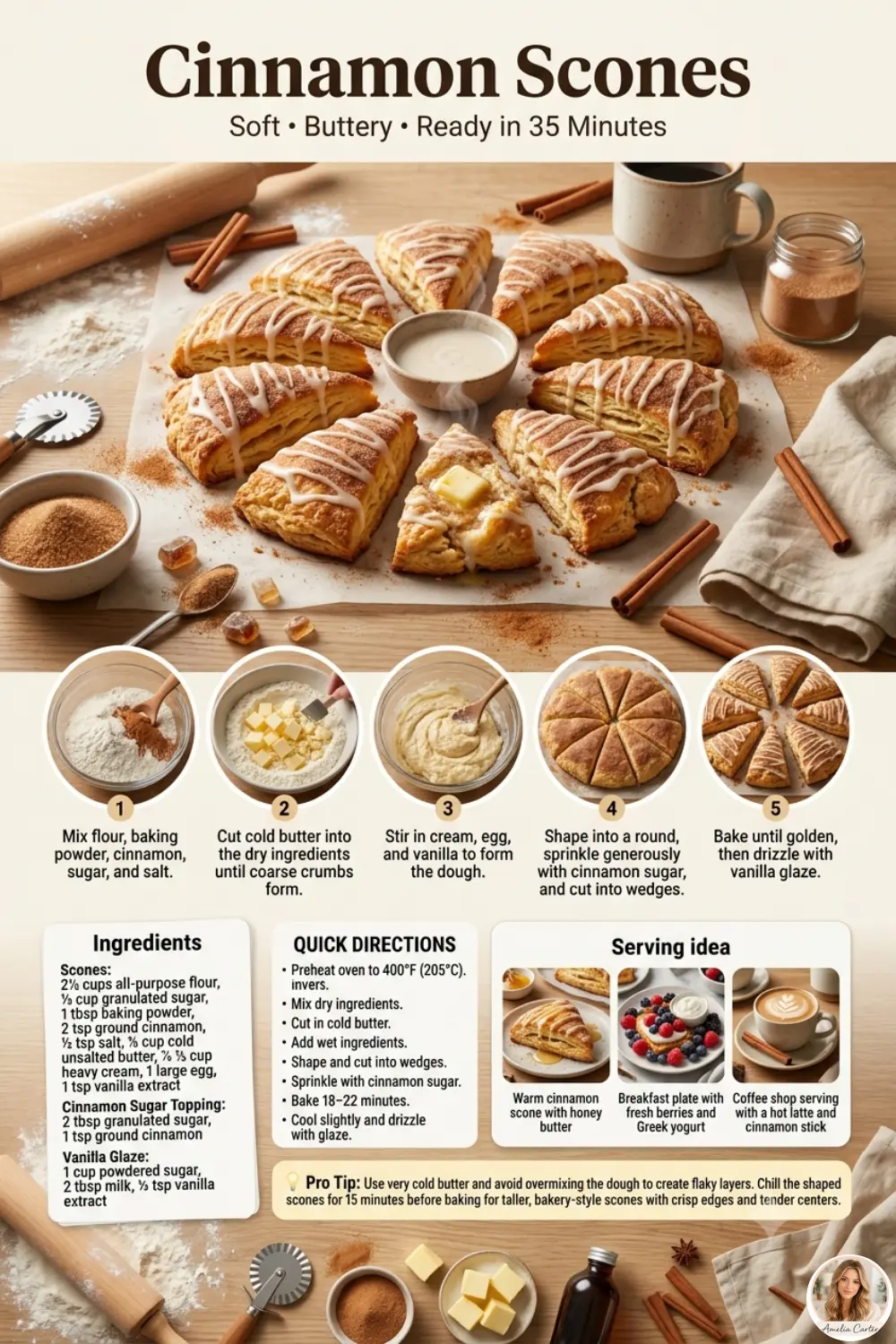
Cinnamon Scones Recipe | Buttery Bakery Style Breakfast Scones
This cinnamon scones recipe bakes buttery, flaky bakery-style breakfast scones with a sweet cinnamon sugar crust in just 50 minutes.
🧂 Ingredients
- 2 1/2 cups (313g) all-purpose flour, plus extra for dusting
- 1/3 cup (67g) granulated sugar
- 2 1/2 teaspoons baking powder
- 1/2 teaspoon fine sea salt
- 1 1/2 teaspoons ground cinnamon, divided
- 1/2 cup (113g) cold unsalted butter, cut into 1/2-inch cubes
- 2/3 cup (160ml) cold heavy cream, plus 2 tablespoons for brushing
- 1 large egg, cold
- 1 teaspoon vanilla extract
- 3 tablespoons (37g) granulated sugar mixed with 1 teaspoon ground cinnamon, for topping
📋 Instructions
- 1Heat the oven and prepare — Preheat the oven to 400F (200C) and line a rimmed baking sheet with parchment paper. Position a rack in the center so the scones brown evenly on top and bottom.
- 2Whisk the dry ingredients — In a large bowl, whisk together the flour, 1/3 cup sugar, baking powder, salt, and 1 teaspoon of the cinnamon until no streaks remain. This ensures the leavener is evenly spread so every scone rises the same.
- 3Cut in the cold butter — Add the cubed cold butter and toss to coat, then cut it in with a pastry cutter or your fingertips until the mixture looks like coarse sand with a few pea-sized butter lumps. Those lumps are what create the flaky layers.
- 4Mix the wet ingredients — Whisk the 2/3 cup cold cream, egg, and vanilla in a small bowl until smooth. Pour it over the flour mixture and fold with a fork just until a shaggy dough forms, stopping before it looks smooth.
- 5Shape the dough — Turn the dough onto a lightly floured surface and pat it into a 7-inch round about 1 inch thick, dusting with flour only if it sticks. Work quickly and gently so the butter stays cold.
- 6Cut into wedges — Cut the round into 8 wedges with a bench scraper or sharp knife, pressing straight down without twisting. Transfer the wedges to the prepared sheet, leaving 2 inches between them.
- 7Brush and top — Brush the tops with the remaining 2 tablespoons cream, then sprinkle generously with the cinnamon sugar topping. The cream helps the sugar adhere and deepens the golden color.
- 8Bake until golden — Bake at 400F (200C) for 18 to 22 minutes, until the scones are deep golden brown and an instant-read thermometer in the center reads 200F (93C). The edges should look crisp and the cinnamon sugar should be bubbling slightly.
- 9Cool before serving — Let the scones rest on the baking sheet for 5 minutes, then transfer to a wire rack to cool for 10 minutes. Serve warm, when the crust is crisp and the interior is at its most tender.