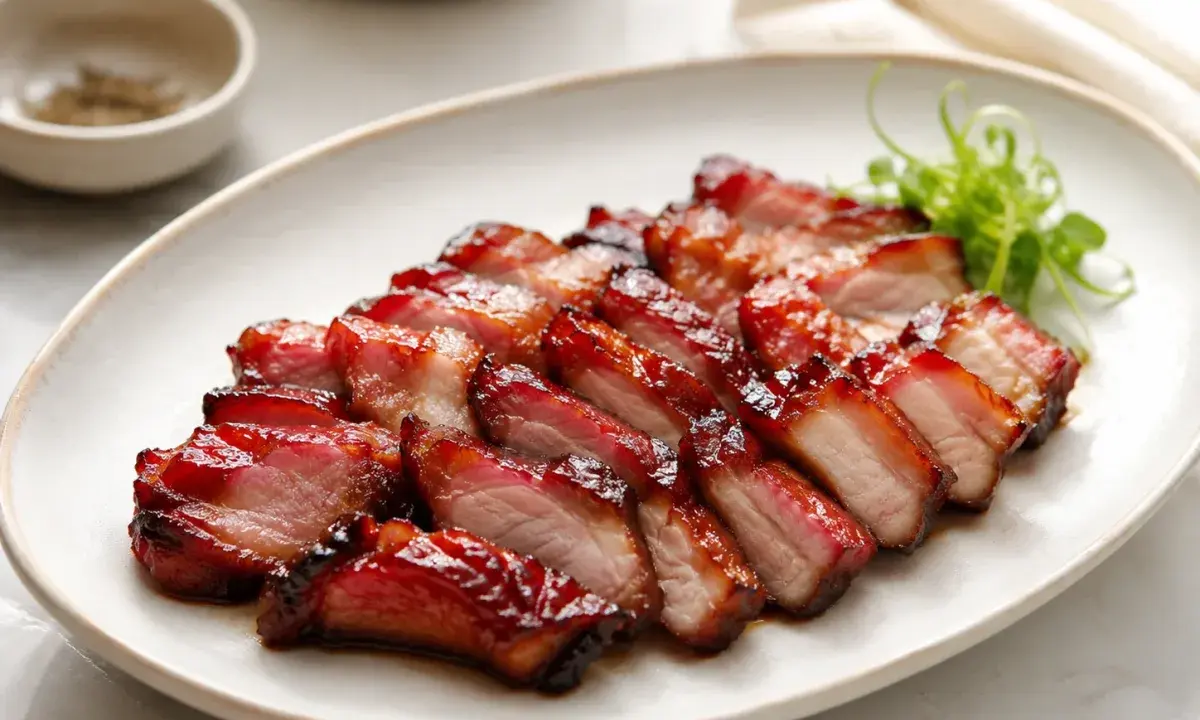
Char siu is Cantonese-style barbecued pork with a shiny, sweet-savory glaze and dark caramelized edges. The best version is not simply red pork: it balances fermented depth from hoisin, salt from soy sauce, warmth from five-spice, and enough sugar to lacquer the surface without making the meat taste like candy.
This oven method is designed for a home kitchen. Long strips of pork are marinated, elevated on a rack so hot air can circulate, then glazed near the end when the sugars are less likely to burn. The result is easy to slice for rice bowls, noodles, bao, or egg fried rice.
Quick Recipe Info
- Prep Time: 20 minutes
- Marinating Time: at least 4 hours
- Cook Time: 35 minutes
- Total Time: about 4 hours 55 minutes
- Servings: 6
- Best cut: pork shoulder or pork collar
What Makes Char Siu Different?
Char siu literally refers to pork roasted on a fork or skewer. Restaurant versions are often cooked in specialized roasting ovens, but the defining details can still be reproduced at home: long pieces with plenty of surface area, a concentrated marinade, suspended roasting, and repeated glazing.
The red color is traditional but not essential to the flavor. A small amount of food coloring creates the familiar appearance; without it, the pork will be mahogany brown from the soy, hoisin, honey, and caramelized sugar.
Ingredient Guide
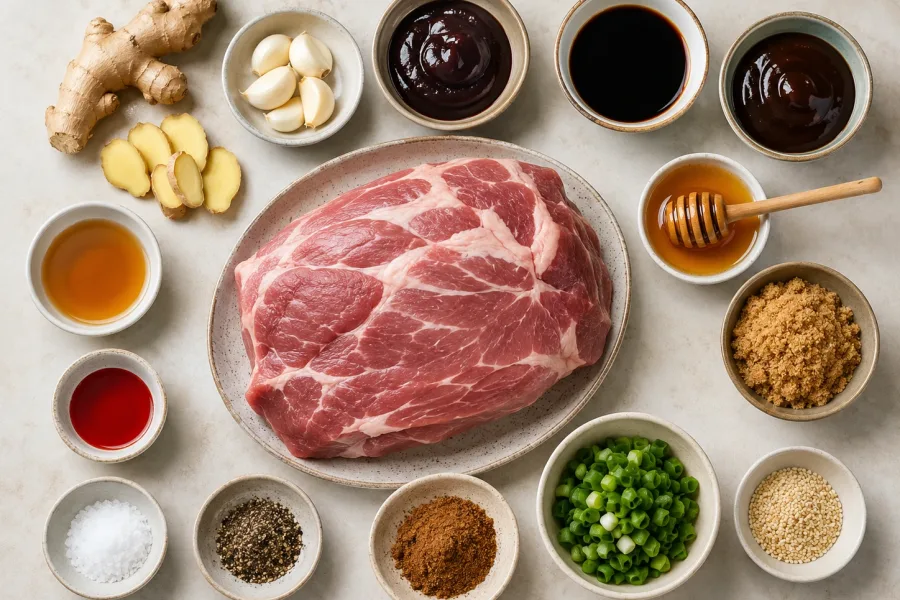
- Pork shoulder or collar: These cuts contain enough intramuscular fat to stay juicy under high heat. Cut the meat into long strips about 2 to 3 inches wide so the glaze reaches more surface area.
- Hoisin and oyster sauce: Hoisin brings sweetness and fermented bean flavor; oyster sauce adds savory depth. They are not interchangeable, so use both when possible.
- Soy sauce: Regular light soy sauce seasons the marinade without making it overly dark. If using low-sodium soy sauce, taste the cooked glaze before adding any extra salt.
- Shaoxing wine: This adds an aromatic, lightly nutty note. Dry sherry is a practical substitute; apple juice can be used for an alcohol-free version, though the flavor will be sweeter.
- Chinese five-spice: Use a measured teaspoon. Too much can overwhelm the pork, especially when the blend is heavy in clove or star anise.
- Honey and brown sugar: They create the lacquered finish. Add the glaze late in roasting because both can scorch.
How the Method Works
1. Cut for even roasting
Trim only thick exterior pieces of fat; leave the fine marbling in place. Cut the pork with the grain into long, evenly sized strips. Uniform thickness matters more than perfect shape because thin ends cook and darken first.
2. Marinate with full contact
Whisk the marinade until the sugar is mostly dissolved, then turn every piece of pork to coat all sides. A zip-top bag or snug container keeps the marinade in contact with the meat. Refrigerate for at least 4 hours; overnight gives the seasoning more time to penetrate.
3. Roast above the pan
Set the pork on a wire rack over a foil-lined pan. Elevating it prevents the underside from simmering in liquid and helps the edges caramelize. Add a small splash of water to the pan if drippings begin to smoke, keeping the water below the rack.
4. Glaze near the end
Turn the pork after the first 15 minutes. Brush with glaze only during the final stage so it becomes glossy instead of bitter. Any marinade that touched raw pork must be brought to a full boil before it is used as a glaze; alternatively, reserve a clean portion before adding the raw meat.
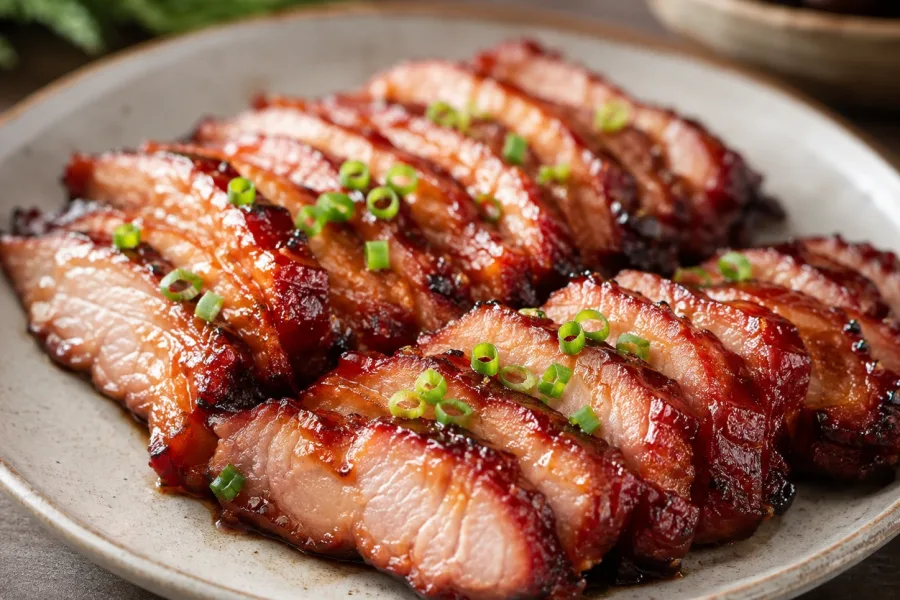
Doneness and Food Safety
Cooking time changes with the thickness of the strips, so use appearance and temperature together. The glaze should be dark, shiny, and slightly charred at the edges. Whole cuts of pork should reach at least 145°F (63°C) and rest for 3 minutes, according to the USDA safe-temperature chart. Pork shoulder may be cooked a little higher if you prefer a firmer, more roasted texture.
Troubleshooting
- The glaze burns before the pork is done: Move the pan down one oven rack, tent the darkest areas loosely with foil, and wait until later to apply the next coat.
- The surface looks pale: Pat excess marinade from the pork before roasting and make sure the pieces are raised above the pan. Finish briefly under the broiler while watching continuously.
- The pork is dry: Use shoulder or collar rather than a very lean cut, keep the strips thick, and check the temperature early.
- The glaze slides off: Simmer it until it coats the back of a spoon, then apply a thin layer rather than one heavy coat.
- The flavor is too salty: Check that regular soy sauce was used rather than dark soy sauce, and avoid adding salt elsewhere in the recipe.
Serving and Leftover Ideas
For a simple plate, serve sliced char siu with jasmine rice, bok choy, or a crisp side such as our Mediterranean chickpea salad. Thin slices also work well in noodle soup, bao buns, omelets, and fried rice. For clean slices, rest the meat first and cut across the grain with a sharp knife.
Storage and Reheating
- Refrigerate cooled char siu in a covered container for up to 4 days.
- Keep larger pieces whole during storage when possible; they lose less moisture than pre-sliced pork.
- Reheat covered in a 325°F (165°C) oven with a spoonful of water, or warm slices briefly in a skillet.
- Freeze tightly wrapped portions for up to 1 month. Thaw overnight in the refrigerator before reheating.
Oven-Roasted Char Siu
Cantonese-style pork shoulder marinated in a balanced sweet-savory sauce and roasted until glossy with caramelized edges.
Prep Time: 20 minutes
Marinating Time: 4 hours
Cook Time: 35 minutes
Total Time: 4 hours 55 minutes
Servings: 6
Ingredients
- 2 pounds pork shoulder or pork collar, cut into long strips
- 3 tablespoons hoisin sauce
- 2 tablespoons soy sauce
- 2 tablespoons honey
- 2 tablespoons brown sugar
- 1 tablespoon oyster sauce
- 1 tablespoon Shaoxing wine or dry sherry
- 1 tablespoon neutral oil
- 4 garlic cloves, minced
- 1 tablespoon freshly grated ginger
- 1 teaspoon Chinese five-spice powder
- 1/2 teaspoon white pepper or black pepper
- 1/4 teaspoon red food coloring, optional
- 1 tablespoon sesame seeds, optional
- 2 tablespoons sliced green onions
Instructions
- Whisk the hoisin, soy sauce, honey, brown sugar, oyster sauce, Shaoxing wine, oil, garlic, ginger, five-spice, pepper, and optional coloring until combined.
- Add the pork and coat every side. Cover and refrigerate for at least 4 hours or overnight. If you plan to use the marinade for glazing, reserve a clean portion before adding the raw pork.
- Heat the oven to 400°F (200°C). Line a roasting pan with foil and place a wire rack on top. Arrange the pork on the rack without crowding the pieces.
- Roast for 15 minutes, turn the strips, and roast for another 10 minutes.
- If using marinade that contacted raw pork, boil it fully in a saucepan before glazing. Simmer until it lightly coats a spoon.
- Brush the pork with a thin layer of glaze. Roast for 8 to 10 minutes more, turning and glazing once if needed, until caramelized and safely cooked through.
- Rest for at least 5 minutes. Slice across the grain and finish with sesame seeds and green onions.
Notes
The red coloring is optional and changes appearance, not flavor. Watch closely during the final glaze because the sugars can darken quickly.
Char Siu Questions
Can I make char siu without food coloring?
Yes. The pork will be brown-red rather than bright red, but the marinade and glaze provide the same flavor.
Can I use pork tenderloin?
You can, but it is much leaner and cooks faster. Check it early with a thermometer and avoid repeated high-heat glazing, which can dry it out.
Why is my char siu not sticky?
The glaze may be too thin or the meat may be too wet. Simmer the glaze until slightly syrupy, apply it in thin coats, and allow each coat to set in the oven.
Can this be grilled?
Yes. Use indirect heat for most of the cooking, then move the pork briefly over direct heat to set the glaze. Because the sauce contains sugar, stay close to the grill during the final minutes.