

A brookie is a brownie and a chocolate chip cookie baked in the same pan. This version weighs 150 g of brownie batter and 200 g of cookie dough per layer so both bake evenly at the same temperature.
The brownie layer goes in first because it needs a longer set. The cookie dough sits on top and browns while the brownie firms up underneath. You get a fudgy base and a chewy top in one slice.
Use a metal 20 cm (8 inch) square pan. Glass heats unevenly and will leave the center raw while the edges dry out. Weigh, watch, repeat.
Why You'll Love This Recipe
About the Ingredients
170 g (6 oz) dark chocolate, 60 to 70 percent cacao, chopped
Chop it yourself rather than using chips, which contain stabilizers that slow melting. Milk chocolate works but raises the sugar content noticeably.
115 g (1/2 cup) unsalted butter, plus extra for greasing
European-style butter with higher fat gives a richer brownie. Salted butter is fine if you drop the added salt to a pinch.
150 g (3/4 cup) granulated sugar
Caster sugar dissolves faster than coarse sugar. Do not swap in brown sugar here, as it makes the brownie layer cakey.
2 large eggs, about 100 g, at room temperature
Cold eggs seize the melted chocolate. Submerge them in warm tap water for five minutes if you forgot to take them out.
60 g (1/2 cup) all-purpose flour, for the brownie layer
Plain flour only. Bread flour develops gluten and turns the base tough.
2 g (1/2 tsp) fine sea salt
Fine salt dissolves evenly. Flaky salt is for finishing on top, not for the batter.
200 g (1 cup packed) light brown sugar
Light brown sugar keeps the cookie layer chewy. Dark brown sugar adds a molasses note that competes with the chocolate.
115 g (1/2 cup) unsalted butter, softened, for the cookie layer
Softened means it dents under a finger but still holds shape. Microwave in five-second bursts if it is cold.
1 large egg plus 1 yolk, about 70 g, for the cookie layer
The extra yolk adds fat and chew. Save the white for an omelette or discard it.
180 g (1 1/2 cups) all-purpose flour, for the cookie layer
Spoon flour into the cup and level it. A packed cup adds up to 20 g extra and dries the cookie top.
3 g (1/2 tsp) baking soda
Baking soda spreads the cookie layer. Baking powder will make it rise too much and crack.
150 g (1 cup) dark chocolate chips or chopped chocolate
Chop a bar into 1 cm pieces for pools of chocolate. Chips hold their shape but give less melt.
Tips & Tricks
- Chill the cookie dough for 15 minutes before layering so it spreads evenly over the brownie batter instead of sinking.
- Do not overmix the brownie batter once the flour goes in. Stop the moment the streaks disappear or the base turns cakey.
- Pull the pan when the center reads 90 C (194 F) on an instant-read thermometer. Carryover heat finishes the set.
- Cool completely in the pan, at least 2 hours, before slicing. Warm brookies crumble at the cut.
Pro Tips
Step-by-Step Instructions
1. Heat the oven
Heat the oven to 175 C (350 F) with a rack in the middle. Grease and line a 20 cm (8 inch) square metal pan with parchment. [A metal pan conducts heat faster than glass, so the center sets before the edges dry.]
2. Melt the chocolate
Melt 170 g chocolate and 115 g butter in a bowl over simmering water, stirring often. Stop when the mixture is smooth and reads 45 C (113 F). [Overheating separates the cocoa butter and leaves a greasy film.]
3. Mix the brownie base
Whisk 150 g sugar, 2 eggs, and 2 g salt into the chocolate for 60 seconds until glossy. Fold in 60 g flour in eight strokes. [The batter should fall in a thick ribbon that holds for two seconds.]
4. Spread the base
Scrape the brownie batter into the pan and level it with an offset spatula. Tap the pan once on the counter. [An even 1 cm layer bakes at the same rate as the cookie top.]
5. Cream the cookie dough
Beat 115 g butter and 200 g brown sugar for 2 minutes until pale. Beat in the egg, yolk, and 3 g baking soda, then fold in 180 g flour and the chocolate. [The dough is ready when it pulls clean from the bowl.]
6. Layer the dough
Drop the cookie dough in 12 spoonfuls over the brownie batter. Press gently with damp fingers to cover, leaving a 1 cm border. [The border lets the brownie edge rise without pushing the dough aside.]
7. Bake the brookie
Bake for 32 to 35 minutes, until the top is golden brown and the center reads 90 C (194 F). [A toothpick inserted in the center should come out with moist crumbs, not wet batter.]
8. Cool and slice
Cool in the pan on a rack for 2 hours, then lift out by the parchment. Cut into 9 squares with a warm knife. [Cooling sets the brownie layer so the squares hold their shape.]
Delicious Variations
Peanut Butter Brookie
Swirl 80 g warm peanut butter into the cookie layer before baking for a salty counterpoint.
S'mores Brookie
Scatter 60 g crushed graham crackers and 50 g mini marshmallows over the cookie dough in the last 5 minutes.
Blondie Brookie
Replace the brownie base with a white chocolate blondie batter and bake 3 minutes longer.
How to Store Brookie 🍪
Refrigerator
Store in an airtight container at room temperature for 3 days, or refrigerate for up to 5 days.
Freezer
Wrap individual squares in plastic, then foil, and freeze for up to 2 months.
Reheating
Warm a square in a 150 C (300 F) oven for 6 minutes, or microwave for 15 seconds.
Frequently Asked Questions
Q: What is a brookie made of?
A brookie is a brownie base topped with chocolate chip cookie dough and baked in one pan. It combines two batters into a single layered bar.
Q: Why is my brookie dry?
Overbaking is the usual cause, so pull the pan at 90 C (194 F) in the center. Measuring flour by scooping also adds too much and dries the crumb.
Q: Can I make brookies ahead of time?
Yes, bake and cool them a day ahead, then store covered at room temperature. The flavor improves overnight as the layers settle.
Q: Should brookies be refrigerated?
No, room temperature in an airtight container keeps them fudgy for three days. Refrigeration firms the chocolate and dulls the texture.
Q: How do I know when brookies are done?
The top turns golden and the center reads 90 C (194 F) on a thermometer. A toothpick should show moist crumbs, not wet batter.
Weigh both batters, watch the center temperature, and slice only after the slab cools. Bake a pan this week and tell me how your layers came out.
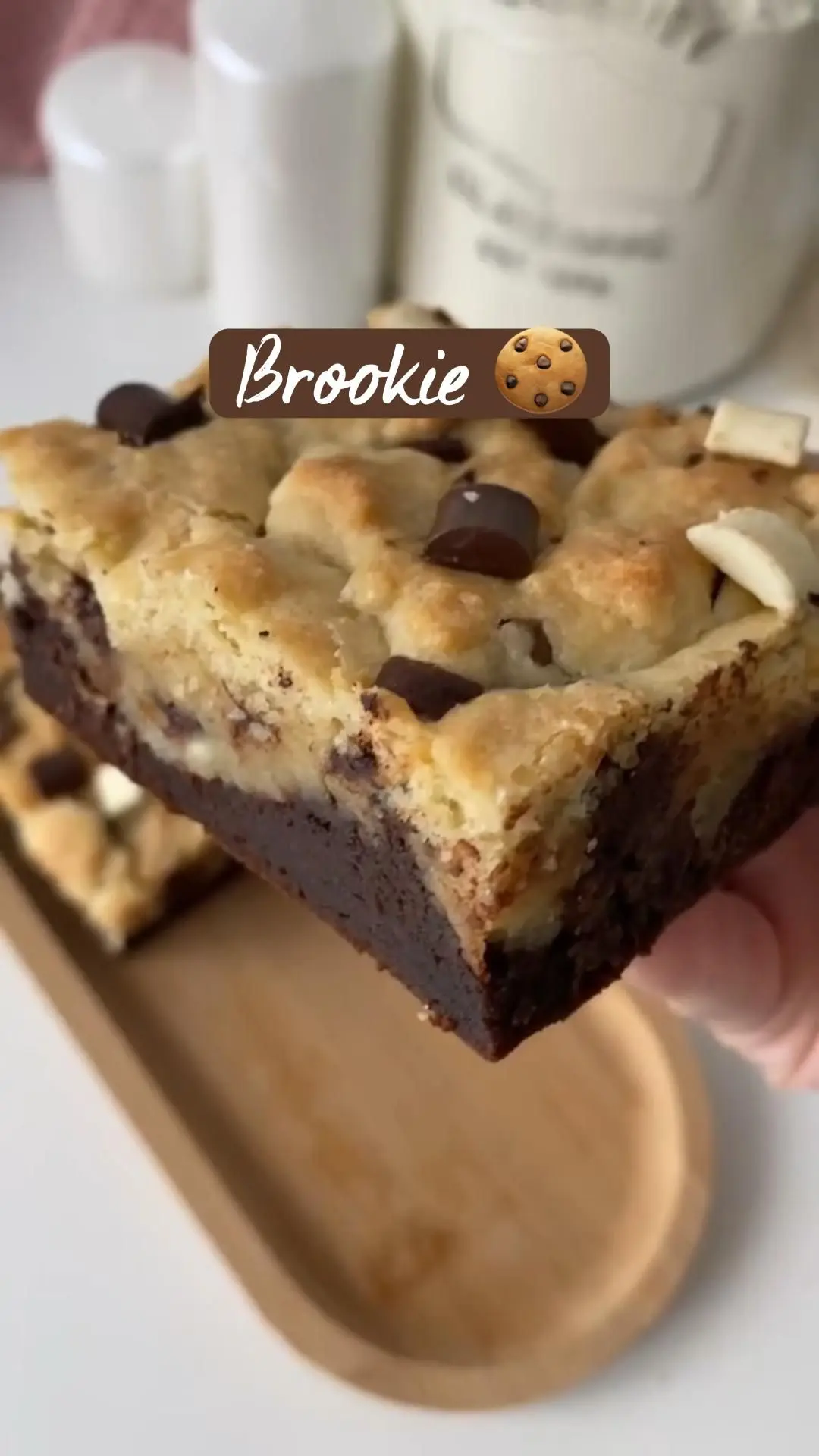
Brookie 🍪
Brookie layers fudgy brownie batter and chewy cookie dough in one pan for the ultimate hybrid dessert that bakes in under an hour.
🧂 Ingredients
- 170 g (6 oz) dark chocolate, 60 to 70 percent cacao, chopped
- 115 g (1/2 cup) unsalted butter, plus extra for greasing
- 150 g (3/4 cup) granulated sugar
- 2 large eggs, about 100 g, at room temperature
- 60 g (1/2 cup) all-purpose flour, for the brownie layer
- 2 g (1/2 tsp) fine sea salt
- 200 g (1 cup packed) light brown sugar
- 115 g (1/2 cup) unsalted butter, softened, for the cookie layer
- 1 large egg plus 1 yolk, about 70 g, for the cookie layer
- 180 g (1 1/2 cups) all-purpose flour, for the cookie layer
- 3 g (1/2 tsp) baking soda
- 150 g (1 cup) dark chocolate chips or chopped chocolate
📋 Instructions
- 1Heat the oven — Heat the oven to 175 C (350 F) with a rack in the middle. Grease and line a 20 cm (8 inch) square metal pan with parchment. [A metal pan conducts heat faster than glass, so the center sets before the edges dry.]
- 2Melt the chocolate — Melt 170 g chocolate and 115 g butter in a bowl over simmering water, stirring often. Stop when the mixture is smooth and reads 45 C (113 F). [Overheating separates the cocoa butter and leaves a greasy film.]
- 3Mix the brownie base — Whisk 150 g sugar, 2 eggs, and 2 g salt into the chocolate for 60 seconds until glossy. Fold in 60 g flour in eight strokes. [The batter should fall in a thick ribbon that holds for two seconds.]
- 4Spread the base — Scrape the brownie batter into the pan and level it with an offset spatula. Tap the pan once on the counter. [An even 1 cm layer bakes at the same rate as the cookie top.]
- 5Cream the cookie dough — Beat 115 g butter and 200 g brown sugar for 2 minutes until pale. Beat in the egg, yolk, and 3 g baking soda, then fold in 180 g flour and the chocolate. [The dough is ready when it pulls clean from the bowl.]
- 6Layer the dough — Drop the cookie dough in 12 spoonfuls over the brownie batter. Press gently with damp fingers to cover, leaving a 1 cm border. [The border lets the brownie edge rise without pushing the dough aside.]
- 7Bake the brookie — Bake for 32 to 35 minutes, until the top is golden brown and the center reads 90 C (194 F). [A toothpick inserted in the center should come out with moist crumbs, not wet batter.]
- 8Cool and slice — Cool in the pan on a rack for 2 hours, then lift out by the parchment. Cut into 9 squares with a warm knife. [Cooling sets the brownie layer so the squares hold their shape.]

Tomasz writes precise, method-first recipes for breads, ferments, and slow braises, drawing on Polish and Central European home cooking. He cares about weights, temperatures, and timing, and explains the reason behind each step so cooks can repeat results. His angle is turning fussy techniques into clear, checkable instructions.