
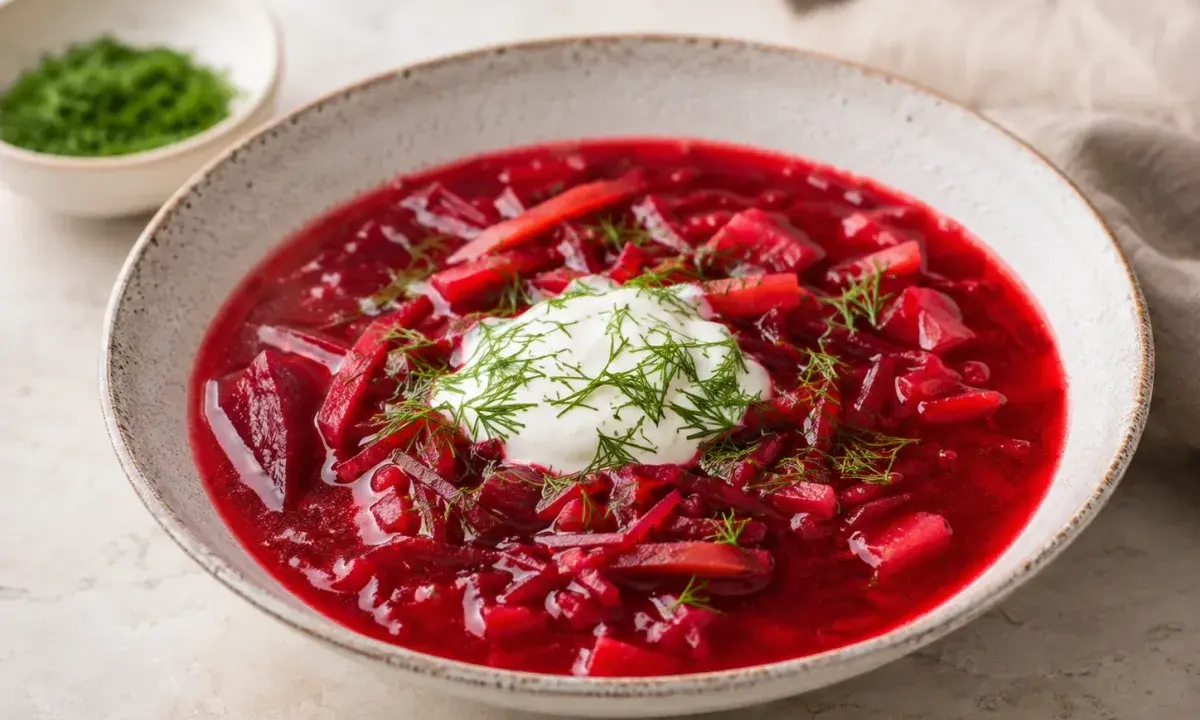
Borscht is a beet-centered soup known for its deep ruby color and balance of earthy, sweet, savory, and sour flavors. Many regional and family versions exist across Eastern Europe; some contain meat, beans, or fermented beet liquid, while others are entirely vegetable based. The Smithsonian’s history of borshch describes how the soup and its ingredients evolved across cultures. This approachable version uses beets, cabbage, potatoes, tomato paste, broth, dill, and a final splash of acid.
The soup is straightforward, but the order matters. Sautéing the beets before adding broth develops their sweetness, cooking the tomato paste removes its raw taste, and adding lemon juice or vinegar at the end keeps the flavor bright.
Quick Recipe Info
- Prep Time: 25 minutes
- Cook Time: 45 minutes
- Resting Time: 10 minutes
- Total Time: about 1 hour 20 minutes
- Servings: 6
- Flavor: earthy, savory, and gently tangy
What Gives Borscht Its Flavor?
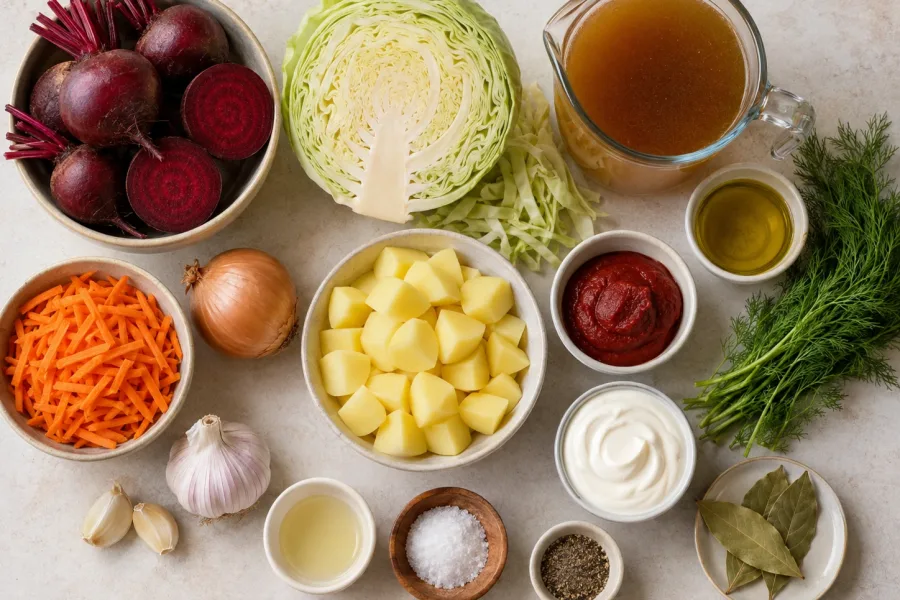
- Beets: They supply color, sweetness, and an earthy base. Medium beets are easier to peel and grate than very large, woody roots.
- Cabbage and potatoes: Cabbage adds body without thickening the broth; potatoes make each bowl more substantial.
- Tomato paste: It deepens the red color and adds concentrated savory acidity. Fry it briefly before adding liquid.
- Broth: Beef broth makes a richer soup, while vegetable broth keeps it meat-free. Choose a lower-sodium broth so the final seasoning remains under your control.
- Lemon juice or vinegar: Borscht needs acidity to lift the beets. Add it near the end, then taste after the soup rests.
- Dill: Fresh dill is most aromatic when stirred in after the heat is lowered.
Preparing Beets Without the Mess
Trim the stem and root ends, peel the beets over a washable cutting board, and use a box grater or the shredding disc of a food processor. Food-safe gloves prevent staining, but beet color usually fades from hands after normal washing. Rinse the knife, grater, and board promptly rather than letting beet juice dry on them.
Grated beets cook faster and blend into the soup; thin matchsticks keep more texture. Use the same cut for the carrots so both vegetables soften at roughly the same rate.
The Best Cooking Order
- Soften the aromatic vegetables: Cook the onion and carrot until the onion loses its raw edge.
- Add the beets: Give them several minutes in the oil to release color and begin concentrating their sweetness.
- Fry the tomato paste: Stir for about 1 minute, until it darkens slightly and coats the vegetables.
- Add broth and slower vegetables: Potatoes and cabbage need time to become tender, so they simmer in the seasoned broth.
- Finish with acid and dill: Add both after the vegetables are tender. Boiling fresh dill for too long weakens its aroma.
- Rest before adjusting: Ten minutes off the heat lets the flavors settle. Taste again before adding more salt or lemon.
How to Balance the Final Bowl
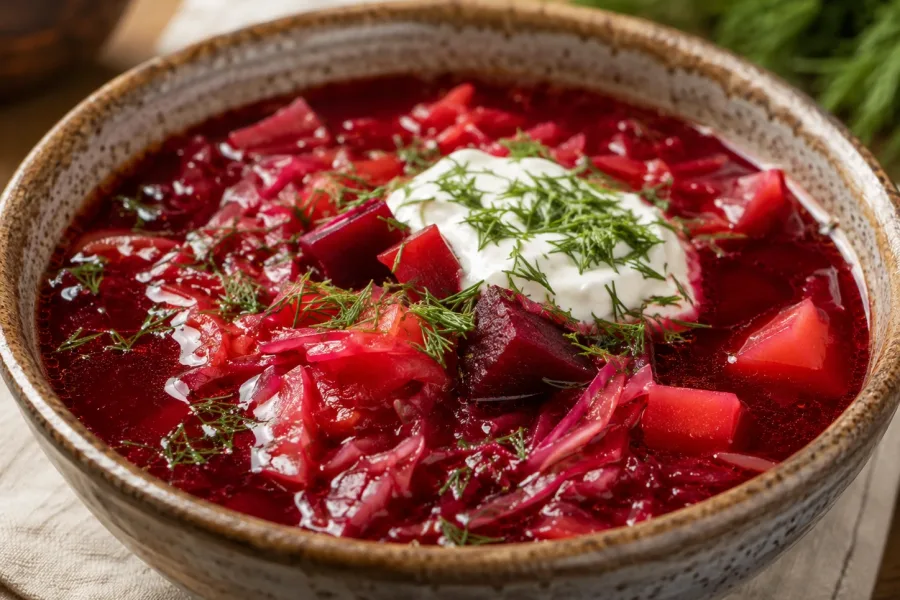
Good borscht should not taste only sweet or only sour. If the beets dominate, add lemon juice or vinegar a teaspoon at a time. If the soup tastes sharp, a small pinch of sugar can round the acidity without making it sweet. If it tastes flat, check the salt before adding more acid. Sour cream softens the acidity at the table, so season the broth before adding the garnish.
Texture Adjustments
- For a brothier soup: Add an extra cup of broth after the vegetables become tender.
- For more body: Mash a few potato pieces against the side of the pot and stir them back in.
- For softer cabbage: Slice it very thinly and add it with the potatoes.
- For firmer cabbage: Add it during the final 15 minutes of simmering.
- For a smoother bowl: Blend one or two cups of soup, then return them to the pot rather than puréeing everything.
Variations
Use vegetable broth for a vegetarian soup. Add cooked white beans for extra substance, or simmer beef chuck separately and add the shredded meat with its broth. Some versions include celery, bell pepper, or a small amount of sugar. These are choices rather than requirements; the essential balance comes from beets, savory broth, vegetables, and acidity.
Serving Borscht
Serve hot with sour cream, dill, and dark rye bread. For a richer baked bread alongside the soup, try our Adjarian khachapuri. For a dairy-free bowl, leave out the sour cream or use an unsweetened plant-based alternative. You can also browse more dinner recipes for complete meal ideas.
Storage and Make-Ahead
Borscht often tastes more integrated the next day. Cool it promptly, refrigerate in a covered container for up to 4 days, and reheat gently. Keep sour cream and fresh dill separate until serving. Freeze the soup for up to 2 months; the potatoes may become slightly softer after thawing, but the flavor remains good.
Borscht Soup
A ruby-colored beet soup with cabbage, potatoes, carrots, savory broth, dill, and a bright acidic finish.
Prep Time: 25 minutes
Cook Time: 45 minutes
Resting Time: 10 minutes
Total Time: 1 hour 20 minutes
Servings: 6
Ingredients
- 2 tablespoons olive oil
- 1 medium onion, diced
- 2 carrots, julienned or grated
- 3 medium beets, peeled and julienned or grated
- 2 garlic cloves, minced
- 2 tablespoons tomato paste
- 6 cups beef broth or vegetable broth
- 2 medium potatoes, peeled and diced
- 3 cups green cabbage, shredded
- 1 tablespoon lemon juice or apple cider vinegar, plus more to taste
- 1 teaspoon fine salt, plus more to taste
- 1/2 teaspoon black pepper
- 2 bay leaves
- 2 tablespoons chopped fresh dill, plus more for serving
- Sour cream, for serving
Instructions
- Heat the oil in a large soup pot over medium heat. Cook the onion and carrots for about 5 minutes, until they begin to soften.
- Add the beets and garlic. Cook for 4 to 5 minutes, stirring, until the beets release color.
- Add the tomato paste and cook for 1 minute, stirring until it coats the vegetables and darkens slightly.
- Pour in the broth. Add the potatoes, cabbage, salt, pepper, and bay leaves. Bring to a gentle boil, reduce the heat, and simmer for 25 to 30 minutes, until tender.
- Remove the bay leaves. Stir in the lemon juice or vinegar and chopped dill.
- Rest for 10 minutes, then taste and adjust the salt and acidity. Serve with sour cream and more dill.
Notes
Add the acid gradually at the end. The amount needed changes with the sweetness of the beets and the saltiness of the broth.
Borscht Questions
Is borscht always made with beets?
No. The name covers several regional soups, including versions based on cabbage or sorrel. The familiar red borscht gets its color and central flavor from beets.
Why add vinegar or lemon at the end?
Late addition preserves a brighter flavor and makes the final balance easier to control after the vegetables are tender.
Can I make borscht without sour cream?
Yes. Sour cream is a garnish, not part of the soup base. Serve it without dairy or add an unsweetened alternative.
Why does borscht taste better the next day?
As the soup rests, the broth absorbs more flavor from the beets, cabbage, dill, and tomato. Taste again after reheating because it may need a small adjustment of salt or acid.