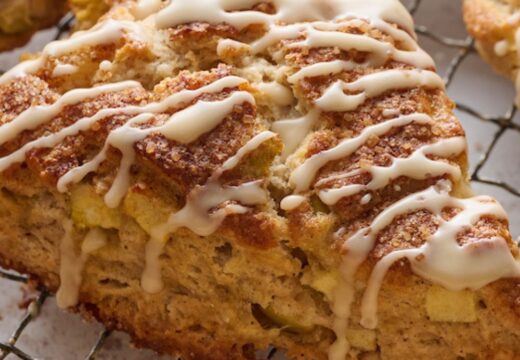

This blackboard scone recipe is the one you write in chalk and keep forever: a simple buttermilk dough that bakes into tall, flaky scones with a crackly golden top and a soft, tender crumb. It comes together in one bowl with cold butter and a hot oven, no stand mixer required.
The trick to a scone that rises proudly instead of spreading flat is keeping everything cold and handling the dough as little as possible. A quick fold gives you those layered, pull-apart edges that make a bakery scone so satisfying.
Serve them warm with salted butter, clotted cream, or jam, or pile them into a basket for a brunch board. They freeze beautifully, so you can bake a batch and have fresh scones any morning of the week.
Why You'll Love This Recipe
About the Ingredients
2 1/2 cups (313g) all-purpose flour, plus extra for dusting
Use a kitchen scale for the most consistent results; if you only have self-rising flour, omit the baking powder and salt and use 2 1/2 cups of it instead.
1/4 cup (50g) granulated sugar
Fine white sugar dissolves fastest into the dough; swap in light brown sugar for a deeper caramel note, but reduce the buttermilk by 1 tablespoon.
1 tablespoon baking powder
Check the date on your can, since expired baking powder is the number one cause of flat scones. Look for double-acting powder for the best rise.
1/2 teaspoon fine sea salt
Fine sea salt blends evenly into the dry mix; if using kosher salt, use 3/4 teaspoon since the crystals are larger.
1/2 cup (113g) cold unsalted butter, cut into 1/2-inch cubes
Butter should be fridge-cold, not frozen, so it cuts into flour without shattering. Salted butter works too, just drop the added salt to 1/4 teaspoon.
3/4 cup (180ml) cold buttermilk, plus 2 tablespoons for brushing
No buttermilk? Stir 2 teaspoons lemon juice into 3/4 cup whole milk and let it sit 5 minutes, or use plain whole-milk yogurt thinned with a splash of milk.
1 large egg, cold
The egg adds richness and structure; a flax egg (1 tablespoon ground flax plus 3 tablespoons water) works for an egg-free version.
1 teaspoon vanilla extract
Pure vanilla rounds out the buttery flavor; try almond extract for a bakery-style almond scone.
1/2 cup (60g) dried cranberries or mini chocolate chips, optional
Toss them in a teaspoon of flour first so they do not sink; frozen blueberries are a great swap but add 2 extra minutes of bake time.
1 tablespoon coarse sanding sugar, for topping
Sanding sugar gives that crunchy bakery sparkle; turbinado sugar is a good substitute with a slightly bigger crunch.
Tips & Tricks
Do not overwork the dough
Stop mixing the moment the flour disappears, because extra kneading develops gluten and turns tender scones tough.
Keep the butter cold
If the dough feels warm or greasy while shaping, chill it for 10 minutes before cutting so the butter stays in visible flecks.
Do not twist the cutter
Press straight down and lift up, since twisting seals the edges and stops the scones from rising tall.
Pro Tips
Step-by-Step Instructions
1. Heat the oven
Preheat the oven to 400F (200C) and line a baking sheet with parchment paper. A fully preheated oven gives the scones an immediate burst of lift.
2. Whisk the dry mix
In a large bowl, whisk together the flour, sugar, baking powder, and salt until evenly combined, about 30 seconds.
3. Cut in the butter
Add the cold butter cubes and rub them into the flour with your fingertips or a pastry cutter until the mixture looks like coarse sand with a few pea-sized butter pieces left. Those butter flecks create the flaky layers.
4. Add the wet ingredients
Whisk the egg, 3/4 cup buttermilk, and vanilla in a small bowl, then pour it into the flour mixture. Stir with a fork just until a shaggy dough forms, then fold in the cranberries if using.
5. Fold and shape
Turn the dough onto a floured surface, pat it into a rough rectangle, fold it in half, and pat it out again to 1 inch thick. This single fold builds layers, so handle it gently.
6. Cut the wedges
Cut the round into 8 wedges with a sharp knife or bench scraper, pressing straight down. Transfer the wedges to the baking sheet, spacing them 1 inch apart.
7. Brush and sugar
Brush the tops with the remaining 2 tablespoons of buttermilk and sprinkle with sanding sugar. This gives the scones their golden, crackly crust.
8. Bake until golden
Bake for 18 to 22 minutes, until the tops are deep golden brown and the centers feel set and spring back when pressed, or an instant-read thermometer reads 200F (93C). Let them cool on the sheet for 5 minutes before serving warm.
Delicious Variations
Lemon Blueberry Scones
Fold in 3/4 cup frozen blueberries and the zest of 1 lemon, then bake 2 minutes longer.
Cheddar Chive Scones
Drop the sugar to 1 tablespoon, add 1 cup grated sharp cheddar and 3 tablespoons chopped chives for a savory version.
Maple Pecan Scones
Swap the sugar for 3 tablespoons maple syrup and fold in 1/2 cup toasted chopped pecans with a maple glaze on top.
How to Store Blackboard Scone Recipes: Classic Buttermilk Scones
Refrigerator
Store cooled scones in an airtight container at room temperature for up to 2 days, or refrigerate for up to 5 days and rewarm before serving.
Freezer
Freeze baked scones in a zip-top bag for up to 2 months, or freeze the cut unbaked wedges on a sheet and bake from frozen at 400F (200C) for 22 to 25 minutes.
Reheating
Rewarm in a 350F (175C) oven for 5 to 7 minutes to restore the crisp crust, or microwave a single scone for 15 seconds for a soft, steamy result.
Frequently Asked Questions
Q: Why did my scones turn out flat?
Flat scones usually mean expired baking powder or butter that was too warm. Check the date on your baking powder and keep the butter fridge-cold until the moment you cut it into the flour.
Q: Can I make scone dough ahead of time?
Yes, you can chill the shaped dough for up to 24 hours before baking. Cover it tightly and add 2 to 3 minutes to the bake time since the dough starts cold.
Q: What is the difference between a scone and a biscuit?
Scones contain egg and sugar, while American biscuits are usually just flour, fat, and milk. That egg and sugar give scones a slightly richer, cakier crumb.
Q: How do I know when scones are fully baked?
The tops should be deep golden brown and the centers should spring back when lightly pressed, or reach 200F (93C) on an instant-read thermometer. If the centers feel soft and doughy, bake 2 more minutes.
Q: Can I use milk instead of buttermilk?
Yes, but the scones will be slightly less tender and tangy. For the closest match, stir 2 teaspoons lemon juice into 3/4 cup whole milk and let it stand 5 minutes before using.
Bake a batch this weekend and see why this is the scone recipe worth writing on the blackboard. Snap a photo of your golden, flaky scones and share it with me, and let me know which variation you tried first.

Blackboard Scone Recipes: Classic Buttermilk Scones
These blackboard scone recipes make tender, buttery buttermilk scones with crisp golden tops in 50 minutes, perfect for breakfast, tea, or a cozy weekend brunch.
🧂 Ingredients
- 2 1/2 cups (313g) all-purpose flour, plus extra for dusting
- 1/4 cup (50g) granulated sugar
- 1 tablespoon baking powder
- 1/2 teaspoon fine sea salt
- 1/2 cup (113g) cold unsalted butter, cut into 1/2-inch cubes
- 3/4 cup (180ml) cold buttermilk, plus 2 tablespoons for brushing
- 1 large egg, cold
- 1 teaspoon vanilla extract
- 1/2 cup (60g) dried cranberries or mini chocolate chips, optional
- 1 tablespoon coarse sanding sugar, for topping
📋 Instructions
- 1Heat the oven — Preheat the oven to 400F (200C) and line a baking sheet with parchment paper. A fully preheated oven gives the scones an immediate burst of lift.
- 2Whisk the dry mix — In a large bowl, whisk together the flour, sugar, baking powder, and salt until evenly combined, about 30 seconds.
- 3Cut in the butter — Add the cold butter cubes and rub them into the flour with your fingertips or a pastry cutter until the mixture looks like coarse sand with a few pea-sized butter pieces left. Those butter flecks create the flaky layers.
- 4Add the wet ingredients — Whisk the egg, 3/4 cup buttermilk, and vanilla in a small bowl, then pour it into the flour mixture. Stir with a fork just until a shaggy dough forms, then fold in the cranberries if using.
- 5Fold and shape — Turn the dough onto a floured surface, pat it into a rough rectangle, fold it in half, and pat it out again to 1 inch thick. This single fold builds layers, so handle it gently.
- 6Cut the wedges — Cut the round into 8 wedges with a sharp knife or bench scraper, pressing straight down. Transfer the wedges to the baking sheet, spacing them 1 inch apart.
- 7Brush and sugar — Brush the tops with the remaining 2 tablespoons of buttermilk and sprinkle with sanding sugar. This gives the scones their golden, crackly crust.
- 8Bake until golden — Bake for 18 to 22 minutes, until the tops are deep golden brown and the centers feel set and spring back when pressed, or an instant-read thermometer reads 200F (93C). Let them cool on the sheet for 5 minutes before serving warm.