
This is Ina Garten's skillet-roasted lemon chicken, cooked the way a scale and a timer demand. A butterflied bird, 1.8 kg (4 lb), pressed flat into a 30 cm (12 inch) cast-iron skillet, seasoned with fennel seed, thyme and lemon. The skillet does two jobs: it sears the underside and it concentrates the juices into a shallow pool you spoon over the meat.
Two details separate a good result from a great one. First, the bird must be butterflied so the thighs and breast finish at the same time. Second, the pan goes onto the stovetop for the first 8 minutes, which starts the skin browning before the oven ever sees it.
Total time is 50 minutes active and passive combined. Rest for 10 minutes before carving, or the juices run onto the board instead of staying in the meat.
Why You'll Love This Recipe
About the Ingredients
1 whole chicken, 1.8 kg (4 lb), butterflied
Ask the butcher to butterfly it, or cut out the backbone with kitchen shears. A 1.6 kg (3.5 lb) bird works too; subtract 5 minutes from the oven time.
2 teaspoons (12 g) kosher salt, plus more for the pan
Kosher salt dissolves slower and seasons more evenly than fine table salt. If using fine salt, halve the quantity.
1 teaspoon (2 g) fennel seeds
Crush them in a mortar so they release anise oil. Anise seed is a close substitute at the same weight.
1 tablespoon (3 g) fresh thyme leaves
Strip the leaves from the stems; dried thyme at one third the volume is acceptable but duller.
1 lemon, 120 g, sliced into 6 thin rounds
Buy a thin-skinned lemon; thick pith turns bitter in the oven. A Meyer lemon is sweeter if you find one.
3 tablespoons (42 g) unsalted butter, softened
Softened butter spreads under the skin without tearing it. Olive oil at 40 ml works as a dairy-free swap.
2 tablespoons (30 ml) olive oil
Use a plain, non-peppery oil for the pan. Grapeseed oil has a higher smoke point if you sear hot.
120 ml (1/2 cup) dry white wine
Sauvignon blanc or pinot grigio, not oaked chardonnay. Chicken stock plus 1 tablespoon lemon juice substitutes well.
4 garlic cloves, 20 g, smashed
Smash and leave the skin on; it protects the garlic from burning at 220 C. Shallots are a milder swap.
1 teaspoon (2 g) black pepper, freshly ground
Grind coarse so it does not scorch. White pepper gives the same heat without dark specks in the sauce.
Tips & Tricks
Dry the skin thoroughly
pat the bird with paper towels and leave it uncovered in the fridge for 30 minutes; surface water is the main cause of pale, chewy skin.
Preheat the skillet, not just the oven
a cold pan on the stovetop means the skin sticks and tears when you flip nothing, because you never flip it.
- Use an instant-read thermometer in the thickest thigh: 74 C (165 F) is the pull point; carryover heat adds 3 to 5 degrees during the rest.
- Rest the bird in the pan, tented loosely with foil: a tight tent traps steam and softens the skin you just built.
Pro Tips
Step-by-Step Instructions
1. Butterfly and dry the bird
Place the chicken breast-side down and cut along both sides of the backbone with shears. Discard the backbone, flip the bird, and press the breastbone flat with your palm (a flat bird cooks evenly and browns across the whole surface). Pat the skin completely dry with paper towels; it should feel tacky, not wet.
2. Season and rest
Rub 2 teaspoons (12 g) kosher salt and 1 teaspoon (2 g) pepper over the skin and into the cavity. Leave it uncovered at room temperature for 30 minutes (the salt pulls moisture out and starts a light brine). The skin will look slightly damp again; blot it once more.
3. Stuff lemon under the skin
Loosen the skin over each breast with your fingers and slide 4 lemon rounds underneath, spacing them evenly. Tuck the remaining rounds and the smashed garlic into the skillet beside the bird (under the skin the lemon steams; on the pan floor it caramelizes into the sauce).
4. Heat the skillet
Set a 30 cm (12 inch) cast-iron skillet over medium-high heat for 4 minutes. Add 2 tablespoons (30 ml) olive oil; it should shimmer and move like water, not smoke heavily.
5. Sear skin-side up
Lay the chicken in the skillet skin-side up and scatter thyme and fennel seeds over the top. Cook undisturbed for 8 minutes (the contact heat browns the underside and renders the first fat). The edges of the bird should look opaque and the pan should be audibly sizzling.
6. Roast at 220 C
Transfer the skillet to an oven preheated to 220 C (425 F). Roast for 25 minutes, then check the thigh with a thermometer (you want 70 C / 158 F at this stage; the bird finishes during the rest and the final blast).
7. Blast the skin
Raise the oven to 240 C (465 F) and roast 5 to 7 minutes more, until the skin is deep golden brown and the thigh reads 74 C (165 F). Watch the lemon rounds; if they darken past amber, move them under the bird.
8. Build the pan sauce
Move the chicken to a board and tent loosely with foil for 10 minutes. Set the skillet over medium heat, add 120 ml (1/2 cup) white wine, and scrape the browned bits for 3 minutes until the liquid coats a spoon (the alcohol cooks off and the drippings dissolve into the wine).
9. Carve and serve
Cut the bird into 8 pieces and arrange on a warm platter. Spoon the pan sauce over the meat, scatter the roasted lemon and garlic alongside, and serve within 5 minutes while the skin is still crisp.
Delicious Variations
Harissa and honey
whisk 2 tablespoons harissa and 1 tablespoon honey into the softened butter and spread it under the skin for a sweet-hot crust.
Lemon and olive
add 60 g (1/2 cup) pitted green olives and 1 teaspoon dried oregano to the pan before roasting for a brinier, Mediterranean sauce.
Tuscan herb
swap the fennel seed for 1 teaspoon chopped rosemary and add 2 tablespoons capers to the wine reduction at the end.
How to Store Ina Garten's Skillet-Roasted Lemon Chicken
Refrigerator
Store carved chicken in a sealed container for up to 3 days; keep the pan sauce separately so the skin does not soften.
Freezer
Freeze pulled meat without skin for up to 2 months in 250 g portions; the skin does not survive freezing.
Reheating
Reheat at 180 C (355 F) for 12 minutes on a wire rack over a tray, or the skin stays soggy.
Frequently Asked Questions
Q: Can I make Ina Garten's skillet-roasted lemon chicken without a cast-iron skillet?
Yes, any oven-safe heavy skillet or a 30 cm (12 inch) stainless pan works, but add 3 minutes to the stovetop sear. Cast iron holds heat better, so a thinner pan browns less evenly and needs the extra time.
Q: Do I have to butterfly the chicken?
No, but a whole trussed bird needs 15 to 20 extra minutes and browns unevenly. If you skip butterflying, roast at 200 C (390 F) for 50 to 55 minutes and tent the breast with foil after 30 minutes.
Q: How do I know when the chicken is done?
The thigh at the thickest point must read 74 C (165 F) on an instant-read thermometer. Juices running from the thigh should be clear, not pink, and the leg should wiggle loosely in the socket.
Q: Why did my chicken skin come out soggy?
Wet skin and a crowded pan are the usual causes. Dry the bird thoroughly, use a pan that fits it with a 2 cm gap on all sides, and never cover it during roasting.
Q: Can I add vegetables to the skillet?
Yes, but parcook them first. Halved baby potatoes need 20 minutes in boiling water before they go into the pan, or they release steam and soften the skin.
Weigh the bird, set the timer, and trust the thermometer rather than the clock. Make it once and the pan sauce becomes the reason you keep a cast-iron skillet on the stove. Weigh, watch, repeat.
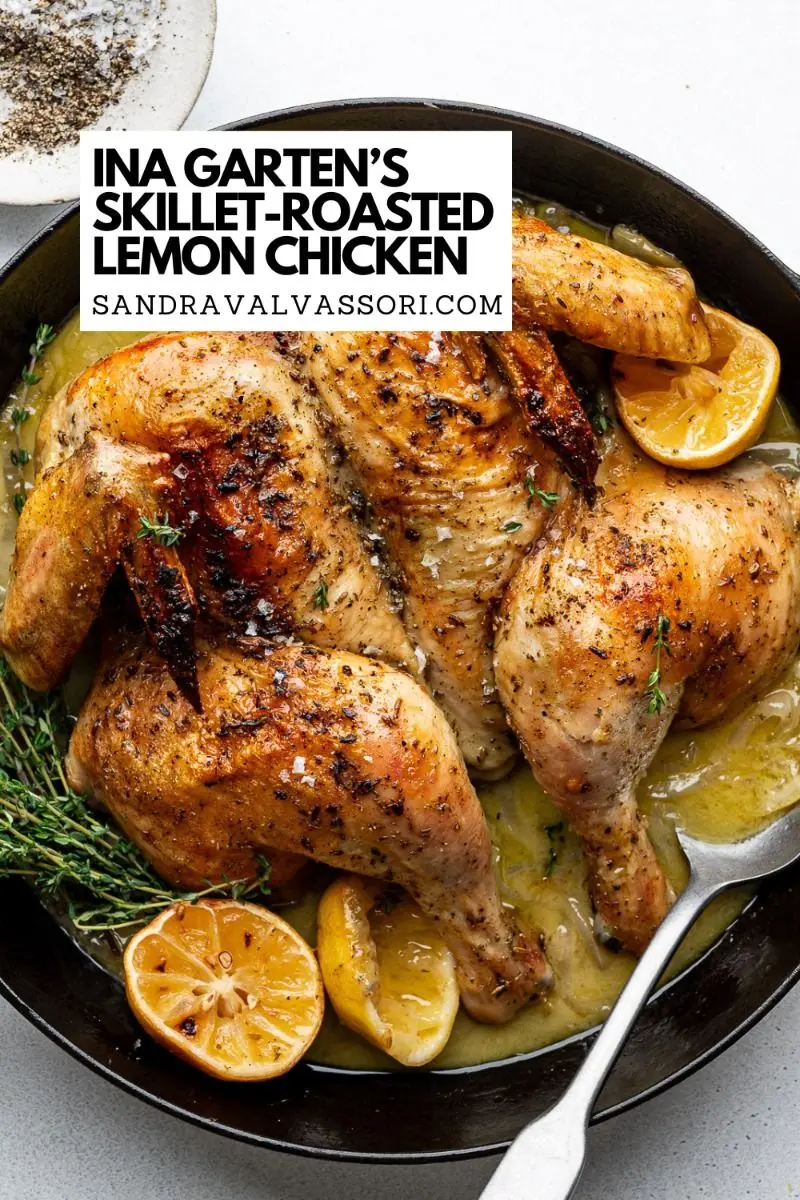
Ina Garten's Skillet-Roasted Lemon Chicken
Ina Garten's skillet-roasted lemon chicken gives you crackling golden skin and lemon-scented pan juices from one pan in 50 minutes flat.
🧂 Ingredients
- 1 whole chicken, 1.8 kg (4 lb), butterflied
- 2 teaspoons (12 g) kosher salt, plus more for the pan
- 1 teaspoon (2 g) fennel seeds
- 1 tablespoon (3 g) fresh thyme leaves
- 1 lemon, 120 g, sliced into 6 thin rounds
- 3 tablespoons (42 g) unsalted butter, softened
- 2 tablespoons (30 ml) olive oil
- 120 ml (1/2 cup) dry white wine
- 4 garlic cloves, 20 g, smashed
- 1 teaspoon (2 g) black pepper, freshly ground
📋 Instructions
- 1Butterfly and dry the bird — Place the chicken breast-side down and cut along both sides of the backbone with shears. Discard the backbone, flip the bird, and press the breastbone flat with your palm (a flat bird cooks evenly and browns across the whole surface). Pat the skin completely dry with paper towels; it should feel tacky, not wet.
- 2Season and rest — Rub 2 teaspoons (12 g) kosher salt and 1 teaspoon (2 g) pepper over the skin and into the cavity. Leave it uncovered at room temperature for 30 minutes (the salt pulls moisture out and starts a light brine). The skin will look slightly damp again; blot it once more.
- 3Stuff lemon under the skin — Loosen the skin over each breast with your fingers and slide 4 lemon rounds underneath, spacing them evenly. Tuck the remaining rounds and the smashed garlic into the skillet beside the bird (under the skin the lemon steams; on the pan floor it caramelizes into the sauce).
- 4Heat the skillet — Set a 30 cm (12 inch) cast-iron skillet over medium-high heat for 4 minutes. Add 2 tablespoons (30 ml) olive oil; it should shimmer and move like water, not smoke heavily.
- 5Sear skin-side up — Lay the chicken in the skillet skin-side up and scatter thyme and fennel seeds over the top. Cook undisturbed for 8 minutes (the contact heat browns the underside and renders the first fat). The edges of the bird should look opaque and the pan should be audibly sizzling.
- 6Roast at 220 C — Transfer the skillet to an oven preheated to 220 C (425 F). Roast for 25 minutes, then check the thigh with a thermometer (you want 70 C / 158 F at this stage; the bird finishes during the rest and the final blast).
- 7Blast the skin — Raise the oven to 240 C (465 F) and roast 5 to 7 minutes more, until the skin is deep golden brown and the thigh reads 74 C (165 F). Watch the lemon rounds; if they darken past amber, move them under the bird.
- 8Build the pan sauce — Move the chicken to a board and tent loosely with foil for 10 minutes. Set the skillet over medium heat, add 120 ml (1/2 cup) white wine, and scrape the browned bits for 3 minutes until the liquid coats a spoon (the alcohol cooks off and the drippings dissolve into the wine).
- 9Carve and serve — Cut the bird into 8 pieces and arrange on a warm platter. Spoon the pan sauce over the meat, scatter the roasted lemon and garlic alongside, and serve within 5 minutes while the skin is still crisp.

Tomasz writes precise, method-first recipes for breads, ferments, and slow braises, drawing on Polish and Central European home cooking. He cares about weights, temperatures, and timing, and explains the reason behind each step so cooks can repeat results. His angle is turning fussy techniques into clear, checkable instructions.