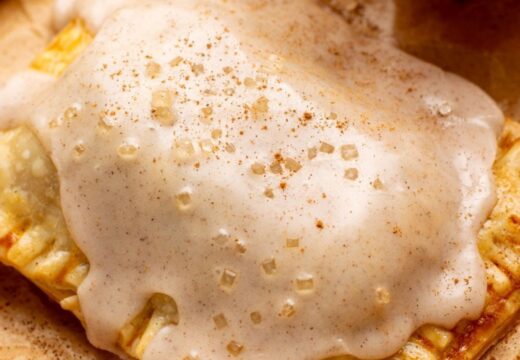
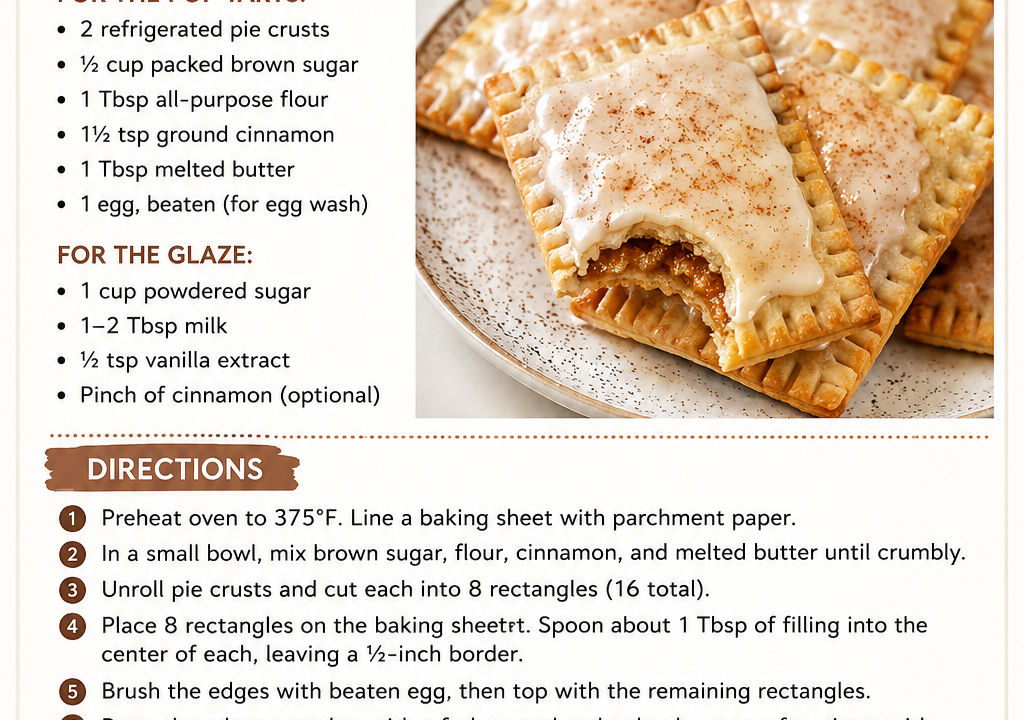
Brown sugar pop tarts are a homemade version of the boxed toaster pastry, built from a cold-butter pie dough and a filling of dark brown sugar thickened with a little flour. The pastry bakes to a shattering, golden crust while the center stays soft and caramel-like.
The dough is mixed in a food processor in under two minutes, then rested in the fridge so the gluten relaxes and the butter stays cold. Cold butter is the whole game here: it steams during baking and pushes the layers apart.
Each tart is sealed with a fork, docked with a skewer, and baked at 190°C (375°F) until the edges turn golden brown. A thin cinnamon glaze sets in ten minutes and gives the top a slight crackle. Weigh, watch, repeat.
Why You'll Love This Recipe
About the Ingredients
340 g (2 1/2 cups) all-purpose flour, plus extra for rolling
Use a kitchen scale for accuracy; scooping flour from the bag can add 30 g per cup and dry out the dough. Bread flour works but gives a chewier crust.
225 g (1 cup) cold unsalted butter, cubed
Butter should be fridge-cold, about 4°C (40°F). Salted butter works; reduce the added salt to a pinch.
60 g (1/4 cup) ice-cold water
Add one tablespoon at a time; you may not need all of it. A splash of cold milk makes the dough slightly more tender.
6 g (1 1/2 teaspoons) fine sea salt
Fine sea salt dissolves evenly. If using table salt, use 5 g (1 teaspoon).
15 g (1 tablespoon) granulated sugar
Sugar tenderizes the dough and helps browning. Honey can replace it but will darken the crust faster.
200 g (1 cup packed) dark brown sugar
Dark brown sugar gives the deepest caramel note. Light brown sugar works; add 1 teaspoon molasses for depth.
12 g (1 1/2 tablespoons) all-purpose flour
This thickens the filling so it does not leak at the seams. Cornstarch works at 10 g (1 tablespoon).
3 g (1/2 teaspoon) ground cinnamon
Freshly ground cinnamon is stronger; use 1/4 teaspoon if it is very pungent. Omit for a plain brown sugar tart.
1 large egg, beaten with 15 g (1 tablespoon) water
This egg wash glues the seams and gives shine. Whole milk brushed on works but browns less evenly.
120 g (1 cup) powdered sugar, sifted
Sift it or the glaze will be lumpy. For a thinner glaze, add water 1 teaspoon at a time.
15 g (1 tablespoon) milk or water, for the glaze
Milk gives a creamier set; water keeps the glaze translucent. Add a drop of vanilla if you like.
1 g (1/4 teaspoon) ground cinnamon, for the glaze
Optional but it ties the glaze to the filling. A pinch of nutmeg is a good swap.
Tips & Tricks
Keep the Butter Cold
Warm butter melts into the flour and produces a tough, bready crust instead of flakes. Cube the butter and return it to the fridge for ten minutes before mixing.
Do Not Overfill
More than 25 g (2 tablespoons) of filling per tart will burst the seams in the oven. Leave a 1.5 cm (1/2 inch) border dry so the egg wash can seal it.
Seal and Dock
Press the seams with a fork and poke three holes in the top of each tart. Trapped steam needs an exit, or the pastry puffs and splits.
Pro Tips
Step-by-Step Instructions
1. Mix the dry ingredients
Pulse 340 g flour, 15 g sugar, and 6 g salt in a food processor twice to combine. This distributes the salt so no bite tastes flat.
2. Cut in the cold butter
Add 225 g cold cubed butter and pulse 8 to 10 times until pea-sized pieces remain. Stop while visible butter flecks are still there; they create the flaky layers.
3. Add the ice water
Drizzle 60 g ice-cold water over the mixture and pulse 4 to 6 times until the dough just holds when squeezed. Do not let it form a ball in the machine.
4. Chill the dough
Turn the dough onto plastic wrap, press into two 2 cm thick discs, and refrigerate 45 minutes. Cold dough rolls without sticking and bakes flakier.
5. Make the filling
Stir 200 g brown sugar, 12 g flour, and 3 g cinnamon in a bowl until no dry flour remains. The flour coats the sugar and thickens the filling as it heats.
6. Roll and fill
Roll one disc to 3 mm (1/8 inch) on floured parchment and cut into 8 x 10 cm (3 x 4 inch) rectangles. Spoon 25 g filling onto half the rectangles, leaving a dry border.
7. Seal and dock
Brush the borders with egg wash, top with a second rectangle, and press the edges with a fork. Poke three holes in each top so steam escapes in the oven.
8. Bake the tarts
Bake at 190°C (375°F) for 18 to 22 minutes until the edges are golden brown and the filling bubbles at the docking holes. Cool on the pan 10 minutes.
9. Glaze and set
Whisk 120 g powdered sugar, 15 g milk, and 1 g cinnamon, then spread over cooled tarts. The glaze should look opaque and set firm in about 10 minutes.
Delicious Variations
Cinnamon Brown Butter
Brown the butter for the filling and add 1/2 teaspoon cinnamon to the glaze.
S'mores Style
Spread 10 g chocolate hazelnut spread under the brown sugar filling and top with mini marshmallows after baking.
Maple Pecan
Replace 30 g of the brown sugar with maple syrup and scatter 20 g chopped toasted pecans over the filling.
How to Store Brown Sugar Pop Tarts
Refrigerator
Store glazed tarts in an airtight container at room temperature for 3 days, or refrigerate up to 7 days. Refrigeration softens the crust slightly.
Freezer
Wrap unbaked sealed tarts in plastic and freeze up to 2 months. Bake from frozen at 190°C (375°F), adding 3 to 4 minutes.
Reheating
Reheat in a toaster on medium or a 160°C (325°F) oven for 4 to 5 minutes until the filling is warm and the crust crisp.
Frequently Asked Questions
Q: Can I make brown sugar pop tarts without a food processor?
Yes, use a pastry cutter or two knives to cut the cold butter into the flour until pea-sized pieces form. Finish by tossing with a fork and adding the ice water one tablespoon at a time.
Q: Why did my pop tarts leak filling in the oven?
The seams were not sealed or the tarts were overfilled. Keep the border dry, press firmly with a fork, and use no more than 25 g of filling per tart.
Q: How do I know when brown sugar pop tarts are done?
The edges should be golden brown and the filling should bubble visibly at the docking holes. That takes 18 to 22 minutes at 190°C (375°F).
Q: Can I use light brown sugar instead of dark?
Yes, light brown sugar works but gives a milder caramel flavor. Add 1 teaspoon of molasses to the filling to bring back the depth.
Q: Can I freeze these pop tarts before baking?
Yes, freeze them sealed and unbaked on a tray, then transfer to a bag for up to 2 months. Bake from frozen at 190°C (375°F) for 22 to 26 minutes.
Mix the dough tonight, chill it while dinner cooks, and bake a tray of brown sugar pop tarts for tomorrow's breakfast. Weigh, watch, repeat.
Brown Sugar Pop Tarts
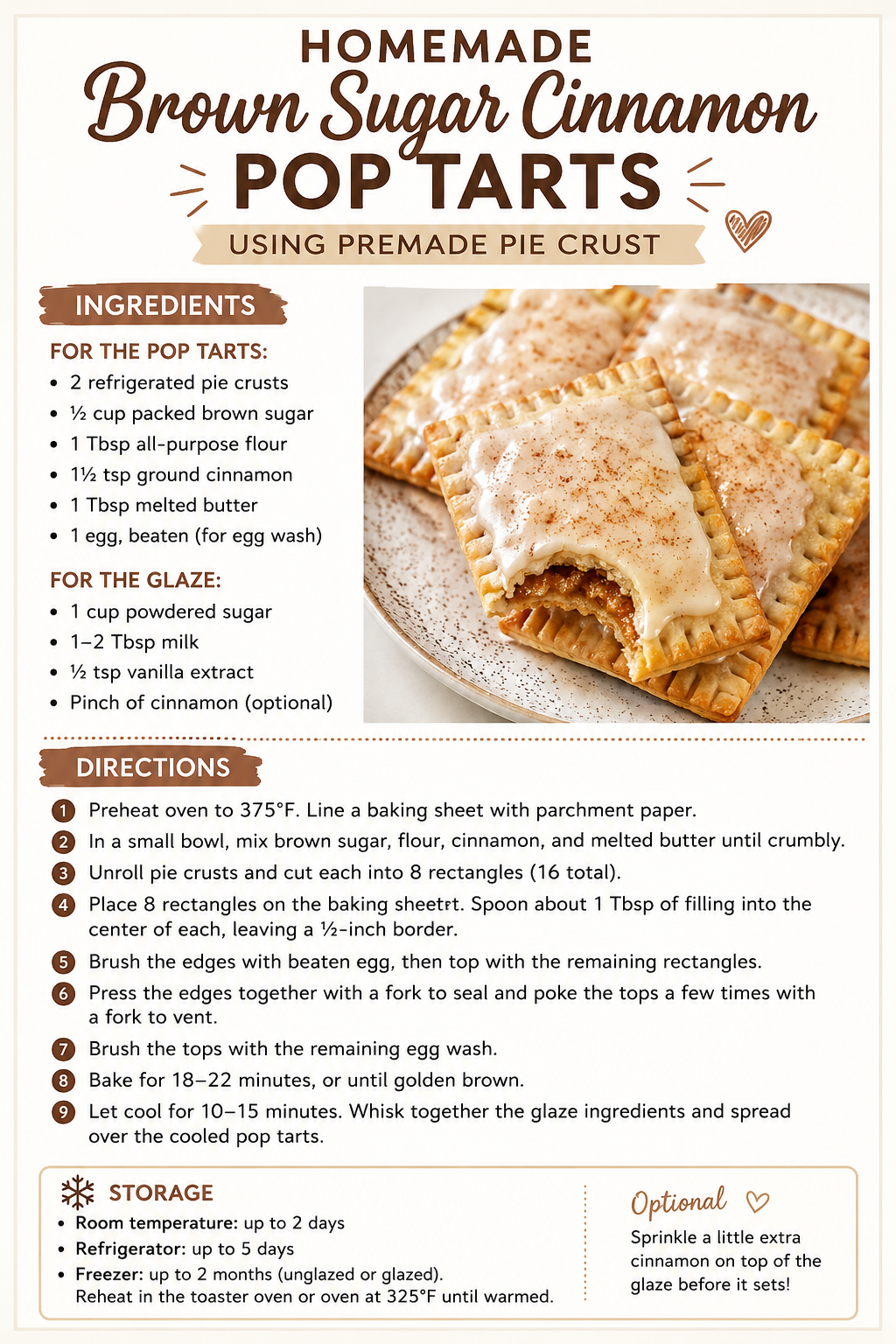
Brown Sugar Pop Tarts with a buttery, flaky crust and a deep caramel-brown sugar filling beat the boxed version in every bite.
🧂 Ingredients
- 340 g (2 1/2 cups) all-purpose flour, plus extra for rolling
- 225 g (1 cup) cold unsalted butter, cubed
- 60 g (1/4 cup) ice-cold water
- 6 g (1 1/2 teaspoons) fine sea salt
- 15 g (1 tablespoon) granulated sugar
- 200 g (1 cup packed) dark brown sugar
- 12 g (1 1/2 tablespoons) all-purpose flour
- 3 g (1/2 teaspoon) ground cinnamon
- 1 large egg, beaten with 15 g (1 tablespoon) water
- 120 g (1 cup) powdered sugar, sifted
- 15 g (1 tablespoon) milk or water, for the glaze
- 1 g (1/4 teaspoon) ground cinnamon, for the glaze
📋 Instructions
- 1Mix the dry ingredients — Pulse 340 g flour, 15 g sugar, and 6 g salt in a food processor twice to combine. This distributes the salt so no bite tastes flat.
- 2Cut in the cold butter — Add 225 g cold cubed butter and pulse 8 to 10 times until pea-sized pieces remain. Stop while visible butter flecks are still there; they create the flaky layers.
- 3Add the ice water — Drizzle 60 g ice-cold water over the mixture and pulse 4 to 6 times until the dough just holds when squeezed. Do not let it form a ball in the machine.
- 4Chill the dough — Turn the dough onto plastic wrap, press into two 2 cm thick discs, and refrigerate 45 minutes. Cold dough rolls without sticking and bakes flakier.
- 5Make the filling — Stir 200 g brown sugar, 12 g flour, and 3 g cinnamon in a bowl until no dry flour remains. The flour coats the sugar and thickens the filling as it heats.
- 6Roll and fill — Roll one disc to 3 mm (1/8 inch) on floured parchment and cut into 8 x 10 cm (3 x 4 inch) rectangles. Spoon 25 g filling onto half the rectangles, leaving a dry border.
- 7Seal and dock — Brush the borders with egg wash, top with a second rectangle, and press the edges with a fork. Poke three holes in each top so steam escapes in the oven.
- 8Bake the tarts — Bake at 190°C (375°F) for 18 to 22 minutes until the edges are golden brown and the filling bubbles at the docking holes. Cool on the pan 10 minutes.
- 9Glaze and set — Whisk 120 g powdered sugar, 15 g milk, and 1 g cinnamon, then spread over cooled tarts. The glaze should look opaque and set firm in about 10 minutes.

Tomasz writes precise, method-first recipes for breads, ferments, and slow braises, drawing on Polish and Central European home cooking. He cares about weights, temperatures, and timing, and explains the reason behind each step so cooks can repeat results. His angle is turning fussy techniques into clear, checkable instructions.