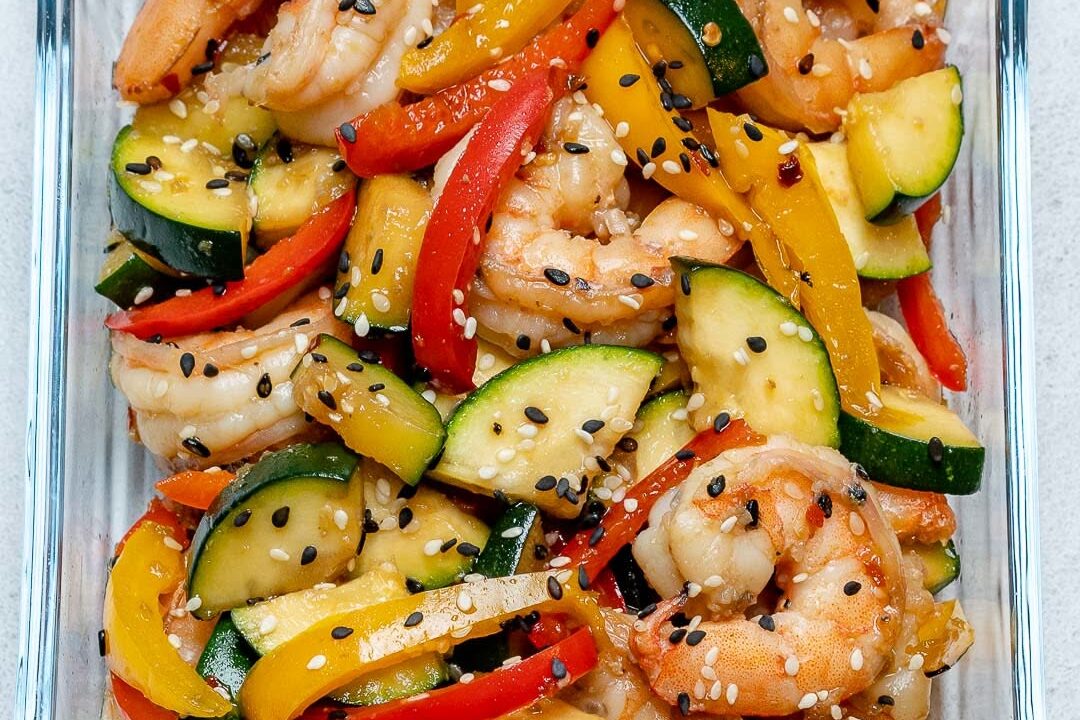
This shrimp stir-fry exists because clean eating should not require three pans. Shrimp, broccoli, peppers, and snap peas cook in one skillet over high heat in under ten minutes. The rest is chopping and portioning.
Weigh everything first. Shrimp lose water fast, so a hot pan and a short cook keep them tender. Overcrowding steams them into rubber, and that is the only real risk here.
The sauce is five ingredients and takes ninety seconds to whisk. Make it before the pan gets hot, because once shrimp hit the oil you have no time to measure.
Why You'll Love This Recipe
About the Ingredients
700 g (about 1 1/2 lb) large raw shrimp, peeled and deveined
Buy frozen shrimp labeled 21-25 count for even cooking; thaw overnight in the fridge. Swap in chicken thigh strips cut 1 cm thick if you avoid shellfish, but add 4 minutes to the cook.
300 g (2 cups) broccoli florets, cut into 3 cm pieces
Frozen florets work if you do not thaw them; they add 2 minutes of steam time. Look for tight, dark green heads with no yellowing at the cut stems.
200 g (1 1/2 cups) red bell pepper, sliced 1 cm thick
Yellow or orange peppers substitute directly. Choose peppers that feel heavy for their size with glossy, unbruised skin.
150 g (1 1/2 cups) snap peas, strings removed
Snow peas or green beans cut on the bias are fine swaps. Snap the tip of one pea; if the string pulls away cleanly, the batch is fresh.
15 g (1 tbsp) neutral oil, such as avocado or canola
Do not substitute olive oil here; its smoke point sits too low for this heat. Avocado oil holds past 250°C (480°F) without bittering.
20 g (1 1/2 tbsp) fresh ginger, grated
Jarred grated ginger is acceptable at 20 g. Frozen ginger grates more finely and keeps for six months.
3 cloves garlic, minced (about 12 g)
Pre-minced garlic loses punch; use 1 tsp of it if that is all you have. Fresh cloves should be firm and heavy with no green sprout.
45 g (3 tbsp) low-sodium soy sauce
Tamari substitutes for gluten-free needs. Coconut aminos work but taste sweeter, so cut the honey to 5 g.
10 g (2 tsp) honey
Maple syrup swaps one for one. Warm honey briefly if it has crystallized so it dissolves into the sauce.
8 g (1 tbsp) cornstarch
Arrowroot powder thickens the same way at the same weight. Whisk it into cold liquid only, or it clumps.
60 g (1/4 cup) cold water
Use the coldest tap water you have; it keeps the slurry smooth. Ice water is unnecessary but harmless.
4 g (1 tsp) toasted sesame oil
Toasted, not plain; plain sesame oil has almost no flavor. Add it off the heat so the aroma survives.
Tips & Tricks
Dry the shrimp hard
Pat shrimp completely dry with paper towels before cooking; surface water steams them and blocks browning.
Do not crowd the pan
Cook shrimp in two batches if your skillet is under 30 cm (12 in) wide; a full pan drops temperature and turns the sear into a boil.
Whisk the slurry twice
Cornstarch settles in seconds, so stir the sauce again right before it enters the pan.
Pull shrimp early
Remove shrimp at 120°C (248°F) internal; carryover heat finishes them while the sauce thickens.
Pro Tips
Step-by-Step Instructions
1. Whisk the sauce
Whisk 45 g soy sauce, 10 g honey, 8 g cornstarch, 60 g cold water, and 20 g grated ginger in a bowl until smooth. (The cornstarch needs cold water to disperse, or it clumps in the hot pan.) The mixture should look cloudy and uniform with no grit at the bottom.
2. Dry the shrimp
Pat 700 g shrimp dry on both sides with paper towels and season with 2 g salt. (Dry surfaces brown; wet surfaces steam.) The shrimp should feel tacky, not slippery, when you touch them.
3. Heat the skillet
Set a 30 cm (12 in) skillet over high heat with 15 g oil and wait 90 seconds. (The pan must be fully hot before food enters, or the shrimp release water.) The oil shimmers and a drop of water sizzles instantly.
4. Sear the shrimp
Add shrimp in one layer and cook 90 seconds per side at 230°C (445°F) pan temperature. (A single layer keeps the heat high.) The shrimp turn opaque pink with light golden edges and curl into a loose C.
5. Remove the shrimp
Transfer shrimp to a plate with tongs, leaving the oil behind. (They finish cooking later; pulling them now prevents rubber.) The plate should hold shrimp at about 120°C (248°F) internal.
6. Stir-fry the vegetables
Add 300 g broccoli, 200 g pepper, and 150 g snap peas to the same pan and cook 3 minutes at 230°C (445°F), stirring twice. (Residual shrimp fat carries flavor.) Broccoli turns bright green and the pepper edges soften slightly.
7. Add garlic and sauce
Stir in 12 g garlic for 20 seconds, then pour in the sauce and stir constantly for 60 seconds. (Garlic burns in under a minute at this heat.) The sauce bubbles at the edges and coats the vegetables in a glossy film.
8. Return shrimp and finish
Return the shrimp and any juices, toss 30 seconds, then pull the pan off the heat and stir in 4 g sesame oil. (Off-heat addition preserves aroma.) Shrimp reach 63°C (145°F) internal and the sauce clings without pooling.
9. Cool and portion
Spread the stir-fry on a tray for 10 minutes, then divide into 5 containers of about 280 g each. (Cooling stops carryover cooking and prevents condensation.) The mixture should be warm, not steaming, when lids go on.
Delicious Variations
Teriyaki Style
Swap the honey for 15 g teriyaki glaze and finish with 5 g toasted sesame seeds.
Spicy Chile-Lime
Add 3 g chile-garlic paste to the sauce and squeeze half a lime over the pan off heat.
Chicken Version
Use 700 g chicken breast sliced 1 cm thick and cook 4 minutes per side before removing.
How to Store Super-Easy Shrimp Stir-Fry for Clean Eating Meal Prep
Refrigerator
Store in airtight containers up to 3 days at 4°C (40°F); keep sauce-coated shrimp on top of the rice, not under it.
Freezer
Freeze portions up to 2 months; thaw overnight in the fridge, never at room temperature.
Reheating
Reheat in a covered skillet over medium heat for 3 minutes with 15 g water, or microwave 90 seconds on high, stirring once.
Frequently Asked Questions
Q: How do you keep shrimp from getting rubbery in a stir-fry?
Cook shrimp no more than 90 seconds per side and pull them at 120°C (248°F) internal before the sauce goes in. Residual heat finishes them to 63°C (145°F) while the sauce thickens. A loose C-curl means tender; a tight O means overcooked.
Q: Can you meal prep shrimp stir-fry ahead of time?
Yes, this keeps 3 days refrigerated in airtight containers. Cool the stir-fry on a tray for 10 minutes before boxing so steam does not sog the vegetables. Store sauce-heavy shrimp above the rice, not beneath it.
Q: Why is my stir-fry sauce watery instead of glossy?
The pan was not hot enough, or the cornstarch slurry sat too long before use. Whisk the slurry again right before pouring and cook it 60 seconds until it bubbles at the edges. A properly reduced sauce coats the back of a spoon.
Q: What vegetables work best for shrimp stir-fry?
Firm, quick-cooking vegetables like broccoli, bell pepper, and snap peas hold up best at high heat. Avoid watery vegetables such as zucchini or tomato, which release liquid and dilute the glaze. Cut everything to a uniform 3 cm so it finishes at the same time.
Q: Is this shrimp stir-fry healthy for clean eating?
Yes, each 280 g portion delivers about 31 grams of protein and 6 grams of fat with no refined flour. The sauce uses honey and soy instead of sugar-heavy bottled stir-fry sauce. Serve over 150 g cooked brown rice to keep the meal balanced.
Weigh the shrimp, dry them well, and keep the pan hot. Portion five boxes tonight and your week of lunches is handled. Weigh, watch, repeat.
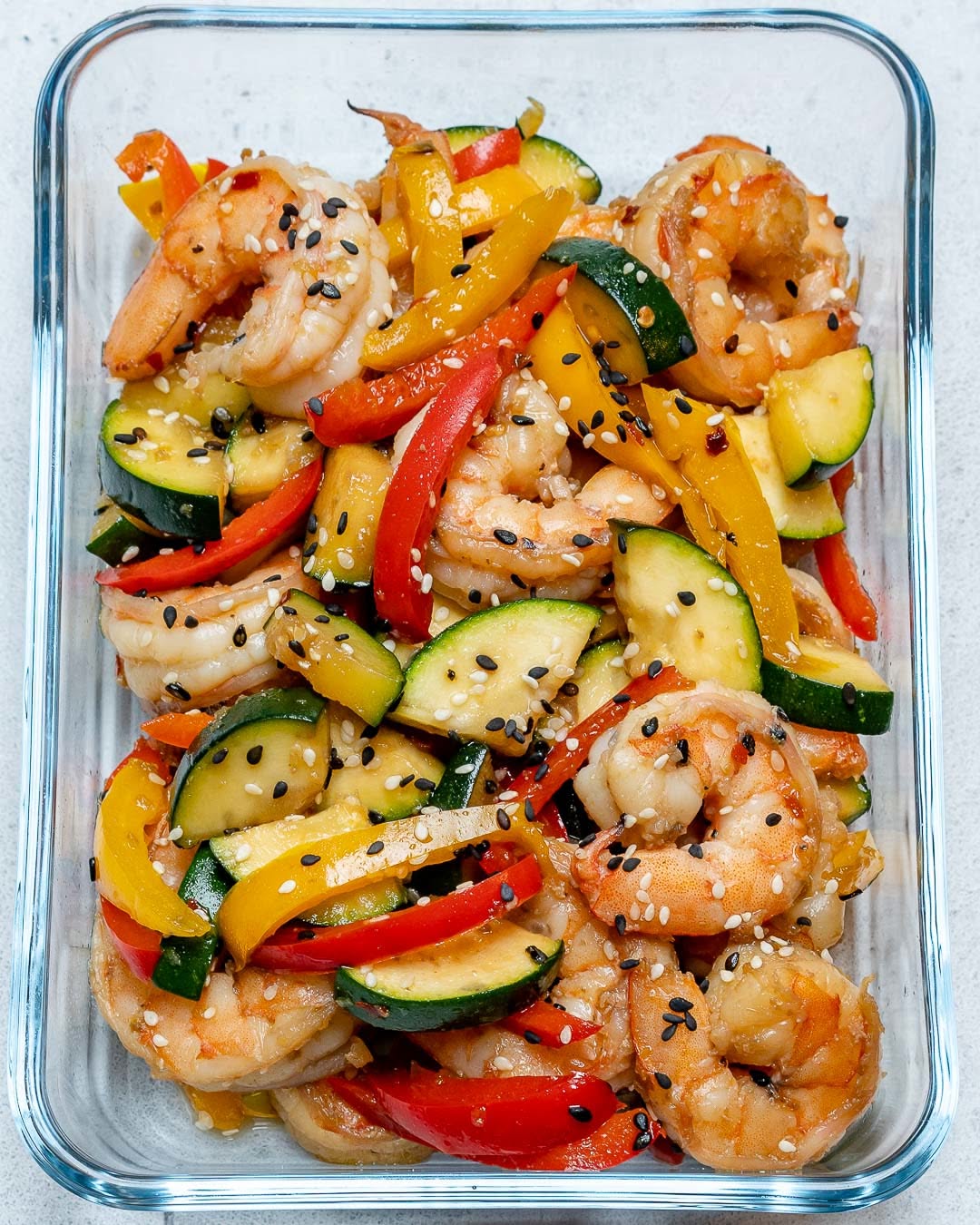
Super-Easy Shrimp Stir-Fry for Clean Eating Meal Prep
This super-easy shrimp stir-fry packs lean protein and crisp vegetables into five clean meal-prep boxes in 35 minutes flat.
🧂 Ingredients
- 700 g (about 1 1/2 lb) large raw shrimp, peeled and deveined
- 300 g (2 cups) broccoli florets, cut into 3 cm pieces
- 200 g (1 1/2 cups) red bell pepper, sliced 1 cm thick
- 150 g (1 1/2 cups) snap peas, strings removed
- 15 g (1 tbsp) neutral oil, such as avocado or canola
- 20 g (1 1/2 tbsp) fresh ginger, grated
- 3 cloves garlic, minced (about 12 g)
- 45 g (3 tbsp) low-sodium soy sauce
- 10 g (2 tsp) honey
- 8 g (1 tbsp) cornstarch
- 60 g (1/4 cup) cold water
- 4 g (1 tsp) toasted sesame oil
📋 Instructions
- 1Whisk the sauce — Whisk 45 g soy sauce, 10 g honey, 8 g cornstarch, 60 g cold water, and 20 g grated ginger in a bowl until smooth. (The cornstarch needs cold water to disperse, or it clumps in the hot pan.) The mixture should look cloudy and uniform with no grit at the bottom.
- 2Dry the shrimp — Pat 700 g shrimp dry on both sides with paper towels and season with 2 g salt. (Dry surfaces brown; wet surfaces steam.) The shrimp should feel tacky, not slippery, when you touch them.
- 3Heat the skillet — Set a 30 cm (12 in) skillet over high heat with 15 g oil and wait 90 seconds. (The pan must be fully hot before food enters, or the shrimp release water.) The oil shimmers and a drop of water sizzles instantly.
- 4Sear the shrimp — Add shrimp in one layer and cook 90 seconds per side at 230°C (445°F) pan temperature. (A single layer keeps the heat high.) The shrimp turn opaque pink with light golden edges and curl into a loose C.
- 5Remove the shrimp — Transfer shrimp to a plate with tongs, leaving the oil behind. (They finish cooking later; pulling them now prevents rubber.) The plate should hold shrimp at about 120°C (248°F) internal.
- 6Stir-fry the vegetables — Add 300 g broccoli, 200 g pepper, and 150 g snap peas to the same pan and cook 3 minutes at 230°C (445°F), stirring twice. (Residual shrimp fat carries flavor.) Broccoli turns bright green and the pepper edges soften slightly.
- 7Add garlic and sauce — Stir in 12 g garlic for 20 seconds, then pour in the sauce and stir constantly for 60 seconds. (Garlic burns in under a minute at this heat.) The sauce bubbles at the edges and coats the vegetables in a glossy film.
- 8Return shrimp and finish — Return the shrimp and any juices, toss 30 seconds, then pull the pan off the heat and stir in 4 g sesame oil. (Off-heat addition preserves aroma.) Shrimp reach 63°C (145°F) internal and the sauce clings without pooling.
- 9Cool and portion — Spread the stir-fry on a tray for 10 minutes, then divide into 5 containers of about 280 g each. (Cooling stops carryover cooking and prevents condensation.) The mixture should be warm, not steaming, when lids go on.

Tomasz writes precise, method-first recipes for breads, ferments, and slow braises, drawing on Polish and Central European home cooking. He cares about weights, temperatures, and timing, and explains the reason behind each step so cooks can repeat results. His angle is turning fussy techniques into clear, checkable instructions.