

Halibut earns its place in the weekly rotation because it is mild, meaty, and nearly impossible to ruin if you treat it kindly. One fillet feeds a crowd, it holds together on the grill, and it soaks up whatever butter, citrus, or spice you throw at it.
I have cooked halibut every way a home kitchen allows: baked in foil, seared in a screaming hot pan, folded into tacos, simmered in coconut curry, and flaked into chowder. What follows is the collection I actually return to, written so a first-timer can nail it and a seasoned cook still picks up a trick.
Every recipe here lists real temperatures in Fahrenheit and Celsius, real times, and the cue to look for so you know when to pull the fish off the heat. Halibut is too expensive to guess with.
Why You'll Love This Recipe
About the Ingredients
4 halibut fillets, about 6 oz (170g) each, skin on or off
Look for fillets of even thickness so they cook at the same rate; frozen halibut is fine if you thaw it overnight in the fridge. Cod or haddock are the closest substitutes if halibut is out of budget.
3 tbsp (45ml) olive oil
Regular olive oil handles the heat better than extra virgin here; avocado oil works if you want a higher smoke point. Butter alone will burn, so save it for basting at the end.
4 tbsp (56g) unsalted butter, melted
Melted butter carries the lemon and garlic into every flake; ghee is a great swap if you are avoiding dairy, and it browns beautifully.
1 lemon, zested and juiced (about 3 tbsp / 45ml juice)
Zest first, then juice, and roll the lemon on the counter before cutting to get more out of it. Lime works in a pinch but tastes sharper.
3 garlic cloves, finely grated
Fresh garlic only, please; the jarred stuff turns bitter under high heat. A microplane gives you a paste that disappears into the butter.
2 tbsp chopped fresh parsley
Flat-leaf parsley is the workhorse; dill or tarragon are lovely if you want a more herbal, anise edge. Add it off the heat so it stays green.
1 tsp kosher salt
Kosher salt is more forgiving than table salt because the crystals are bigger; if you only have fine salt, use half the amount.
1/2 tsp freshly ground black pepper
Fresh cracked pepper blooms in the butter; pre-ground loses its punch fast. White pepper is a quieter substitute if you want less visible fleck.
1/4 tsp smoked paprika
This is the secret for a golden crust without a heavy spice rub; sweet paprika works but gives less color. Skip it if you want the pure lemon-butter flavor.
Tips & Tricks
Do not skip drying the fish
Pat the fillets bone dry with paper towels before seasoning. Surface moisture is the number one reason halibut steams instead of sears, and a wet fillet will never give you that golden edge.
Pull it early
Halibut keeps cooking after it leaves the pan, so take it off at 130F (54C) and let it rest. By the time you plate, it will be a perfect 135F (57C) and still glossy inside.
Season the fish, not just the pan
Salt the fillets 10 to 15 minutes ahead so the seasoning penetrates. Salting at the last second just sits on the surface and tastes sharp.
Pro Tips
Step-by-Step Instructions
1. Dry and Season
Pat the 4 fillets completely dry with paper towels and set them on a plate. Season both sides with the 1 tsp kosher salt, 1/2 tsp black pepper, and 1/4 tsp smoked paprika, then let them sit 10 minutes at room temperature.
2. Mix the Butter
In a small bowl, stir together the 4 tbsp melted butter, grated garlic, lemon zest, and 1 tbsp of the lemon juice. Set aside; the garlic will mellow into the butter while you heat the pan.
3. Heat the Skillet
Set a large nonstick or cast-iron skillet over medium-high heat for 2 minutes, then add the 3 tbsp olive oil. The oil should shimmer and slide easily; if it smokes hard, pull the pan off the heat for 20 seconds.
4. Sear the Fillets
Lay the fillets in the pan presentation side down and do not touch them for 4 minutes. You are looking for a deep golden brown edge and the fish releasing on its own; if it fights you, give it another 30 seconds.
5. Flip and Baste
Flip each fillet with a thin spatula and cook 3 to 4 minutes more, spooning the garlic butter over the top continuously. Pull the fish at 130F (54C) in the thickest part on an instant-read thermometer; the flesh should flake at the tip but still look glossy in the center.
6. Finish with Lemon
Move the fillets to a warm plate, spoon the pan butter over them, and squeeze the remaining 2 tbsp lemon juice into the hot pan. Swirl it for 10 seconds, then pour that pan sauce over the fish.
7. Rest and Serve
Scatter the 2 tbsp chopped parsley over the top and let the fillets rest 3 minutes. Serve with rice, crusty bread, or a pile of greens to soak up the lemon butter.
Delicious Variations
Coconut Curry Halibut
Simmer the seared fillets in a can of coconut milk with red curry paste, lime, and spinach for a 25-minute one-pan dinner.
Crispy Fish Tacos
Cut the fillets into strips, coat in cornmeal, and pan-fry at 350F (175C) for 3 minutes per side, then pile into warm tortillas with cabbage slaw.
Mediterranean Sheet Pan
Nestle the fillets among cherry tomatoes, olives, and chickpeas, drizzle with olive oil, and roast at 400F (205C) for 15 minutes.
How to Store 20 Halibut Recipes That Will Make You Say "Holy Fish!"
Refrigerator
Store leftovers in an airtight container in the fridge for up to 2 days; halibut dries out fast, so pour any leftover pan juices over it before sealing.
Freezer
Freeze cooked halibut in a sealed container for up to 1 month, but expect the texture to soften; it is best used in chowder or fish cakes after thawing.
Reheating
Reheat gently at 300F (150C) for 8 to 10 minutes covered with foil, or flake it cold into a salad; the microwave will make it rubbery.
Frequently Asked Questions
Q: How do I know when halibut is done?
Halibut is done when the thickest part reads 135F (57C) on an instant-read thermometer and the flesh flakes into large, opaque pieces. Pull it at 130F (54C) and let it rest, since carryover heat finishes the job. If it looks translucent in the center, give it another minute.
Q: Why did my halibut turn out dry?
Dry halibut is almost always overcooked, not undercooked. Fish keeps cooking after it leaves the pan, so pull it 5 degrees early and rest it; also avoid thin tail cuts, which overcook in half the time of a thick center fillet.
Q: Is halibut better baked or pan-seared?
Pan-searing gives you a golden crust and a buttery pan sauce, while baking is more hands-off and better for thick fillets or a crowd. For weeknights I sear; for company or a sheet-pan dinner I bake at 400F (205C) for 12 to 15 minutes.
Q: Can I use frozen halibut for these recipes?
Yes, and it works beautifully if you thaw it slowly overnight in the fridge. Pat it very dry after thawing, because frozen fish releases more water and will steam instead of brown if it is wet.
Q: What should I serve with halibut?
Halibut loves something starchy and something bright: rice pilaf, smashed potatoes, or crusty bread alongside a lemony green salad or roasted vegetables. Keep the sides simple so the butter and citrus stay the star.
Pick one recipe, grab a thermometer, and cook halibut with a little confidence this week. Cook it your way, and tell me how it went.
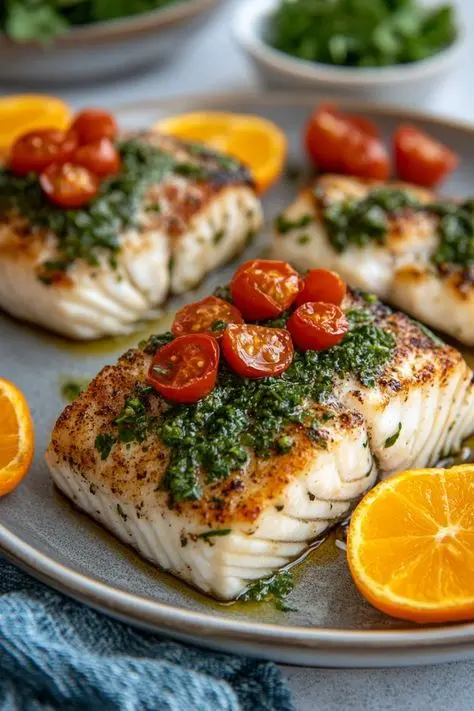
20 Halibut Recipes That Will Make You Say "Holy Fish!"
Twenty halibut recipes, from lemon-herb baked fillets to crispy fish tacos, that turn a pricey fillet into a weeknight win every single time.
🧂 Ingredients
- 4 halibut fillets, about 6 oz (170g) each, skin on or off
- 3 tbsp (45ml) olive oil
- 4 tbsp (56g) unsalted butter, melted
- 1 lemon, zested and juiced (about 3 tbsp / 45ml juice)
- 3 garlic cloves, finely grated
- 2 tbsp chopped fresh parsley
- 1 tsp kosher salt
- 1/2 tsp freshly ground black pepper
- 1/4 tsp smoked paprika
📋 Instructions
- 1Dry and Season — Pat the 4 fillets completely dry with paper towels and set them on a plate. Season both sides with the 1 tsp kosher salt, 1/2 tsp black pepper, and 1/4 tsp smoked paprika, then let them sit 10 minutes at room temperature.
- 2Mix the Butter — In a small bowl, stir together the 4 tbsp melted butter, grated garlic, lemon zest, and 1 tbsp of the lemon juice. Set aside; the garlic will mellow into the butter while you heat the pan.
- 3Heat the Skillet — Set a large nonstick or cast-iron skillet over medium-high heat for 2 minutes, then add the 3 tbsp olive oil. The oil should shimmer and slide easily; if it smokes hard, pull the pan off the heat for 20 seconds.
- 4Sear the Fillets — Lay the fillets in the pan presentation side down and do not touch them for 4 minutes. You are looking for a deep golden brown edge and the fish releasing on its own; if it fights you, give it another 30 seconds.
- 5Flip and Baste — Flip each fillet with a thin spatula and cook 3 to 4 minutes more, spooning the garlic butter over the top continuously. Pull the fish at 130F (54C) in the thickest part on an instant-read thermometer; the flesh should flake at the tip but still look glossy in the center.
- 6Finish with Lemon — Move the fillets to a warm plate, spoon the pan butter over them, and squeeze the remaining 2 tbsp lemon juice into the hot pan. Swirl it for 10 seconds, then pour that pan sauce over the fish.
- 7Rest and Serve — Scatter the 2 tbsp chopped parsley over the top and let the fillets rest 3 minutes. Serve with rice, crusty bread, or a pile of greens to soak up the lemon butter.

Mireille writes about weeknight cooking built around what is already in the pantry, with a focus on Haitian and Caribbean home dishes made simpler for busy kitchens. She favors short ingredient lists, honest substitutions, and recipes that forgive a missed step. Her angle is feeding a household well without a second trip to the store.