All Recipes Menu
Whipped Hot Honey Chicken Tenders – Easy
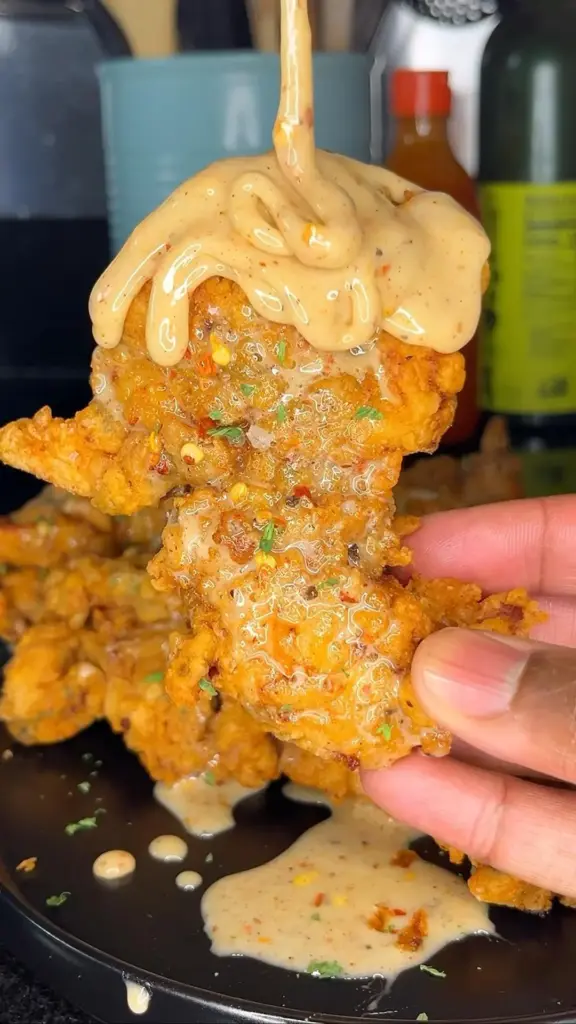
These chicken tenders use buttermilk, cornstarch, and controlled oil heat.
Whipped butter softens the honey's heat and coats each tender evenly.
Measure the ingredients, watch the oil, and serve immediately.
Why You'll Love This Recipe
About the Ingredients
900g (2 lb) chicken tenderloins, about 12 pieces
Tenderloins cook evenly because their thickness is consistent. Substitute sliced chicken breast, or buy pieces with similar thickness.
240g (1 cup) cultured buttermilk
Buttermilk seasons the meat and helps the coating adhere. Substitute plain yogurt thinned with 60g water.
50g (1 large) egg
Egg strengthens the wet coating around the chicken. Substitute 45g aquafaba for an egg-free version.
160g (1 1/3 cups) all-purpose flour
Flour forms the main crust. Substitute bread flour for a firmer coating, or buy unbleached flour for a neutral flavor.
45g (1/3 cup) cornstarch
Cornstarch reduces gluten and keeps the crust light. Substitute potato starch at the same weight.
10g (1 3/4 tsp) kosher salt
Kosher salt seasons both the meat and crust. Use 6g fine salt if kosher salt is unavailable.
6g (2 tsp) smoked paprika
Smoked paprika adds color and savory depth. Substitute sweet paprika, or buy a fresh jar for stronger flavor.
4g (1 1/4 tsp) garlic powder
Garlic powder distributes flavor through the dry mixture. Substitute 8g finely grated fresh garlic in the buttermilk.
360g (1 1/2 cups) peanut or canola oil, for frying
Both oils tolerate frying temperatures well. Substitute sunflower oil, or buy refined oil for a cleaner flavor.
75g (1/3 cup) unsalted butter, softened
Soft butter gives the honey mixture a spreadable texture. Substitute plant-based block butter, not soft margarine.
120g (1/3 cup) honey
Honey carries sweetness and helps the sauce cling. Substitute maple syrup, or buy mild honey for a balanced finish.
4g (2 tsp) crushed red pepper flakes
Pepper flakes provide direct heat without thinning the sauce. Substitute 8g hot sauce for a smoother mixture.
Tips & Tricks
Dry coating
Pat the chicken thoroughly before dipping, or the crust can slide during frying.
Oil temperature
Keep the oil at 350°F (177°C), and fry in small batches to prevent greasy crust.
Raw centers
Check the thickest tender with a thermometer, and remove it only at 165°F (74°C).
Thin sauce
Use softened butter rather than melted butter, or the whipped mixture will separate.
Pro Tips
Step-by-Step Instructions
1. Dry the chicken
Pat the chicken dry with paper towels and trim loose connective tissue. [A dry surface helps the coating adhere.] The meat is ready when no surface moisture remains.
2. Whisk the wet mix
Whisk the buttermilk and egg until uniform. [A smooth mixture coats each tender evenly.] The mixture is ready when no egg streaks remain.
3. Season the dredge
Stir the flour, cornstarch, salt, paprika, and garlic powder together. [Even seasoning prevents bland patches.] The mixture is ready when its color looks consistent.
4. Dip each tender
Dip each tender into the buttermilk mixture and let excess drip away. [A thin wet layer prevents a heavy crust.] The surface should look fully covered.
5. Coat the chicken
Press each tender into the seasoned flour mixture until no bare patches remain. [Pressure creates a rough surface for better crunch.] The coating is ready when it looks dry and craggy.
6. Heat the oil
Heat the oil in a deep skillet at 350°F (177°C) for 5 minutes. [Stable heat prevents raw centers and dark crusts.] The oil shimmers, and a flour crumb sizzles immediately.
7. Fry until done
Fry the tenders at 350°F (177°C) for 3 minutes per side, 6 minutes total. [Turning once promotes even browning.] The coating is golden brown, bubbling edges have settled, and the center reaches 165°F (74°C).
8. Whip the honey butter
Beat the softened butter, honey, and pepper flakes for 2 minutes. [Whipping adds air and spreads the heat evenly.] The mixture is pale, smooth, and visibly aerated.
9. Serve with sauce
Rest the tenders for 5 minutes, then spoon the whipped hot honey butter over them. [Resting lets the juices settle without softening the crust.] Serve when the coating still sounds crisp.
Delicious Variations
Lemon pepper
Add 4g lemon zest and replace smoked paprika with cracked black pepper.
Maple chile
Replace honey with maple syrup and add 2g ancho chile powder.
Herb butter
Add 6g chopped chives to the whipped butter before serving.
How to Store Whipped Hot Honey Chicken Tenders
Refrigerator
Refrigerate cooled tenders and sauce separately in sealed containers for up to 3 days.
Freezer
Freeze cooled tenders on a tray, then transfer them to a freezer bag for up to 2 months. Freeze the sauce separately for up to 1 month.
Reheating
Reheat tenders at 400°F (204°C) for 10 minutes, turning once. Stop when the coating firms and the center reaches 165°F (74°C).
Frequently Asked Questions
Q: Can I bake hot honey chicken tenders instead of frying them?
Yes, bake them at 425°F (218°C) for 18 to 22 minutes. Turn them halfway through, and check for 165°F (74°C) in the thickest piece.
Q: How do I keep chicken tenders crispy after frying?
Keep them crisp by draining them on a wire rack instead of paper towels. Paper towels trap steam beneath the coating.
Q: What is whipped hot honey made of?
Whipped hot honey is softened butter beaten with honey and pepper flakes. The butter reduces the heat and gives the sauce a spreadable texture.
Q: Can I use chicken breast instead of chicken tenderloins?
Yes, slice chicken breast into strips about 2cm thick. Adjust frying time only after checking that the center reaches 165°F (74°C).
Make the sauce first, control the oil, and serve these tenders while the crust is crisp. Weigh, watch, repeat.
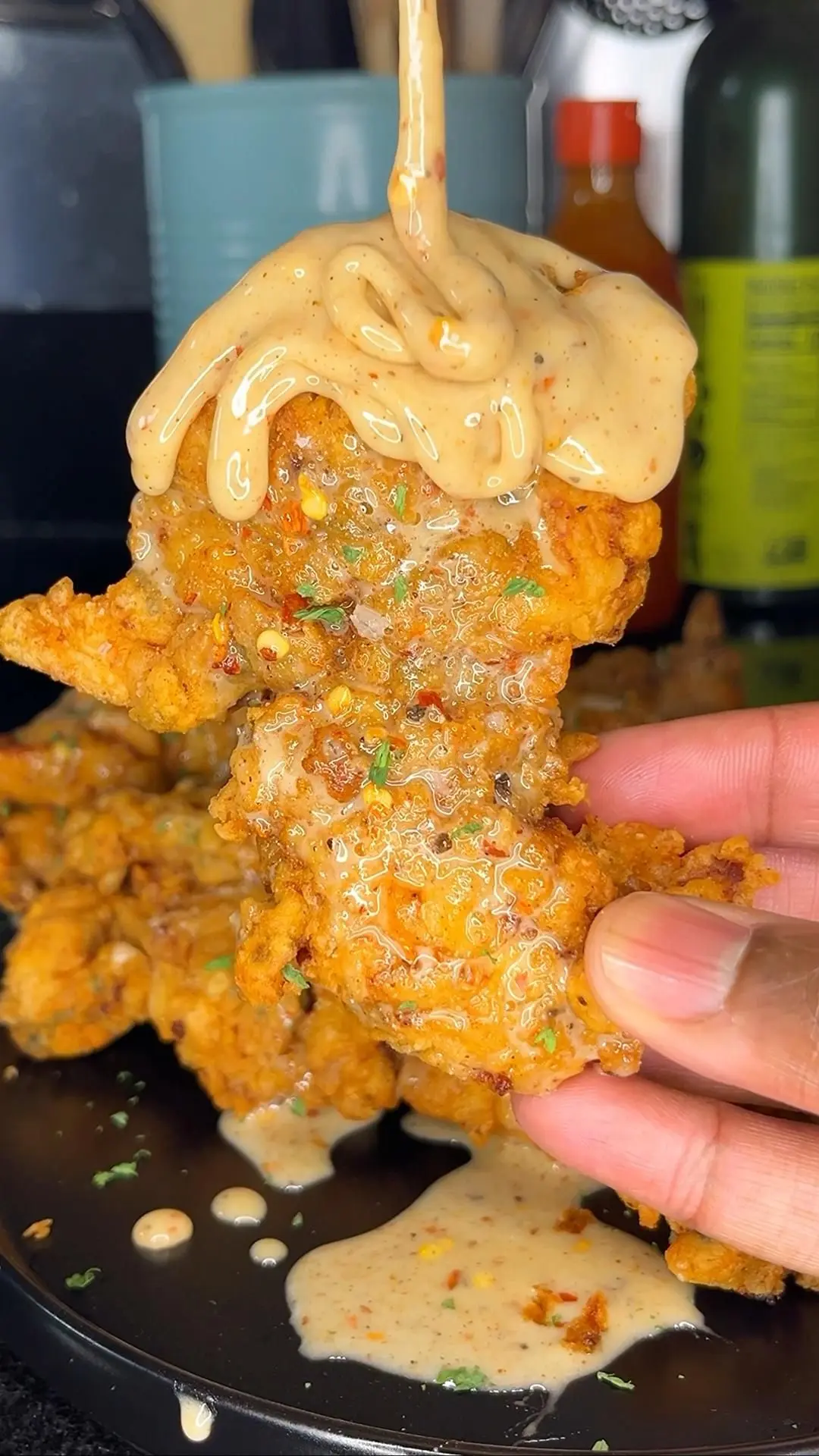
Whipped Hot Honey Chicken Tenders
Whipped Hot Honey Chicken Tenders deliver crisp coating, tender meat, and a sweet heat finish in 35 minutes, with a measured method for weeknight cooking.
🧂 Ingredients
- 900g (2 lb) chicken tenderloins, about 12 pieces
- 240g (1 cup) cultured buttermilk
- 50g (1 large) egg
- 160g (1 1/3 cups) all-purpose flour
- 45g (1/3 cup) cornstarch
- 10g (1 3/4 tsp) kosher salt
- 6g (2 tsp) smoked paprika
- 4g (1 1/4 tsp) garlic powder
- 360g (1 1/2 cups) peanut or canola oil, for frying
- 75g (1/3 cup) unsalted butter, softened
- 120g (1/3 cup) honey
- 4g (2 tsp) crushed red pepper flakes
📋 Instructions
- 1Dry the chicken — Pat the chicken dry with paper towels and trim loose connective tissue. [A dry surface helps the coating adhere.] The meat is ready when no surface moisture remains.
- 2Whisk the wet mix — Whisk the buttermilk and egg until uniform. [A smooth mixture coats each tender evenly.] The mixture is ready when no egg streaks remain.
- 3Season the dredge — Stir the flour, cornstarch, salt, paprika, and garlic powder together. [Even seasoning prevents bland patches.] The mixture is ready when its color looks consistent.
- 4Dip each tender — Dip each tender into the buttermilk mixture and let excess drip away. [A thin wet layer prevents a heavy crust.] The surface should look fully covered.
- 5Coat the chicken — Press each tender into the seasoned flour mixture until no bare patches remain. [Pressure creates a rough surface for better crunch.] The coating is ready when it looks dry and craggy.
- 6Heat the oil — Heat the oil in a deep skillet at 350°F (177°C) for 5 minutes. [Stable heat prevents raw centers and dark crusts.] The oil shimmers, and a flour crumb sizzles immediately.
- 7Fry until done — Fry the tenders at 350°F (177°C) for 3 minutes per side, 6 minutes total. [Turning once promotes even browning.] The coating is golden brown, bubbling edges have settled, and the center reaches 165°F (74°C).
- 8Whip the honey butter — Beat the softened butter, honey, and pepper flakes for 2 minutes. [Whipping adds air and spreads the heat evenly.] The mixture is pale, smooth, and visibly aerated.
- 9Serve with sauce — Rest the tenders for 5 minutes, then spoon the whipped hot honey butter over them. [Resting lets the juices settle without softening the crust.] Serve when the coating still sounds crisp.

Tomasz writes precise, method-first recipes for breads, ferments, and slow braises, drawing on Polish and Central European home cooking. He cares about weights, temperatures, and timing, and explains the reason behind each step so cooks can repeat results. His angle is turning fussy techniques into clear, checkable instructions.