All Recipes Menu
Pumpkin Pancakes – Fluffy 30-Minute Fall Breakfast
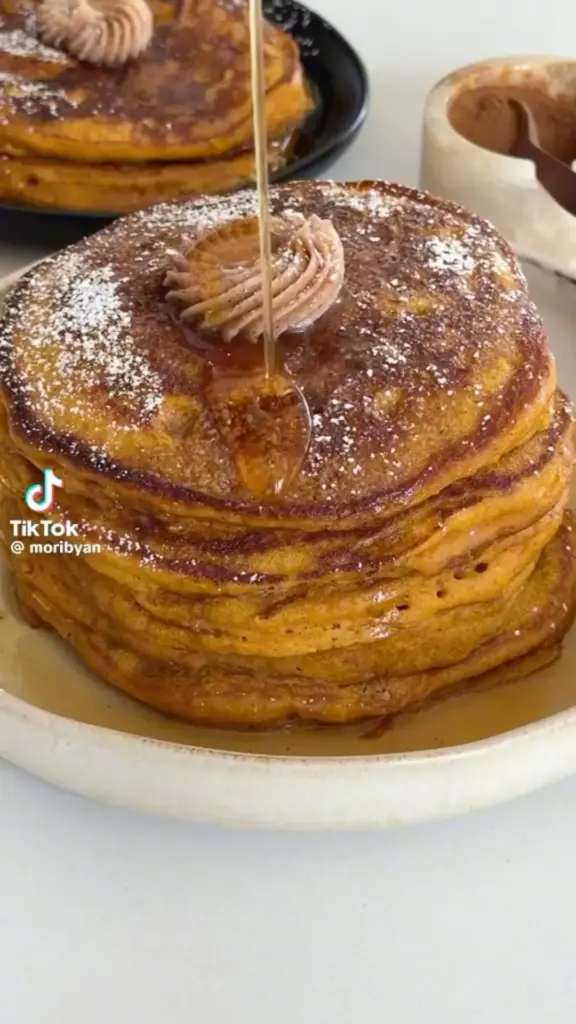
Pumpkin pancakes are a batter built on 240 g (1 cup) pumpkin purée and 250 g (2 cups) all-purpose flour. The purée adds moisture and sugar, so the batter needs less liquid than a plain pancake and a short rest before cooking.
Weigh the dry ingredients first. Volume measures of flour vary by up to 20 percent, and this batter is sensitive to that gap. A 5-minute rest hydrates the flour and lets the baking powder start working before the pan gets hot.
Cook at 190 °C (375 °F) on a flat griddle. The pancakes set in 2 to 3 minutes per side and stay tender because the pumpkin holds water inside the crumb.
Why You'll Love This Recipe
About the Ingredients
250 g (2 cups) all-purpose flour
Spoon the flour into the cup and level it; scooping packs it and makes the pancakes dense. Substitute 125 g (1 cup) whole wheat flour for half if you want more fiber.
25 g (2 tbsp) granulated sugar
Sugar browns the surface and feeds the baking powder. Light brown sugar works and adds a molasses note.
10 g (2 1/2 tsp) baking powder
Check the date on the tin; stale powder gives flat pancakes. Test it by dropping a pinch into hot water, which should fizz.
3 g (1/2 tsp) fine salt
Salt balances the sweetness and strengthens the gluten. Fine sea salt dissolves faster than coarse flakes.
4 g (2 tsp) ground cinnamon
Buy cinnamon in small jars; ground spice loses aroma within a year. Use 1 tsp if you prefer a milder spice.
1 g (1/2 tsp) ground ginger
Ground ginger adds the warm bite that reads as pumpkin spice. Fresh grated ginger works at 1 tsp.
0.5 g (1/4 tsp) ground nutmeg
Grate nutmeg fresh if you have a whole nut; it is far more aromatic. Skip it rather than use an old, dusty jar.
240 g (1 cup) pumpkin purée
Use 100 percent pumpkin purée, not pumpkin pie filling, which is sweetened and spiced already. Butternut squash purée substitutes directly.
2 large eggs (about 100 g)
Room-temperature eggs emulsify better into the purée. Pull them out 30 minutes before mixing.
300 ml (1 1/4 cups) whole milk
Whole milk gives the richest crumb. Substitute oat milk plus 1 tbsp lemon juice for a dairy-free version.
45 g (3 tbsp) unsalted butter, melted
Melt and cool the butter slightly so it does not cook the eggs. Neutral oil substitutes at the same weight.
5 g (1 tsp) vanilla extract
Vanilla rounds out the spice. Imitation vanilla is fine here because the batter is heavily spiced.
Tips & Tricks
Do Not Overmix
Stir until the flour just disappears; lumps are fine, and a smooth batter means tough pancakes.
Rest the Batter
Five minutes of rest hydrates the flour and thickens the batter so it spreads less in the pan.
Watch the Pan Heat
Too hot and the outside burns before the center sets; hold the griddle at 190 °C (375 °F).
Measure the Pumpkin by Weight
Extra purée makes the batter wet and the pancakes gummy, so use 240 g exactly.
Pro Tips
Step-by-Step Instructions
1. Whisk the dry mix
Combine 250 g flour, 25 g sugar, 10 g baking powder, 3 g salt, 4 g cinnamon, 1 g ginger, and 0.5 g nutmeg in a large bowl. Whisk for 20 seconds to distribute the leaveners evenly (clumps of baking powder leave bitter spots). The mix is ready when no streaks of spice remain.
2. Blend the wet mix
Whisk 240 g pumpkin purée, 2 eggs, 300 ml milk, 45 g melted butter, and 5 g vanilla in a second bowl until smooth, about 30 seconds. The mixture is ready when it is an even orange with no curdled streaks.
3. Fold the batter
Pour the wet mix into the dry and fold with a spatula for 15 to 20 strokes, stopping while small lumps remain. Overmixing develops gluten and gives a chewy pancake (the lumps bake out).
4. Rest the batter
Let the batter stand 5 minutes at room temperature. The flour hydrates and the batter thickens slightly (this prevents thin, spreading pancakes).
5. Heat the griddle
Heat a flat griddle or heavy skillet to 190 °C (375 °F) and brush with a thin film of oil. A drop of water should sizzle and skitter across the surface within 1 second.
6. Cook the first side
Scoop 60 ml (1/4 cup) batter per pancake onto the griddle and cook 2 to 3 minutes. The edges set and matte, and bubbles pop on the surface (that is the signal to flip).
7. Flip and finish
Flip once and cook 90 seconds to 2 minutes more, until the center springs back when pressed and the bottom is golden brown. Do not press the pancakes down with the spatula (it squeezes out the air).
8. Hold and serve
Move finished pancakes to a rack in a 90 °C (200 °F) oven while you cook the rest. Serve within 15 minutes with butter and maple syrup.
Delicious Variations
Chocolate Chip Pumpkin
Scatter 100 g (1/2 cup) mini chocolate chips over the batter in the pan so they do not sink.
Pumpkin Spice Oat Pancakes
Replace 60 g (1/2 cup) of the flour with rolled oats for a chewier, nuttier crumb.
Savory Pumpkin Pancakes
Drop the sugar and vanilla, add 30 g grated Parmesan, and serve with fried eggs.
How to Store Pumpkin Pancakes 🤎🥞
Refrigerator
Store cooled pancakes in an airtight container for up to 4 days; place parchment between them so they do not stick.
Freezer
Freeze flat on a tray for 1 hour, then stack in a bag for up to 2 months.
Reheating
Reheat in a toaster or a 160 °C (325 °F) oven for 4 minutes until hot through and crisp at the edges.
Frequently Asked Questions
Q: Why are my pumpkin pancakes gummy?
Too much pumpkin purée or too little mixing time makes the crumb gummy. Weigh the purée at 240 g and fold only until the flour disappears. A 5-minute rest also helps the flour absorb the liquid evenly.
Q: Can I make pumpkin pancake batter ahead of time?
You can mix the batter up to 12 hours ahead and store it covered in the refrigerator. The baking powder weakens over time, so add 2 g (1/2 tsp) fresh baking powder just before cooking. Let the batter sit at room temperature for 10 minutes before it hits the pan.
Q: Can I use pumpkin pie filling instead of pumpkin purée?
No, pumpkin pie filling is sweetened and already spiced, so the pancakes turn out too sweet. Buy a can labeled 100 percent pumpkin purée, or use homemade roasted squash purée. If only pie filling is on hand, cut the sugar in the recipe to 10 g.
Q: How do I know when to flip a pumpkin pancake?
Flip when the edges look dry and matte and bubbles have popped across the surface, usually 2 to 3 minutes in. Lift one corner with a thin spatula first; if it releases cleanly and is golden, it is ready. The second side needs only 90 seconds.
Q: Are pumpkin pancakes healthy?
They are a moderate treat: each pancake carries real pumpkin, eggs, and milk, but also flour and sugar. One serving of two pancakes is about 285 calories with 12 g protein. Serve with Greek yogurt and fruit to raise the protein and lower the syrup.
Weigh the flour and pumpkin, heat the griddle to 190 °C (375 °F), and watch the bubbles before you flip. Make a double batch and freeze half for weekday mornings. Weigh, watch, repeat.
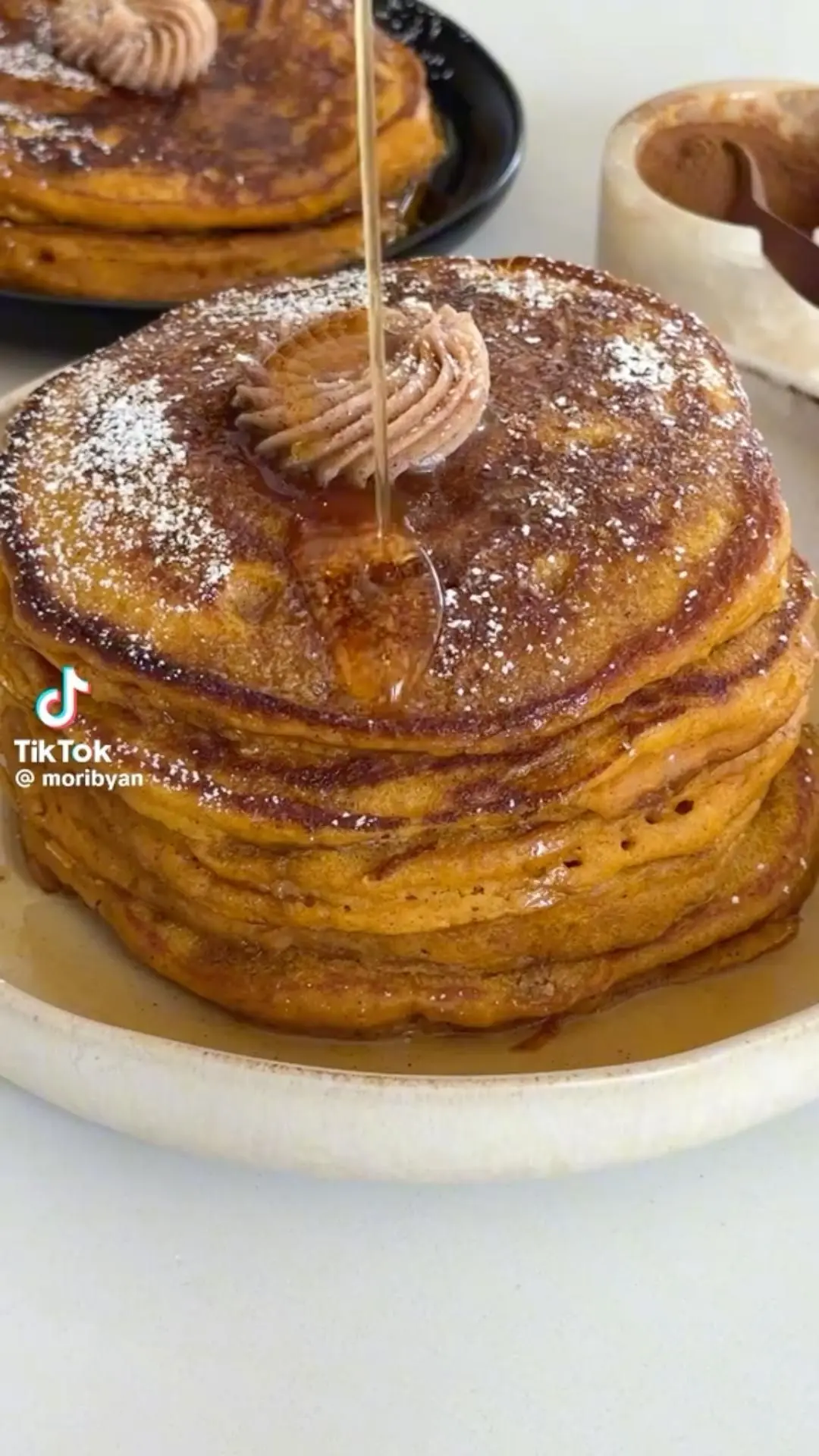
Pumpkin Pancakes 🤎🥞
Pumpkin pancakes deliver a soft, spiced crumb with real pumpkin purée, ready in 30 minutes for a cozy fall breakfast the whole table devours.
🧂 Ingredients
- 250 g (2 cups) all-purpose flour
- 25 g (2 tbsp) granulated sugar
- 10 g (2 1/2 tsp) baking powder
- 3 g (1/2 tsp) fine salt
- 4 g (2 tsp) ground cinnamon
- 1 g (1/2 tsp) ground ginger
- 0.5 g (1/4 tsp) ground nutmeg
- 240 g (1 cup) pumpkin purée
- 2 large eggs (about 100 g)
- 300 ml (1 1/4 cups) whole milk
- 45 g (3 tbsp) unsalted butter, melted
- 5 g (1 tsp) vanilla extract
📋 Instructions
- 1Whisk the dry mix — Combine 250 g flour, 25 g sugar, 10 g baking powder, 3 g salt, 4 g cinnamon, 1 g ginger, and 0.5 g nutmeg in a large bowl. Whisk for 20 seconds to distribute the leaveners evenly (clumps of baking powder leave bitter spots). The mix is ready when no streaks of spice remain.
- 2Blend the wet mix — Whisk 240 g pumpkin purée, 2 eggs, 300 ml milk, 45 g melted butter, and 5 g vanilla in a second bowl until smooth, about 30 seconds. The mixture is ready when it is an even orange with no curdled streaks.
- 3Fold the batter — Pour the wet mix into the dry and fold with a spatula for 15 to 20 strokes, stopping while small lumps remain. Overmixing develops gluten and gives a chewy pancake (the lumps bake out).
- 4Rest the batter — Let the batter stand 5 minutes at room temperature. The flour hydrates and the batter thickens slightly (this prevents thin, spreading pancakes).
- 5Heat the griddle — Heat a flat griddle or heavy skillet to 190 °C (375 °F) and brush with a thin film of oil. A drop of water should sizzle and skitter across the surface within 1 second.
- 6Cook the first side — Scoop 60 ml (1/4 cup) batter per pancake onto the griddle and cook 2 to 3 minutes. The edges set and matte, and bubbles pop on the surface (that is the signal to flip).
- 7Flip and finish — Flip once and cook 90 seconds to 2 minutes more, until the center springs back when pressed and the bottom is golden brown. Do not press the pancakes down with the spatula (it squeezes out the air).
- 8Hold and serve — Move finished pancakes to a rack in a 90 °C (200 °F) oven while you cook the rest. Serve within 15 minutes with butter and maple syrup.

Tomasz writes precise, method-first recipes for breads, ferments, and slow braises, drawing on Polish and Central European home cooking. He cares about weights, temperatures, and timing, and explains the reason behind each step so cooks can repeat results. His angle is turning fussy techniques into clear, checkable instructions.