All Recipes Menu
Maple Pecan Cinnamon Scones – Best Cozy 50-Minute Bake

These maple pecan cinnamon scones are the kind of bake that makes a kitchen smell like a cabin in October: toasted nuts, cinnamon, and maple syrup all melding in the oven. The dough comes together in one bowl and one cutting board, no mixer required, so you can have warm scones on the table before the coffee finishes brewing.
The secret is twofold: cold butter cut into craggy pieces for maximum flake, and a double layer of maple flavor, once in the dough and again in the glossy glaze that sets on top. Toasting the pecans first is non-negotiable. It takes five minutes and turns raw, slightly bitter nuts into deep, buttery ones that hold their crunch against the soft crumb.
These are tender but sturdy enough to split and butter, and they freeze beautifully, so you can bake a batch on Sunday and pull one out whenever the craving hits. Serve them warm with salted butter and a strong cup of coffee, or pack them for a weekend brunch and watch them disappear.
Why You'll Love This Recipe
About the Ingredients
2 cups (250g) all-purpose flour, plus extra for dusting
Use a kitchen scale if you can, since spooned-and-leveled flour can vary by 20g. For a slightly nuttier crumb, swap 1/2 cup of the all-purpose flour for whole wheat pastry flour.
1/4 cup (50g) granulated sugar
Granulated sugar keeps the crumb light; don't substitute honey here because the extra liquid will make the dough sticky. If you only have cane sugar, pulse it in a blender for 10 seconds to fine it down.
2 teaspoons baking powder
Check the date on your can, since expired baking powder is the most common cause of flat scones. For a lead-free option, look for aluminum-free baking powder at the store.
1 teaspoon ground cinnamon
Fresh cinnamon makes a real difference, so smell yours before using it. If it smells dusty rather than sweet, buy a new jar of Ceylon cinnamon for a softer, more floral note.
1/2 teaspoon fine sea salt
Fine sea salt dissolves evenly into the dough. If you only have kosher salt, use 3/4 teaspoon of Diamond Crystal or 1/2 teaspoon of Morton.
1/2 cup (113g) unsalted butter, very cold and cut into 1/2-inch cubes
Freeze the butter for 15 minutes before cutting it in for the flakiest layers. Salted butter works in a pinch, but then reduce the added salt to 1/4 teaspoon.
3/4 cup (90g) pecan halves, toasted and roughly chopped
Toast the pecans at 350F (175C) for 6 to 8 minutes until fragrant, then cool completely before chopping. Walnuts make a fine substitute, though they are slightly more bitter.
1/3 cup (80ml) whole milk, plus 1 tablespoon for brushing
Whole milk gives the richest crumb; for a dairy-free version, use full-fat oat milk and expect a slightly denser scone. Keep it ice-cold right up until you pour it in.
1/4 cup (60ml) pure maple syrup, plus 2 tablespoons for the glaze
Use Grade A dark or amber maple syrup for the strongest flavor; pancake syrup is corn-syrup based and will not taste the same. Buy a small jug rather than a giant one if you only bake occasionally.
1 large egg, cold
The egg adds richness and helps bind the dough. For an egg-free version, whisk 1 tablespoon ground flaxseed with 3 tablespoons water and let it sit for 5 minutes before using.
1/2 cup (60g) powdered sugar, sifted
Sift the powdered sugar to avoid lumps in the glaze. If you need a thicker glaze, add more sugar a teaspoon at a time; for a thinner one, add a few drops of milk.
Tips & Tricks
Keep Everything Cold
Warm butter or warm milk will melt the fat before baking and give you flat, tough scones instead of flaky ones. Chill your bowl and cut the butter into cubes straight from the fridge or freezer.
Don't Overwork the Dough
Stop mixing the moment the dough holds together, because extra kneading develops gluten and turns tender scones chewy. A shaggy, slightly crumbly dough is exactly right.
Pat, Don't Roll
Roll the dough out with a light hand to about 1 inch thick, since pressing too hard compresses the layers. A sharp, straight-down cut with a knife also helps the scones rise tall and split cleanly.
Glaze After Cooling
Wait until the scones are completely cool before drizzling the maple glaze, or it will melt and slide right off. Set them on a wire rack with a sheet of parchment underneath to catch the drips.
Pro Tips
Step-by-Step Instructions
1. Heat the Oven
Preheat the oven to 400F (200C) and line a baking sheet with parchment paper. Let the oven fully come to temperature, about 15 minutes, so the scones get an immediate burst of heat.
2. Toast the Pecans
Spread the pecan halves on a dry baking sheet and toast at 350F (175C) for 6 to 8 minutes, until they smell nutty and darken slightly. Cool completely, then roughly chop; you should hear a crisp snap when you break one.
3. Whisk the Dry Ingredients
In a large bowl, whisk together the flour, granulated sugar, baking powder, cinnamon, and salt until evenly combined. Break up any cinnamon clumps with your fingers so the spice distributes evenly.
4. Cut in the Butter
Scatter the cold butter cubes over the flour and toss to coat. Use a pastry cutter or your fingertips to work the butter in until the mixture looks like coarse meal with some pea-sized pieces remaining, about 2 to 3 minutes.
5. Add the Wet Ingredients
Stir the chopped pecans into the flour mixture. Whisk the milk, maple syrup, and egg together in a small jug, then pour into the dry ingredients and fold with a spatula just until a shaggy dough forms, about 10 to 12 strokes.
6. Shape the Dough
Turn the dough onto a lightly floured surface and pat it into a 7-inch round about 1 inch thick. Cut it into 6 wedges with a sharp knife, pressing straight down rather than sawing, then transfer the wedges to the prepared baking sheet.
7. Brush and Bake
Brush the tops lightly with the remaining 1 tablespoon of milk. Bake at 400F (200C) for 18 to 22 minutes, until the scones are golden brown and a toothpick inserted in the center comes out clean. The internal temperature should read about 200F (93C).
8. Cool and Glaze
Transfer the scones to a wire rack and cool for at least 15 minutes. Whisk the powdered sugar with the remaining 2 tablespoons of maple syrup until smooth and pourable, then drizzle over the cooled scones and let it set for 5 minutes before serving.
Delicious Variations
Apple Pecan
Fold 1/2 cup of finely diced peeled apple into the dough with the pecans for a fruity, autumnal twist; reduce the milk by 1 tablespoon to compensate for the apple's moisture.
Maple Bacon
Add 1/3 cup of crumbled cooked bacon to the dough and finish with a pinch of flaky sea salt on the glaze for a sweet-savory version.
Gluten-Free
Swap the all-purpose flour for a 1-to-1 gluten-free baking blend and add 1/2 teaspoon xanthan gum if your blend does not include it; the texture will be slightly more delicate but still tender.
How to Store Maple Pecan Cinnamon Scones
Refrigerator
Store cooled scones in an airtight container at room temperature for up to 2 days or in the refrigerator for up to 5 days; reheat briefly to soften the glaze.
Freezer
Freeze baked scones in a zip-top bag for up to 2 months, or freeze unbaked wedges on a tray and bake from frozen at 400F (200C) for 22 to 26 minutes.
Reheating
Reheat in a 300F (150C) oven for 6 to 8 minutes, or microwave for 15 to 20 seconds, until warm and soft in the center.
Frequently Asked Questions
Q: Why are my scones flat and not rising?
Flat scones are almost always caused by expired baking powder or butter that was too warm. Check the date on your baking powder, and freeze the butter cubes for 15 minutes before cutting them in so the fat stays cold until it hits the oven.
Q: Can I make maple pecan cinnamon scones ahead of time?
Yes, you can shape the dough into wedges and refrigerate them overnight, tightly covered, or freeze them for up to 2 months. Bake straight from the fridge or freezer, adding 3 to 5 minutes to the bake time if frozen.
Q: Can I use pancake syrup instead of maple syrup?
You can, but the flavor will be noticeably sweeter and more artificial, and the glaze will be thinner. Pure maple syrup is the better choice because its caramel notes pair with the toasted pecans and cinnamon.
Q: How do I know when scones are fully baked?
The tops should be golden brown and a toothpick inserted in the center should come out clean, with an internal temperature around 200F (93C). If the tops brown before the center sets, tent them loosely with foil and continue baking.
Q: Can I make these scones without a pastry cutter?
Yes, your fingertips work beautifully, or you can pulse the cold butter into the flour in a food processor a few times. Just stop while you still see pea-sized butter pieces, since overworking the mixture will make the scones tough.
Bake a batch of these maple pecan cinnamon scones this weekend and let the smell fill your kitchen. If you make them, snap a photo and leave a comment below telling me how they turned out, and don't forget to share the recipe with a friend who needs a cozy morning bake.
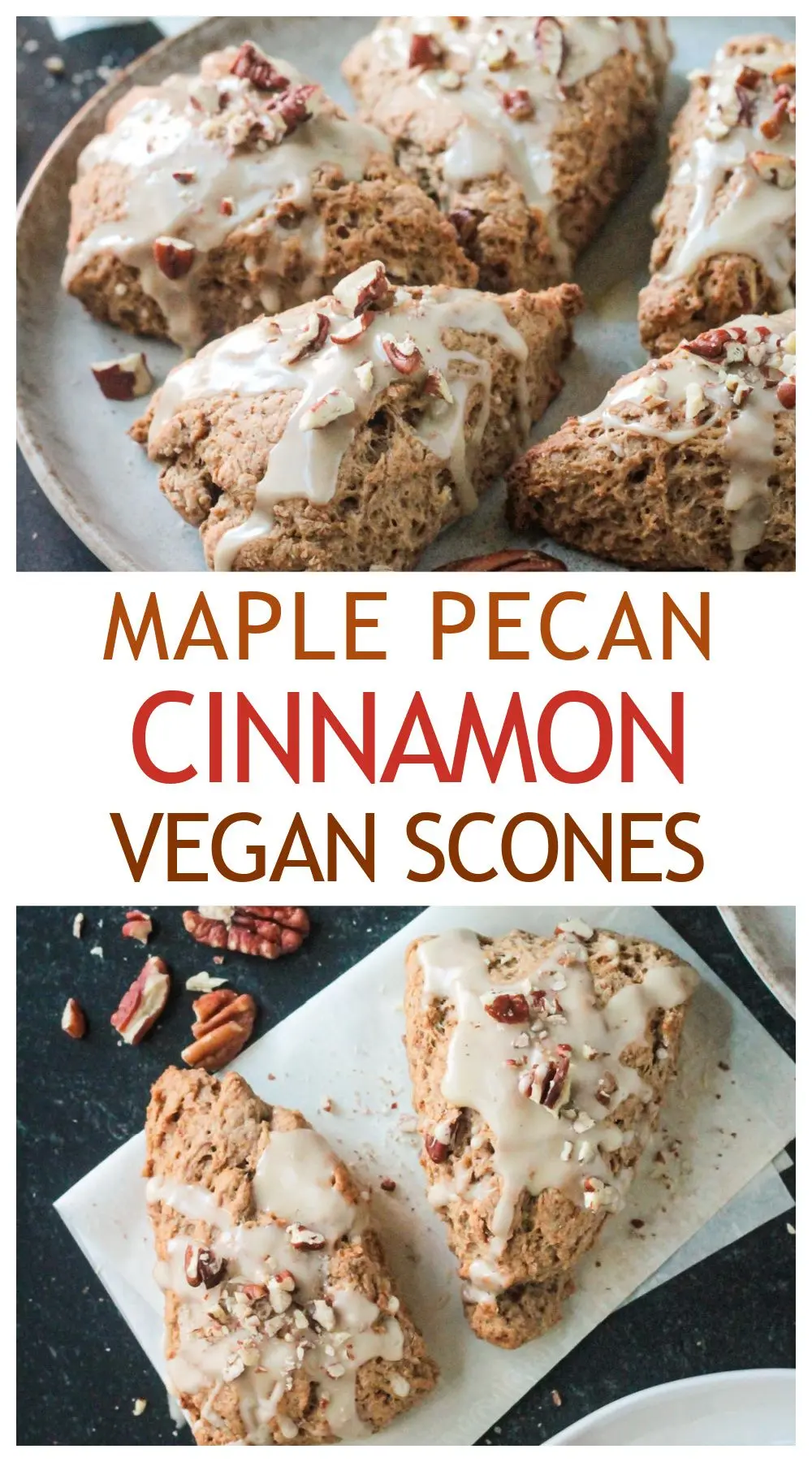
Maple Pecan Cinnamon Scones
Maple Pecan Cinnamon Scones deliver buttery, flaky layers with toasted pecans, warm cinnamon, and real maple glaze in one cozy bake.
🧂 Ingredients
- 2 cups (250g) all-purpose flour, plus extra for dusting
- 1/4 cup (50g) granulated sugar
- 2 teaspoons baking powder
- 1 teaspoon ground cinnamon
- 1/2 teaspoon fine sea salt
- 1/2 cup (113g) unsalted butter, very cold and cut into 1/2-inch cubes
- 3/4 cup (90g) pecan halves, toasted and roughly chopped
- 1/3 cup (80ml) whole milk, plus 1 tablespoon for brushing
- 1/4 cup (60ml) pure maple syrup, plus 2 tablespoons for the glaze
- 1 large egg, cold
- 1/2 cup (60g) powdered sugar, sifted
📋 Instructions
- 1Heat the Oven — Preheat the oven to 400F (200C) and line a baking sheet with parchment paper. Let the oven fully come to temperature, about 15 minutes, so the scones get an immediate burst of heat.
- 2Toast the Pecans — Spread the pecan halves on a dry baking sheet and toast at 350F (175C) for 6 to 8 minutes, until they smell nutty and darken slightly. Cool completely, then roughly chop; you should hear a crisp snap when you break one.
- 3Whisk the Dry Ingredients — In a large bowl, whisk together the flour, granulated sugar, baking powder, cinnamon, and salt until evenly combined. Break up any cinnamon clumps with your fingers so the spice distributes evenly.
- 4Cut in the Butter — Scatter the cold butter cubes over the flour and toss to coat. Use a pastry cutter or your fingertips to work the butter in until the mixture looks like coarse meal with some pea-sized pieces remaining, about 2 to 3 minutes.
- 5Add the Wet Ingredients — Stir the chopped pecans into the flour mixture. Whisk the milk, maple syrup, and egg together in a small jug, then pour into the dry ingredients and fold with a spatula just until a shaggy dough forms, about 10 to 12 strokes.
- 6Shape the Dough — Turn the dough onto a lightly floured surface and pat it into a 7-inch round about 1 inch thick. Cut it into 6 wedges with a sharp knife, pressing straight down rather than sawing, then transfer the wedges to the prepared baking sheet.
- 7Brush and Bake — Brush the tops lightly with the remaining 1 tablespoon of milk. Bake at 400F (200C) for 18 to 22 minutes, until the scones are golden brown and a toothpick inserted in the center comes out clean. The internal temperature should read about 200F (93C).
- 8Cool and Glaze — Transfer the scones to a wire rack and cool for at least 15 minutes. Whisk the powdered sugar with the remaining 2 tablespoons of maple syrup until smooth and pourable, then drizzle over the cooled scones and let it set for 5 minutes before serving.