All Recipes Menu
Ina Garten’s Viral Brownie Pudding – Easy Small Batch
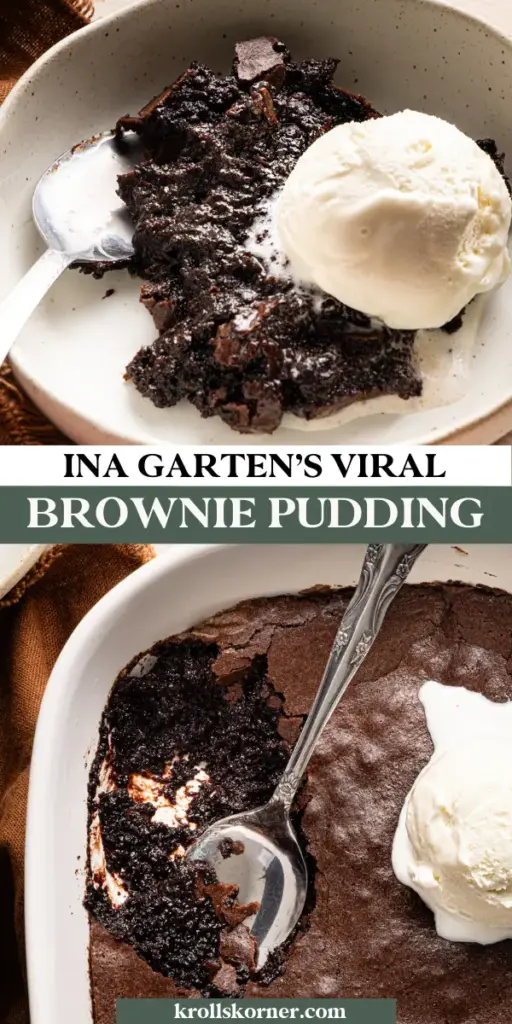
The first time you pull this from the oven, the whole kitchen smells like melted chocolate and toasted butter, and you'll hear a faint crackle as the top settles. That sound is your signal that the thin, papery crust has formed over a pudding so soft it barely holds a spoon.
This is Ina's famous brownie pudding, but sized for a small household so you're not staring down a 9x13 pan for a week. Six generous scoops, one loaf pan, and a batter that comes together in a single bowl with a whisk.
You'll know it's done when the center still wobbles like set custard and a skewer comes out streaky, not clean. That gooey middle is the whole point, so trust your nose and your eyes over the clock.
Why You'll Love This Recipe
About the Ingredients
10 tablespoons (142g) unsalted butter, plus extra for greasing
Use a good European-style butter for deeper flavor. In a pinch, salted butter works; just skip the added salt in the recipe.
1 cup (200g) granulated sugar
Caster sugar dissolves fastest, but plain granulated is fine. Don't swap in brown sugar here, as it makes the pudding too dense.
2 large eggs, at room temperature
Room-temperature eggs whip into a lighter foam. If yours are cold, rest them in warm tap water for 10 minutes.
1 teaspoon vanilla extract
Real vanilla beats imitation every time. Bourbon vanilla adds a warm, almost caramel note that suits the chocolate.
1/2 cup (50g) Dutch-process cocoa powder, plus extra for dusting
Dutch-process gives a darker, smoother chocolate flavor. If you only have natural cocoa, add 1/4 teaspoon baking soda.
1/4 cup (30g) all-purpose flour
Just a little flour holds the structure. Swap in a 1:1 gluten-free blend if needed, and the texture stays nearly identical.
1/4 teaspoon fine sea salt
A pinch of salt sharpens the chocolate. Kosher salt works too, but use a slightly rounded 1/4 teaspoon.
Vanilla ice cream, for serving
Cold vanilla against hot pudding is the classic move. Try a scoop of coffee or salted caramel ice cream for a twist.
Tips & Tricks
Don't Overbake It
The center should still jiggle when you nudge the pan; a fully set center means you've lost the pudding texture.
Use a Water Bath
Setting the loaf pan in a larger pan of hot water keeps the custard silky and prevents the edges from turning rubbery.
Whisk Cocoa Thoroughly
Sift or whisk the cocoa before mixing, or you'll get bitter clumps hiding in the batter.
Let It Rest Briefly
Five minutes out of the oven lets the crust set so your spoon doesn't tear straight through it.
Pro Tips
Step-by-Step Instructions
1. Heat the Oven
Preheat your oven to 325°F (165°C). Butter a 9x5-inch loaf pan generously, then dust it with cocoa powder and tap out the excess.
2. Melt the Butter
Melt the butter in a small saucepan over low heat until just liquid, about 3 minutes. Pull it off the heat before it sizzles or browns, then let it cool for 5 minutes.
3. Whisk Eggs and Sugar
In a large bowl, whisk the eggs, sugar, and vanilla for 2 minutes until pale and slightly thickened. You want to see ribbons fall from the whisk.
4. Add the Dry Ingredients
Sift the cocoa, flour, and salt directly into the egg mixture, then whisk gently until just combined. Fold in the melted butter last, stirring until the batter is glossy and smooth.
5. Pour and Set the Water Bath
Scrape the batter into the prepared loaf pan and smooth the top. Place the pan in a larger roasting pan and pour hot tap water into the outer pan until it reaches halfway up the sides.
6. Bake Until Wobbly
Bake at 325°F (165°C) for 32 to 35 minutes, until the top is set and crackly and the center wobbles gently when nudged. The edges will pull slightly away from the pan and smell deeply of chocolate.
7. Cool Briefly
Lift the loaf pan out of the water bath and set it on a rack for 5 minutes. The pudding will deflate slightly in the middle, which is exactly what you want.
8. Serve Warm
Spoon into bowls while still warm and top each portion with a scoop of vanilla ice cream. Watch it melt into the cracks and pool at the edges.
Delicious Variations
Mocha Brownie Pudding
Add 1 teaspoon instant espresso powder to the dry ingredients for a coffee-shop depth.
Salted Caramel Swirl
Drizzle 2 tablespoons of warm salted caramel over the batter before baking and swirl once with a knife.
Raspberry Brownie Pudding
Tuck 8 fresh raspberries into the batter just before baking for bright, tart pockets.
How to Store Ina Garten's Viral Brownie Pudding (Small Batch)
Refrigerator
Cover the cooled pan tightly and refrigerate for up to 3 days. It firms up into a dense, truffle-like texture that's delicious cold.
Freezer
Scoop individual portions into airtight containers and freeze for up to 2 months. Thaw overnight in the refrigerator before reheating.
Reheating
Microwave a single portion for 20 to 30 seconds, or warm the whole pan covered at 300°F (150°C) for 10 minutes until just soft in the middle.
Frequently Asked Questions
Q: Why did my brownie pudding turn out dry?
It was almost certainly overbaked. Pull the pan as soon as the center still jiggles and a skewer comes out with thick streaks rather than clean. The water bath also matters, so don't skip it.
Q: Can I make Ina Garten's brownie pudding without a water bath?
Yes, but the texture will be firmer and more like a brownie than a pudding. If you skip the bath, lower the oven to 300°F (150°C) and check it at 28 minutes.
Q: How do I know when brownie pudding is done?
The top should be set and crackly while the center wobbles like set custard when you nudge the pan. A toothpick inserted in the middle should come out streaky with batter, not clean.
Q: Can I double this small batch recipe?
Yes, use a 9x13-inch pan and bake at 325°F (165°C) for 40 to 45 minutes. Keep the water bath and start checking at 38 minutes, since the larger volume takes longer to set.
Q: What's the best pan for brownie pudding?
A 9x5-inch metal loaf pan gives the most even bake and fits neatly inside a roasting pan for the water bath. Glass works too, but add 3 to 5 minutes to the bake time.
Give this small-batch brownie pudding a try tonight, and don't forget the ice cream on top. Scoop it warm, listen for that crackle, and tell me how yours turned out. Taste as you go, then taste again.
Ina Garten's Viral Brownie Pudding (Small Batch)
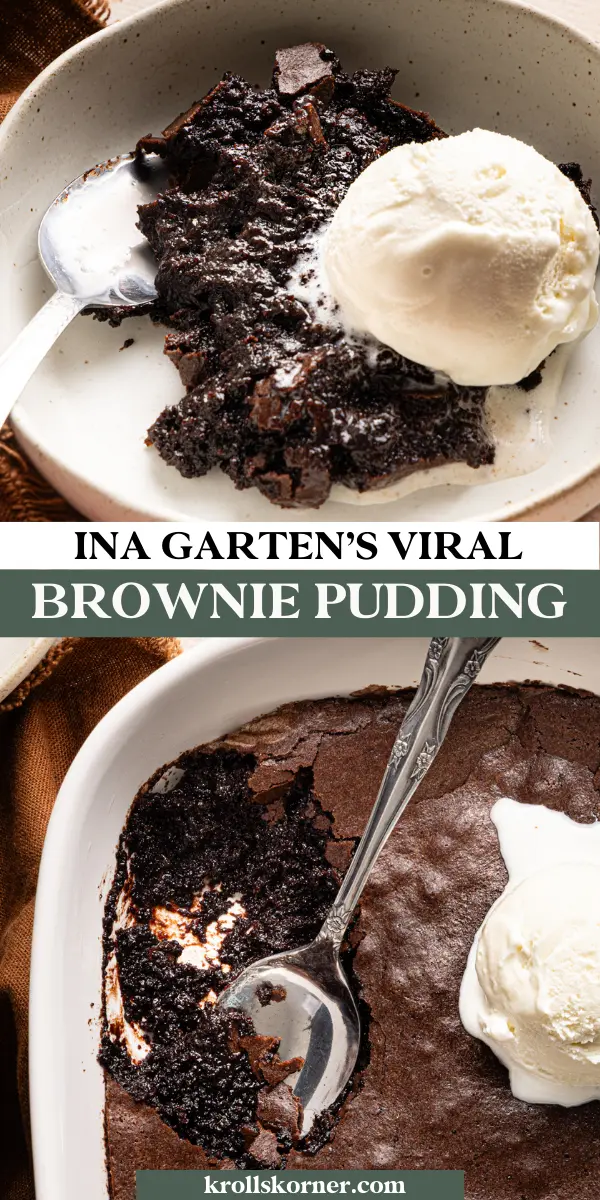
Ina Garten's viral brownie pudding, scaled down to a small batch: crackly top, molten fudgy center, and a scoop of vanilla ice cream on top.
🧂 Ingredients
- 10 tablespoons (142g) unsalted butter, plus extra for greasing
- 1 cup (200g) granulated sugar
- 2 large eggs, at room temperature
- 1 teaspoon vanilla extract
- 1/2 cup (50g) Dutch-process cocoa powder, plus extra for dusting
- 1/4 cup (30g) all-purpose flour
- 1/4 teaspoon fine sea salt
- Vanilla ice cream, for serving
📋 Instructions
- 1Heat the Oven — Preheat your oven to 325°F (165°C). Butter a 9x5-inch loaf pan generously, then dust it with cocoa powder and tap out the excess.
- 2Melt the Butter — Melt the butter in a small saucepan over low heat until just liquid, about 3 minutes. Pull it off the heat before it sizzles or browns, then let it cool for 5 minutes.
- 3Whisk Eggs and Sugar — In a large bowl, whisk the eggs, sugar, and vanilla for 2 minutes until pale and slightly thickened. You want to see ribbons fall from the whisk.
- 4Add the Dry Ingredients — Sift the cocoa, flour, and salt directly into the egg mixture, then whisk gently until just combined. Fold in the melted butter last, stirring until the batter is glossy and smooth.
- 5Pour and Set the Water Bath — Scrape the batter into the prepared loaf pan and smooth the top. Place the pan in a larger roasting pan and pour hot tap water into the outer pan until it reaches halfway up the sides.
- 6Bake Until Wobbly — Bake at 325°F (165°C) for 32 to 35 minutes, until the top is set and crackly and the center wobbles gently when nudged. The edges will pull slightly away from the pan and smell deeply of chocolate.
- 7Cool Briefly — Lift the loaf pan out of the water bath and set it on a rack for 5 minutes. The pudding will deflate slightly in the middle, which is exactly what you want.
- 8Serve Warm — Spoon into bowls while still warm and top each portion with a scoop of vanilla ice cream. Watch it melt into the cracks and pool at the edges.

Priya writes about South Indian home cooking and the improvisation that happens in real kitchens, from quick weekday tiffins to slow weekend spreads. She is interested in how a single tempering of spices changes a dish and in adapting familiar recipes to what a cook has on hand. Her angle is playful, sensory recipe writing that treats cooking as something to tinker with.