All Recipes Menu
Hot Honey Chicken Tenders – Crispy 40-Minute Dinner
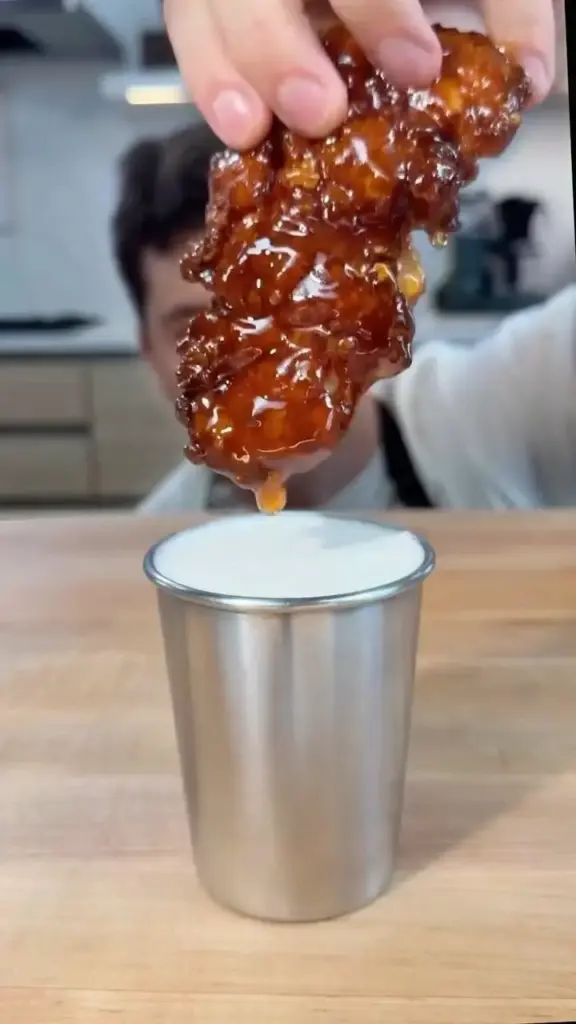
Hot honey chicken tenders are a two-part build: a buttermilk brine that keeps the meat juicy, then a double dredge that fries into a shattering crust. The honey goes on last, off the heat, so the sugar never scorches.
Weigh the flour and buttermilk rather than eyeballing them. The dredge works only when the ratios hold, and a scale makes the crust repeatable every time.
Fry in two batches and keep the oil between 350F and 360F (175C to 180C). Crowding drops the temperature and the coating drinks oil instead of sealing.
Why You'll Love This Recipe
About the Ingredients
900 g (about 12 pieces) chicken tenders, trimmed
Buy tenders of even thickness so they cook at one rate. Boneless skinless thighs cut into 2 cm strips work as a substitute and stay juicier.
360 g (1 1/2 cups) buttermilk
Full-fat buttermilk clings best. Substitute 360 g whole milk mixed with 15 g lemon juice and rested 10 minutes.
15 g (1 tbsp) hot sauce, such as Frank's
Any cayenne-based vinegar hot sauce works. Skip sugar-forward barbecue sauces here; they burn in the fryer.
10 g (2 tsp) fine sea salt
Fine salt dissolves into the brine evenly. Do not swap in flaky salt at the same weight; it measures far weaker.
200 g (1 2/3 cups) all-purpose flour
Low-protein flour fries lighter. A 1:1 gluten-free blend substitutes directly if you need it.
30 g (1/4 cup) cornstarch
Cornstarch is what makes the crust shatter. Potato starch is a clean substitute at the same weight.
8 g (1 tbsp) smoked paprika
Smoked paprika adds depth, not heat. Sweet paprika is a milder swap; use half the amount of hot paprika.
3 g (1 tsp) cayenne pepper
Adjust to taste but keep at least 1 g for the signature burn. Aleppo pepper gives a fruitier, gentler heat.
2 large eggs (about 100 g)
Eggs bind the second dredge. Two egg whites plus 10 g oil work if you are avoiding yolks.
1.5 L (6 cups) neutral oil, for frying
Canola, peanut, or refined sunflower all hold 350F well. Never fry in unrefined olive oil; it smokes early.
170 g (1/2 cup) honey
Use runny clover or wildflower honey. Thick creamed honey needs gentle warming to pour and coat.
6 g (1 tsp) red pepper flakes
Fresh flakes carry more heat than old ones. Crushed arbol is hotter; start with half if unsure.
Tips & Tricks
Keep the oil steady
Clip a thermometer to the pot and hold 350F to 360F (175C to 180C); below that the crust turns greasy, above it browns before the chicken cooks.
Rest the dredge
Let coated tenders sit 10 minutes before frying so the flour hydrates and bonds to the meat instead of falling off in the oil.
Glaze off the heat
Toss tenders in hot honey only after they drain, because honey sugars scorch in seconds at frying temperature.
Salt after frying
Season the moment tenders leave the oil, when the surface still grabs salt.
Pro Tips
Step-by-Step Instructions
1. Brine the tenders
Whisk 360 g buttermilk, 15 g hot sauce, and 10 g salt in a bowl. Submerge the 900 g tenders, cover, and refrigerate 30 minutes (the salt seasons the meat and the acid tenderizes the surface).
2. Build the dredge
Whisk 200 g flour, 30 g cornstarch, 8 g smoked paprika, 3 g cayenne, and 4 g salt in a wide dish. Beat 2 eggs in a second dish (the starch-to-flour ratio is what makes the crust shatter).
3. Heat the oil
Pour 1.5 L neutral oil into a heavy pot to a depth of 5 cm. Heat to 350F (175C), checked with a clip-on thermometer (shallow oil heats faster and needs less volume).
4. Dredge twice
Lift each tender from the brine, let it drip, then press it into the flour, dip in egg, and press into flour again. Set coated pieces on a rack and rest 10 minutes (the rest hydrates the flour so it bonds).
5. Fry the first batch
Lower five tenders into the oil and fry 5 to 6 minutes, turning once, until deep golden brown and the bubbling at the edges slows (internal temperature should read 165F/74C).
6. Drain and repeat
Move fried tenders to a rack over paper towels and salt lightly. Return the oil to 350F (175C) before frying the next batch (a rack, not a plate, keeps the underside crisp).
7. Make the hot honey
Warm 170 g honey with 6 g red pepper flakes in a small pan over low heat for 3 minutes, until it loosens and smells floral (do not let it simmer or the flakes turn bitter).
8. Glaze and serve
Drizzle the warm honey over the drained tenders or toss them in a bowl, then serve within 10 minutes (the glaze softens the crust if it sits longer).
Delicious Variations
Baked Version
Spray the dredged tenders with oil and bake at 220C (425F) for 18 minutes, turning once at the halfway mark.
Nashville Style
Add 20 g cayenne to the honey and spoon it over tenders resting on white bread with pickles.
Air Fryer
Cook at 200C (400F) for 12 minutes, flipping at 6 minutes, then glaze immediately.
How to Store Hot Honey Chicken Tenders
Refrigerator
Store unglazed tenders in an airtight container up to 3 days; keep the hot honey separate so the crust survives.
Freezer
Freeze fried, unglazed tenders on a tray for 1 hour, then bag up to 2 months.
Reheating
Reheat at 200C (400F) for 8 to 10 minutes on a rack, then glaze fresh.
Frequently Asked Questions
Q: Why did my chicken tenders turn out soggy?
The oil was below 350F (175C) or the pot was crowded. Fry in batches of five and confirm the temperature with a thermometer before each batch.
Q: Can I make hot honey chicken tenders in the oven instead of frying?
Yes, bake them at 220C (425F) for 18 minutes on an oiled rack. The crust is lighter but still crisp, and you avoid the oil entirely.
Q: How do I know when chicken tenders are fully cooked?
Insert a thermometer into the thickest part; it should read 165F (74C). At that point the juices run clear and the crust is deep golden brown.
Q: Can I make the hot honey ahead of time?
Yes, warm honey with pepper flakes keeps in a jar for two weeks at room temperature. Reheat gently to 40C (104F) before using so it pours.
Q: What can I use instead of buttermilk?
Mix 360 g whole milk with 15 g lemon juice and rest 10 minutes. The mixture thickens and clings to the chicken the same way.
Weigh the flour, watch the oil temperature, and repeat the batch until the crust is second nature. Weigh, watch, repeat.
Hot Honey Chicken Tenders
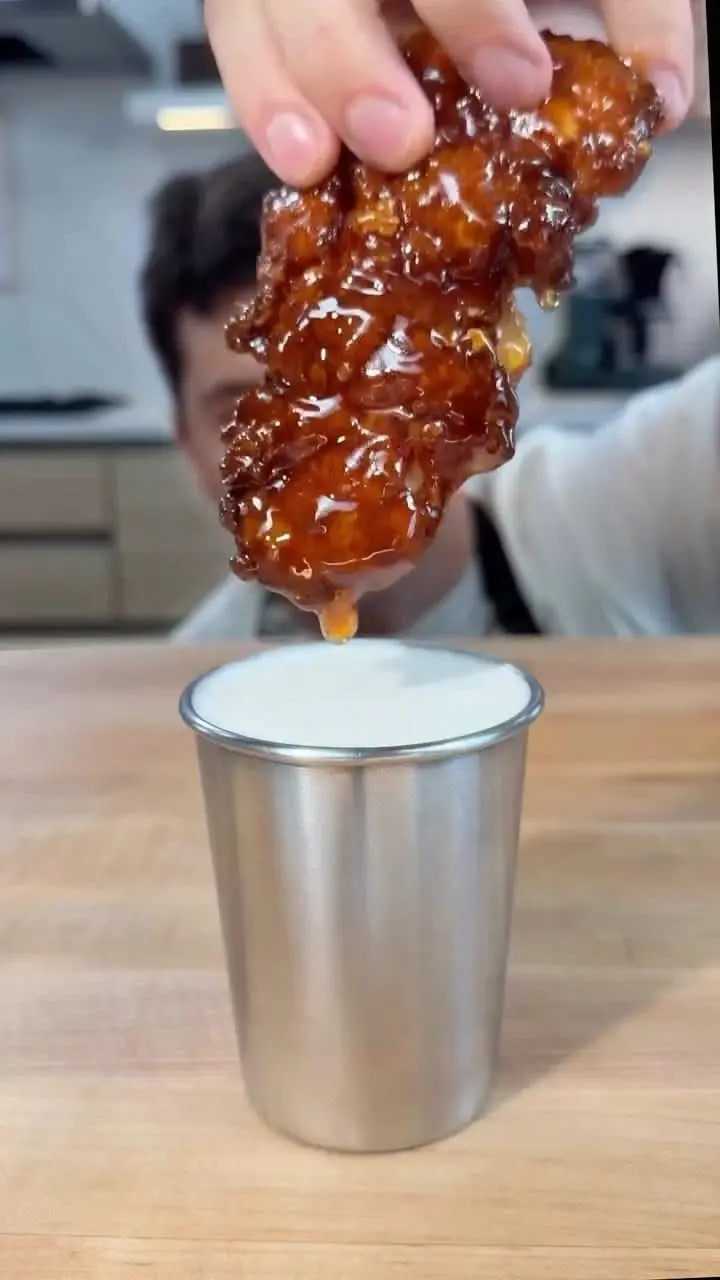
Hot honey chicken tenders deliver a crunchy golden crust glazed in sweet-spicy honey for a fast weeknight dinner the whole family fights over.
🧂 Ingredients
- 900 g (about 12 pieces) chicken tenders, trimmed
- 360 g (1 1/2 cups) buttermilk
- 15 g (1 tbsp) hot sauce, such as Frank's
- 10 g (2 tsp) fine sea salt
- 200 g (1 2/3 cups) all-purpose flour
- 30 g (1/4 cup) cornstarch
- 8 g (1 tbsp) smoked paprika
- 3 g (1 tsp) cayenne pepper
- 2 large eggs (about 100 g)
- 1.5 L (6 cups) neutral oil, for frying
- 170 g (1/2 cup) honey
- 6 g (1 tsp) red pepper flakes
📋 Instructions
- 1Brine the tenders — Whisk 360 g buttermilk, 15 g hot sauce, and 10 g salt in a bowl. Submerge the 900 g tenders, cover, and refrigerate 30 minutes (the salt seasons the meat and the acid tenderizes the surface).
- 2Build the dredge — Whisk 200 g flour, 30 g cornstarch, 8 g smoked paprika, 3 g cayenne, and 4 g salt in a wide dish. Beat 2 eggs in a second dish (the starch-to-flour ratio is what makes the crust shatter).
- 3Heat the oil — Pour 1.5 L neutral oil into a heavy pot to a depth of 5 cm. Heat to 350F (175C), checked with a clip-on thermometer (shallow oil heats faster and needs less volume).
- 4Dredge twice — Lift each tender from the brine, let it drip, then press it into the flour, dip in egg, and press into flour again. Set coated pieces on a rack and rest 10 minutes (the rest hydrates the flour so it bonds).
- 5Fry the first batch — Lower five tenders into the oil and fry 5 to 6 minutes, turning once, until deep golden brown and the bubbling at the edges slows (internal temperature should read 165F/74C).
- 6Drain and repeat — Move fried tenders to a rack over paper towels and salt lightly. Return the oil to 350F (175C) before frying the next batch (a rack, not a plate, keeps the underside crisp).
- 7Make the hot honey — Warm 170 g honey with 6 g red pepper flakes in a small pan over low heat for 3 minutes, until it loosens and smells floral (do not let it simmer or the flakes turn bitter).
- 8Glaze and serve — Drizzle the warm honey over the drained tenders or toss them in a bowl, then serve within 10 minutes (the glaze softens the crust if it sits longer).

Tomasz writes precise, method-first recipes for breads, ferments, and slow braises, drawing on Polish and Central European home cooking. He cares about weights, temperatures, and timing, and explains the reason behind each step so cooks can repeat results. His angle is turning fussy techniques into clear, checkable instructions.