All Recipes Menu
Halibut with Dijon Herb Cream – Creamy 30-Minute Dinner

The butter hits the hot skillet and the kitchen fills with that nutty, golden smell before the fish even touches the pan. That's your cue that dinner is about to get very good, very fast.
Halibut with Dijon Herb Cream is the kind of dish that looks like a restaurant plate but comes together in one pan on a Tuesday. The fish sears to a crisp, golden crust while a tangy cream sauce builds around it, perfumed with tarragon and chives.
You'll know it's done by sound and smell: the butter sizzles low and steady, the cream bubbles at the edges, and the herbs go sweet and fragrant. Grab your best skillet and let's cook.
Why You'll Love This Recipe
About the Ingredients
4 halibut fillets, about 6 oz (170g) each, skin removed
Ask your fishmonger for center-cut fillets so they cook evenly. If halibut is unavailable or too pricey, thick cod loin or mahi-mahi work beautifully here.
1 1/4 tsp fine sea salt, divided
Fine sea salt dissolves faster than kosher flakes in the sauce. If using kosher, use about 1 3/4 tsp to taste the same.
1/2 tsp freshly ground black pepper
Fresh-cracked pepper is far more aromatic than pre-ground. A quick twist from a mill is worth the extra second.
2 tbsp unsalted butter, divided
Unsalted lets you control the seasoning. Swap in olive oil if you're dairy-free, though you'll lose some of that nutty browning.
1 small shallot, finely minced (about 3 tbsp)
Shallots are sweeter and gentler than onion. In a pinch, use the white part of a scallion or a quarter of a mild yellow onion.
2 cloves garlic, finely grated
A microplane turns garlic into a paste that melts into the sauce without burning. Jarred garlic works but tastes flatter.
3/4 cup heavy cream
Full-fat heavy cream thickens without breaking. For a lighter version, use half-and-half and simmer two minutes longer.
2 tbsp Dijon mustard
Dijon brings the tang; whole-grain mustard adds texture if you like. Avoid yellow mustard, which is too sharp and thin.
1 tbsp fresh lemon juice, plus wedges for serving
Fresh juice only here, since bottled tastes metallic. A splash of dry white wine can stand in if you're out of lemons.
2 tbsp chopped fresh tarragon
Tarragon is the classic match for Dijon. No tarragon? Use dill or a mix of parsley and thyme.
1 tbsp chopped fresh chives, plus more for garnish
Snip chives with scissors to keep them from bruising. Thinly sliced scallion greens are a fine substitute.
Tips & Tricks
Dry the fish thoroughly
Pat fillets bone-dry with paper towels before seasoning, or the butter will steam instead of sear and you'll lose that golden crust.
Keep the heat moderate
If the butter starts smoking hard, pull the pan off the heat for ten seconds. Dijon cream scorches quickly once the garlic goes in.
Add cream off the boil
Whisk the cream in and lower the heat immediately; a gentle simmer keeps the sauce silky instead of grainy.
Season the sauce at the end
Dijon and lemon both carry salt and acid, so taste before adding more salt.
Pro Tips
Step-by-Step Instructions
1. Pat and Season the Fish
Pat the halibut fillets completely dry with paper towels, then season both sides with 1 tsp of the salt and the pepper. Let them sit at room temperature for 10 minutes while you prep the aromatics, which helps them cook evenly.
2. Melt Butter and Sear
Heat 1 tbsp of the butter in a large skillet over medium-high heat until it foams and smells nutty, about 1 minute. Lay in the fillets and sear undisturbed for 4 minutes, until the edges look opaque and the underside is deep golden brown.
3. Flip and Finish
Flip the fillets and cook 2 to 3 minutes more, until the fish flakes at the thickest point and an instant-read thermometer reads 130°F (54°C). Transfer to a warm plate and tent loosely with foil.
4. Soften the Shallot
Lower the heat to medium and add the remaining 1 tbsp butter to the same pan. Add the shallot and cook 2 minutes, stirring, until translucent and fragrant but not browned.
5. Bloom the Garlic
Stir in the garlic and cook just 30 seconds, until you smell it bloom. Keep it moving so it doesn't catch and turn bitter.
6. Build the Dijon Cream
Pour in the cream and whisk in the Dijon mustard. Bring to a gentle simmer, then cook 3 to 4 minutes, until the sauce coats the back of a spoon and bubbles softly at the edges.
7. Brighten and Season
Off the heat, whisk in the lemon juice, tarragon, chives, and remaining 1/4 tsp salt. Taste and adjust, then return the fish and any juices to the pan to warm through for 1 minute.
8. Plate and Serve
Spoon the Dijon herb cream over the fillets, scatter with more chives, and serve right away with lemon wedges and something to soak up the sauce.
Delicious Variations
Crispy-Skin Version
Sear skin-on fillets skin-side down for 5 minutes over medium heat for a crackly top, then finish as written.
Herb Swap
Try dill and capers instead of tarragon and chives for a brinier, Scandinavian-style sauce.
Lighter Cream
Use half-and-half with 1 tsp cornstarch whisked in for a slimmed-down sauce that still clings to the fish.
How to Store Halibut with Dijon Herb Cream
Refrigerator
Store leftovers in an airtight container in the refrigerator for up to 2 days; keep the fish and sauce together so it stays moist.
Freezer
Freezing is not recommended, as the cream sauce separates and the fish turns watery.
Reheating
Reheat gently in a covered skillet over low heat with a splash of water for 3 to 4 minutes, or microwave in 30-second bursts until just warm.
Frequently Asked Questions
Q: What temperature should halibut be cooked to?
Halibut is done at 130°F to 135°F (54°C to 57°C) at the thickest point. Pull it at 130°F and let it rest, since carryover heat brings it up a few degrees.
Q: Can I use frozen halibut for this recipe?
Yes, but thaw it completely in the refrigerator overnight and pat it very dry before searing. Frozen-then-thawed fish releases extra water, which can stop it from browning.
Q: What can I substitute for Dijon mustard?
Whole-grain mustard is the closest swap and adds a nice texture to the sauce. In a pinch, use half the amount of spicy brown mustard and taste before adding more.
Q: Why did my cream sauce curdle?
The sauce likely boiled too hard or the cream was cold when it hit the pan. Keep it at a gentle simmer and add cream at room temperature, whisking constantly.
Q: What should I serve with halibut with Dijon herb cream?
Steamed rice, crushed baby potatoes, or crusty bread all soak up the sauce beautifully. Add a crisp green salad or roasted asparagus to round out the plate.
Sear that halibut until it's golden and let the Dijon cream bubble around it, then spoon it over and watch the plates come back clean. Taste as you go, then taste again.
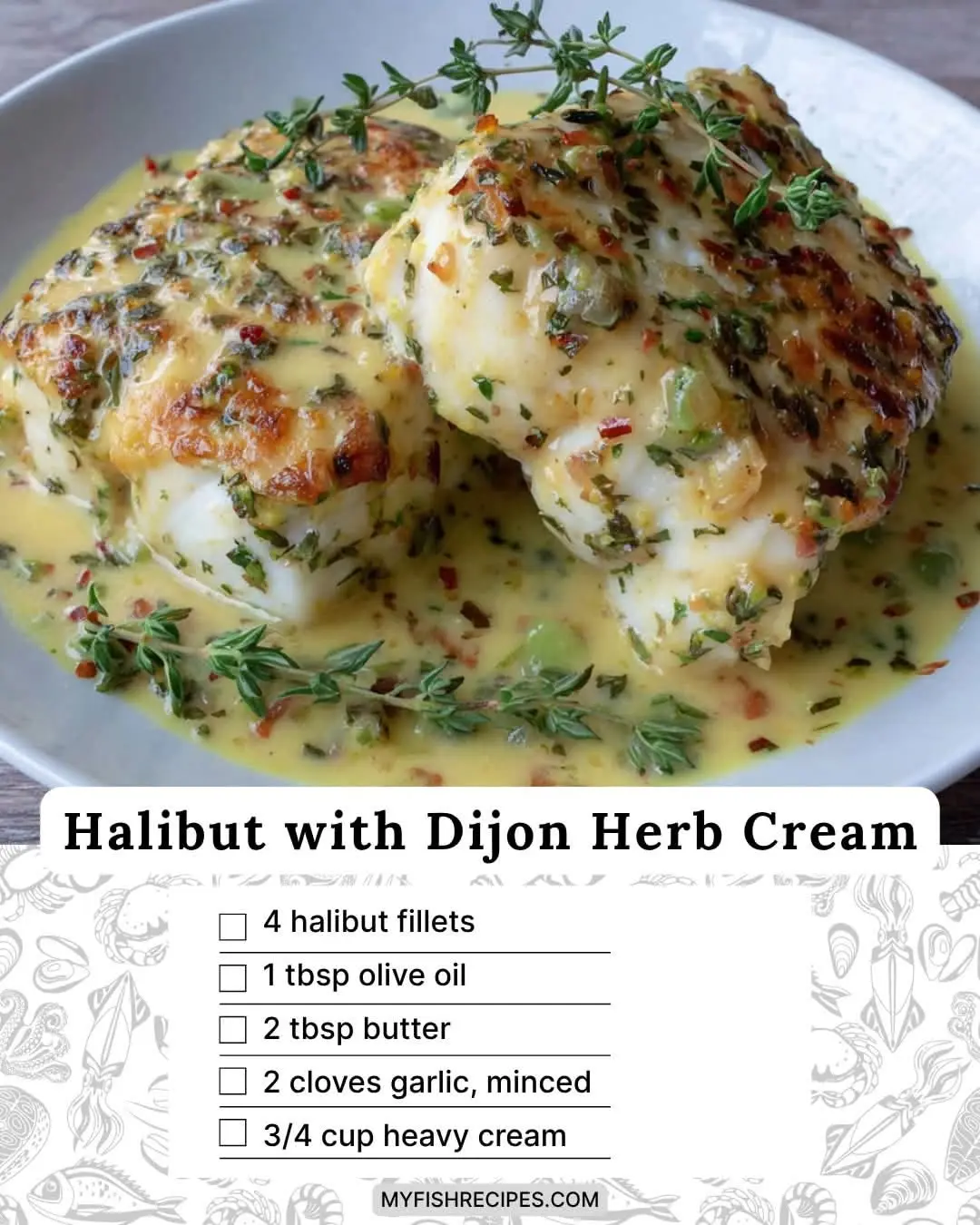
Halibut with Dijon Herb Cream
Halibut with Dijon Herb Cream gives you flaky, golden-seared fish in a silky mustard sauce with fresh herbs, ready in about 30 minutes flat.
🧂 Ingredients
- 4 halibut fillets, about 6 oz (170g) each, skin removed
- 1 1/4 tsp fine sea salt, divided
- 1/2 tsp freshly ground black pepper
- 2 tbsp unsalted butter, divided
- 1 small shallot, finely minced (about 3 tbsp)
- 2 cloves garlic, finely grated
- 3/4 cup heavy cream
- 2 tbsp Dijon mustard
- 1 tbsp fresh lemon juice, plus wedges for serving
- 2 tbsp chopped fresh tarragon
- 1 tbsp chopped fresh chives, plus more for garnish
📋 Instructions
- 1Pat and Season the Fish — Pat the halibut fillets completely dry with paper towels, then season both sides with 1 tsp of the salt and the pepper. Let them sit at room temperature for 10 minutes while you prep the aromatics, which helps them cook evenly.
- 2Melt Butter and Sear — Heat 1 tbsp of the butter in a large skillet over medium-high heat until it foams and smells nutty, about 1 minute. Lay in the fillets and sear undisturbed for 4 minutes, until the edges look opaque and the underside is deep golden brown.
- 3Flip and Finish — Flip the fillets and cook 2 to 3 minutes more, until the fish flakes at the thickest point and an instant-read thermometer reads 130°F (54°C). Transfer to a warm plate and tent loosely with foil.
- 4Soften the Shallot — Lower the heat to medium and add the remaining 1 tbsp butter to the same pan. Add the shallot and cook 2 minutes, stirring, until translucent and fragrant but not browned.
- 5Bloom the Garlic — Stir in the garlic and cook just 30 seconds, until you smell it bloom. Keep it moving so it doesn't catch and turn bitter.
- 6Build the Dijon Cream — Pour in the cream and whisk in the Dijon mustard. Bring to a gentle simmer, then cook 3 to 4 minutes, until the sauce coats the back of a spoon and bubbles softly at the edges.
- 7Brighten and Season — Off the heat, whisk in the lemon juice, tarragon, chives, and remaining 1/4 tsp salt. Taste and adjust, then return the fish and any juices to the pan to warm through for 1 minute.
- 8Plate and Serve — Spoon the Dijon herb cream over the fillets, scatter with more chives, and serve right away with lemon wedges and something to soak up the sauce.

Priya writes about South Indian home cooking and the improvisation that happens in real kitchens, from quick weekday tiffins to slow weekend spreads. She is interested in how a single tempering of spices changes a dish and in adapting familiar recipes to what a cook has on hand. Her angle is playful, sensory recipe writing that treats cooking as something to tinker with.