All Recipes Menu
Halibut Piccata with Lemon-Caper Butter Over Garlic Mash
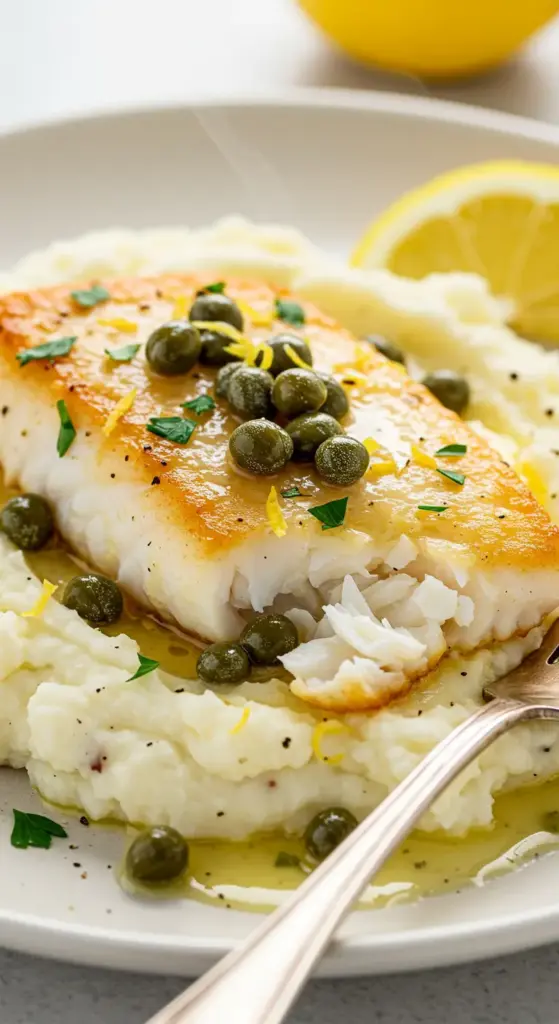
The butter hits the hot pan and the whole kitchen turns golden—that sharp little hiss is your cue that dinner is about to get very good. Halibut piccata with lemon-caper butter over garlic mash is the kind of plate that looks fussy and cooks like a weeknight favorite.
You will dredge thick halibut fillets in a whisper of flour, sear them until they release without a fight, then swirl lemon, capers, and cold butter into the same pan. The mash underneath is silky, garlicky, and just sturdy enough to catch every drop of that glossy sauce.
Try this next time: swap the capers for chopped Castelvetrano olives and add a pinch of chili flakes to the butter—it turns the whole dish a little briny and a little spicy in the best way. Taste as you go, then taste again.
Why You'll Love This Recipe
About the Ingredients
6 (6-ounce / 170g) skinless halibut fillets, about 1 inch thick
Ask for center-cut fillets so they cook evenly; if halibut is pricey, thick cod or swordfish steaks work beautifully here.
1/3 cup (45g) all-purpose flour
Use this to dredge the fish for a light golden crust; a gluten-free 1:1 blend or rice flour substitutes seamlessly.
1 1/2 teaspoons kosher salt, plus more for the potatoes
Kosher salt seasons gently and evenly; if using fine table salt, start with 1 teaspoon and taste as you go.
1/2 teaspoon freshly ground black pepper
Fresh-cracked pepper blooms in the hot pan; white pepper is a softer swap if you want a cleaner-looking sauce.
3 tablespoons olive oil, divided
Use regular (not extra-virgin) olive oil for searing since it handles heat better; avocado oil is an excellent substitute.
4 tablespoons cold unsalted butter, cut into cubes
Cold butter emulsifies the sauce instead of breaking it; salted butter works if you reduce the added salt slightly.
3/4 cup (180ml) dry white wine, such as Sauvignon Blanc
A crisp, unoaked wine gives the sauce its backbone; substitute dry vermouth or 3/4 cup chicken broth plus 1 tablespoon lemon juice.
3 tablespoons capers, drained and roughly chopped
Capers bring the salty pop; if they taste harsh, rinse them first, or swap in chopped green olives for a mellower brine.
1/4 cup fresh lemon juice (from about 2 lemons), plus 1 lemon zested
Roll the lemons firmly on the counter before juicing to get more yield; Meyer lemons make the sauce slightly sweeter.
2 1/2 pounds (1.1kg) Yukon Gold potatoes, peeled and cut into 1-inch chunks
Yukon Golds mash creamy without grittiness; russets work too but need a little more butter to stay silky.
5 garlic cloves, peeled (3 for the mash, 2 minced for the sauce)
Fresh garlic is essential here; jarred minced garlic is fine in a pinch but tastes flatter, so use an extra clove.
1/2 cup (120ml) whole milk or half-and-half, warmed
Warm dairy keeps the mash from turning gluey; oat milk or a splash of cream both work well.
Tips & Tricks
- Pat the halibut bone-dry and let it sit out for 10 minutes before dredging—wet fish steams instead of searing, and you lose that golden crust.
- Do not crowd the skillet. Sear in two batches if needed so the fillets brown rather than release steam and turn pale.
- Whisk the cold butter into the sauce off the heat, one cube at a time, so the piccata butter stays glossy instead of greasy.
- Cook the potatoes in well-salted water and mash them while hot; cold potatoes turn gummy and no amount of butter fixes it.
Pro Tips
Step-by-Step Instructions
1. Boil the potatoes
Cover the potato chunks with cold water by 2 inches, add 1 tablespoon salt and the 3 whole garlic cloves, and boil at a rolling simmer over medium-high heat for 15 to 18 minutes. They are done when a knife slides in with zero resistance—no crumbling, no resistance at the center.
2. Warm the dairy
While the potatoes cook, warm the milk in a small saucepan over low heat until it steams gently, about 2 minutes at 150°F (65°C). Keep it warm off the heat so it blends into the mash without shocking it.
3. Mash until silky
Drain the potatoes and garlic, let them steam-dry for 1 minute, then rice or mash them with 2 tablespoons of the butter. Stir in the warm milk and 1/2 teaspoon salt until smooth and glossy, then cover and keep warm.
4. Dry and dredge the fish
Pat the halibut completely dry and season both sides with the remaining salt and the pepper. Dredge each fillet in the flour, shaking off the excess so only a thin veil remains—too much flour makes a pasty crust.
5. Sear the halibut
Heat 2 tablespoons olive oil in a large skillet over medium-high heat until it shimmers at about 375°F (190°C). Add the halibut and cook 3 to 4 minutes per side until deeply golden and the center reads 130°F (54°C); the fish should release from the pan without tugging. Transfer to a warm plate.
6. Build the piccata sauce
Lower the heat to medium, add the remaining oil and the minced garlic, and cook 30 seconds until fragrant but not browned. Pour in the wine and simmer 3 to 4 minutes until reduced by half and the sharp alcohol smell disappears, scraping up the browned bits.
7. Swirl in lemon-caper butter
Stir in the lemon juice and capers, then remove the pan from the heat and whisk in the cold butter one cube at a time until the sauce is glossy and coats a spoon. Taste, then adjust with salt and a little lemon.
8. Plate and spoon over
Spoon a generous mound of garlic mash onto each warm plate, set a halibut fillet on top, and spoon the lemon-caper butter over so it pools at the edges. Finish with lemon zest and a crack of pepper, and serve immediately.
Delicious Variations
Chicken Piccata Style
Swap the halibut for 6 thin chicken cutlets, pounding them to 1/2 inch and cooking 3 minutes per side—same sauce, same mash.
Crispy Panko Crust
Dredge the halibut in flour, then egg, then panko before searing for a crackly exterior that stands up to the butter sauce.
Herb-Lemon Mash
Fold 2 tablespoons chopped parsley and the zest of half a lemon into the potatoes for a greener, brighter base under the fish.
How to Store Halibut Piccata with Lemon-Caper Butter Over Garlic Mash
Refrigerator
Store the halibut and sauce in one airtight container and the mash in another for up to 3 days; keep the sauce spooned over the fish so it stays moist.
Freezer
Freeze the cooked halibut without the sauce for up to 2 months; the garlic mash freezes well too, though it may need a splash of milk when reheated.
Reheating
Reheat the halibut gently in a 300°F (150°C) oven for 8 to 10 minutes, and warm the mash with a splash of milk over low heat or in the microwave, stirring halfway.
Frequently Asked Questions
Q: What is piccata sauce made of?
Piccata sauce is a pan sauce of white wine, lemon juice, capers, and butter, usually finished with parsley. The butter is whisked in cold at the end so the sauce turns silky and glossy rather than greasy.
Q: How do I know when halibut is cooked through?
Halibut is done when the center reads 130°F to 135°F (54°C to 57°C) on an instant-read thermometer and the fish flakes into large, moist petals. Pull it a few degrees early and let it rest, since carryover heat finishes the job.
Q: Can I make this halibut piccata ahead of time?
You can make the garlic mash and the piccata sauce a few hours ahead, then sear the halibut fresh right before serving. Reheat the sauce gently over low heat with a splash of water so the butter does not break.
Q: What can I use instead of white wine in piccata?
Dry vermouth or chicken broth with an extra tablespoon of lemon juice are the best stand-ins for white wine. Both give the sauce acidity and depth without the alcohol.
Q: What should I serve with halibut piccata besides mashed potatoes?
Buttered orzo, angel hair pasta, or crusty bread all soak up the lemon-caper butter beautifully. A simple green salad or sautéed spinach balances the richness of the dish.
Sear that halibut until it sings, swirl the butter until the sauce shines, and spoon it all over a mountain of garlic mash tonight. Taste as you go, then taste again.
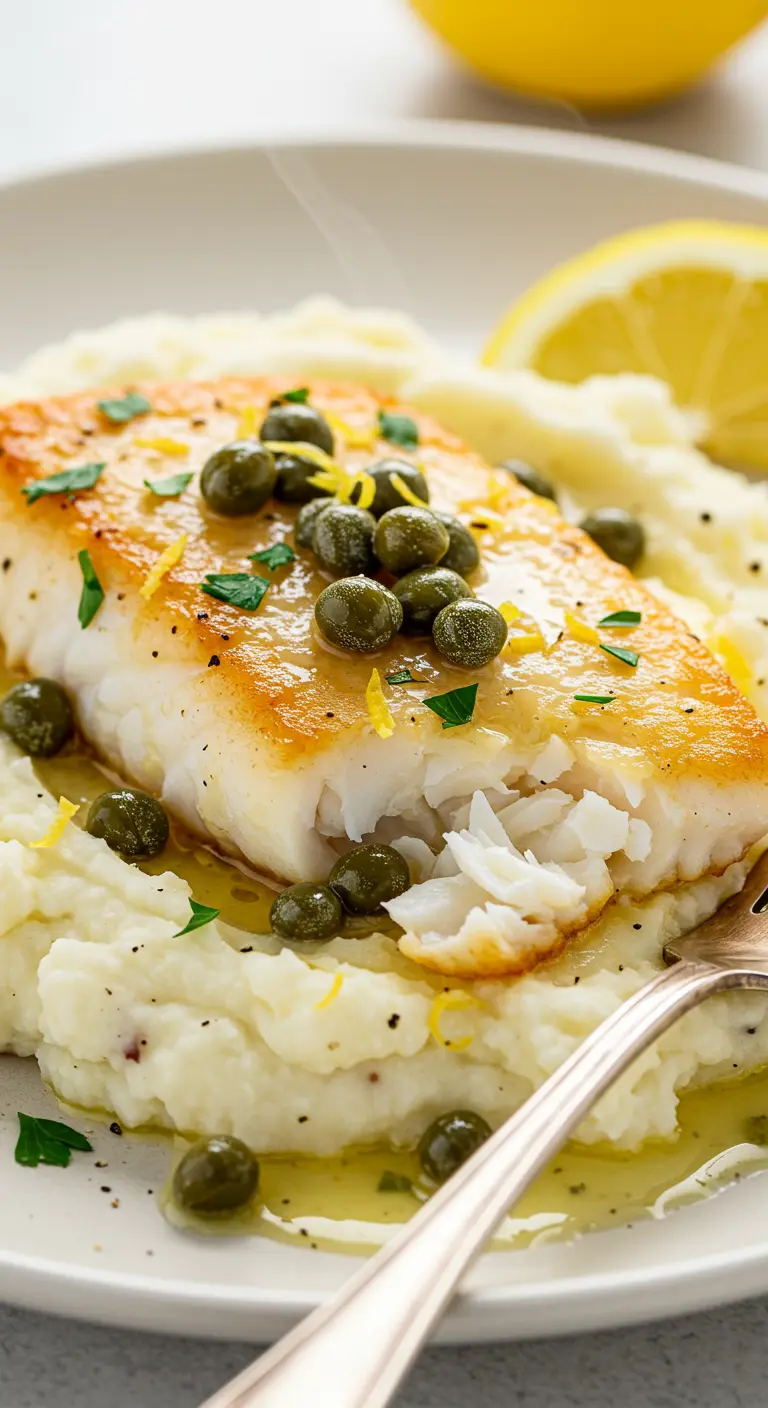
Halibut Piccata with Lemon-Caper Butter Over Garlic Mash
Buttery halibut piccata with a bright lemon-caper pan sauce spooned over creamy garlic mash—an elegant 50-minute dinner that tastes like a restaurant plate.
🧂 Ingredients
- 6 (6-ounce / 170g) skinless halibut fillets, about 1 inch thick
- 1/3 cup (45g) all-purpose flour
- 1 1/2 teaspoons kosher salt, plus more for the potatoes
- 1/2 teaspoon freshly ground black pepper
- 3 tablespoons olive oil, divided
- 4 tablespoons cold unsalted butter, cut into cubes
- 3/4 cup (180ml) dry white wine, such as Sauvignon Blanc
- 3 tablespoons capers, drained and roughly chopped
- 1/4 cup fresh lemon juice (from about 2 lemons), plus 1 lemon zested
- 2 1/2 pounds (1.1kg) Yukon Gold potatoes, peeled and cut into 1-inch chunks
- 5 garlic cloves, peeled (3 for the mash, 2 minced for the sauce)
- 1/2 cup (120ml) whole milk or half-and-half, warmed
📋 Instructions
- 1Boil the potatoes — Cover the potato chunks with cold water by 2 inches, add 1 tablespoon salt and the 3 whole garlic cloves, and boil at a rolling simmer over medium-high heat for 15 to 18 minutes. They are done when a knife slides in with zero resistance—no crumbling, no resistance at the center.
- 2Warm the dairy — While the potatoes cook, warm the milk in a small saucepan over low heat until it steams gently, about 2 minutes at 150°F (65°C). Keep it warm off the heat so it blends into the mash without shocking it.
- 3Mash until silky — Drain the potatoes and garlic, let them steam-dry for 1 minute, then rice or mash them with 2 tablespoons of the butter. Stir in the warm milk and 1/2 teaspoon salt until smooth and glossy, then cover and keep warm.
- 4Dry and dredge the fish — Pat the halibut completely dry and season both sides with the remaining salt and the pepper. Dredge each fillet in the flour, shaking off the excess so only a thin veil remains—too much flour makes a pasty crust.
- 5Sear the halibut — Heat 2 tablespoons olive oil in a large skillet over medium-high heat until it shimmers at about 375°F (190°C). Add the halibut and cook 3 to 4 minutes per side until deeply golden and the center reads 130°F (54°C); the fish should release from the pan without tugging. Transfer to a warm plate.
- 6Build the piccata sauce — Lower the heat to medium, add the remaining oil and the minced garlic, and cook 30 seconds until fragrant but not browned. Pour in the wine and simmer 3 to 4 minutes until reduced by half and the sharp alcohol smell disappears, scraping up the browned bits.
- 7Swirl in lemon-caper butter — Stir in the lemon juice and capers, then remove the pan from the heat and whisk in the cold butter one cube at a time until the sauce is glossy and coats a spoon. Taste, then adjust with salt and a little lemon.
- 8Plate and spoon over — Spoon a generous mound of garlic mash onto each warm plate, set a halibut fillet on top, and spoon the lemon-caper butter over so it pools at the edges. Finish with lemon zest and a crack of pepper, and serve immediately.

Priya writes about South Indian home cooking and the improvisation that happens in real kitchens, from quick weekday tiffins to slow weekend spreads. She is interested in how a single tempering of spices changes a dish and in adapting familiar recipes to what a cook has on hand. Her angle is playful, sensory recipe writing that treats cooking as something to tinker with.