All Recipes Menu
Easy Creamy Tuscan Shrimp Pasta – 30-Minute
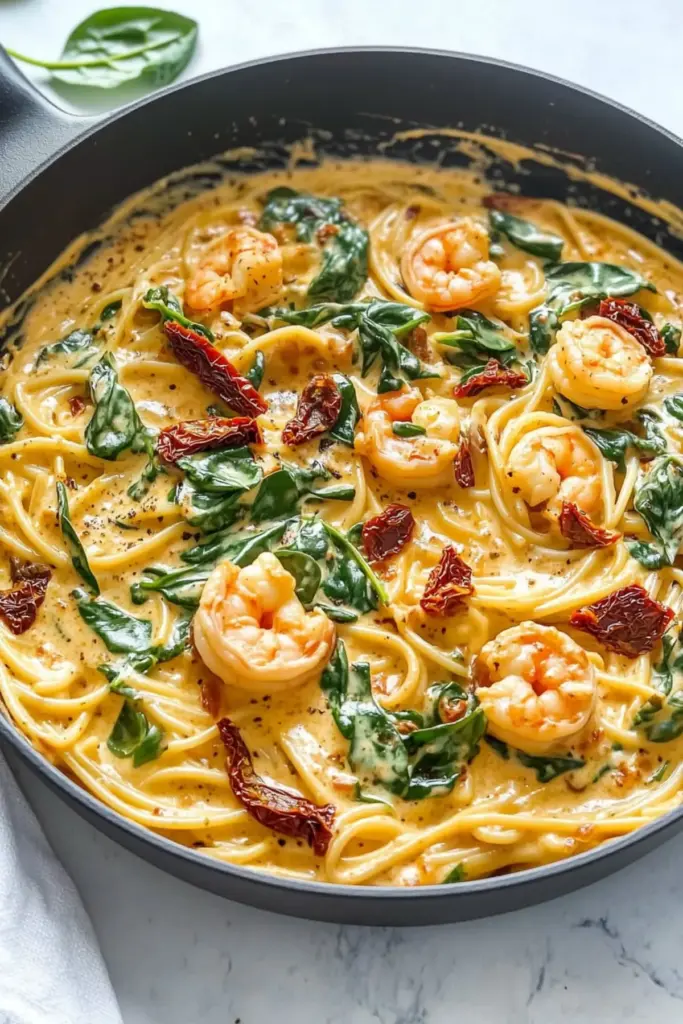
The moment garlic hits warm butter, your kitchen smells like a tiny Tuscan trattoria, and the sun-dried tomatoes add a sweet, tangy pop. You will twirl this creamy pasta straight from the skillet while the sauce still glistens.
Gather everything before you start because this dish moves quickly. Listen for sizzling shrimp, watch for bubbling sauce, and taste your way to a glossy, restaurant-worthy dinner.
Why You'll Love This Recipe
About the Ingredients
12 ounces (340g) linguine
Linguine catches the creamy sauce beautifully; fettuccine is an easy substitution if that is what you have.
1 pound (454g) large peeled and deveined shrimp
Choose shrimp labeled 16/20 or 21/25 for juicy bites; frozen shrimp work well when thawed and patted completely dry.
1 tablespoon (15ml) extra-virgin olive oil
Use a mild olive oil for sautéing; avocado oil is a good substitute if you prefer a higher-smoke-point option.
2 tablespoons (28g) unsalted butter
Unsalted butter lets you control the seasoning; salted butter can be used if you reduce the added salt.
4 garlic cloves, finely minced
Fresh garlic gives the best aroma; refrigerated jarred minced garlic is a convenient buying shortcut.
1/2 cup (90g) oil-packed sun-dried tomatoes, drained and sliced
Oil-packed tomatoes stay pleasantly tender; dry-packed tomatoes can substitute after soaking them in hot water for 10 minutes.
1 cup (240ml) low-sodium chicken broth
Low-sodium broth keeps the sauce balanced; vegetable broth is a simple substitution for a pescatarian version.
3/4 cup (180ml) heavy cream
Heavy cream creates the most stable sauce; evaporated milk is a lighter substitution that still turns silky.
3 cups (90g) baby spinach
Baby spinach wilts quickly and stays tender; chopped kale is a sturdier substitution, but cook it for an extra minute.
1/2 cup (50g) finely grated Parmesan cheese
Grate Parmesan from a wedge for the smoothest melt; pecorino Romano is a saltier, sharper substitution.
1/2 teaspoon kosher salt, 1/4 teaspoon black pepper, and 1/4 teaspoon red pepper flakes
Use fine sea salt if you do not have kosher salt, and choose mild or hot pepper flakes according to your heat preference.
Tips & Tricks
Dry shrimp well
Patting them dry prevents steaming and helps the edges turn golden instead of gray.
Save pasta water
Reserve the starchy water before draining so you can loosen the sauce without making it watery.
Watch the cream
Keep the sauce at a gentle simmer; a hard boil can make it greasy and split.
Finish gently
Add the shrimp back only at the end so they stay tender and reach 145°F (63°C).
Pro Tips
Step-by-Step Instructions
1. Boil the linguine
Bring a large pot of salted water to 212°F (100°C), then cook the linguine for exactly 9 minutes, stirring once or twice. It should be al dente with a firm center; reserve 1/2 cup pasta water, then drain.
2. Season the shrimp
Pat the shrimp dry and toss them with the kosher salt, black pepper, and red pepper flakes. Dry surfaces are your shortcut to better browning.
3. Sear the shrimp
Heat a large skillet with the olive oil to 400°F (204°C) for exactly 2 minutes. Add the shrimp and cook exactly 1 1/2 minutes per side; they are ready when opaque, lightly golden at the edges, and curled into loose C shapes.
4. Sauté the aromatics
Lower the skillet to 350°F (177°C), add the butter, garlic, and sun-dried tomatoes, and cook for exactly 2 minutes. The butter should foam gently and the garlic should smell sweet and fragrant, never dark brown.
5. Build the sauce
Pour in the broth and heavy cream, then hold the skillet at 325°F (163°C) for exactly 4 minutes. Stir often until the sauce thickens slightly and small bubbles gather around the edges.
6. Wilt the spinach
Add the spinach and cook at 325°F (163°C) for exactly 1 minute, folding until the leaves collapse into the sauce. The spinach should look glossy and tender, with no dry leaves remaining.
7. Toss everything together
Add the drained linguine and Parmesan, then toss at 300°F (149°C) for exactly 2 minutes, adding reserved pasta water a splash at a time. The sauce should cling to the noodles with glossy bubbling edges, and the shrimp should register 145°F (63°C) inside.
8. Serve while glossy
Turn off the heat, taste for salt, and divide the pasta among four bowls. Spoon extra sun-dried tomatoes over each serving and serve immediately while the aroma is warm and garlicky.
Delicious Variations
- Try lemon-herb Tuscan shrimp by adding 1 teaspoon lemon zest and 2 tablespoons chopped parsley after turning off the heat.
- Make it spicy Tuscan by doubling the red pepper flakes and stirring in 1 tablespoon Calabrian chile paste with the broth.
- Add mushrooms and peas by sautéing 8 ounces sliced mushrooms with the garlic, then folding in 1/2 cup thawed peas with the spinach.
How to Store Creamy Tuscan Shrimp Pasta
Refrigerator
Store cooled pasta in an airtight container for up to 3 days. The sauce will thicken as it chills.
Freezer
Freeze without the shrimp for up to 1 month for the best texture; thaw overnight in the refrigerator and add freshly cooked shrimp when reheating.
Reheating
Reheat gently in a skillet over low heat with 1 to 2 tablespoons broth or cream per serving, stirring until hot but never boiling.
Frequently Asked Questions
Q: Can I use frozen shrimp for creamy Tuscan shrimp pasta?
Yes, you can use frozen shrimp after thawing them completely and patting them very dry. This prevents excess water from diluting the sauce and keeps the shrimp golden at the edges.
Q: How do I keep shrimp from getting rubbery in pasta?
Cook shrimp only until opaque and curled into a loose C, then remove them before making the sauce. Add them back for the final 2 minutes and confirm they reach 145°F (63°C).
Q: What pasta is best for creamy Tuscan shrimp pasta?
Linguine is the best pasta for creamy Tuscan shrimp pasta because its wide strands hold the sauce. Fettuccine, spaghetti, or penne also work when cooked just until al dente.
Q: Can I make creamy Tuscan shrimp pasta without heavy cream?
Yes, you can replace the heavy cream with evaporated milk for a lighter sauce. Keep the heat gentle and use pasta water to help the Parmesan create a smooth finish.
Q: How do I reheat creamy shrimp pasta without separating the sauce?
Reheat creamy shrimp pasta gently in a skillet with a splash of broth or cream. Avoid high heat and boiling, which can split the sauce and toughen the shrimp.
Grab a skillet and let the garlic do its fragrant little dance tonight. Serve this creamy, colorful pasta with crusty bread, then tell me which variation made it to your table. Taste as you go, then taste again.
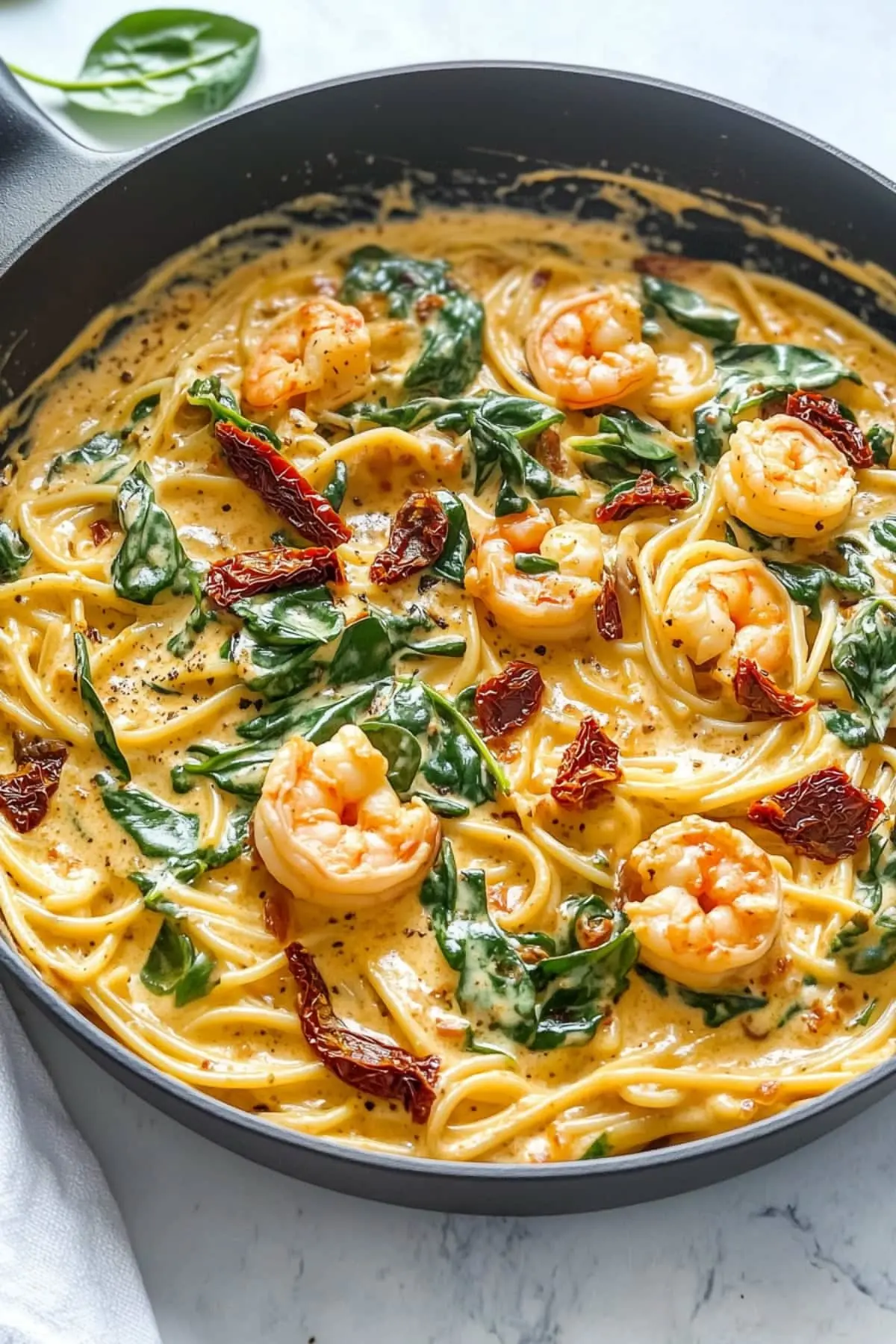
Creamy Tuscan Shrimp Pasta
Creamy Tuscan Shrimp Pasta brings garlicky shrimp, silky cream, spinach, and sun-dried tomatoes to your table in one cozy, protein-packed skillet dinner.
🧂 Ingredients
- 12 ounces (340g) linguine
- 1 pound (454g) large peeled and deveined shrimp
- 1 tablespoon (15ml) extra-virgin olive oil
- 2 tablespoons (28g) unsalted butter
- 4 garlic cloves, finely minced
- 1/2 cup (90g) oil-packed sun-dried tomatoes, drained and sliced
- 1 cup (240ml) low-sodium chicken broth
- 3/4 cup (180ml) heavy cream
- 3 cups (90g) baby spinach
- 1/2 cup (50g) finely grated Parmesan cheese
- 1/2 teaspoon kosher salt, 1/4 teaspoon black pepper, and 1/4 teaspoon red pepper flakes
📋 Instructions
- 1Boil the linguine — Bring a large pot of salted water to 212°F (100°C), then cook the linguine for exactly 9 minutes, stirring once or twice. It should be al dente with a firm center; reserve 1/2 cup pasta water, then drain.
- 2Season the shrimp — Pat the shrimp dry and toss them with the kosher salt, black pepper, and red pepper flakes. Dry surfaces are your shortcut to better browning.
- 3Sear the shrimp — Heat a large skillet with the olive oil to 400°F (204°C) for exactly 2 minutes. Add the shrimp and cook exactly 1 1/2 minutes per side; they are ready when opaque, lightly golden at the edges, and curled into loose C shapes.
- 4Sauté the aromatics — Lower the skillet to 350°F (177°C), add the butter, garlic, and sun-dried tomatoes, and cook for exactly 2 minutes. The butter should foam gently and the garlic should smell sweet and fragrant, never dark brown.
- 5Build the sauce — Pour in the broth and heavy cream, then hold the skillet at 325°F (163°C) for exactly 4 minutes. Stir often until the sauce thickens slightly and small bubbles gather around the edges.
- 6Wilt the spinach — Add the spinach and cook at 325°F (163°C) for exactly 1 minute, folding until the leaves collapse into the sauce. The spinach should look glossy and tender, with no dry leaves remaining.
- 7Toss everything together — Add the drained linguine and Parmesan, then toss at 300°F (149°C) for exactly 2 minutes, adding reserved pasta water a splash at a time. The sauce should cling to the noodles with glossy bubbling edges, and the shrimp should register 145°F (63°C) inside.
- 8Serve while glossy — Turn off the heat, taste for salt, and divide the pasta among four bowls. Spoon extra sun-dried tomatoes over each serving and serve immediately while the aroma is warm and garlicky.

Priya writes about South Indian home cooking and the improvisation that happens in real kitchens, from quick weekday tiffins to slow weekend spreads. She is interested in how a single tempering of spices changes a dish and in adapting familiar recipes to what a cook has on hand. Her angle is playful, sensory recipe writing that treats cooking as something to tinker with.