All Recipes Menu
Crispy Honey Mustard Chicken Tenders – Easy Dinner
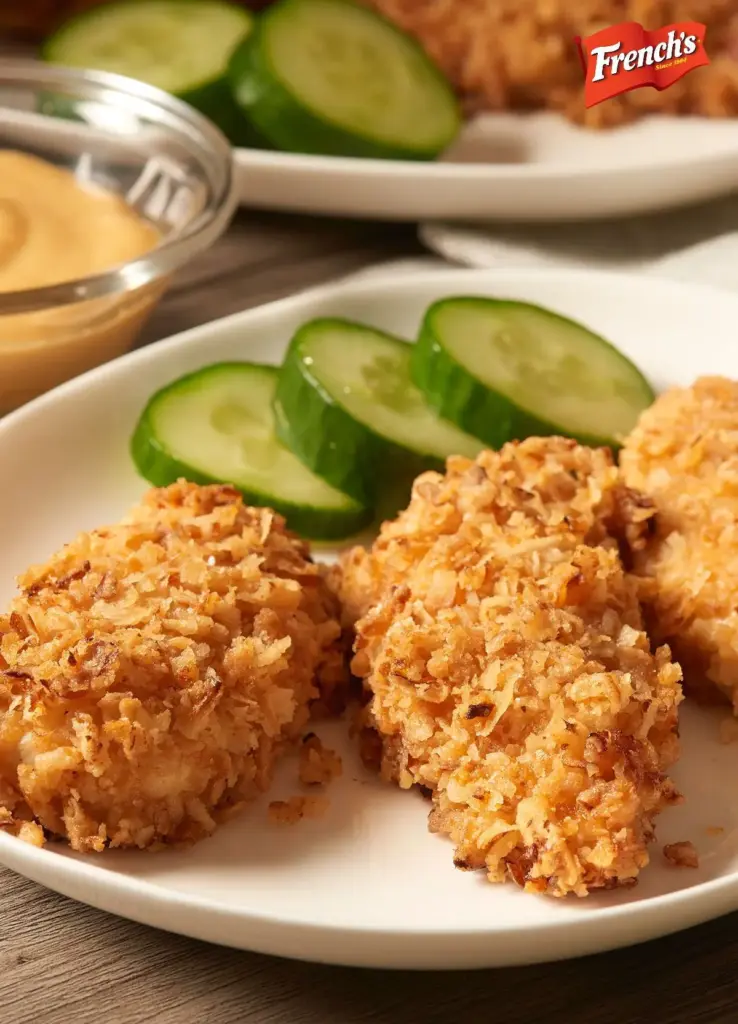
The kitchen fills with the warm, toasty smell of panko while honey and mustard make a sweet-tangy little chorus in your mixing bowl. These tenders come out golden, crisp, and ready for enthusiastic dipping.
You will coat juicy chicken in a quick honey mustard marinade, press it into seasoned panko, and bake until the edges sizzle. Keep your sauce divided before the chicken goes in, and you will have a fresh dip waiting at the finish line.
Why You'll Love This Recipe
About the Ingredients
1 lb (454g) chicken tenderloins
Choose pieces of similar thickness so they finish together. You can substitute 1 lb (454g) boneless, skinless chicken breast cut into strips.
1/2 cup (120g) smooth Dijon mustard
Smooth Dijon clings well to the chicken and adds gentle heat. Substitute spicy brown mustard for a bolder bite, or buy a creamy Dijon without added whole seeds.
1/3 cup (113g) honey
Honey balances the mustard and helps the crust turn golden. Substitute pure maple syrup, or buy a runny honey that whisks easily.
2 tbsp (30ml) fresh lemon juice
Fresh lemon brightens the rich coating. Substitute 1 1/2 tbsp apple cider vinegar, or choose a firm, heavy lemon for more juice.
1 cup (120g) plain panko breadcrumbs
Panko creates the airiest crunch. Substitute 1 cup crushed cornflakes for extra crispness, and buy plain rather than seasoned crumbs so you control the salt.
1/2 cup (60g) all-purpose flour
Flour gives the egg something dry to grip. Substitute a cup-for-cup gluten-free flour blend if needed.
1 large egg
The egg helps the panko adhere in an even layer. Substitute 3 tbsp buttermilk for an egg-free binder.
1 tbsp (15ml) olive oil
Oil helps the breadcrumbs brown and crisp in the oven. Substitute avocado or canola oil, or buy a mild olive oil so it does not overpower the sauce.
1 tsp garlic powder
Garlic powder seasons the crust evenly without adding moisture. Substitute 1 small grated garlic clove, but mix it thoroughly into the panko.
3/4 tsp kosher salt
Kosher salt sharpens every layer of flavor. If using fine table salt, use 1/2 tsp instead.
1/2 tsp freshly ground black pepper
Pepper adds a soft, savory warmth. Substitute white pepper for a milder look, or buy peppercorns and grind them just before mixing.
Tips & Tricks
Avoid soggy tenders
Pat the chicken dry, leave space between pieces, and use parchment so steam can escape.
Avoid bland breading
Season the panko and flour, not just the honey mustard mixture, so every bite tastes balanced.
Avoid burnt honey
Keep the tray on the middle oven rack and use the stated 425°F (218°C) temperature rather than broiling.
Avoid a falling crust
Press the panko firmly onto each tender, then let the coated chicken sit for 5 minutes before baking.
Pro Tips
Step-by-Step Instructions
1. Mix The Sauce
Whisk the Dijon, honey, lemon juice, garlic powder, salt, and pepper in a bowl. Measure 1/3 cup of the mixture into a clean dipping bowl before adding any chicken.
2. Coat The Chicken
Pat the chicken tenderloins very dry, then toss them with the remaining honey mustard until every surface glistens. Let them stand for 5 minutes while you set up the breading.
3. Build The Breading
Place the flour in one shallow dish and whisk the egg in a second. In a third dish, stir the panko with the olive oil until the crumbs feel lightly moistened.
4. Dip And Press
Coat each tender in flour, shake off the excess, dip it in egg, then press it firmly into the oiled panko. Turn and press again so no glossy patch of chicken remains uncovered.
5. Arrange The Tray
Set the coated tenders on a parchment-lined baking sheet with at least 1 inch (2.5cm) between them. The breathing room lets hot air crisp the sides instead of steaming the coating.
6. Bake Until Golden
Preheat the oven to 425°F (218°C) for exactly 10 minutes, then bake the tenders for exactly 20 minutes, flipping at the 10-minute mark. They are ready when the coating is deep golden, the edges sound faintly crisp when tapped, and the thickest tender reads 165°F (74°C) on an instant-read thermometer.
7. Rest Before Serving
Transfer the tenders to a plate and rest them for 5 minutes. The crust settles into a satisfying crunch while the juices redistribute inside.
8. Serve With Sauce
Bring out the reserved honey mustard and serve it alongside the warm tenders. Taste one while it is still crackling, then add a lemon wedge or extra pepper if you like.
Delicious Variations
Try this next time
Add 1/2 tsp smoked paprika to the panko for a subtle campfire note.
Make it spicy
Stir 1 tbsp hot sauce into the honey mustard and add a pinch of cayenne to the crumbs.
Go extra herby
Mix 1 tsp dried Italian seasoning into the panko and serve with a sprinkle of chopped parsley.
How to Store Crispy Honey Mustard Chicken Tenders
Refrigerator
Refrigerate cooled tenders in an airtight container for up to 3 days, keeping the dipping sauce in a separate container.
Freezer
Freeze fully cooled tenders in a single layer, then transfer them to a freezer bag for up to 2 months. Thaw overnight in the refrigerator for the best crust.
Reheating
Reheat refrigerated or thawed tenders at 400°F (204°C) for exactly 8 minutes, turning once, until hot and crisp; avoid the microwave, which softens the panko.
Frequently Asked Questions
Q: How do you make chicken tenders crispy in the oven?
Use panko mixed with a little oil, leave space between the tenders, and bake at 425°F (218°C) until golden and 165°F (74°C) inside. Patting the chicken dry is the small step that keeps steam from softening the crust.
Q: Can I use chicken breast instead of chicken tenderloins?
Yes, slice boneless, skinless chicken breast into evenly sized strips and use the same coating method. Keep the pieces similar in thickness so they reach 165°F (74°C) at the same time.
Q: How long do honey mustard chicken tenders last in the fridge?
They last for up to 3 days in an airtight container in the refrigerator. Store the sauce separately and reheat the tenders in a 400°F (204°C) oven for the crispest finish.
Q: What temperature should chicken tenders reach?
Chicken tenders should reach 165°F (74°C) in the thickest part. Check with an instant-read thermometer after the coating turns golden and the edges sound crisp.
Pile these crispy tenders onto a platter, set out the honey mustard, and watch them disappear before the first crunch has faded. Make a batch tonight and tell me whether your favorite bite is the sweet center or the crackly edge. Taste as you go, then taste again.
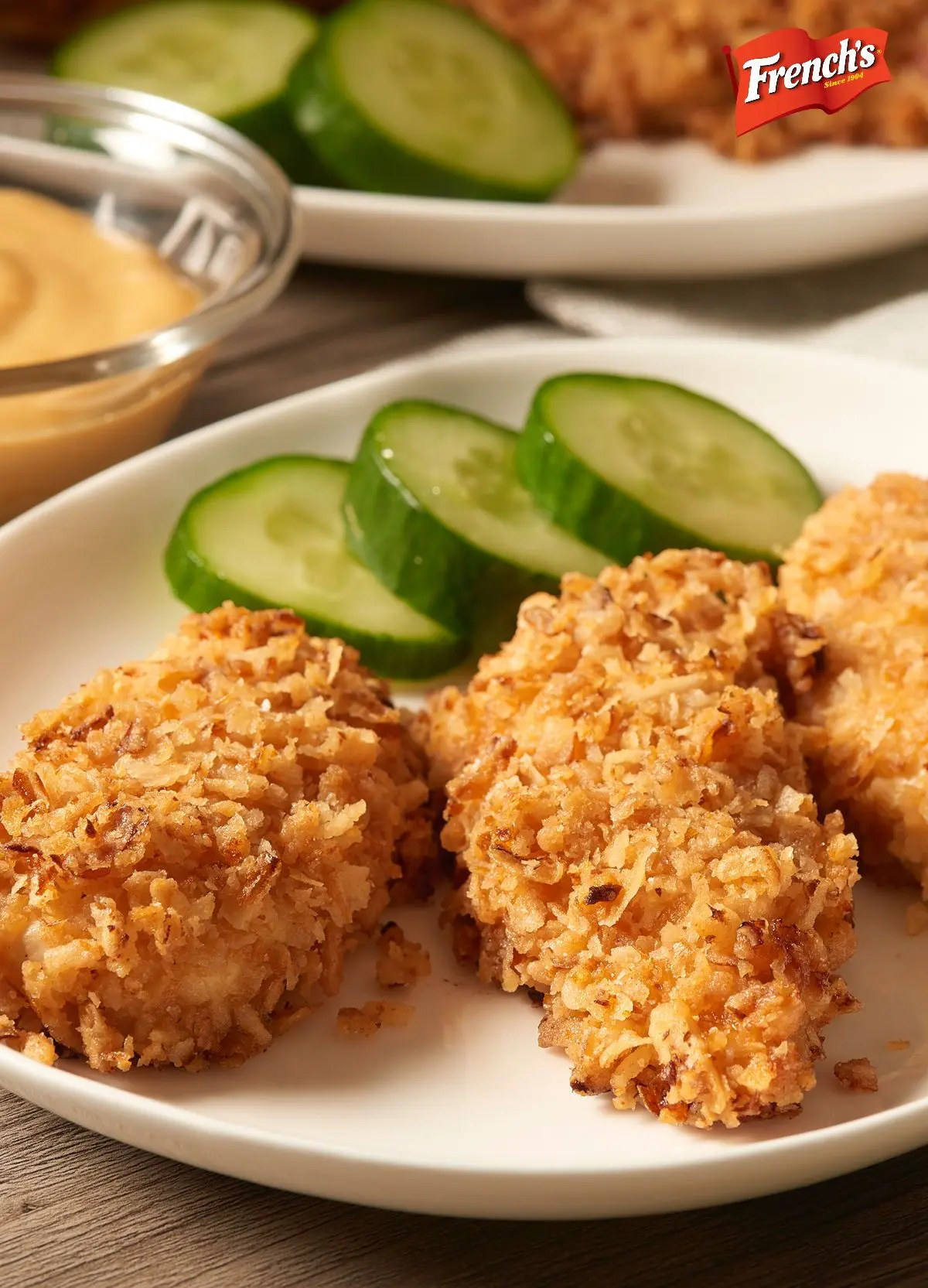
Crispy Honey Mustard Chicken Tenders
Crispy Honey Mustard Chicken Tenders bring a golden, crunchy coating and sweet-tangy flavor to your table in about 40 minutes, with baked-in ease.
🧂 Ingredients
- 1 lb (454g) chicken tenderloins
- 1/2 cup (120g) smooth Dijon mustard
- 1/3 cup (113g) honey
- 2 tbsp (30ml) fresh lemon juice
- 1 cup (120g) plain panko breadcrumbs
- 1/2 cup (60g) all-purpose flour
- 1 large egg
- 1 tbsp (15ml) olive oil
- 1 tsp garlic powder
- 3/4 tsp kosher salt
- 1/2 tsp freshly ground black pepper
📋 Instructions
- 1Mix The Sauce — Whisk the Dijon, honey, lemon juice, garlic powder, salt, and pepper in a bowl. Measure 1/3 cup of the mixture into a clean dipping bowl before adding any chicken.
- 2Coat The Chicken — Pat the chicken tenderloins very dry, then toss them with the remaining honey mustard until every surface glistens. Let them stand for 5 minutes while you set up the breading.
- 3Build The Breading — Place the flour in one shallow dish and whisk the egg in a second. In a third dish, stir the panko with the olive oil until the crumbs feel lightly moistened.
- 4Dip And Press — Coat each tender in flour, shake off the excess, dip it in egg, then press it firmly into the oiled panko. Turn and press again so no glossy patch of chicken remains uncovered.
- 5Arrange The Tray — Set the coated tenders on a parchment-lined baking sheet with at least 1 inch (2.5cm) between them. The breathing room lets hot air crisp the sides instead of steaming the coating.
- 6Bake Until Golden — Preheat the oven to 425°F (218°C) for exactly 10 minutes, then bake the tenders for exactly 20 minutes, flipping at the 10-minute mark. They are ready when the coating is deep golden, the edges sound faintly crisp when tapped, and the thickest tender reads 165°F (74°C) on an instant-read thermometer.
- 7Rest Before Serving — Transfer the tenders to a plate and rest them for 5 minutes. The crust settles into a satisfying crunch while the juices redistribute inside.
- 8Serve With Sauce — Bring out the reserved honey mustard and serve it alongside the warm tenders. Taste one while it is still crackling, then add a lemon wedge or extra pepper if you like.

Priya writes about South Indian home cooking and the improvisation that happens in real kitchens, from quick weekday tiffins to slow weekend spreads. She is interested in how a single tempering of spices changes a dish and in adapting familiar recipes to what a cook has on hand. Her angle is playful, sensory recipe writing that treats cooking as something to tinker with.