All Recipes Menu
Creamy Slow Scrambled Eggs with Ricotta and Chives
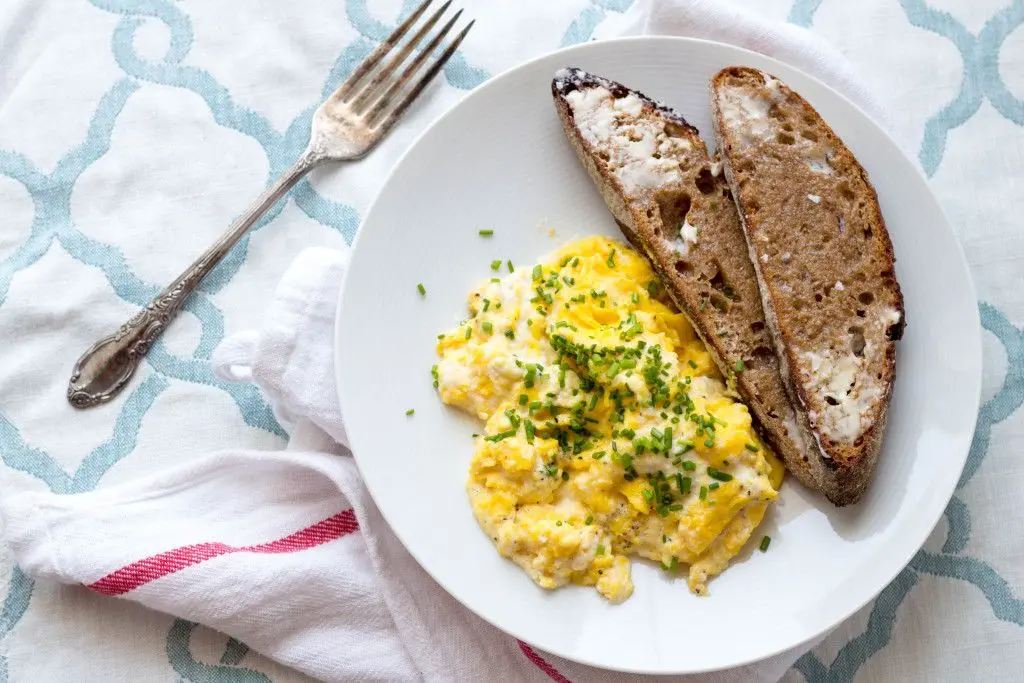
Slow Scrambled Eggs with Ricotta and Chives are built on low heat and patience. You stir constantly at 200°F (93°C) so the curds stay small and custardy instead of rubbery.
The ricotta goes in off the heat. It cools the pan slightly and keeps the eggs soft while adding a mild, milky richness. Chives go in last so they stay green and sharp.
Weigh everything first. Scrambled eggs move fast once the pan is warm, and you will not have time to measure ricotta mid-stir.
Why You'll Love This Recipe
About the Ingredients
8 large eggs (about 400g)
Use the freshest eggs you can buy; older whites thin out and the curds turn watery. For a lighter set, swap 2 whole eggs for 2 extra yolks.
60g whole-milk ricotta (¼ cup), drained
Whole-milk ricotta gives the creamiest result. If yours is soupy, drain it in a fine sieve for 10 minutes, or substitute full-fat cottage cheese.
40g unsalted butter (3 tbsp), divided
European-style butter has less water and browns less. Salted butter works, but then skip the added salt until tasting.
30g fresh chives (about 1 small bunch), finely snipped
Snip with scissors to avoid bruising the leaves. Freeze-dried chives are a poor substitute here; use the green tops of 2 scallions instead.
30g Parmigiano-Reggiano (⅓ cup), finely grated
Grate on a microplane so it melts without clumping. Pecorino Romano is a sharper swap; use 20g because it is saltier.
30g crème fraîche or sour cream (2 tbsp)
Adds tang and stabilizes the curds. Full-fat Greek yogurt works if you stir it in off the heat only.
2g fine sea salt (½ tsp), plus more to taste
Salt the eggs after they begin to set, not before; early salting can make them weep. Kosher salt is fine at the same weight.
1g freshly ground black pepper (¼ tsp)
Grind coarse for texture. White pepper gives a cleaner look if you are serving these for company.
4 slices sourdough bread (about 160g), toasted
A sturdy bread holds the soft eggs. Gluten-free or rye toast both work; toast it well so it does not go soggy.
Tips & Tricks
Keep the heat low
If the eggs hiss, the pan is too hot. Pull it off the burner for 30 seconds and keep stirring.
Stir with a flat spatula
A silicone spatula scrapes the whole pan bottom and stops a browned layer from forming.
Stop early
Pull the pan when the eggs look slightly wetter than you want; carryover heat finishes them on the plate.
Drain the ricotta
Excess whey thins the mixture. Ten minutes in a sieve makes a visible difference in texture.
Pro Tips
Step-by-Step Instructions
1. Crack and whisk
Crack 8 eggs (400g) into a bowl and whisk for 30 seconds until fully uniform, with no visible streaks of white. [A uniform mix cooks evenly, so you get no rubbery white patches.] Stop when the mixture is one flat yellow.
2. Warm the pan
Set a 25cm nonstick skillet over low heat and add 25g of the butter. Wait until it melts and foams gently without browning, about 2 minutes at 200°F (93°C). [If the butter browns, the pan is too hot and the curds will toughen.] The cue is a soft foam with no color.
3. Add the eggs
Pour in the eggs and wait 20 seconds without stirring. [This lets the base set slightly so curds form instead of a slurry.] You will see the first opaque edges appear at the rim.
4. Stir low and slow
Stir constantly with a silicone spatula, scraping the bottom, for 8 to 10 minutes at 200°F (93°C). [Constant motion keeps curds small and stops a browned film from forming.] The eggs are ready when they look like loose, glossy porridge and still flow slowly.
5. Pull off the heat
Slide the pan off the burner and stir in the remaining 15g butter, 60g ricotta, 30g crème fraîche, and 30g Parmigiano. [Off-heat residual heat melts the cheese without splitting it.] The mixture should look creamy and slightly wet, not dry.
6. Season and fold in chives
Add 2g salt, 1g pepper, and 30g snipped chives, folding gently three or four times. [Folding keeps the chives whole and the curds intact.] Taste and adjust salt; the eggs should taste bright and milky.
7. Rest and plate
Let the pan sit for 60 seconds, then spoon the eggs over 4 slices of toasted sourdough. [The short rest lets the curds firm to a soft custard.] The finished eggs hold a soft mound on the toast without running.
Delicious Variations
Smoked Salmon Version
Fold in 80g flaked cold-smoked salmon with the chives for a brunch plate.
Herbed Goat Cheese Version
Swap the ricotta for 60g soft goat cheese and add 5g chopped tarragon.
Chili Crisp Version
Drizzle 10g chili crisp over the plated eggs instead of black pepper for heat.
How to Store Slow Scrambled Eggs with Ricotta and Chives
Refrigerator
Store in an airtight container for up to 2 days; press plastic wrap onto the surface to limit drying.
Freezer
Do not freeze; the curds weep and turn grainy on thawing.
Reheating
Reheat gently in a nonstick pan over low heat with 1 tbsp water, stirring for 2 to 3 minutes; or microwave in 20-second bursts.
Frequently Asked Questions
Q: Why are my scrambled eggs rubbery?
They were cooked too hot or too long. Keep the pan at 200°F (93°C), stir constantly, and pull the eggs while they still look slightly wet.
Q: Can I make slow scrambled eggs ahead of time?
You can whisk the eggs and drain the ricotta up to 24 hours ahead, but cook them fresh. Cooked eggs hold for 2 days but lose their custardy texture on reheating.
Q: How much ricotta should I add to scrambled eggs?
Use about 15g of ricotta per large egg, so 60g for 8 eggs. More than that and the mixture turns grainy and heavy.
Q: Do you salt scrambled eggs before or after cooking?
Salt after the curds begin to set, near the end of cooking. Early salting can draw water out of the eggs and make them weep in the pan.
Q: What can I use instead of chives?
Use the finely sliced green tops of 2 scallions or 10g chopped fresh dill. Dried chives lose their color and bite, so avoid them here.
Weigh the eggs, keep the heat low, and stir. Make it once and the timing becomes instinct. Weigh, watch, repeat.
Slow Scrambled Eggs with Ricotta and Chives
Slow Scrambled Eggs with Ricotta and Chives make soft, custardy curds in 20 minutes, with fresh chives and creamy ricotta folded in at the end.
🧂 Ingredients
- 8 large eggs (about 400g)
- 60g whole-milk ricotta (¼ cup), drained
- 40g unsalted butter (3 tbsp), divided
- 30g fresh chives (about 1 small bunch), finely snipped
- 30g Parmigiano-Reggiano (⅓ cup), finely grated
- 30g crème fraîche or sour cream (2 tbsp)
- 2g fine sea salt (½ tsp), plus more to taste
- 1g freshly ground black pepper (¼ tsp)
- 4 slices sourdough bread (about 160g), toasted
📋 Instructions
- 1Crack and whisk — Crack 8 eggs (400g) into a bowl and whisk for 30 seconds until fully uniform, with no visible streaks of white. [A uniform mix cooks evenly, so you get no rubbery white patches.] Stop when the mixture is one flat yellow.
- 2Warm the pan — Set a 25cm nonstick skillet over low heat and add 25g of the butter. Wait until it melts and foams gently without browning, about 2 minutes at 200°F (93°C). [If the butter browns, the pan is too hot and the curds will toughen.] The cue is a soft foam with no color.
- 3Add the eggs — Pour in the eggs and wait 20 seconds without stirring. [This lets the base set slightly so curds form instead of a slurry.] You will see the first opaque edges appear at the rim.
- 4Stir low and slow — Stir constantly with a silicone spatula, scraping the bottom, for 8 to 10 minutes at 200°F (93°C). [Constant motion keeps curds small and stops a browned film from forming.] The eggs are ready when they look like loose, glossy porridge and still flow slowly.
- 5Pull off the heat — Slide the pan off the burner and stir in the remaining 15g butter, 60g ricotta, 30g crème fraîche, and 30g Parmigiano. [Off-heat residual heat melts the cheese without splitting it.] The mixture should look creamy and slightly wet, not dry.
- 6Season and fold in chives — Add 2g salt, 1g pepper, and 30g snipped chives, folding gently three or four times. [Folding keeps the chives whole and the curds intact.] Taste and adjust salt; the eggs should taste bright and milky.
- 7Rest and plate — Let the pan sit for 60 seconds, then spoon the eggs over 4 slices of toasted sourdough. [The short rest lets the curds firm to a soft custard.] The finished eggs hold a soft mound on the toast without running.

Tomasz writes precise, method-first recipes for breads, ferments, and slow braises, drawing on Polish and Central European home cooking. He cares about weights, temperatures, and timing, and explains the reason behind each step so cooks can repeat results. His angle is turning fussy techniques into clear, checkable instructions.