All Recipes Menu
Creamy Garlic Parmesan Chicken Pasta – 35-Minute Comfort
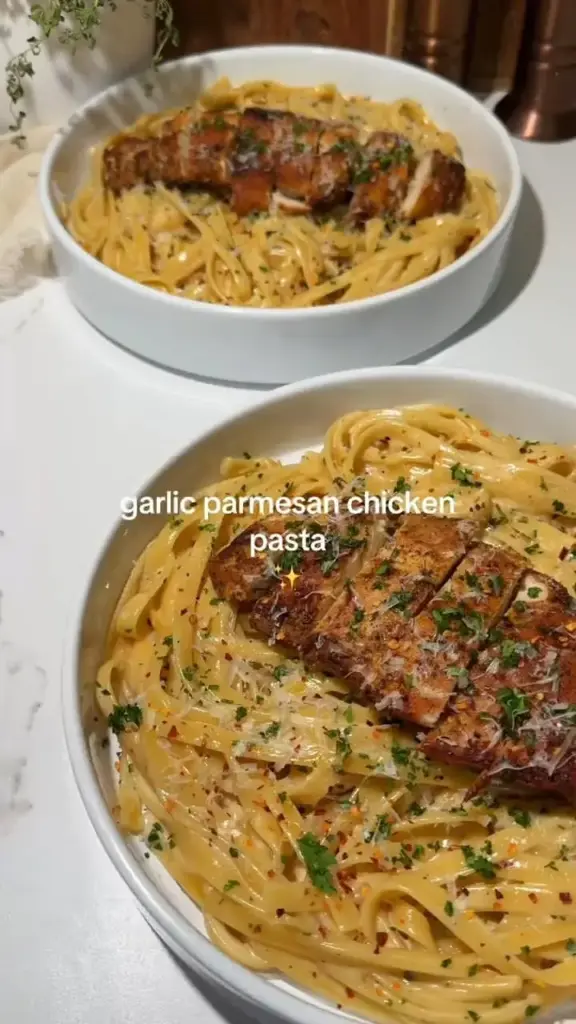
The moment garlic hits a hot pan, the whole kitchen starts humming — that sharp, warm sizzle is your signal that dinner is officially underway. You'll hear it before you smell it, and you'll smell it before you taste the first creamy, cheesy bite of this garlic Parmesan chicken pasta.
Picture golden-seared chicken cutlets tucked into a silky sauce of butter, cream, and a small mountain of freshly grated Parmesan, all tangled around rigatoni that catches every drop. It's the kind of weeknight dinner that tastes like you fussed, even though the whole thing comes together in under an hour.
Keep an eye on the sauce as it simmers — when it coats the back of your spoon and the edges of the pan start bubbling, you're exactly where you want to be. Taste as you go, then taste again.
Why You'll Love This Recipe
About the Ingredients
12 oz (340 g) rigatoni or penne
Rigatoni's ridges trap the creamy sauce beautifully. If you only have spaghetti, save 1 cup of pasta water — you'll need it to loosen the sauce.
1.5 lb (680 g) boneless, skinless chicken breasts, sliced into 1/2-inch cutlets
Slicing breasts horizontally into cutlets helps them cook evenly and stay juicy. Boneless thighs work great too and stay extra tender.
1 tsp kosher salt, plus more for the pasta water
Kosher salt seasons more gently than table salt. If using fine table salt, start with 3/4 teaspoon.
1/2 tsp freshly ground black pepper
Fresh-cracked pepper blooms in the hot pan. Pre-ground pepper loses its punch, so grind it right before cooking if you can.
2 tbsp olive oil
Use regular (not extra-virgin) olive oil for searing — it handles high heat better. Avocado oil is a fine swap.
3 tbsp unsalted butter
Butter builds the sauce's silky base. If you only have salted butter, reduce the added salt in the sauce to a pinch.
6 cloves garlic, finely minced (about 2 tbsp)
Fresh garlic is non-negotiable here — jarred garlic tastes flat and bitter when sautéed. Mince it fine so it melts into the sauce instead of burning.
1 cup (240 ml) heavy cream
Heavy cream gives the richest, most stable sauce. For a lighter version, use half-and-half but simmer gently so it doesn't curdle.
1.5 cups (150 g) freshly grated Parmesan, plus more for serving
Grate it yourself from a block — pre-shredded Parmesan is coated in starch and won't melt smoothly. Pecorino Romano is a sharper swap.
1/2 cup (120 ml) reserved pasta water
The starchy water is your secret weapon for a glossy sauce. Don't skip it — plain tap water won't emulsify the same way.
2 tbsp chopped fresh parsley, for garnish
Flat-leaf parsley adds a fresh, grassy finish. Basil or a pinch of red pepper flakes works if you want a different vibe.
Tips & Tricks
Grate your own Parmesan
the starch coating on pre-shredded cheese makes the sauce grainy instead of glossy.
Reserve pasta water before you drain
set a mug aside the second the pasta is al dente, because you can't get it back once the sink swallows it.
- Don't dump cold cream into a screaming-hot pan: pull the heat to medium-low first, then pour slowly and stir — this keeps the sauce from splitting.
Pro Tips
Step-by-Step Instructions
1. Boil the pasta
Bring a large pot of generously salted water to a rolling boil and cook the rigatoni for 1 minute less than the package directions (usually 10-11 minutes), until just shy of al dente. Scoop out 1/2 cup of pasta water and set it aside before draining.
2. Season the chicken
Pat the chicken cutlets completely dry with paper towels, then season both sides with the kosher salt and black pepper. Dry chicken is the key to a crust that actually sticks to the pan.
3. Sear until golden
Heat the olive oil in a large skillet over medium-high heat (375°F / 190°C) until it shimmers, about 2 minutes. Add the chicken and cook 4-5 minutes per side, until deep golden brown and the internal temperature reads 165°F (74°C). You'll hear a steady, confident sizzle — if it's quiet, the pan isn't hot enough.
4. Rest and slice
Transfer the chicken to a cutting board and let it rest 5 minutes while you build the sauce. Resting keeps the juices in the meat instead of on your cutting board, then slice it into strips.
5. Bloom the garlic
Lower the heat to medium and melt the butter in the same skillet, scraping up the browned bits. Add the garlic and stir constantly for 30-45 seconds, until it smells nutty and fragrant but hasn't browned — burnt garlic turns the whole sauce bitter.
6. Build the cream sauce
Pour in the heavy cream in a slow stream, stirring constantly, and bring to a gentle simmer at 195°F (90°C). Cook 3-4 minutes, until the sauce thickens enough to coat the back of a spoon, then whisk in the Parmesan a handful at a time until fully melted.
7. Toss it all together
Add the drained pasta and sliced chicken to the skillet, tossing over low heat for 1-2 minutes. Splash in the reserved pasta water a little at a time until the sauce turns glossy and clings to every noodle.
8. Garnish and serve
Taste, adjust with a pinch of salt and pepper, then shower with fresh parsley and extra Parmesan. Serve immediately — this dish is at its silkiest right out of the pan.
Delicious Variations
Crispy Bacon Version
Cook 4 slices of chopped bacon first, use the rendered fat to sear the chicken, and crumble the bacon over the top for a smoky crunch.
Lemon-Pepper Twist
Stir in the zest of 1 lemon and an extra pinch of black pepper at the end for a bright, peppery lift.
Baked Casserole Style
Toss everything together, top with 1 cup of mozzarella and 1/2 cup of Parmesan, and bake at 400°F (205°C) for 12-15 minutes until the cheese bubbles at the edges.
How to Store Garlic Parmesan Chicken Pasta
Refrigerator
Store in an airtight container in the refrigerator for up to 3 days. The sauce thickens as it chills, so plan to loosen it with a splash of milk or broth when reheating.
Freezer
Freeze the pasta and sauce together in a freezer-safe container for up to 2 months. The cream sauce can separate slightly on thawing, so reheat gently and stir well to bring it back together.
Reheating
Reheat on the stovetop over medium-low heat with 1-2 tablespoons of milk or broth, stirring until creamy again. In the microwave, cover and heat in 30-second bursts, stirring between each, to avoid drying out the chicken.
Frequently Asked Questions
Q: Why did my garlic Parmesan sauce turn grainy?
Your sauce turned grainy because the heat was too high or the Parmesan was added too fast. Keep the cream at a gentle simmer and whisk the cheese in a handful at a time off the heat. Pre-shredded cheese can also cause graininess, so grate from a block when you can.
Q: Can I make garlic Parmesan chicken pasta ahead of time?
Yes, you can make it up to 1 day ahead and reheat it gently with a splash of milk or broth. Cook the pasta just shy of al dente so it doesn't turn mushy on the second pass. Store it covered in the refrigerator until you're ready.
Q: How do I know when the chicken is fully cooked?
The chicken is fully cooked when an instant-read thermometer inserted into the thickest part reads 165°F (74°C). You'll also see the juices run clear and the meat feel firm but springy to the touch. Let it rest 5 minutes before slicing so the juices stay put.
Q: Can I use milk instead of heavy cream?
Yes, but use whole milk and simmer gently, since lower-fat dairy is more likely to curdle. Whisk in a teaspoon of flour or cornstarch with the Parmesan to help the sauce hold together. The result will be lighter and less rich, but still delicious.
Q: What pasta shape works best for creamy chicken pasta?
Rigatoni and penne are the best choices because their ridges and hollow centers hold the sauce. Fusilli and farfalle also work well. Avoid very thin pasta like angel hair, which can't carry a heavy cream sauce.
Grab your biggest skillet and a block of Parmesan, and let the garlic do the talking tonight. Snap a photo of your glossy, golden pan and tell me how your family reacted — I have a feeling this one is going into the regular rotation. Taste as you go, then taste again.
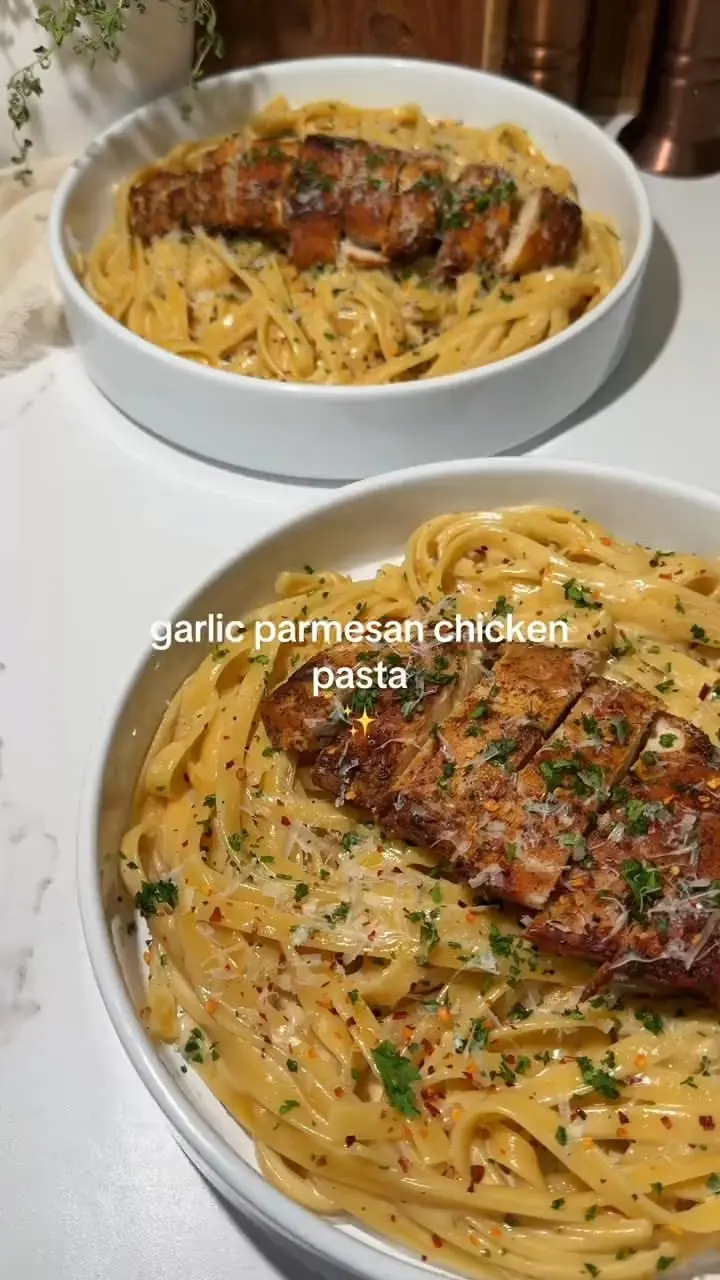
Garlic Parmesan Chicken Pasta
This garlic Parmesan chicken pasta is creamy, cheesy, and ready in 50 minutes, with golden seared chicken and a silky sauce that clings to every noodle.
🧂 Ingredients
- 12 oz (340 g) rigatoni or penne
- 1.5 lb (680 g) boneless, skinless chicken breasts, sliced into 1/2-inch cutlets
- 1 tsp kosher salt, plus more for the pasta water
- 1/2 tsp freshly ground black pepper
- 2 tbsp olive oil
- 3 tbsp unsalted butter
- 6 cloves garlic, finely minced (about 2 tbsp)
- 1 cup (240 ml) heavy cream
- 1.5 cups (150 g) freshly grated Parmesan, plus more for serving
- 1/2 cup (120 ml) reserved pasta water
- 2 tbsp chopped fresh parsley, for garnish
📋 Instructions
- 1Boil the pasta — Bring a large pot of generously salted water to a rolling boil and cook the rigatoni for 1 minute less than the package directions (usually 10-11 minutes), until just shy of al dente. Scoop out 1/2 cup of pasta water and set it aside before draining.
- 2Season the chicken — Pat the chicken cutlets completely dry with paper towels, then season both sides with the kosher salt and black pepper. Dry chicken is the key to a crust that actually sticks to the pan.
- 3Sear until golden — Heat the olive oil in a large skillet over medium-high heat (375°F / 190°C) until it shimmers, about 2 minutes. Add the chicken and cook 4-5 minutes per side, until deep golden brown and the internal temperature reads 165°F (74°C). You'll hear a steady, confident sizzle — if it's quiet, the pan isn't hot enough.
- 4Rest and slice — Transfer the chicken to a cutting board and let it rest 5 minutes while you build the sauce. Resting keeps the juices in the meat instead of on your cutting board, then slice it into strips.
- 5Bloom the garlic — Lower the heat to medium and melt the butter in the same skillet, scraping up the browned bits. Add the garlic and stir constantly for 30-45 seconds, until it smells nutty and fragrant but hasn't browned — burnt garlic turns the whole sauce bitter.
- 6Build the cream sauce — Pour in the heavy cream in a slow stream, stirring constantly, and bring to a gentle simmer at 195°F (90°C). Cook 3-4 minutes, until the sauce thickens enough to coat the back of a spoon, then whisk in the Parmesan a handful at a time until fully melted.
- 7Toss it all together — Add the drained pasta and sliced chicken to the skillet, tossing over low heat for 1-2 minutes. Splash in the reserved pasta water a little at a time until the sauce turns glossy and clings to every noodle.
- 8Garnish and serve — Taste, adjust with a pinch of salt and pepper, then shower with fresh parsley and extra Parmesan. Serve immediately — this dish is at its silkiest right out of the pan.

Priya writes about South Indian home cooking and the improvisation that happens in real kitchens, from quick weekday tiffins to slow weekend spreads. She is interested in how a single tempering of spices changes a dish and in adapting familiar recipes to what a cook has on hand. Her angle is playful, sensory recipe writing that treats cooking as something to tinker with.