All Recipes Menu
Creamy Cajun Chicken Bowtie Pasta Skillet – One-Pan Dinner
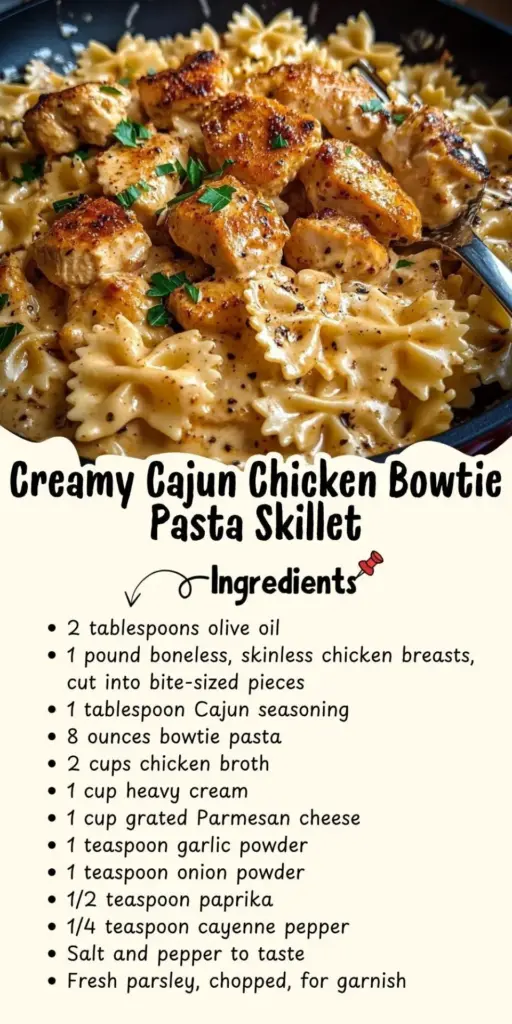
The second that Cajun seasoning hits the hot oil, your kitchen smells like a Louisiana back porch — smoky, peppery, and a little sweet from the paprika. You will hear the chicken sizzle and see the edges turn deep golden brown before you even think about the sauce.
This is the skillet dinner I make when I want something creamy but not shy, and bowtie pasta is the perfect little sauce scoop. Everything happens in one pan, so the pasta soaks up all that spiced chicken flavor instead of a pot of plain water.
Keep your heat moderate and stir the cream in off the boil, and you will get a glossy sauce that clings to every fold of the farfalle. Taste as you go, then taste again.
Why You'll Love This Recipe
About the Ingredients
1 1/2 lb (680g) boneless, skinless chicken thighs, cut into 1-inch pieces
Thighs stay juicy under high heat; chicken breast works too but cook it 2 minutes less. Look for thighs with even thickness so they brown uniformly.
2 tbsp Cajun seasoning, divided
Use a salt-free blend so you control the sodium; if yours contains salt, skip the added salt in the pasta water. Smoked paprika can stand in for half of it in a pinch.
2 tbsp olive oil
Avocado oil is a great high-heat swap; avoid butter here because it burns before the chicken browns.
1 medium yellow onion, diced (about 1 cup)
Sweet onion or shallots are fine substitutes; frozen diced onion works if you drain it well first.
1 red bell pepper, diced
Frozen bell pepper strips thaw and dice easily; poblano adds a milder, grassier heat if you prefer less sweet.
3 garlic cloves, minced
Jarred minced garlic is a fine shortcut — use 1 tbsp; add it last so it does not scorch.
12 oz (340g) bowtie pasta (farfalle)
Penne or rotini are good substitutes if bowties are sold out; check the box for a 10 to 11 minute cook time.
3 cups (720ml) low-sodium chicken broth
Vegetable broth works for a lighter version; keep it low-sodium since the Cajun blend already brings salt.
1 cup (240ml) heavy cream
Half-and-half gives a thinner sauce; full-fat coconut milk makes it dairy-free with a subtle sweetness.
1/2 cup (50g) grated Parmesan
Freshly grated Parmigiano-Reggiano melts smoother than pre-shredded; Pecorino is a sharper swap.
2 tbsp chopped fresh parsley, for garnish
Thin-sliced scallions or torn basil are good substitutes; add them off the heat so they stay bright.
Tips & Tricks
Do not crowd the chicken
Brown it in a single layer so it sears instead of steaming. Work in two batches if your skillet is smaller than 12 inches.
Scrape the fond
Those browned bits on the skillet bottom are pure flavor. Deglaze with a splash of broth and scrape them up before adding the pasta.
Add cream off the boil
Stir in the cream once the pasta is tender and the heat is lowered, or the sauce can split and turn grainy.
Pro Tips
Step-by-Step Instructions
1. Season the chicken
Pat the chicken dry and toss it with 1 tablespoon of the Cajun seasoning in a bowl. Let it sit 10 minutes at room temperature while you chop the vegetables so the spice penetrates the meat.
2. Sear the chicken
Heat the olive oil in a 12-inch skillet over medium-high heat (about 400°F / 205°C) until it shimmers. Add the chicken in a single layer and cook 4 to 5 minutes per side until deep golden brown and the internal temperature reads 165°F (74°C); transfer to a plate.
3. Soften the vegetables
Lower the heat to medium (about 350°F / 175°C) and add the onion and bell pepper to the same skillet. Cook 4 to 5 minutes, stirring, until the onion turns translucent and the pepper softens at the edges.
4. Bloom the garlic
Stir in the garlic and the remaining 1 tablespoon Cajun seasoning and cook 30 seconds until fragrant — you will smell the paprika bloom. Do not let the garlic brown.
5. Simmer the pasta
Pour in the chicken broth and scrape up the browned bits, then stir in the bowtie pasta. Bring to a gentle boil, cover, and cook 10 to 11 minutes, stirring twice, until the pasta is al dente and most of the liquid is absorbed.
6. Finish the sauce
Reduce the heat to low (about 200°F / 95°C), stir in the heavy cream and Parmesan, and return the chicken with its juices. Simmer 3 to 4 minutes until the sauce bubbles gently at the edges and coats the back of a spoon.
7. Garnish and serve
Taste and adjust the salt, then scatter the parsley over the top. Serve straight from the skillet while the sauce is glossy and hot.
Delicious Variations
Smoky Sausage Swap
Use sliced andouille sausage instead of chicken and brown it 3 minutes per side for extra Cajun punch.
Dairy-Free Version
Replace the cream with full-fat coconut milk and skip the Parmesan for a coconutty, spiced skillet.
Veggie Loaded
Add 2 cups of sliced zucchini and a handful of spinach in the last 5 minutes of simmering for a lighter, greener pan.
How to Store Creamy Cajun Chicken Bowtie Pasta Skillet
Refrigerator
Store leftovers in an airtight container in the refrigerator for up to 3 days; the sauce thickens as it chills.
Freezer
Freeze in portions for up to 2 months, but the cream sauce may separate slightly on thaw — whisk it back together over low heat.
Reheating
Reheat gently on the stovetop over low heat with a splash of broth or milk, stirring until the sauce loosens and turns glossy again.
Frequently Asked Questions
Q: Can I use chicken breast instead of thighs?
Yes, boneless chicken breast works well — just cut it into even 1-inch pieces and cook it 2 minutes less per side so it does not dry out. Check for 165°F (74°C) internal temperature before removing it from the skillet.
Q: Do I have to cook the pasta separately?
No, the bowtie pasta cooks right in the skillet with the broth, which saves a pot and builds flavor. Keep the heat at a gentle boil and stir twice so the pasta does not stick to the bottom.
Q: Why did my cream sauce curdle?
The cream curdled because it hit too high a heat or the pan was still boiling hard. Lower the heat to low before stirring in the cream, and add it slowly while stirring so the sauce stays smooth.
Q: Is this Cajun chicken pasta very spicy?
It has a warm, smoky kick rather than a fiery burn, since most Cajun blends lean on paprika and garlic. For a milder pan, use 1 tablespoon of Cajun seasoning and add a pinch of smoked paprika for color.
Q: How do I keep the pasta from getting mushy?
Cook the bowties just until al dente, about 10 to 11 minutes, and stop when there is still a little bite at the center. The pasta keeps softening as it sits in the hot sauce, so pull it early rather than late.
Grab your biggest skillet, crank up the heat, and let that Cajun aroma fill the kitchen tonight. Taste as you go, then taste again.
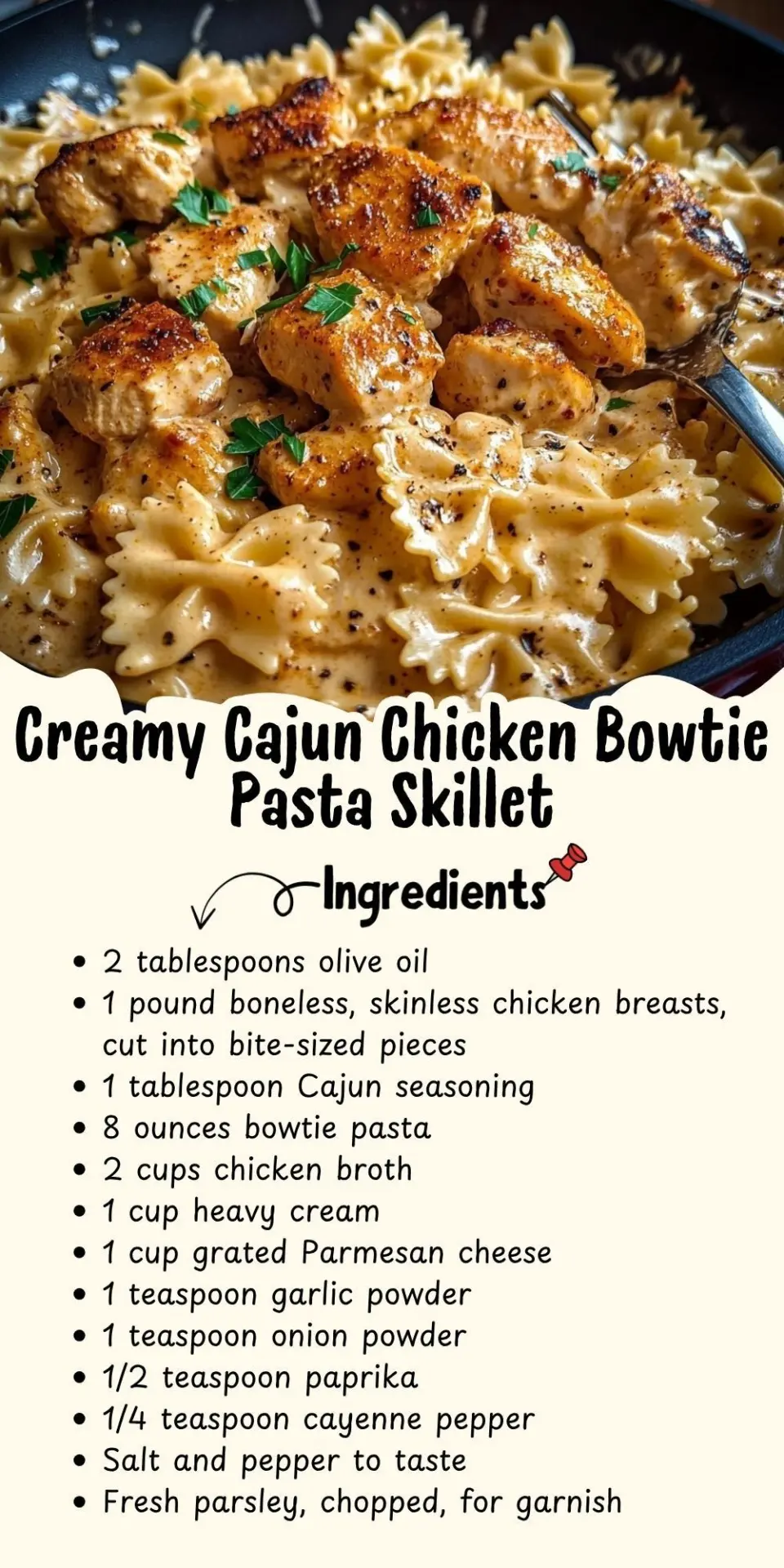
Creamy Cajun Chicken Bowtie Pasta Skillet
This creamy Cajun chicken bowtie pasta skillet delivers smoky spice, tender chicken, and silky sauce in one pan for a bold 50-minute weeknight dinner.
🧂 Ingredients
- 1 1/2 lb (680g) boneless, skinless chicken thighs, cut into 1-inch pieces
- 2 tbsp Cajun seasoning, divided
- 2 tbsp olive oil
- 1 medium yellow onion, diced (about 1 cup)
- 1 red bell pepper, diced
- 3 garlic cloves, minced
- 12 oz (340g) bowtie pasta (farfalle)
- 3 cups (720ml) low-sodium chicken broth
- 1 cup (240ml) heavy cream
- 1/2 cup (50g) grated Parmesan
- 2 tbsp chopped fresh parsley, for garnish
📋 Instructions
- 1Season the chicken — Pat the chicken dry and toss it with 1 tablespoon of the Cajun seasoning in a bowl. Let it sit 10 minutes at room temperature while you chop the vegetables so the spice penetrates the meat.
- 2Sear the chicken — Heat the olive oil in a 12-inch skillet over medium-high heat (about 400°F / 205°C) until it shimmers. Add the chicken in a single layer and cook 4 to 5 minutes per side until deep golden brown and the internal temperature reads 165°F (74°C); transfer to a plate.
- 3Soften the vegetables — Lower the heat to medium (about 350°F / 175°C) and add the onion and bell pepper to the same skillet. Cook 4 to 5 minutes, stirring, until the onion turns translucent and the pepper softens at the edges.
- 4Bloom the garlic — Stir in the garlic and the remaining 1 tablespoon Cajun seasoning and cook 30 seconds until fragrant — you will smell the paprika bloom. Do not let the garlic brown.
- 5Simmer the pasta — Pour in the chicken broth and scrape up the browned bits, then stir in the bowtie pasta. Bring to a gentle boil, cover, and cook 10 to 11 minutes, stirring twice, until the pasta is al dente and most of the liquid is absorbed.
- 6Finish the sauce — Reduce the heat to low (about 200°F / 95°C), stir in the heavy cream and Parmesan, and return the chicken with its juices. Simmer 3 to 4 minutes until the sauce bubbles gently at the edges and coats the back of a spoon.
- 7Garnish and serve — Taste and adjust the salt, then scatter the parsley over the top. Serve straight from the skillet while the sauce is glossy and hot.

Priya writes about South Indian home cooking and the improvisation that happens in real kitchens, from quick weekday tiffins to slow weekend spreads. She is interested in how a single tempering of spices changes a dish and in adapting familiar recipes to what a cook has on hand. Her angle is playful, sensory recipe writing that treats cooking as something to tinker with.