All Recipes Menu
Chocolate Chip Scones – Buttery, Flaky & Soft in 50 Minutes
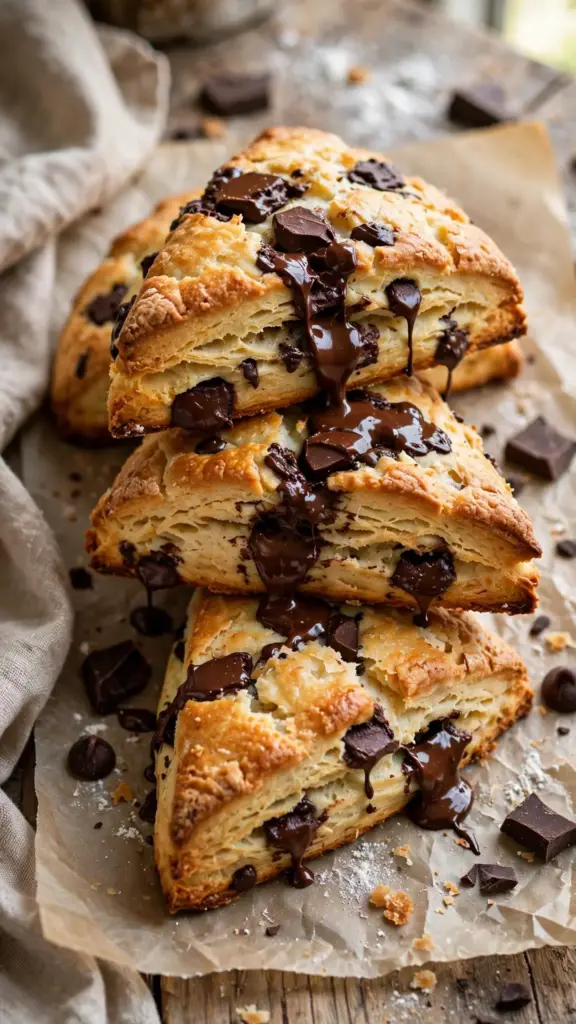
Chocolate chip scones are the breakfast pastry that feels like dessert but comes together with a bowl, a whisk, and about fifteen minutes of hands-on work. The dough is enriched with cold butter and heavy cream, which is exactly why these bake up tall with a tender, pull-apart crumb instead of the dry, crumbly bricks scones are famous for.
The secret is keeping everything cold and handling the dough as little as possible - you want visible butter flecks in the flour before the cream ever touches it. A quick fold-and-pat gives you those flaky layers, and a generous sprinkle of coarse sugar on top creates the crackly crust that makes bakery scones so irresistible.
Serve them warm with a smear of salted butter or a spoon of clotted cream, and they'll disappear before they cool completely. This recipe makes six generous wedge-shaped scones, which is perfect for a weekend breakfast or a small batch to freeze for later.
Why You'll Love This Recipe
About the Ingredients
2 cups (250g) all-purpose flour, plus extra for dusting
Spoon flour into the cup and level it off - scooping packs it down and makes dry scones. For a slightly more tender crumb, swap 1/4 cup of the flour for cake flour.
1/3 cup (67g) granulated sugar
Adds sweetness and helps the scones brown. You can reduce it to 1/4 cup if you prefer a less sweet breakfast scone.
1 tablespoon (12g) baking powder
Use fresh baking powder - it is the only lift these scones get. Check the date on the can; expired powder will give you flat, dense wedges.
1/2 teaspoon (3g) fine sea salt
Balances the sugar and makes the chocolate taste richer. If using salted butter, drop this to 1/4 teaspoon.
1/2 cup (113g) unsalted butter, cold, cut into 1/2-inch cubes
Keep the butter in the fridge until the last second. Frozen butter grated on a box grater works even better for flaky layers.
1/2 cup (85g) mini chocolate chips
Mini chips stay suspended in the dough and melt evenly. Regular chips work too, but toss them in a teaspoon of flour first so they do not sink.
3/4 cup (180ml) cold heavy cream, plus 2 tablespoons for brushing
Cold cream keeps the butter from softening. Whole milk plus 1 tablespoon melted butter is a workable substitute in a pinch.
1 large egg, cold
Binds the dough and adds richness. A flax egg (1 tablespoon ground flax + 3 tablespoons water) works for an egg-free version.
1 teaspoon vanilla extract
Rounds out the chocolate flavor. Almond extract (1/2 teaspoon) gives a lovely bakery-style twist.
2 tablespoons coarse sanding sugar, for topping
Creates that crunchy crackly top. Turbinado or demerara sugar is a perfect substitute if you do not have sanding sugar.
Tips & Tricks
Keep Everything Cold
Chill your bowl, cubed butter, and cream in the freezer for 10 minutes before starting - warm ingredients make spread-out, flat scones.
Do Not Overwork the Dough
Stop mixing the moment the dough holds together; extra kneading develops gluten and turns flaky scones tough.
Pat, Do Not Roll
Shape the dough into a 1-inch-thick disk by hand so you keep the butter layers intact instead of pressing them flat.
Bake on a Hot Oven
A fully preheated 400°F (200°C) oven gives the instant lift that makes scones rise tall before the butter melts out.
Pro Tips
Step-by-Step Instructions
1. Preheat and Prep
Preheat the oven to 400°F (200°C) and line a baking sheet with parchment paper. Chill your mixing bowl in the freezer for 10 minutes while you gather ingredients.
2. Whisk Dry Ingredients
Whisk together 2 cups (250g) flour, 1/3 cup (67g) sugar, 1 tablespoon baking powder, and 1/2 teaspoon salt in the cold bowl. Stir in the mini chocolate chips so they get a light flour coating.
3. Cut In Cold Butter
Add the cold cubed butter and toss to coat, then work it in with your fingertips or a pastry cutter until the mixture looks like coarse sand with some pea-sized butter lumps remaining - those lumps are your flaky layers.
4. Mix the Wet Ingredients
Whisk 3/4 cup (180ml) cold cream, the egg, and vanilla in a small jug. Pour it into the flour mixture and stir with a fork just until no dry flour remains; the dough will look shaggy.
5. Shape the Dough
Turn the dough onto a lightly floured surface and pat it into a 1-inch-thick round disk, folding it over itself once to build layers. Do not knead - just press gently until it holds together.
6. Cut the Wedges
Cut the disk into 6 equal wedges with a sharp knife, pressing straight down. Transfer the wedges to the baking sheet, leaving 2 inches between them.
7. Brush and Sugar
Brush the tops with the remaining 2 tablespoons of cream and sprinkle generously with coarse sanding sugar. Let the scones rest 10 minutes at room temperature while the oven finishes heating.
8. Bake Until Golden
Bake at 400°F (200°C) for 18-22 minutes, until the tops are deep golden brown and the edges look set and slightly crackled. A toothpick inserted in the center should come out with just a few moist crumbs, and an instant-read thermometer should read 200°F (93°C).
9. Cool and Serve
Slide the parchment onto a wire rack and cool the scones for 10 minutes before eating - the chocolate is molten hot straight from the oven. Serve warm with salted butter.
Delicious Variations
Triple Chocolate
Swap half the mini chips for dark chocolate chunks and add 2 tablespoons cocoa powder, replacing 2 tablespoons of flour.
Cranberry-Orange
Replace the chocolate chips with 1/2 cup dried cranberries and add 1 tablespoon orange zest to the dry ingredients.
Cinnamon Sugar Top
Omit the sanding sugar and brush the tops with melted butter, then dust with a cinnamon-sugar mixture before baking.
How to Store Chocolate Chip Scones (Buttery, Flaky & Soft!)
Refrigerator
Store cooled scones in an airtight container at room temperature for up to 2 days, or refrigerate for up to 5 days and rewarm before serving.
Freezer
Freeze baked scones in a zip-top bag for up to 2 months; freeze raw cut wedges on a tray, then bag them and bake from frozen at 400°F (200°C) for 22-25 minutes.
Reheating
Rewarm in a 350°F (175°C) oven for 5-6 minutes, or microwave for 15-20 seconds - the oven keeps the crust crisp while the microwave keeps the crumb soft.
Frequently Asked Questions
Q: Why are my chocolate chip scones dry and crumbly?
Dry scones almost always come from too much flour or overbaking. Spoon and level your flour instead of scooping, and pull the scones from the oven as soon as the centers register 200°F (93°C) - every extra minute past that dries them out.
Q: Can I make chocolate chip scones ahead of time?
Yes - shape and cut the dough, then freeze the raw wedges on a tray and bake straight from frozen whenever you want fresh scones. Add 4-5 minutes to the bake time and do not thaw them first.
Q: Can I use milk instead of heavy cream in scones?
You can substitute whole milk, but the scones will be slightly less rich and tender. For the closest result, use whole milk plus 1 tablespoon of melted butter per 3/4 cup to replace the fat the cream would have provided.
Q: What is the secret to flaky scones?
Cold butter and minimal handling are the secret. Leave visible pea-sized butter pieces in the flour, use cold cream and egg, and pat the dough together instead of kneading so the butter creates steam pockets as it bakes.
Q: How do I know when chocolate chip scones are done baking?
They are done when the tops are deep golden brown and an instant-read thermometer in the center reads 200°F (93°C). If the tops brown before the centers set, tent them loosely with foil and continue baking.
If you bake these chocolate chip scones this weekend, snap a photo of those golden, flaky layers and tag me - I love seeing your bakes. Save this recipe to your breakfast board and come back to leave a rating so other bakers know how yours turned out!
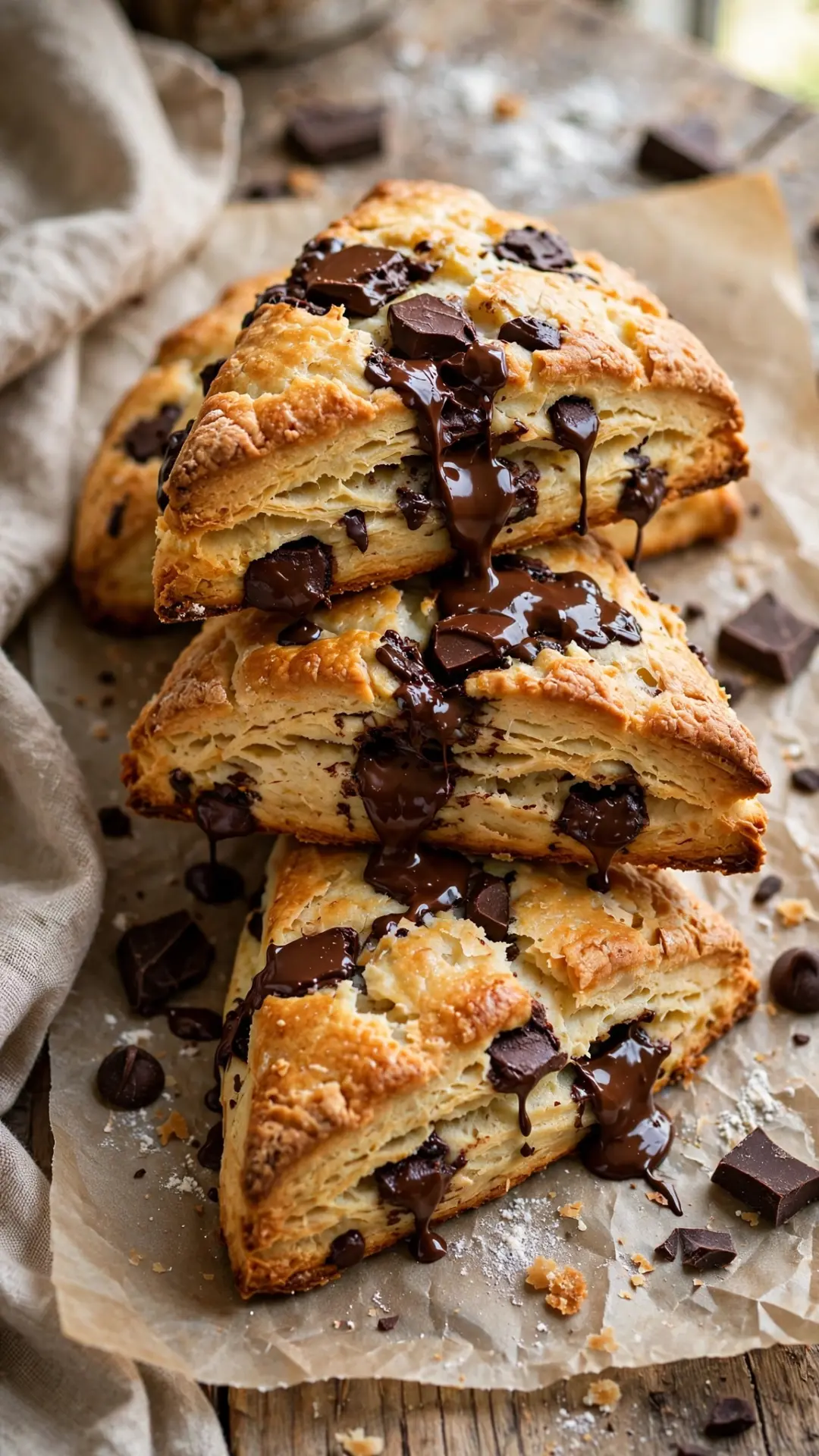
Chocolate Chip Scones (Buttery, Flaky & Soft!)
These chocolate chip scones bake up tall, buttery, and flaky with melty chocolate in every bite - a 50-minute bakery-style treat for breakfast.
🧂 Ingredients
- 2 cups (250g) all-purpose flour, plus extra for dusting
- 1/3 cup (67g) granulated sugar
- 1 tablespoon (12g) baking powder
- 1/2 teaspoon (3g) fine sea salt
- 1/2 cup (113g) unsalted butter, cold, cut into 1/2-inch cubes
- 1/2 cup (85g) mini chocolate chips
- 3/4 cup (180ml) cold heavy cream, plus 2 tablespoons for brushing
- 1 large egg, cold
- 1 teaspoon vanilla extract
- 2 tablespoons coarse sanding sugar, for topping
📋 Instructions
- 1Preheat and Prep — Preheat the oven to 400°F (200°C) and line a baking sheet with parchment paper. Chill your mixing bowl in the freezer for 10 minutes while you gather ingredients.
- 2Whisk Dry Ingredients — Whisk together 2 cups (250g) flour, 1/3 cup (67g) sugar, 1 tablespoon baking powder, and 1/2 teaspoon salt in the cold bowl. Stir in the mini chocolate chips so they get a light flour coating.
- 3Cut In Cold Butter — Add the cold cubed butter and toss to coat, then work it in with your fingertips or a pastry cutter until the mixture looks like coarse sand with some pea-sized butter lumps remaining - those lumps are your flaky layers.
- 4Mix the Wet Ingredients — Whisk 3/4 cup (180ml) cold cream, the egg, and vanilla in a small jug. Pour it into the flour mixture and stir with a fork just until no dry flour remains; the dough will look shaggy.
- 5Shape the Dough — Turn the dough onto a lightly floured surface and pat it into a 1-inch-thick round disk, folding it over itself once to build layers. Do not knead - just press gently until it holds together.
- 6Cut the Wedges — Cut the disk into 6 equal wedges with a sharp knife, pressing straight down. Transfer the wedges to the baking sheet, leaving 2 inches between them.
- 7Brush and Sugar — Brush the tops with the remaining 2 tablespoons of cream and sprinkle generously with coarse sanding sugar. Let the scones rest 10 minutes at room temperature while the oven finishes heating.
- 8Bake Until Golden — Bake at 400°F (200°C) for 18-22 minutes, until the tops are deep golden brown and the edges look set and slightly crackled. A toothpick inserted in the center should come out with just a few moist crumbs, and an instant-read thermometer should read 200°F (93°C).
- 9Cool and Serve — Slide the parchment onto a wire rack and cool the scones for 10 minutes before eating - the chocolate is molten hot straight from the oven. Serve warm with salted butter.