All Recipes Menu
Brown Butter Chocolate Chip Cookies – 30-Minute Bakery Trick
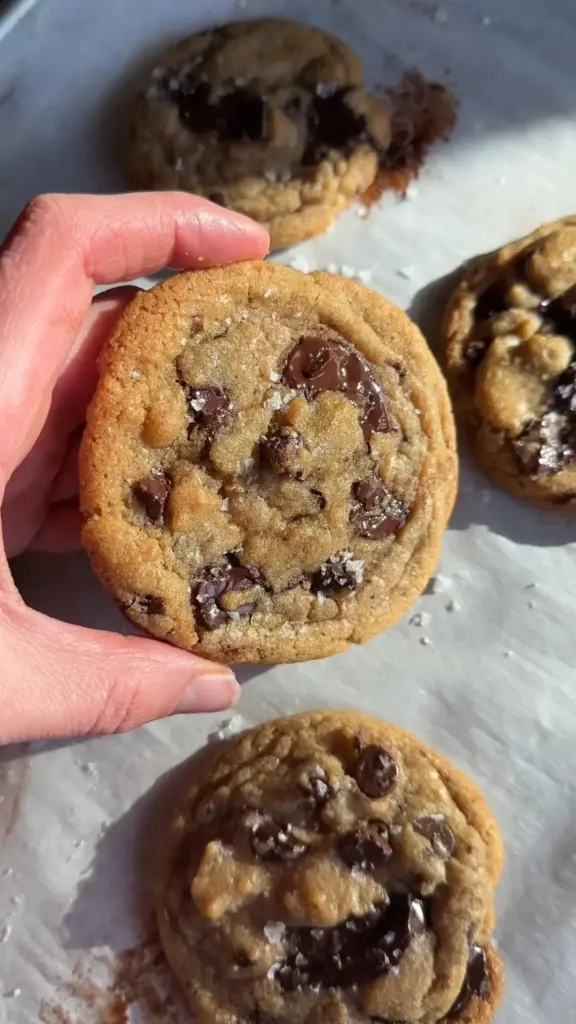
Brown butter is butter that has been cooked past melting until its milk solids toast and turn amber. That single extra step gives these cookies a toffee note you cannot get from creamed butter. I weigh everything, because a few grams of flour decides whether the cookie spreads or domes.
The dough comes together in one saucepan and one bowl. You brown 170 g (12 tbsp) of butter, cool it briefly, then build the dough in the same pot. Chilling is short, thirty minutes, only enough to firm the fat so the cookies hold thickness.
Expect 18 cookies at roughly 62 g each. They bake in 11 to 12 minutes at 180 C (350 F) and finish with a crackled top and a soft middle. Weigh, watch, repeat.
Why You'll Love This Recipe
About the Ingredients
170 g (12 tbsp) unsalted butter
European-style butter with 82% fat browns more evenly. If using salted butter, drop the added salt to 2 g (1/3 tsp).
150 g (3/4 cup packed) dark brown sugar
Dark brown sugar carries more molasses than light. If you only have light brown, add 5 g (1 tsp) molasses.
100 g (1/2 cup) granulated sugar
White sugar sharpens the edges. Caster sugar dissolves faster if your granulated is coarse.
2 large eggs, about 100 g, at room temperature
Room-temperature eggs emulsify into warm butter without seizing. Pull them out 30 minutes ahead, or rest them in warm water for 10 minutes.
8 g (2 tsp) vanilla extract
Real extract, not imitation, survives the oven heat. Bourbon vanilla gives the warmest note.
280 g (2 1/4 cups) all-purpose flour
Weigh the flour; scooping can add 30 g per cup. Bread flour at 50% substitution makes a chewier cookie.
6 g (1 tsp) baking soda
Check the date; old soda gives flat, pale cookies. Baking powder is not a substitute here.
4 g (3/4 tsp) fine sea salt
Fine sea salt dissolves evenly. If using table salt, use 3 g (1/2 tsp).
200 g (1 1/3 cups) semisweet chocolate chips
Chips hold shape; chopped 60% chocolate pools better. Both work, so use what you have.
Flaky sea salt, for finishing
Maldon flakes crush between the fingers. Coarse kosher salt works if you use half as much.
Tips & Tricks
Brown, Don't Burn
Pull the pan off heat the moment the foam smells nutty and the solids at the bottom are amber, not black. Burnt solids taste bitter and cannot be rescued.
Cool Before Eggs
Let the brown butter sit 10 minutes until it reads 50 C (122 F) on a thermometer. Hot butter cooks the eggs into streaks.
Weigh the Flour
A kitchen scale keeps you at 280 g. Extra flour is the number one cause of dry, crumbly cookies.
Chill Briefly, Not Overnight
Thirty minutes firms the fat enough for thickness. Longer chilling needs a 2-minute longer bake.
Pro Tips
Step-by-Step Instructions
1. Brown the Butter
Melt 170 g butter in a light-colored saucepan over medium heat, swirling, for 5 to 7 minutes until the foam subsides and the solids turn amber. Pull it off at 180 C (355 F) internal; the cue is a nutty smell and brown flecks on the pan bottom. (A light pan lets you see the color change.)
2. Cool the Butter
Pour the brown butter into a large bowl and rest it 10 minutes until it reads 50 C (122 F). Warm butter, not hot, keeps the eggs from curdling. (The cue is a thermometer, not the clock.)
3. Whisk the Sugars
Whisk in 150 g dark brown sugar, 100 g granulated sugar, and 4 g salt for 60 seconds until glossy. The mixture should look like wet sand with no dry pockets.
4. Beat in Eggs
Beat in 2 eggs one at a time, then 8 g vanilla, for 45 seconds until the batter is smooth and slightly lighter. Stop when the surface turns silky, not foamy.
5. Fold the Dry
Stir in 280 g flour and 6 g baking soda with a spatula just until no flour streaks remain, about 20 turns. Stop at the moment the dough pulls clean from the bowl; overmixing builds gluten and toughness.
6. Add the Chocolate
Fold in 200 g chocolate chips until evenly distributed, about 10 turns. The dough will be soft and tacky at this point.
7. Chill the Dough
Cover and refrigerate 30 minutes until firm enough to scoop without sticking. Cold fat holds shape and limits spread.
8. Scoop and Bake
Heat the oven to 180 C (350 F). Scoop 18 balls of 62 g onto lined trays, 5 cm apart, and bake 11 to 12 minutes until edges are golden and centers look just set. The cue is a pale, soft center and browned rim; internal temperature reads 85 C (185 F).
9. Finish and Cool
Sprinkle flaky salt on the hot cookies and cool on the tray 10 minutes. They finish setting as they cool, so do not move them early.
Delicious Variations
Sea Salt Dark Chocolate
Swap the chips for 200 g chopped 70% chocolate and finish with extra flaky salt for a sharper bite.
Pecan Toffee
Add 80 g toasted chopped pecans and 40 g toffee bits with the chocolate for a crunchier cookie.
Rye Brown Butter
Replace 60 g of the flour with dark rye flour for a malty, deeper flavor that pairs well with milk chocolate.
How to Store Brown Butter Chocolate Chip Cookies
Refrigerator
Store baked cookies in an airtight container at room temperature for 4 days, or refrigerate dough balls up to 3 days before baking.
Freezer
Freeze scooped dough balls on a tray, then bag them for up to 3 months; bake from frozen at 180 C (350 F) for 13 to 14 minutes.
Reheating
Warm cookies at 150 C (300 F) for 3 minutes to soften the center; a microwave at 10 seconds works for a single cookie.
Frequently Asked Questions
Q: Why did my brown butter cookies spread flat?
Warm dough and under-measured flour cause flat cookies. Chill the dough 30 minutes and weigh the flour at 280 g before baking.
Q: Can I skip browning the butter?
Yes, but you lose the toffee flavor that defines this cookie. Melted unbrowned butter gives a flatter, plainer result.
Q: How do I know when brown butter is ready?
The foam quiets, the smell turns nutty, and brown flecks sit on the pan bottom. That happens at roughly 5 to 7 minutes over medium heat.
Q: Can I make the dough ahead of time?
Yes, the dough keeps refrigerated up to 3 days. Let it sit 15 minutes at room temperature before scooping so it does not crumble.
Q: Why are my cookies dry and crumbly?
Too much flour is the usual cause. Spoon and level, or better, weigh 280 g, and pull the cookies at 11 minutes while centers still look soft.
Weigh your butter and flour, watch the pan for amber flecks, and bake one test cookie before the full tray. Then tell me how yours turned out.
Brown Butter Chocolate Chip Cookies
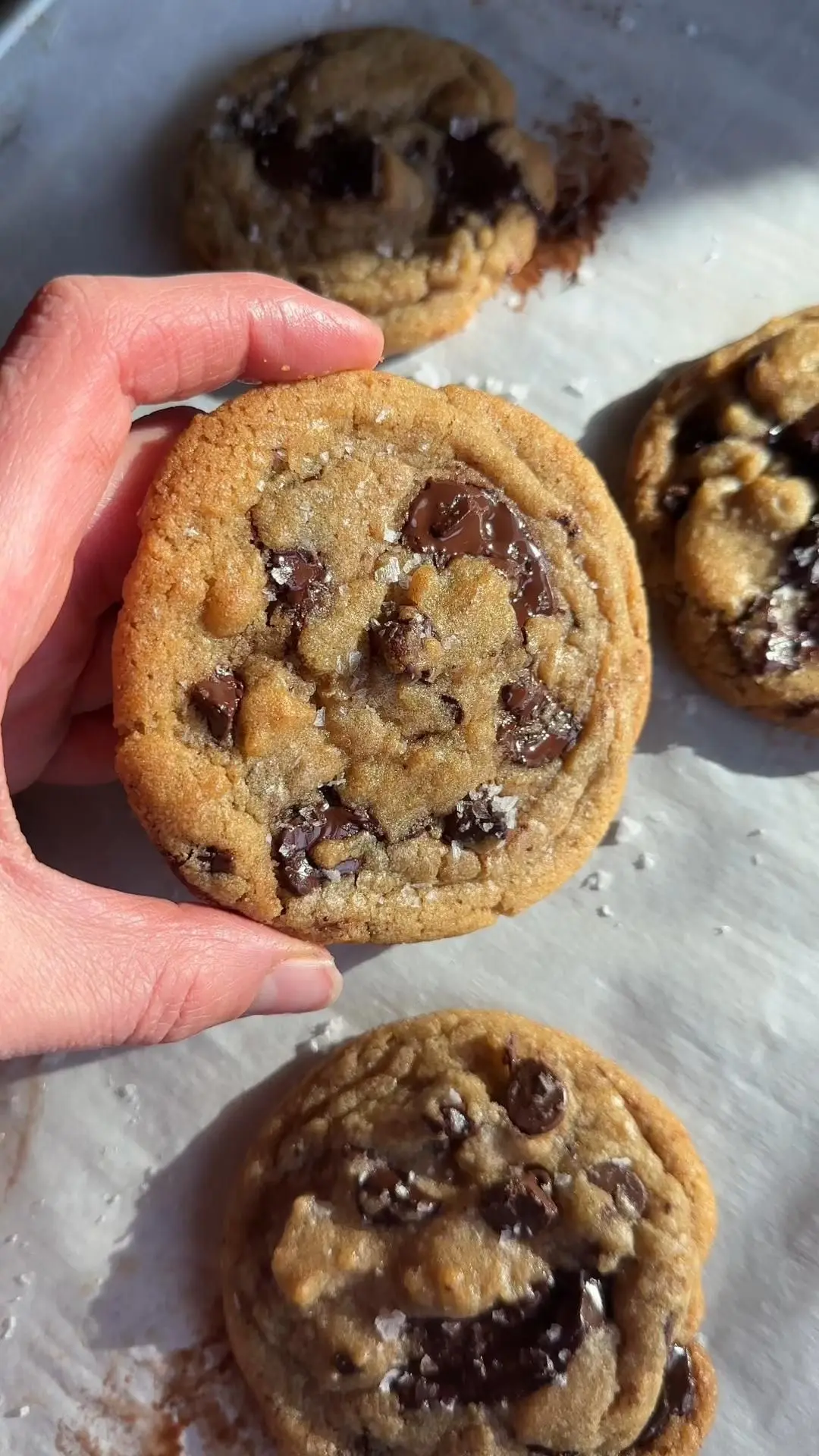
Brown Butter Chocolate Chip Cookies bring toffee-deep flavor and chewy centers with crisp edges, ready in 50 minutes from one bowl and one pan.
🧂 Ingredients
- 170 g (12 tbsp) unsalted butter
- 150 g (3/4 cup packed) dark brown sugar
- 100 g (1/2 cup) granulated sugar
- 2 large eggs, about 100 g, at room temperature
- 8 g (2 tsp) vanilla extract
- 280 g (2 1/4 cups) all-purpose flour
- 6 g (1 tsp) baking soda
- 4 g (3/4 tsp) fine sea salt
- 200 g (1 1/3 cups) semisweet chocolate chips
- Flaky sea salt, for finishing
📋 Instructions
- 1Brown the Butter — Melt 170 g butter in a light-colored saucepan over medium heat, swirling, for 5 to 7 minutes until the foam subsides and the solids turn amber. Pull it off at 180 C (355 F) internal; the cue is a nutty smell and brown flecks on the pan bottom. (A light pan lets you see the color change.)
- 2Cool the Butter — Pour the brown butter into a large bowl and rest it 10 minutes until it reads 50 C (122 F). Warm butter, not hot, keeps the eggs from curdling. (The cue is a thermometer, not the clock.)
- 3Whisk the Sugars — Whisk in 150 g dark brown sugar, 100 g granulated sugar, and 4 g salt for 60 seconds until glossy. The mixture should look like wet sand with no dry pockets.
- 4Beat in Eggs — Beat in 2 eggs one at a time, then 8 g vanilla, for 45 seconds until the batter is smooth and slightly lighter. Stop when the surface turns silky, not foamy.
- 5Fold the Dry — Stir in 280 g flour and 6 g baking soda with a spatula just until no flour streaks remain, about 20 turns. Stop at the moment the dough pulls clean from the bowl; overmixing builds gluten and toughness.
- 6Add the Chocolate — Fold in 200 g chocolate chips until evenly distributed, about 10 turns. The dough will be soft and tacky at this point.
- 7Chill the Dough — Cover and refrigerate 30 minutes until firm enough to scoop without sticking. Cold fat holds shape and limits spread.
- 8Scoop and Bake — Heat the oven to 180 C (350 F). Scoop 18 balls of 62 g onto lined trays, 5 cm apart, and bake 11 to 12 minutes until edges are golden and centers look just set. The cue is a pale, soft center and browned rim; internal temperature reads 85 C (185 F).
- 9Finish and Cool — Sprinkle flaky salt on the hot cookies and cool on the tray 10 minutes. They finish setting as they cool, so do not move them early.

Tomasz writes precise, method-first recipes for breads, ferments, and slow braises, drawing on Polish and Central European home cooking. He cares about weights, temperatures, and timing, and explains the reason behind each step so cooks can repeat results. His angle is turning fussy techniques into clear, checkable instructions.