All Recipes Menu
Blueberry Lavender Scones – Easy Bakery-Style Treat

These blueberry lavender scones earn a permanent spot in my weekly rotation because they taste like a fancy bakery breakfast but come together in one bowl with a pastry cutter and no special equipment.
The trick is a light hand with the lavender. A little goes a long way, and paired with plump blueberries and cold butter, it turns an ordinary scone into something people ask about. I use dried culinary lavender you can find near the tea section, and frozen berries work just as well as fresh when they're not in season.
You'll get six generous scones with crisp edges and a soft, tender middle, perfect for a slow morning with coffee or an afternoon cup of tea.
Why You'll Love This Recipe
About the Ingredients
2 cups (250g) all-purpose flour
Spoon the flour into the cup and level it off so you don't pack it. For a lighter crumb, swap 1/2 cup for cake flour.
1/3 cup (67g) granulated sugar
This keeps the scones gently sweet. You can use an equal amount of coconut sugar for a deeper caramel note.
1 tablespoon baking powder
Make sure it's fresh, since it does all the lifting here. Check the date on the can before you start.
1/2 teaspoon fine sea salt
Balances the sweet and floral flavors. Table salt works if you use a slightly scant half teaspoon.
1 1/2 teaspoons dried culinary lavender, finely crushed
Crush it between your fingers to release the oils. Buy food-grade lavender, not craft or potpourri lavender.
1/2 cup (113g) cold unsalted butter, cubed
Cold butter gives those flaky layers. Keep it in the fridge until the moment you add it, or use frozen butter grated on a box grater.
1 cup (140g) fresh or frozen blueberries
If using frozen, don't thaw them, since frozen berries hold their shape better in the dough. Wild blueberries are smaller and less likely to bleed.
1/2 cup (120ml) cold whole milk, plus 1 tablespoon for brushing
Whole milk gives richness; buttermilk or a plain oat milk both work as swaps. Keep it cold for the best texture.
1 large egg
Binds the dough and helps it rise. A flax egg made with 1 tablespoon ground flax and 3 tablespoons water works for egg-free scones.
1 tablespoon coarse sugar, for topping
Turbinado or demerara sugar adds a crunchy top. Regular granulated sugar is fine in a pinch.
Tips & Tricks
Don't Overmix
Stop as soon as the dough holds together, or the scones turn dense and tough.
Keep It Cold
Cold butter and cold milk are what create flaky layers, so work quickly and chill the dough if it gets warm.
Go Easy on Lavender
Too much turns bitter and soapy, so measure carefully and crush it finely.
If it goes wrong
If your dough feels too sticky to shape, dust your hands and the counter with a little flour rather than adding more to the bowl.
Pro Tips
Step-by-Step Instructions
1. Heat the oven
Preheat your oven to 400°F (200°C) and line a baking sheet with parchment paper. A hot oven gives the scones a fast lift and crisp edges.
2. Mix the dry ingredients
Whisk the flour, sugar, baking powder, salt, and crushed lavender in a large bowl until evenly combined. This spreads the lavender so no single bite is overpowering.
3. Cut in the butter
Add the cold cubed butter and cut it in with a pastry cutter or two forks until the mixture looks like coarse crumbs with a few pea-sized pieces left. Those butter bits are what make the scones flaky.
4. Add the wet ingredients
Whisk the egg into the cold milk, then pour it into the flour mixture and stir gently with a fork until a shaggy dough forms. Don't overwork it, since a few dry streaks are fine at this stage.
5. Fold in the berries
Gently fold in the blueberries with a spatula until just distributed. If using frozen berries, work quickly so they stay cold and don't tint the dough.
6. Shape the dough
Turn the dough onto a lightly floured surface and pat it into a 7-inch (18cm) round about 1 inch thick. Cut it into 6 wedges with a sharp knife, pressing straight down rather than sawing.
7. Brush and top
Transfer the wedges to the baking sheet, spacing them 2 inches apart. Brush the tops with the reserved milk and sprinkle with coarse sugar for a crunchy finish.
8. Bake until golden
Bake at 400°F (200°C) for 18 to 22 minutes, until the tops are golden brown and the edges look set. A toothpick inserted in the center should come out clean with just a few moist crumbs.
9. Cool and serve
Let the scones cool on the sheet for 5 minutes, then move them to a rack. Serve warm, when the berries are jammy and the lavender aroma is strongest.
Delicious Variations
Lemon Blueberry
Add 1 tablespoon lemon zest and swap the milk for buttermilk for a bright, tangy twist.
Lavender Honey Glaze
Drizzle a glaze made from 1/2 cup powdered sugar, 1 tablespoon honey, and 1 tablespoon milk over cooled scones.
Raspberry Lavender
Use raspberries instead of blueberries and reduce the lavender to 1 teaspoon for a softer floral flavor.
How to Store Blueberry Lavender Scones
Refrigerator
Store cooled scones in an airtight container at room temperature for up to 2 days, or refrigerate for up to 5 days and reheat gently.
Freezer
Freeze baked scones wrapped tightly for up to 2 months, or freeze unbaked shaped wedges and bake from frozen, adding 3 to 4 minutes to the bake time.
Reheating
Warm in a 325°F (165°C) oven for 5 to 7 minutes, or microwave for 15 seconds, to bring back that fresh-baked texture.
Frequently Asked Questions
Q: Can I use fresh lavender instead of dried?
Yes, but use about twice as much fresh lavender since it's milder than dried. Chop it very finely so you don't get large floral pieces in the dough.
Q: Why did my scones turn out dry?
Overbaking or too much flour is usually the culprit. Measure flour by spooning it into the cup, and pull the scones out as soon as the edges are golden and the center springs back.
Q: Can I make blueberry lavender scones ahead of time?
Yes, you can shape the dough and freeze the wedges on a tray, then bake straight from frozen whenever you want. Add 3 to 4 minutes to the bake time and keep the oven at 400°F (200°C).
Q: Is culinary lavender safe to eat?
Culinary lavender is grown for eating and is safe in small amounts, but decorative or craft lavender may be treated with chemicals. Always buy food-grade lavender and use it sparingly.
Q: What can I use instead of blueberries?
Raspberries, chopped strawberries, or even dried cranberries work well in the same amount. If using wetter fruit like strawberries, pat it dry first so the dough doesn't get soggy.
Give these blueberry lavender scones a try this weekend and let the smell fill your kitchen. Cook it your way, and tell me how it went.
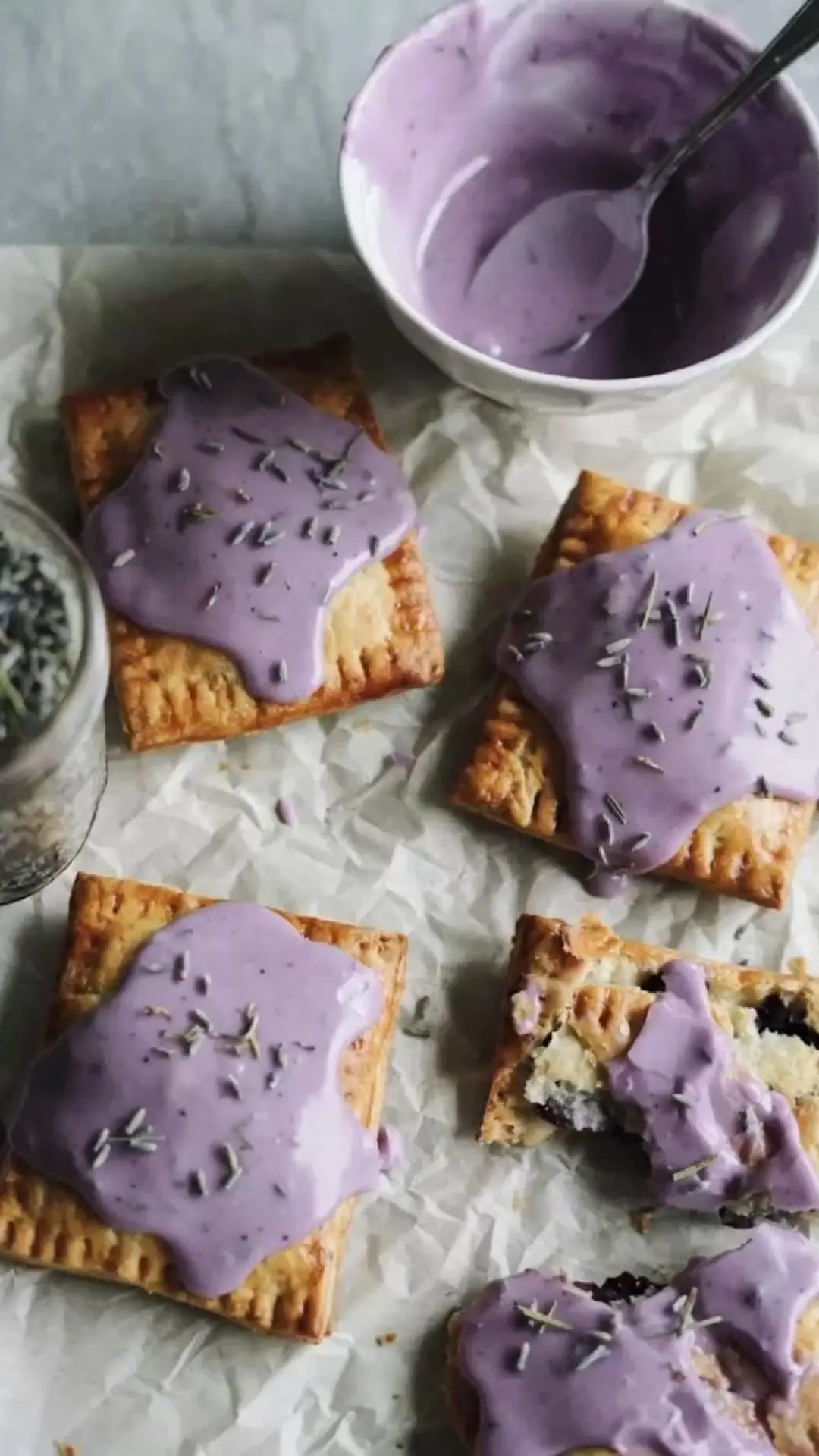
Blueberry Lavender Scones
Blueberry lavender scones bake up tender and buttery with juicy berries and a soft floral hint, ready in under an hour for breakfast or tea.
🧂 Ingredients
- 2 cups (250g) all-purpose flour
- 1/3 cup (67g) granulated sugar
- 1 tablespoon baking powder
- 1/2 teaspoon fine sea salt
- 1 1/2 teaspoons dried culinary lavender, finely crushed
- 1/2 cup (113g) cold unsalted butter, cubed
- 1 cup (140g) fresh or frozen blueberries
- 1/2 cup (120ml) cold whole milk, plus 1 tablespoon for brushing
- 1 large egg
- 1 tablespoon coarse sugar, for topping
📋 Instructions
- 1Heat the oven — Preheat your oven to 400°F (200°C) and line a baking sheet with parchment paper. A hot oven gives the scones a fast lift and crisp edges.
- 2Mix the dry ingredients — Whisk the flour, sugar, baking powder, salt, and crushed lavender in a large bowl until evenly combined. This spreads the lavender so no single bite is overpowering.
- 3Cut in the butter — Add the cold cubed butter and cut it in with a pastry cutter or two forks until the mixture looks like coarse crumbs with a few pea-sized pieces left. Those butter bits are what make the scones flaky.
- 4Add the wet ingredients — Whisk the egg into the cold milk, then pour it into the flour mixture and stir gently with a fork until a shaggy dough forms. Don't overwork it, since a few dry streaks are fine at this stage.
- 5Fold in the berries — Gently fold in the blueberries with a spatula until just distributed. If using frozen berries, work quickly so they stay cold and don't tint the dough.
- 6Shape the dough — Turn the dough onto a lightly floured surface and pat it into a 7-inch (18cm) round about 1 inch thick. Cut it into 6 wedges with a sharp knife, pressing straight down rather than sawing.
- 7Brush and top — Transfer the wedges to the baking sheet, spacing them 2 inches apart. Brush the tops with the reserved milk and sprinkle with coarse sugar for a crunchy finish.
- 8Bake until golden — Bake at 400°F (200°C) for 18 to 22 minutes, until the tops are golden brown and the edges look set. A toothpick inserted in the center should come out clean with just a few moist crumbs.
- 9Cool and serve — Let the scones cool on the sheet for 5 minutes, then move them to a rack. Serve warm, when the berries are jammy and the lavender aroma is strongest.

Mireille writes about weeknight cooking built around what is already in the pantry, with a focus on Haitian and Caribbean home dishes made simpler for busy kitchens. She favors short ingredient lists, honest substitutions, and recipes that forgive a missed step. Her angle is feeding a household well without a second trip to the store.