All Recipes Menu
Baked Halibut with Parmesan Herb Mayo Crust – Easy
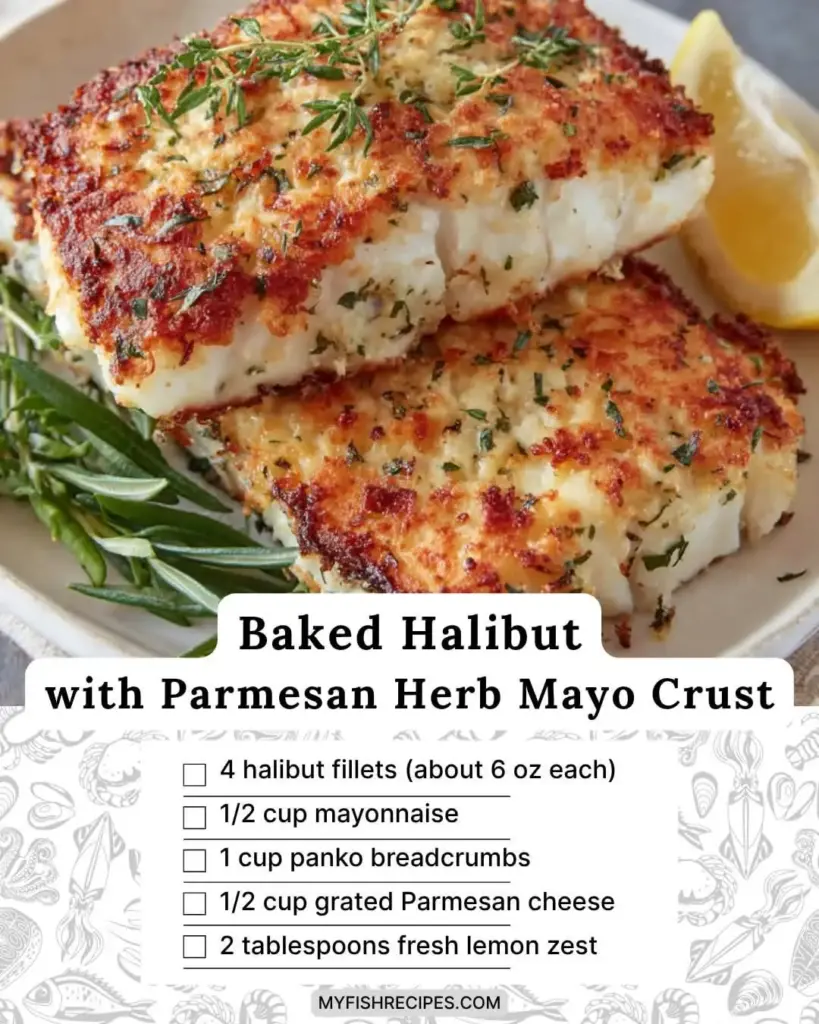
Baked halibut with Parmesan herb mayo crust is a weeknight method, not a project. You weigh the fish, stir four crust components, and let a 220 C oven do the rest.
The mayonnaise is not a shortcut for flavor. It is a fat-and-egg emulsion that holds grated Parmesan and chopped herbs against a vertical fillet, so the crust sets instead of sliding off.
Halibut is lean and forgiving at high heat. The crust insulates the surface, which keeps the interior moist while the top browns.
Why You'll Love This Recipe
About the Ingredients
900 g (2 lb) halibut fillets, about 4 pieces, 2.5 cm (1 in) thick
Ask for center-cut fillets of even thickness so they finish together. Cod or haddock substitute well at the same weight and time.
120 g (1/2 cup) mayonnaise
Full-fat mayonnaise browns better than light versions, which stay pale. Greek yogurt works as a tangier substitute at the same weight.
50 g (1/2 cup) finely grated Parmesan
Grate on a microplane so it melts into the mayo rather than sitting in gritty specks. Pecorino Romano gives a sharper, saltier crust.
10 g (2 tbsp) fresh parsley, finely chopped
Dry the leaves thoroughly before chopping, or the crust turns wet. Dill or tarragon are good swaps for a different herb profile.
5 g (1 tbsp) fresh chives, finely chopped
Snip with scissors to keep the pieces small and even. Scallion greens are a fine substitute.
2 g (1/2 tsp) garlic powder
Garlic powder disperses evenly; fresh garlic burns at 220 C. Onion powder is a milder substitute.
2 g (1/2 tsp) fine sea salt
Halibut needs less salt than oily fish; measure rather than pour. Kosher salt is acceptable at the same weight.
1 g (1/4 tsp) freshly ground black pepper
Grind coarse for texture that survives the bake. White pepper gives heat without dark flecks.
15 g (1 tbsp) unsalted butter, softened
Butter enriches the crust and aids browning at the edges. Olive oil works at the same weight.
5 g (1 tsp) lemon zest
Zest only the yellow layer; the white pith is bitter. Lime zest substitutes directly.
Tips & Tricks
- Pat the fillets bone-dry before applying the crust; surface water steams the topping and prevents browning.
- Spread the mayo mixture 6 mm (1/4 in) thick and stop 5 mm short of the edges so it does not run off during baking.
- Pull the pan when the center reads 54 C (130 F); carryover heat finishes the fish to 57 C (135 F) as it rests.
Pro Tips
Step-by-Step Instructions
1. Heat the oven
Set the oven to 220 C (425 F) with a rack in the upper third. Line a sheet pan with parchment. [The upper rack browns the crust faster than the lower position.]
2. Dry the fillets
Pat the halibut dry with paper towels on both sides. Season lightly with half the salt. [Dry surfaces let the mayo adhere and brown rather than steam.] The fish should feel tacky, not slick.
3. Mix the crust
Stir 120 g mayonnaise, 50 g Parmesan, 10 g parsley, 5 g chives, 2 g garlic powder, 2 g salt, 1 g pepper, 15 g butter, and 5 g lemon zest in a bowl. [Even distribution prevents bitter garlic pockets.] The mixture should be thick enough to hold a spoon ridge.
4. Arrange the fish
Place the fillets on the lined pan, spaced 3 cm apart. [Gaps let hot air circulate so the sides set.] The pieces should not touch.
5. Apply the crust
Spoon the mayo mixture over each fillet and spread to 6 mm thickness. [A measured layer browns evenly instead of pooling.] Leave a 5 mm border of bare fish around each edge.
6. Bake
Bake for 16 to 18 minutes at 220 C (425 F). [High heat sets the emulsion before it can slide.] The crust is golden brown and bubbling at the edges.
7. Check the center
Insert an instant-read thermometer into the thickest fillet. [Temperature is the only reliable doneness signal for white fish.] Pull the pan at 54 C (130 F) internal.
8. Rest and serve
Rest the fillets 3 minutes, then lift with a thin spatula. [The crust firms and releases cleanly.] Serve with lemon wedges.
Delicious Variations
Lemon-Dill Version
swap parsley and chives for 10 g chopped dill and add 5 g more lemon zest.
Spicy Crust
add 3 g (1 tsp) smoked paprika and 1 g (1/4 tsp) cayenne to the mayo mixture.
Panko Topping
fold 20 g panko into the crust for a crunchier, more textured surface.
How to Store Baked Halibut with Parmesan Herb Mayo Crust
Refrigerator
Store cooled fillets in a sealed container for up to 2 days; the crust softens after day one.
Freezer
Freeze unbaked crusted fillets for up to 1 month, then bake from frozen at 200 C (400 F) for 25 to 28 minutes.
Reheating
Reheat at 160 C (325 F) for 8 to 10 minutes, covered loosely with foil to protect the crust.
Frequently Asked Questions
Q: What temperature should halibut be cooked to?
Halibut is done at 54 to 57 C (130 to 135 F) internal temperature. Pull it at 54 C and let carryover heat finish it. Above 60 C the flesh turns dry and chalky.
Q: Can I use frozen halibut for this recipe?
Yes, thaw it fully in the refrigerator overnight and pat it dry before crusting. Frozen fish releases more water, so dry it twice. Bake at the same temperature and check at 16 minutes.
Q: Why did my mayo crust slide off?
The fillet was wet or the crust was spread too thin at the edges. Dry the fish thoroughly and leave a 5 mm border. A thicker 6 mm layer also grips better.
Q: Can I make this ahead of time?
You can crust the fillets up to 4 hours ahead and refrigerate them uncovered. Bake straight from the refrigerator and add 2 to 3 minutes. Do not hold it overnight, as the salt draws moisture.
Q: What do you serve with baked halibut?
Serve it with steamed green beans, roasted potatoes, or rice pilaf. A crisp white wine or lemon butter sauce complements the Parmesan crust. Keep sides mild so the herb topping stays forward.
Weigh the fish, mix the crust, and set a timer. Bake it once and you will keep the method for every white fish you bring home.
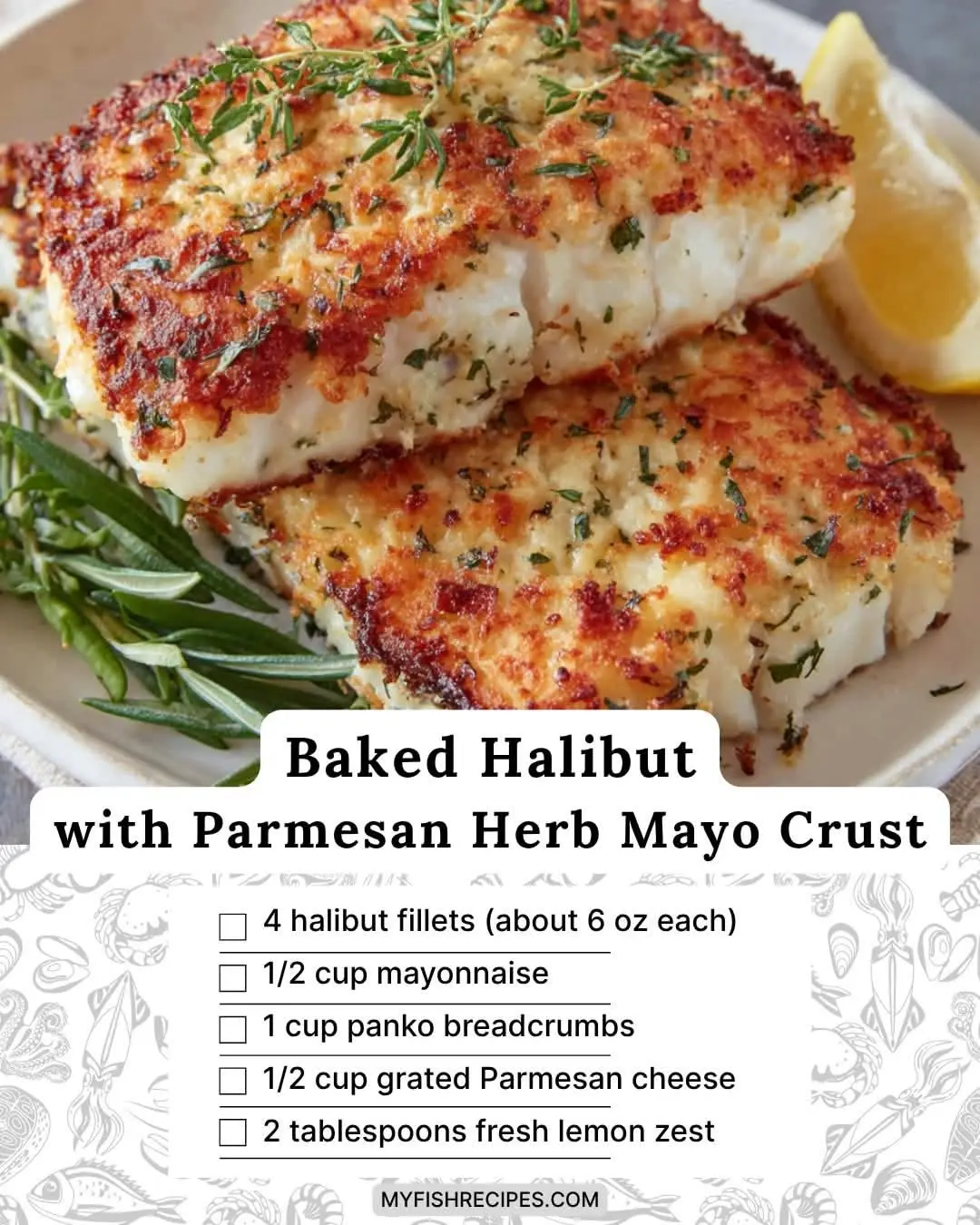
Baked Halibut with Parmesan Herb Mayo Crust
Baked halibut with Parmesan herb mayo crust bakes in 18 minutes to a golden, bubbling top over flaky white fish, all in one dish.
🧂 Ingredients
- 900 g (2 lb) halibut fillets, about 4 pieces, 2.5 cm (1 in) thick
- 120 g (1/2 cup) mayonnaise
- 50 g (1/2 cup) finely grated Parmesan
- 10 g (2 tbsp) fresh parsley, finely chopped
- 5 g (1 tbsp) fresh chives, finely chopped
- 2 g (1/2 tsp) garlic powder
- 2 g (1/2 tsp) fine sea salt
- 1 g (1/4 tsp) freshly ground black pepper
- 15 g (1 tbsp) unsalted butter, softened
- 5 g (1 tsp) lemon zest
📋 Instructions
- 1Heat the oven — Set the oven to 220 C (425 F) with a rack in the upper third. Line a sheet pan with parchment. [The upper rack browns the crust faster than the lower position.]
- 2Dry the fillets — Pat the halibut dry with paper towels on both sides. Season lightly with half the salt. [Dry surfaces let the mayo adhere and brown rather than steam.] The fish should feel tacky, not slick.
- 3Mix the crust — Stir 120 g mayonnaise, 50 g Parmesan, 10 g parsley, 5 g chives, 2 g garlic powder, 2 g salt, 1 g pepper, 15 g butter, and 5 g lemon zest in a bowl. [Even distribution prevents bitter garlic pockets.] The mixture should be thick enough to hold a spoon ridge.
- 4Arrange the fish — Place the fillets on the lined pan, spaced 3 cm apart. [Gaps let hot air circulate so the sides set.] The pieces should not touch.
- 5Apply the crust — Spoon the mayo mixture over each fillet and spread to 6 mm thickness. [A measured layer browns evenly instead of pooling.] Leave a 5 mm border of bare fish around each edge.
- 6Bake — Bake for 16 to 18 minutes at 220 C (425 F). [High heat sets the emulsion before it can slide.] The crust is golden brown and bubbling at the edges.
- 7Check the center — Insert an instant-read thermometer into the thickest fillet. [Temperature is the only reliable doneness signal for white fish.] Pull the pan at 54 C (130 F) internal.
- 8Rest and serve — Rest the fillets 3 minutes, then lift with a thin spatula. [The crust firms and releases cleanly.] Serve with lemon wedges.

Tomasz writes precise, method-first recipes for breads, ferments, and slow braises, drawing on Polish and Central European home cooking. He cares about weights, temperatures, and timing, and explains the reason behind each step so cooks can repeat results. His angle is turning fussy techniques into clear, checkable instructions.