All Recipes Menu
Apple Pie Cinnamon Rolls – Best Cozy Fall Breakfast
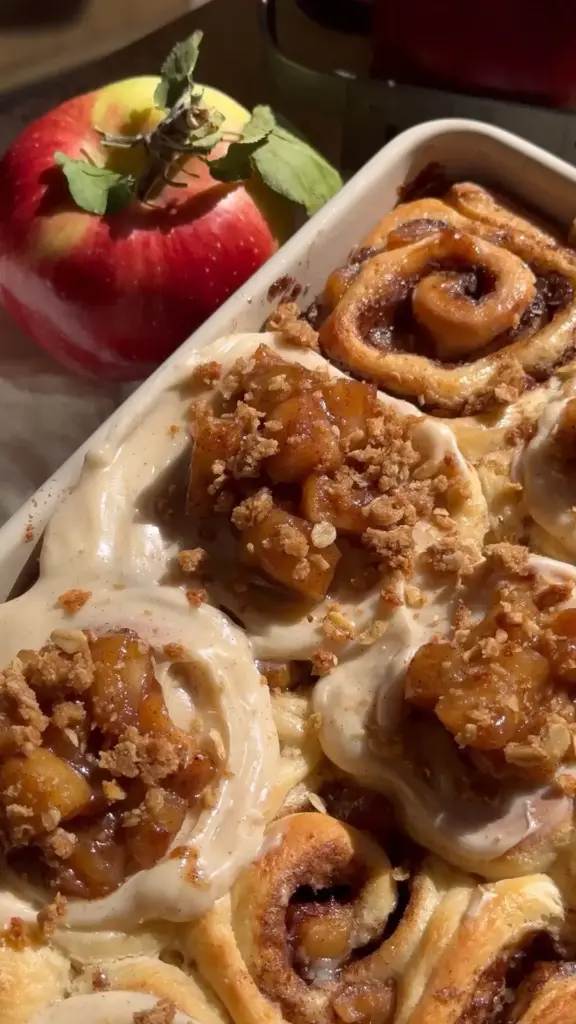
The moment butter hits the skillet and diced apples start to sizzle, your kitchen smells like the inside of a pie crust at Thanksgiving. That cinnamon-and-brown-sugar steam is your first sign these rolls are going to be something special.
You are taking everything you love about apple pie, all that jammy spiced fruit and buttery crust energy, and rolling it into soft, pillowy cinnamon rolls. The dough stays tender, the filling turns sticky and caramelized, and the glaze ties it all together.
No lattice, no fussy crimping, just a pan of golden spirals you can tear apart warm with your fingers. Try this next time: swap half the apples for pears for a softer, honeyed bite. Taste as you go, then taste again.
Why You'll Love This Recipe
About the Ingredients
4 cups (500g) all-purpose flour, plus extra for dusting
Bread flour works too and gives a slightly chewier crumb. Buy a fresh bag, since stale flour makes dense rolls.
2 1/4 teaspoons (7g) active dry yeast
Instant yeast can be used straight in the dry mix with no proofing. Check the expiration date, because dead yeast means flat rolls.
1 cup (240ml) whole milk, warmed to 110°F (43°C)
Oat milk or 2% milk both work; whole milk gives the richest dough. Warm it to the touch, like a warm bath, never hot.
1/4 cup (50g) granulated sugar
Honey can replace it at 3 tablespoons for a deeper flavor. Keep the sugar in the dough, since it feeds the yeast.
6 tablespoons (85g) unsalted butter, softened, divided
Salted butter works if you cut the added salt in half. Let it sit out 30 minutes so it creams smoothly.
1 large egg, room temperature
A flax egg (1 tablespoon ground flax plus 3 tablespoons water) makes it egg-free. Room temperature egg keeps the dough from seizing.
3 medium apples (about 1 lb/450g), peeled and finely diced
Honeycrisp or Granny Smith hold their shape best. Skip mushy varieties like Red Delicious, which turn to sauce.
1/3 cup (65g) packed brown sugar
Dark brown sugar gives a molasses-heavy caramel note. Coconut sugar is a fine swap with a slightly drier filling.
2 teaspoons ground cinnamon
Fresh cinnamon is worth it; smell the jar, since old spice tastes dusty. Cinnamon and a pinch of nutmeg are the classic pie pairing.
1/4 teaspoon fine salt
Kosher salt is fine; just use a little less by volume. Salt balances the sweet filling and keeps the dough from tasting flat.
1 cup (120g) powdered sugar
Sift it first so the glaze stays lump-free. A splash of maple syrup instead of milk gives a fall twist.
2 tablespoons whole milk or heavy cream, for the glaze
Heavy cream makes a thicker, richer glaze. Add it one teaspoon at a time until you hit a drizzleable ribbon.
Tips & Tricks
Do not overheat the milk
Anything above 120°F (49°C) can kill your yeast, so use a thermometer and aim for 110°F (43°C).
Cook the apples first
Sautéing the diced apples for 5 minutes drives off moisture so the filling turns jammy instead of making soggy rolls.
Roll tightly and seal the seam
A loose roll lets the filling escape during the bake, so press the edge down and slice with a serrated knife.
Let them rise until puffy, not doubled
In a warm spot this takes about 45 minutes; if the dough springs back slowly when poked, it is ready.
Pro Tips
Step-by-Step Instructions
1. Warm the milk
Warm the milk to 110°F (43°C) and stir in 1 tablespoon of the sugar and the yeast. Let it sit 5 to 10 minutes until foamy on top, which proves the yeast is alive.
2. Mix the dough
Whisk the flour and salt, then add the yeast mixture, remaining sugar, egg, and 4 tablespoons softened butter. Stir until a shaggy dough forms.
3. Knead until smooth
Knead 8 to 10 minutes on a floured counter until the dough is smooth and springs back when poked. It should feel soft and slightly tacky, not sticky.
4. Let it rise
Place the dough in a buttered bowl, cover, and let rise in a warm spot 60 to 75 minutes until doubled. It is ready when a gentle poke leaves an indent that fills slowly.
5. Cook the apple filling
Melt the remaining 2 tablespoons butter in a skillet over medium heat and cook the apples with brown sugar and cinnamon 5 to 7 minutes until the edges soften and the juices turn syrupy. Cool 10 minutes.
6. Roll and fill
Roll the dough into a 12x18-inch rectangle, spread the cooled apple filling evenly, and roll up tightly from the long side. Pinch the seam shut.
7. Slice and proof
Cut into 12 rolls and arrange in a buttered 9x13-inch pan. Cover and let rise 40 to 45 minutes until puffy and touching.
8. Bake until golden
Bake at 350°F (175°C) for 25 to 30 minutes until the tops are golden brown and the center rolls reach 190°F (88°C). The filling should bubble at the edges.
9. Glaze and serve
Whisk the powdered sugar with milk and a pinch of salt, then drizzle over the warm rolls. Serve within 20 minutes while the glaze is still glossy.
Delicious Variations
Caramel Apple Crunch
Drizzle 1/4 cup warm salted caramel over the baked rolls and scatter toasted pecans on top.
Apple Streusel Rolls
Sprinkle a brown sugar, butter, and oat crumble over the rolls before baking for a crisp top.
Maple Bourbon Glaze
Swap the milk in the glaze for maple syrup and 1 teaspoon bourbon for a grown-up finish.
How to Store Apple Pie Cinnamon Rolls
Refrigerator
Store baked rolls in an airtight container at room temperature up to 2 days, or refrigerate up to 5 days. Rewarm before serving for the softest texture.
Freezer
Freeze baked rolls individually wrapped for up to 2 months. You can also freeze unbaked sliced rolls, then thaw and proof overnight before baking.
Reheating
Reheat at 300°F (150°C) for 8 to 10 minutes, tented with foil, until warm and steamy in the center.
Frequently Asked Questions
Q: Can I make apple pie cinnamon rolls ahead of time?
Yes, assemble the rolls, cover the pan, and refrigerate overnight, then let them sit at room temperature 30 minutes before baking. This slow proof gives an even puffier roll in the morning.
Q: Why did my cinnamon rolls turn out dry?
Dry rolls usually come from too much flour or overbaking, so weigh your flour and pull the pan at 190°F (88°C) internal temperature. The apple filling also adds moisture, so do not skip cooking it down first.
Q: Can I use canned apple pie filling?
Yes, about 1 1/2 cups of canned filling works in place of the homemade apple mixture. Drain off excess syrup so the dough does not get soggy, and reduce the brown sugar to 2 tablespoons.
Q: How do I know when the rolls are fully baked?
The center roll should read 190°F (88°C) on an instant-read thermometer, with golden tops and bubbling fruit at the edges. If the tops brown too fast, tent with foil for the last 10 minutes.
Q: Can I make these dairy-free?
Yes, use oat or almond milk, a plant-based butter, and a flax egg. The dough will be slightly less rich but still soft, and the glaze works with any creamy plant milk.
Pull that pan out while the glaze is still dripping and let everyone grab a roll with their fingers. Snap a photo of those golden spirals and tell me how your kitchen smelled. Taste as you go, then taste again.
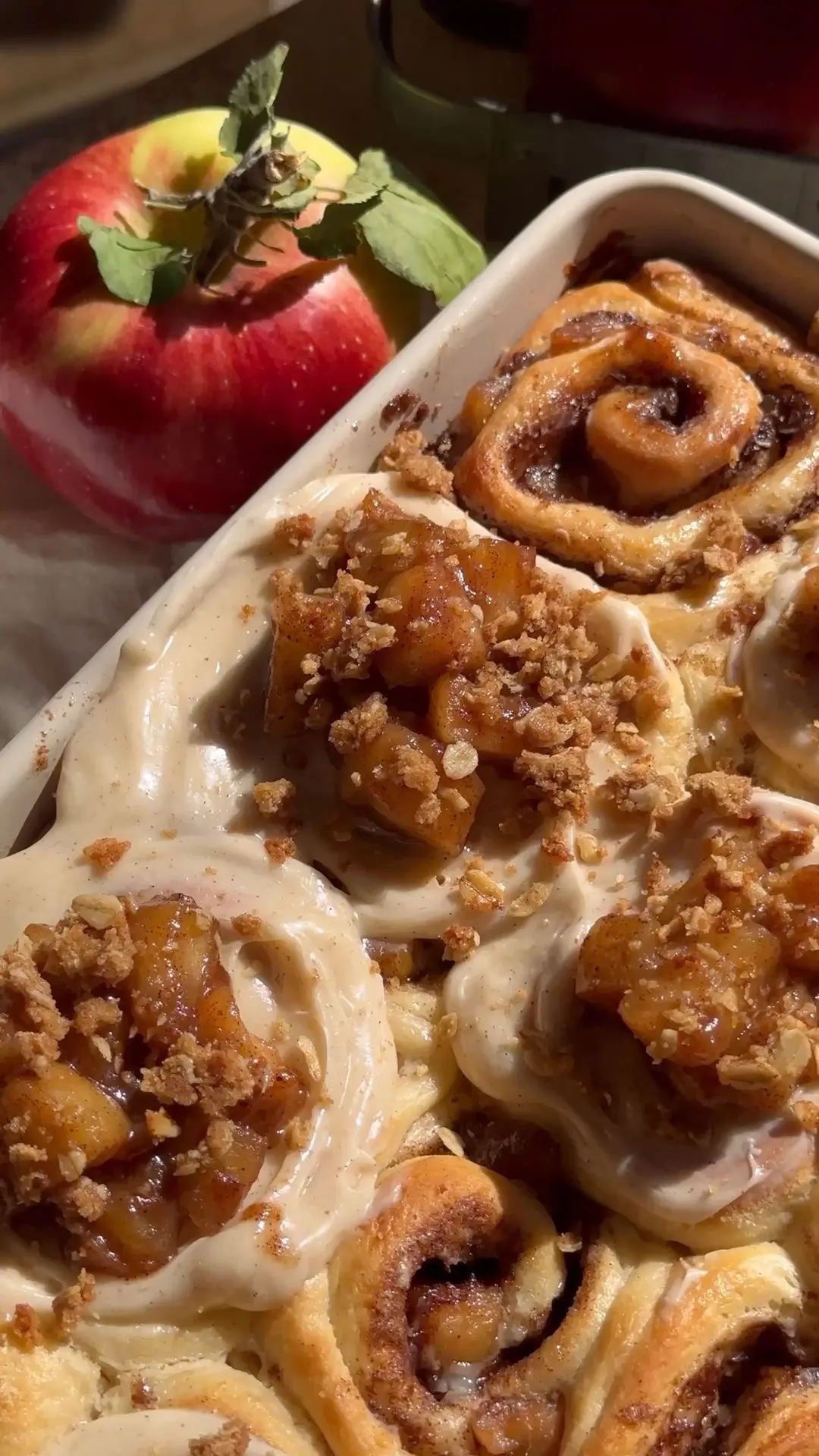
Apple Pie Cinnamon Rolls
Apple Pie Cinnamon Rolls bake soft, gooey spirals of spiced apple filling under a warm vanilla glaze for the coziest fall breakfast you will ever pull from your oven.
🧂 Ingredients
- 4 cups (500g) all-purpose flour, plus extra for dusting
- 2 1/4 teaspoons (7g) active dry yeast
- 1 cup (240ml) whole milk, warmed to 110°F (43°C)
- 1/4 cup (50g) granulated sugar
- 6 tablespoons (85g) unsalted butter, softened, divided
- 1 large egg, room temperature
- 3 medium apples (about 1 lb/450g), peeled and finely diced
- 1/3 cup (65g) packed brown sugar
- 2 teaspoons ground cinnamon
- 1/4 teaspoon fine salt
- 1 cup (120g) powdered sugar
- 2 tablespoons whole milk or heavy cream, for the glaze
📋 Instructions
- 1Warm the milk — Warm the milk to 110°F (43°C) and stir in 1 tablespoon of the sugar and the yeast. Let it sit 5 to 10 minutes until foamy on top, which proves the yeast is alive.
- 2Mix the dough — Whisk the flour and salt, then add the yeast mixture, remaining sugar, egg, and 4 tablespoons softened butter. Stir until a shaggy dough forms.
- 3Knead until smooth — Knead 8 to 10 minutes on a floured counter until the dough is smooth and springs back when poked. It should feel soft and slightly tacky, not sticky.
- 4Let it rise — Place the dough in a buttered bowl, cover, and let rise in a warm spot 60 to 75 minutes until doubled. It is ready when a gentle poke leaves an indent that fills slowly.
- 5Cook the apple filling — Melt the remaining 2 tablespoons butter in a skillet over medium heat and cook the apples with brown sugar and cinnamon 5 to 7 minutes until the edges soften and the juices turn syrupy. Cool 10 minutes.
- 6Roll and fill — Roll the dough into a 12x18-inch rectangle, spread the cooled apple filling evenly, and roll up tightly from the long side. Pinch the seam shut.
- 7Slice and proof — Cut into 12 rolls and arrange in a buttered 9x13-inch pan. Cover and let rise 40 to 45 minutes until puffy and touching.
- 8Bake until golden — Bake at 350°F (175°C) for 25 to 30 minutes until the tops are golden brown and the center rolls reach 190°F (88°C). The filling should bubble at the edges.
- 9Glaze and serve — Whisk the powdered sugar with milk and a pinch of salt, then drizzle over the warm rolls. Serve within 20 minutes while the glaze is still glossy.

Priya writes about South Indian home cooking and the improvisation that happens in real kitchens, from quick weekday tiffins to slow weekend spreads. She is interested in how a single tempering of spices changes a dish and in adapting familiar recipes to what a cook has on hand. Her angle is playful, sensory recipe writing that treats cooking as something to tinker with.