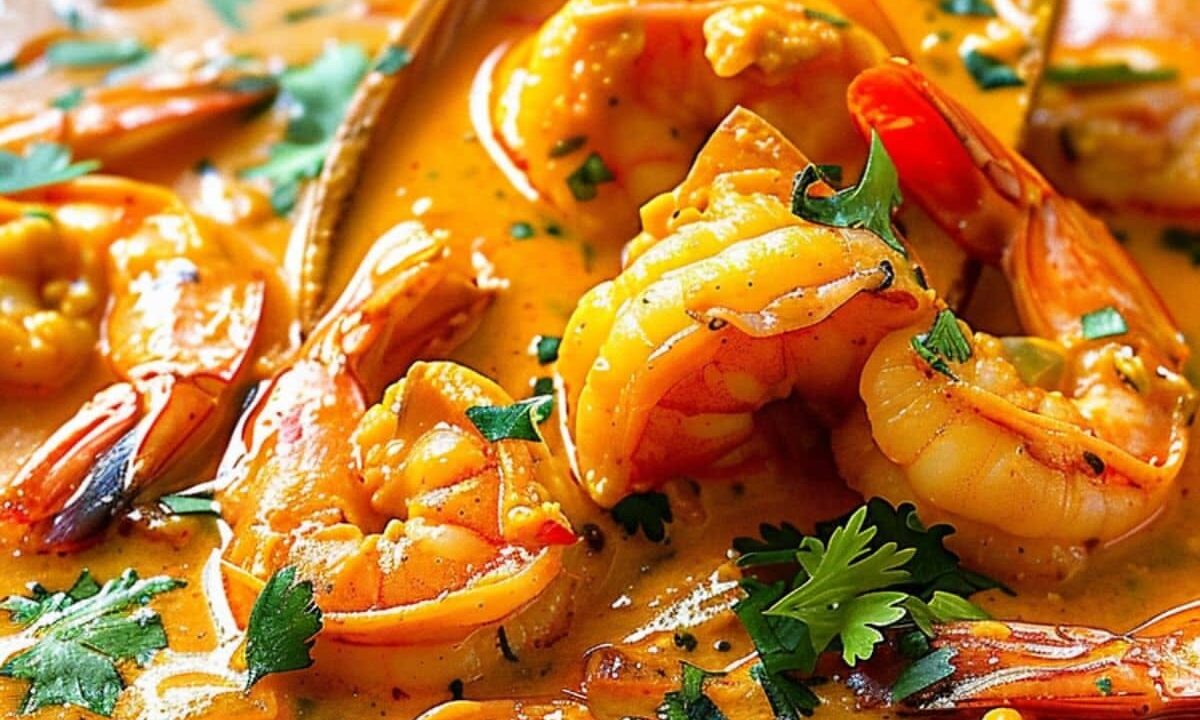
The first thing you'll notice is the smell: red curry paste hitting hot oil and blooming into something sweet, sharp, and a little smoky. That aroma is your signal that dinner is already going right.
You're going to simmer shrimp in coconut milk with lime and fish sauce until the sauce coats a spoon, then spoon it over jasmine rice while it's still bubbling at the edges. It tastes like a takeout splurge but moves faster than delivery.
Everything happens in one skillet, and the only real skill involved is not walking away while the paste blooms. Stay close, stir, and breathe it in.
Why You'll Love This Recipe
About the Ingredients
1 1/2 pounds (680g) large shrimp, peeled and deveined, tails removed
Pat them very dry before cooking so they sear instead of steam. Frozen shrimp work beautifully here; thaw overnight in the fridge and drain well, or buy pre-peeled for a faster weeknight.
3 tablespoons Thai red curry paste
Use a good jarred brand like Maesri or Mae Ploy for authentic depth. If you only have green curry paste, swap it in for a brighter, herbier sauce with the same quantity.
1 tablespoon neutral oil, such as avocado or canola
You need a high-smoke-point oil to bloom the paste without burning. Coconut oil works too, but keep the heat moderate since it smokes earlier.
1 can (13.5 oz / 400ml) full-fat coconut milk
Full-fat is non-negotiable for that silky body; light coconut milk turns thin and watery. Shake the can hard before opening, or whisk the separated cream back in.
1 cup (240ml) low-sodium chicken or vegetable broth
Broth keeps the sauce from getting too heavy while it reduces. Use vegetable broth to make the whole dish pescatarian-friendly.
1 tablespoon fish sauce
This is your salt and umami in one bottle. Soy sauce is a fine substitute if you're out, but add it a teaspoon at a time since it's saltier.
1 tablespoon brown sugar
A touch of sweetness rounds out the curry's heat. Palm sugar is the traditional choice; honey works in a pinch, though it browns faster.
1 red bell pepper, sliced into thin strips
Thin strips cook through in the same time as the shrimp. Swap in snap peas or sliced zucchini if that's what's in your crisper drawer.
1 cup (150g) cherry tomatoes, halved
They burst and sweeten the sauce as they simmer. Canned diced tomatoes (drained) are a fine off-season stand-in.
1 tablespoon fresh lime juice, plus lime wedges for serving
Add it off the heat so the brightness stays sharp. Bottled lime juice is acceptable but tastes flatter, so use a touch more.
1/4 cup (10g) fresh Thai basil or cilantro leaves
Thai basil brings an anise-like perfume; cilantro is the easy supermarket swap. Stir it in at the very end so it stays green and fragrant.
2 cups (370g) cooked jasmine rice, for serving
Cook it before you start the curry so nothing waits. Cauliflower rice keeps this lower-carb and soaks up the sauce surprisingly well.
Tips & Tricks
Bloom, Don't Burn
Cook the curry paste in oil over medium heat for 60 to 90 seconds, stirring constantly, until it darkens and smells nutty. If it starts to stick or smoke, pull the pan off the heat immediately.
Dry Shrimp, Better Sear
Shrimp release water and steam if they're wet, so pat them thoroughly with paper towels. They should sizzle the second they touch the pan.
Salt at the End
Fish sauce and reducing coconut milk both concentrate salt, so taste before adding more. A squeeze of lime fixes an oversalted sauce faster than water does.
Simmer Gently
Keep the coconut milk at a lazy bubble, never a rolling boil, or the fat can split and turn the sauce grainy.
Pro Tips
Step-by-Step Instructions
1. Bloom the curry paste
Heat the oil in a large skillet over medium heat (about 350F / 175C) until it shimmers, then add the curry paste and stir constantly for 60 to 90 seconds until it darkens and smells toasty and fragrant. This step is where the flavor is born, so don't rush it.
2. Build the sauce
Pour in the coconut milk and broth, whisking to dissolve the paste, then stir in the fish sauce and brown sugar. Bring to a gentle simmer (small bubbles at the edges, around 200F / 93C) and cook for 8 to 10 minutes until slightly thickened.
3. Add the vegetables
Stir in the bell pepper and cherry tomatoes and simmer for 5 to 6 minutes, until the peppers are just tender and the tomatoes start to slump. You'll hear a soft pop as they burst, which is exactly what you want.
4. Sear the shrimp
Push the vegetables to the side, raise the heat to medium-high (about 400F / 205C), and lay the shrimp in a single layer. Cook 2 minutes per side until they curl into a C shape and turn opaque pink with golden edges, reaching 120F (49C) internally.
5. Finish with lime and herbs
Turn off the heat, squeeze in the lime juice, and fold in the Thai basil. Taste and adjust with a splash more fish sauce or lime until the sauce tastes bright, rich, and balanced.
6. Serve immediately
Spoon the curry over warm jasmine rice and scatter extra herbs on top. Serve with lime wedges so everyone can brighten their own bowl.
Delicious Variations
Green Curry Version
Swap the red paste for green and add a handful of frozen peas in the last two minutes for a sweeter, grassier sauce.
Vegetarian Swap
Replace the shrimp with 14 ounces (400g) extra-firm tofu cubes, seared first, and use vegetable broth for a meatless bowl.
Extra Veggie Load
Add sliced mushrooms and baby spinach along with the peppers, letting the spinach wilt in the final minute off the heat.
How to Store Easy Thai Coconut Shrimp Curry
Refrigerator
Store in an airtight container in the fridge for up to 3 days; keep the rice separate so it doesn't drink all the sauce.
Freezer
Freeze the curry base without shrimp for up to 2 months, then thaw overnight and add fresh shrimp when reheating.
Reheating
Warm gently over low heat with a splash of broth or coconut milk, adding shrimp only in the last 2 minutes so they don't toughen.
Frequently Asked Questions
Q: Can I use frozen shrimp for this coconut curry?
Yes, frozen shrimp work perfectly as long as they're fully thawed and patted dry first. Thaw them overnight in the fridge or under cold running water, then blot with paper towels so they sear rather than steam.
Q: Why did my coconut milk curry split or look grainy?
Your heat was too high and the coconut milk boiled hard, which separates the fat from the liquid. Keep it at a gentle simmer with small bubbles at the edges, and whisk in a spoonful of warm broth if it starts to look curdled.
Q: How spicy is Thai red curry with coconut milk?
It's usually a warm, medium heat, and the coconut milk and sugar mellow it considerably. If you're heat-sensitive, start with 2 tablespoons of paste and taste before adding the third.
Q: Can I make this shrimp curry dairy-free?
Yes, it's naturally dairy-free since coconut milk replaces any cream. Just double-check that your curry paste and fish sauce don't list dairy-derived ingredients, which is rare but worth a glance.
Q: What do I serve with Thai coconut shrimp curry?
Jasmine rice is the classic pairing because it soaks up the sauce without competing with it. Steamed broccoli, roti, or rice noodles all work well too if you want to change it up.
Give this one a go on a night when you want something that tastes like a treat but still gets you out of the kitchen fast. Taste as you go, then taste again.
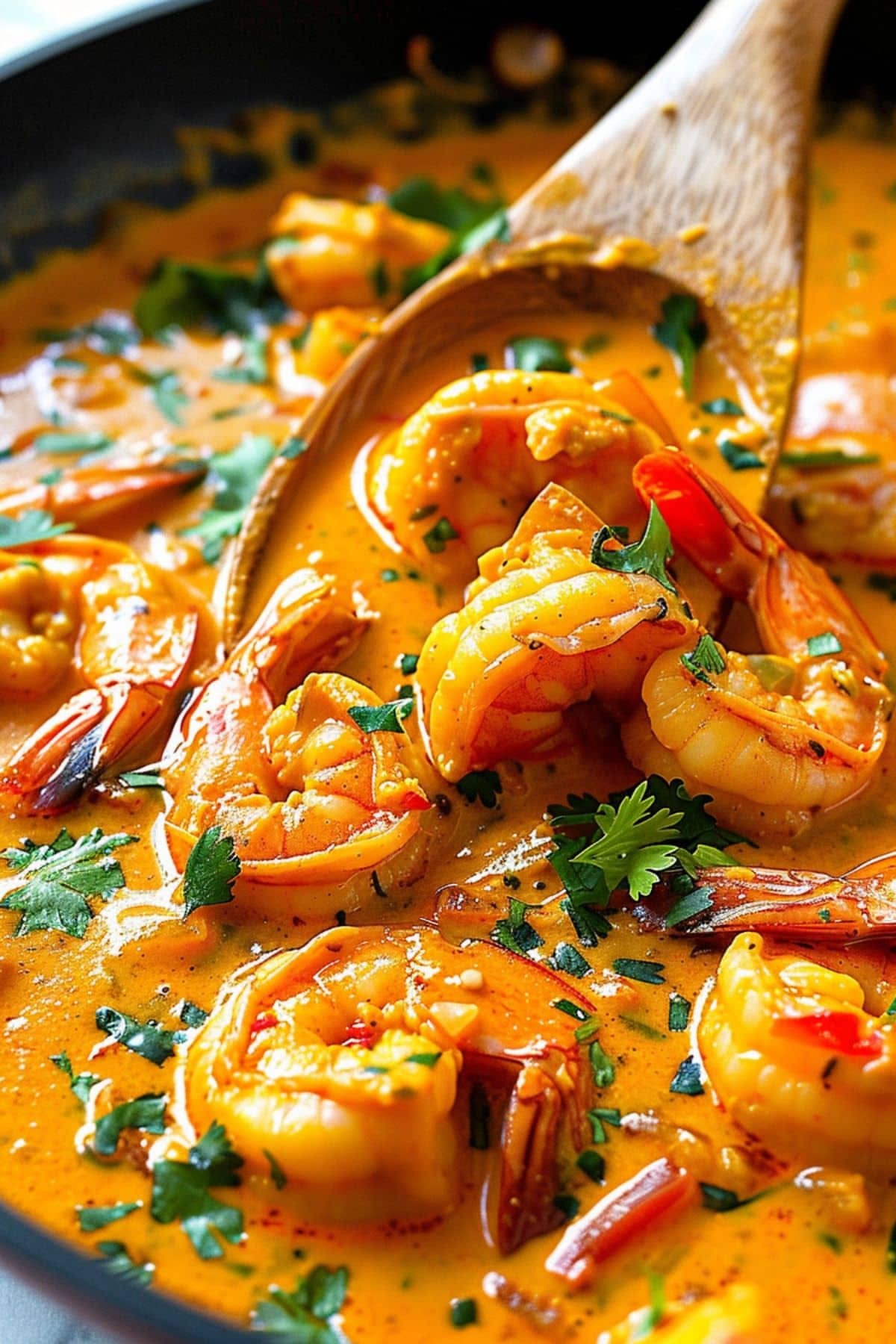
Easy Thai Coconut Shrimp Curry
This easy Thai coconut shrimp curry simmers juicy shrimp in a silky red curry sauce for a rich, aromatic dinner on the table in about 35 minutes.
🧂 Ingredients
- 1 1/2 pounds (680g) large shrimp, peeled and deveined, tails removed
- 3 tablespoons Thai red curry paste
- 1 tablespoon neutral oil, such as avocado or canola
- 1 can (13.5 oz / 400ml) full-fat coconut milk
- 1 cup (240ml) low-sodium chicken or vegetable broth
- 1 tablespoon fish sauce
- 1 tablespoon brown sugar
- 1 red bell pepper, sliced into thin strips
- 1 cup (150g) cherry tomatoes, halved
- 1 tablespoon fresh lime juice, plus lime wedges for serving
- 1/4 cup (10g) fresh Thai basil or cilantro leaves
- 2 cups (370g) cooked jasmine rice, for serving
📋 Instructions
- 1Bloom the curry paste — Heat the oil in a large skillet over medium heat (about 350F / 175C) until it shimmers, then add the curry paste and stir constantly for 60 to 90 seconds until it darkens and smells toasty and fragrant. This step is where the flavor is born, so don't rush it.
- 2Build the sauce — Pour in the coconut milk and broth, whisking to dissolve the paste, then stir in the fish sauce and brown sugar. Bring to a gentle simmer (small bubbles at the edges, around 200F / 93C) and cook for 8 to 10 minutes until slightly thickened.
- 3Add the vegetables — Stir in the bell pepper and cherry tomatoes and simmer for 5 to 6 minutes, until the peppers are just tender and the tomatoes start to slump. You'll hear a soft pop as they burst, which is exactly what you want.
- 4Sear the shrimp — Push the vegetables to the side, raise the heat to medium-high (about 400F / 205C), and lay the shrimp in a single layer. Cook 2 minutes per side until they curl into a C shape and turn opaque pink with golden edges, reaching 120F (49C) internally.
- 5Finish with lime and herbs — Turn off the heat, squeeze in the lime juice, and fold in the Thai basil. Taste and adjust with a splash more fish sauce or lime until the sauce tastes bright, rich, and balanced.
- 6Serve immediately — Spoon the curry over warm jasmine rice and scatter extra herbs on top. Serve with lime wedges so everyone can brighten their own bowl.

Priya writes about South Indian home cooking and the improvisation that happens in real kitchens, from quick weekday tiffins to slow weekend spreads. She is interested in how a single tempering of spices changes a dish and in adapting familiar recipes to what a cook has on hand. Her angle is playful, sensory recipe writing that treats cooking as something to tinker with.