
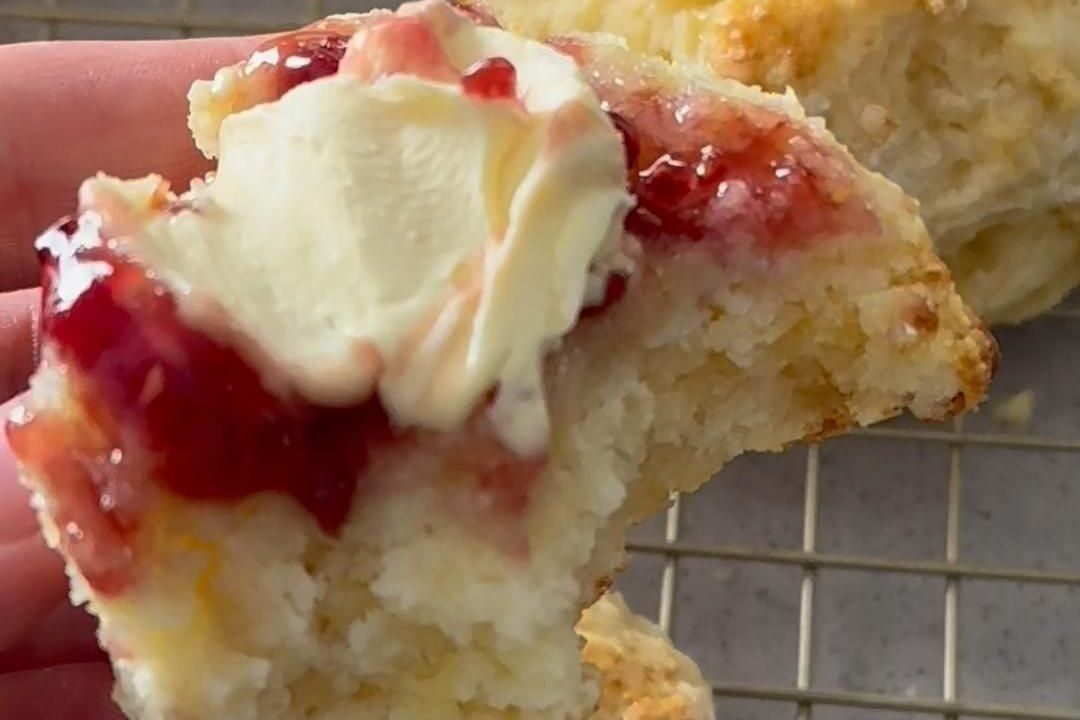
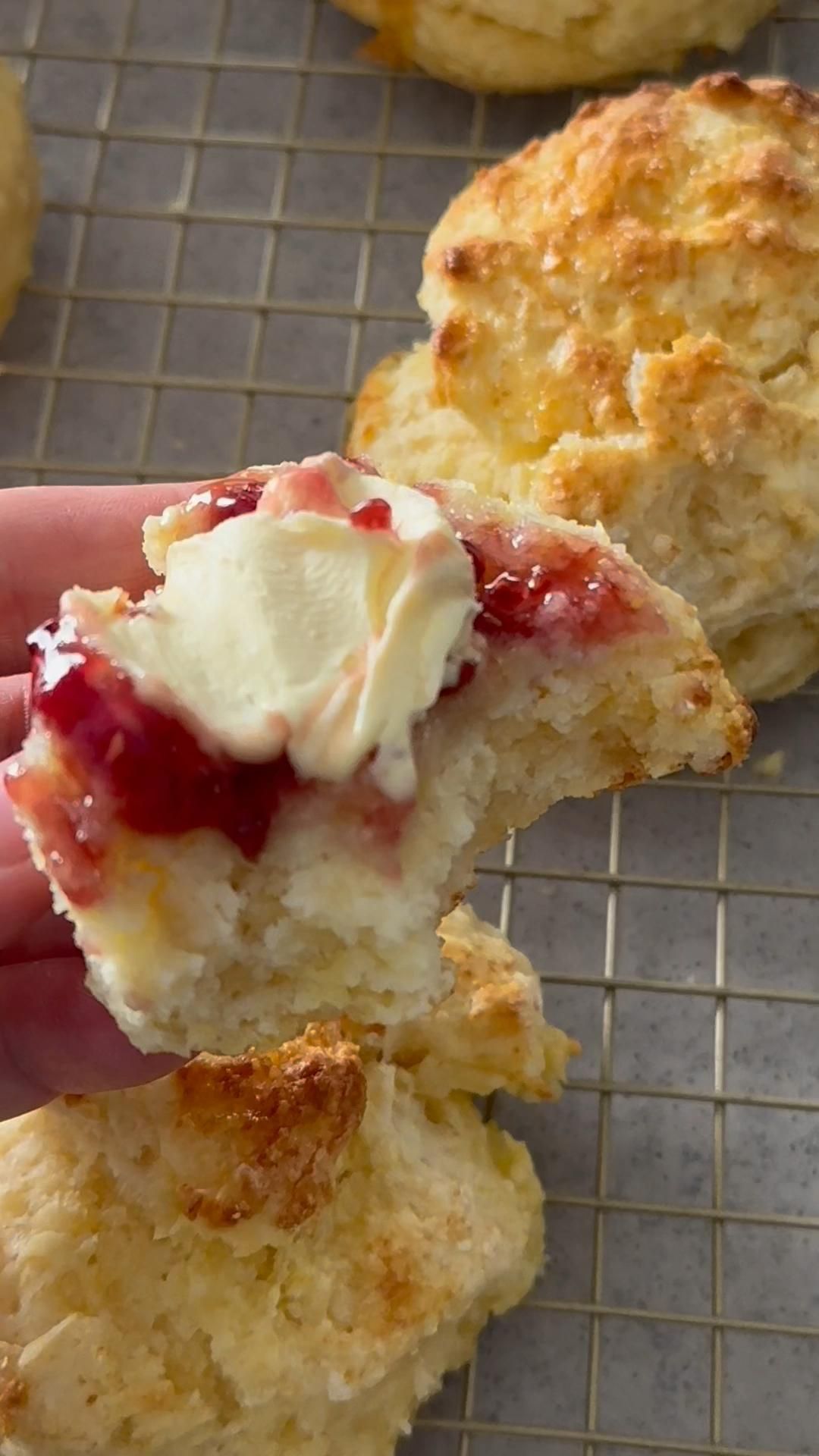
If you have ever bitten into a dry, crumbly scone and wondered why anyone bothers, this recipe is the fix. Cold butter, real buttermilk and a hot oven give you scones that split open into soft, flaky layers instead of sawdust.
These are the scones I make on Sunday mornings when the house is still quiet and the kettle is on. They come together in one bowl, get patted out by hand, and are in the oven before the coffee finishes brewing.
The vanilla glaze is optional but highly recommended – it drips into the cracks and sets to a thin, sweet shell that makes them feel like something from a bakery case.
Why You'll Love This Recipe
About the Ingredients
3 cups (375g) all-purpose flour, plus extra for dusting
Use plain all-purpose flour for the softest crumb; bread flour makes them chewier, and a 50/50 swap with cake flour gives an even more delicate texture.
1/4 cup (50g) granulated sugar
Caster sugar dissolves fastest, but regular granulated works fine; reduce to 3 tablespoons if you plan to add a sweet glaze or dried fruit.
1 tablespoon baking powder
Check the date on your tin – baking powder loses power after 6 months and is the number one reason scones bake up flat.
1/2 teaspoon fine salt
Fine sea salt blends evenly into the dry mix; if you only have kosher salt, use a slightly heaped 1/2 teaspoon.
1/2 cup (113g) unsalted butter, cold and cubed
Freeze the butter for 15 minutes before cubing if your kitchen is warm; salted butter works too, just drop the added salt to 1/4 teaspoon.
1 cup (240ml) cold buttermilk, plus 2 tablespoons for brushing
Shake the carton well before measuring. No buttermilk? Stir 1 tablespoon lemon juice into 1 cup of whole milk and rest 10 minutes, or use plain kefir.
1 large egg (50g), cold
A cold egg keeps the dough firm; a flax egg (1 tablespoon ground flax + 3 tablespoons water) works for an egg-free version.
2 teaspoons vanilla extract
Real vanilla extract beats imitation here; almond extract swapped in at 1 teaspoon gives a lovely bakery-style almond note.
1 cup (120g) powdered sugar, for the glaze
Sift it first or you will get lumps; for a less sweet finish, use 3/4 cup and add an extra teaspoon of buttermilk.
2 tablespoons buttermilk or milk, for the glaze
Whole milk, oat milk or cream all work; add it a teaspoon at a time until the glaze ribbons off the spoon.
Tips & Tricks
Keep Everything Cold
Warm butter melts into the flour before baking, so chill your bowl, your buttermilk and your butter and work quickly with cool hands.
Do Not Overwork the Dough
Stop mixing the moment the dough holds together – a shaggy, slightly streaky dough bakes into flaky layers, while a smooth one turns tough.
Pat, Do Not Roll
Press the dough to about 1 inch (2.5cm) thick with your palms so you keep the air pockets that make scones rise.
Bake Them Close Together
Arrange the wedges touching on the tray so they climb rather than spread, then pull them apart after baking.
Pro Tips
Step-by-Step Instructions
1. Preheat and Prep
Preheat your oven to 425F (220C) and line a large baking tray with parchment paper. A fully preheated oven is what gives scones their initial burst of rise.
2. Whisk the Dry Mix
In a large bowl, whisk together the flour, sugar, baking powder and salt until no lumps remain. Breaking up any baking powder clumps now prevents bitter pockets later.
3. Cut in the Butter
Add the cold cubed butter and rub it into the flour with your fingertips until the mixture looks like coarse breadcrumbs with a few pea-sized pieces left. Those visible butter flecks create the flaky layers.
4. Add the Wet Ingredients
Whisk the buttermilk, egg and vanilla in a jug, then pour into the dry mix. Stir with a fork just until a shaggy dough forms – about 15 to 20 seconds – and stop while it is still slightly streaky.
5. Shape the Dough
Tip the dough onto a lightly floured bench and pat it into a 1 inch (2.5cm) thick round, about 7 inches (18cm) wide, folding it over itself once. Cut into 8 wedges with a sharp knife or bench scraper, pressing straight down.
6. Bake Until Golden
Arrange the wedges on the tray just touching and brush the tops with buttermilk. Bake at 425F (220C) for 18 to 22 minutes, until the tops are deep golden brown and the edges look set and dry. They are done when a skewer inserted in the centre comes out clean and the internal temperature reads 200F (93C).
7. Glaze and Cool
Whisk the powdered sugar with 2 tablespoons buttermilk until smooth and pourable, adding more liquid a teaspoon at a time if needed. Drizzle over the warm scones and let them set for 10 minutes before serving.
Delicious Variations
Lemon Blueberry
Fold 1 cup of fresh blueberries and the zest of 1 lemon into the dough, then swap the vanilla glaze for a lemon juice glaze.
Cinnamon Raisin
Add 3/4 cup of plump raisins and 1 teaspoon of cinnamon to the dry mix, and finish with a dusting of cinnamon sugar instead of glaze.
Cheddar Chive Savoury
Cut the sugar to 1 tablespoon, add 1 cup of grated sharp cheddar and 3 tablespoons of chopped chives, and skip the glaze entirely.
How to Store Buttermilk Scones | Sweetest Menu
Refrigerator
Store cooled scones in an airtight container at room temperature for up to 2 days, or refrigerate for up to 4 days – warm them briefly to bring back the tenderness.
Freezer
Freeze baked scones in a zip-lock bag for up to 2 months, or freeze the unbaked cut wedges on a tray and then bag them; bake from frozen at 425F (220C) adding 3 to 4 minutes.
Reheating
Reheat in a 300F (150C) oven for 5 to 7 minutes, or microwave a single scone for 15 to 20 seconds – avoid long microwaving or they turn rubbery.
Frequently Asked Questions
Q: Why are my scones flat and not rising?
Flat scones almost always mean old baking powder or butter that was too warm. Check the date on your baking powder and freeze your butter for 15 minutes before rubbing it in, then bake at a full 425F (220C) without opening the oven door early.
Q: Can I make buttermilk scones without buttermilk?
Yes – stir 1 tablespoon of lemon juice or white vinegar into 1 cup of whole milk and let it sit for 10 minutes until it looks slightly curdled. Plain kefir or thinned plain yogurt also work as a straight 1-to-1 swap.
Q: How do I stop my scones from being dry and crumbly?
Stop mixing as soon as the dough comes together and never add extra flour while shaping. Overworking develops gluten and over-flouring dries the dough, so pat it gently and bake just until the tops are golden.
Q: Can I make the dough ahead of time?
Yes, cut the wedges, place them on a lined tray, cover and refrigerate overnight or freeze for up to 2 months. Bake straight from cold, adding 2 to 3 minutes to the bake time for refrigerated dough and 3 to 4 minutes for frozen.
Q: What is the best way to serve buttermilk scones?
Serve them slightly warm, split and spread with salted butter, clotted cream or jam. They are best within a few hours of baking, which is when the outside is crisp and the inside is at its most tender.
Bake a batch this weekend, pour yourself something hot, and enjoy a warm scone with far too much butter. If you make them, snap a photo and let me know how they turned out – I love seeing your kitchen wins.
Buttermilk Scones | Sweetest Menu
Buttermilk Scones are tall, tender and golden with a sweet vanilla glaze – the easiest 50-minute breakfast bake you will make all week.
🧂 Ingredients
- 3 cups (375g) all-purpose flour, plus extra for dusting
- 1/4 cup (50g) granulated sugar
- 1 tablespoon baking powder
- 1/2 teaspoon fine salt
- 1/2 cup (113g) unsalted butter, cold and cubed
- 1 cup (240ml) cold buttermilk, plus 2 tablespoons for brushing
- 1 large egg (50g), cold
- 2 teaspoons vanilla extract
- 1 cup (120g) powdered sugar, for the glaze
- 2 tablespoons buttermilk or milk, for the glaze
📋 Instructions
- 1Preheat and Prep — Preheat your oven to 425F (220C) and line a large baking tray with parchment paper. A fully preheated oven is what gives scones their initial burst of rise.
- 2Whisk the Dry Mix — In a large bowl, whisk together the flour, sugar, baking powder and salt until no lumps remain. Breaking up any baking powder clumps now prevents bitter pockets later.
- 3Cut in the Butter — Add the cold cubed butter and rub it into the flour with your fingertips until the mixture looks like coarse breadcrumbs with a few pea-sized pieces left. Those visible butter flecks create the flaky layers.
- 4Add the Wet Ingredients — Whisk the buttermilk, egg and vanilla in a jug, then pour into the dry mix. Stir with a fork just until a shaggy dough forms – about 15 to 20 seconds – and stop while it is still slightly streaky.
- 5Shape the Dough — Tip the dough onto a lightly floured bench and pat it into a 1 inch (2.5cm) thick round, about 7 inches (18cm) wide, folding it over itself once. Cut into 8 wedges with a sharp knife or bench scraper, pressing straight down.
- 6Bake Until Golden — Arrange the wedges on the tray just touching and brush the tops with buttermilk. Bake at 425F (220C) for 18 to 22 minutes, until the tops are deep golden brown and the edges look set and dry. They are done when a skewer inserted in the centre comes out clean and the internal temperature reads 200F (93C).
- 7Glaze and Cool — Whisk the powdered sugar with 2 tablespoons buttermilk until smooth and pourable, adding more liquid a teaspoon at a time if needed. Drizzle over the warm scones and let them set for 10 minutes before serving.