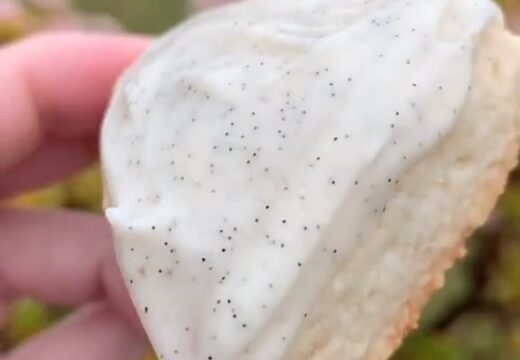

These vanilla bean scones are the closest thing to a coffee shop pastry you can pull from your own oven. Cold butter, cream, and a whole scraped vanilla bean create a tender crumb with those signature black flecks and a sweet vanilla glaze that cracks just slightly when you bite in.
The trick is keeping everything cold and handling the dough as little as possible. Overworking develops gluten and turns scones dense, so we pat, fold, and cut with confidence. A hot oven gives them a dramatic rise and golden edges.
Whether you serve them warm for weekend brunch or box them up for a teacher gift, these scones hold their own against any bakery case. They come together in about 50 minutes start to finish, most of which is hands-off oven time.
Why You'll Love This Recipe
About the Ingredients
2 cups (250g) all-purpose flour
Spoon flour into the measuring cup and level it off so you don't pack it. For a slightly more tender scone, swap 1/4 cup of the flour for cake flour.
1/3 cup (67g) granulated sugar
Standard white sugar keeps the crumb light. You can use vanilla sugar if you have it for an extra flavor boost.
1 tablespoon baking powder
Check the date on your baking powder; expired powder is the number one reason scones don't rise. Look for aluminum-free for a cleaner taste.
1/2 teaspoon fine sea salt
Fine sea salt dissolves evenly. If using table salt, reduce to 1/4 teaspoon since it's saltier by volume.
1/2 cup (113g) cold unsalted butter, cubed
Freeze the butter for 15 minutes before cubing for the flakiest layers. Salted butter works but reduce the added salt to a pinch.
1 vanilla bean, split and scraped
Save the empty pod in a jar of sugar to make vanilla sugar. If you can't find a bean, use 1 tablespoon vanilla bean paste instead of the seeds.
1/2 cup (120ml) cold heavy cream, plus 2 tablespoons for brushing
Cold cream keeps the butter from melting before baking. Half-and-half works in a pinch but gives a slightly less rich scone.
1 large egg
Room temperature egg blends more smoothly into the dough. A flax egg (1 tablespoon ground flax plus 3 tablespoons water) makes it egg-free.
1 1/2 teaspoons pure vanilla extract
Use real extract, not imitation, since vanilla is the star here. Bourbon vanilla reads sweeter and more classic than Tahitian.
1 cup (120g) powdered sugar
Sift it first to avoid lumps in the glaze. For a thinner glaze, add cream a teaspoon at a time.
2 to 3 tablespoons heavy cream, for the glaze
Whole milk can substitute but the glaze will be slightly less glossy. Add it gradually until you reach a pourable consistency.
Tips & Tricks
Keep Everything Cold
Chill the bowl, butter, and cream before starting; warm ingredients melt the butter and flatten the rise.
Don't Overwork the Dough
Stop mixing when flour streaks remain and pat the dough just until it holds together.
Cut Straight Down
Press the cutter straight down without twisting so the layers stay intact and the scones rise tall.
Glaze When Cool
Wait until scones are barely warm before glazing or it will melt and run right off.
Pro Tips
Step-by-Step Instructions
1. Heat the oven and prep
Preheat the oven to 400°F (200°C) and line a baking sheet with parchment. Keep the sheet in the fridge while you work so the dough stays cold.
2. Whisk the dry ingredients
In a large chilled bowl, whisk together the flour, sugar, baking powder, and salt. Scrape the vanilla bean seeds into the mixture and rub them into the flour with your fingertips until evenly speckled.
3. Cut in the cold butter
Add the cubed cold butter and toss to coat. Cut it in with a pastry blender or your fingertips until the mixture looks like coarse sand with some pea-sized butter pieces remaining, about 2 minutes.
4. Add the wet ingredients
Whisk the cold cream, egg, and vanilla extract together, then pour over the flour mixture. Stir with a fork just until a shaggy dough forms and no dry flour remains, about 20 seconds.
5. Pat and fold the dough
Turn the dough onto a lightly floured surface and pat into a rough rectangle. Fold it in thirds like a letter, rotate, and repeat twice more, then pat into a 7-inch (18cm) round about 1 inch (2.5cm) thick.
6. Cut the wedges
Cut the round into 8 wedges with a sharp knife or bench scraper, pressing straight down without sawing. Transfer to the chilled baking sheet, spacing them 2 inches apart.
7. Brush and bake
Brush the tops with the remaining 2 tablespoons of cream. Bake at 400°F (200°C) for 18 to 22 minutes, until the tops are golden brown and the edges look set, or until an instant-read thermometer in the center reads 200°F (93°C).
8. Cool and glaze
Transfer scones to a rack and cool for 10 minutes. Whisk the powdered sugar with 2 tablespoons cream and a splash of vanilla until pourable, then drizzle over the barely warm scones and let set for 5 minutes.
Delicious Variations
Lemon Vanilla Scones
Add 1 tablespoon lemon zest to the dry ingredients and swap 1 tablespoon of the cream in the glaze for lemon juice.
White Chocolate Vanilla Scones
Fold 1/2 cup white chocolate chips into the dough before patting for a sweeter, dessert-style scone.
Cardamom Vanilla Scones
Add 1/2 teaspoon ground cardamom with the dry ingredients for a warm, aromatic twist that pairs beautifully with coffee.
How to Store Vanilla Bean Scones
Refrigerator
Store glazed scones in an airtight container at room temperature for up to 2 days or refrigerate for up to 5 days; reheat briefly to refresh the texture.
Freezer
Freeze baked scones wrapped tightly for up to 2 months, or freeze unbaked wedges on a sheet then bag them and bake from frozen at 400°F (200°C) for 22 to 26 minutes.
Reheating
Reheat in a 300°F (150°C) oven for 5 to 7 minutes until warmed through; avoid the microwave, which makes them rubbery.
Frequently Asked Questions
Q: Why are my scones dry and crumbly?
Dry scones usually come from too much flour or overbaking. Measure flour by spooning and leveling, and pull the scones from the oven as soon as the edges are golden and the center reads 200°F (93°C).
Q: Can I make vanilla bean scones ahead of time?
Yes, you can freeze unbaked wedges for up to 2 months and bake them straight from frozen. Add 4 to 5 minutes to the bake time and check that the center reaches 200°F (93°C).
Q: Can I use vanilla extract instead of a vanilla bean?
Yes, use 1 tablespoon of vanilla bean paste or 2 teaspoons of pure vanilla extract in place of the whole bean. The flavor will be slightly less floral, but the scones will still taste wonderful.
Q: Why didn't my scones rise?
The most common cause is expired baking powder or butter that was too warm. Check the date on your baking powder and keep the butter, cream, and bowl cold until the moment the scones go into the oven.
Q: How do I know when scones are fully baked?
Look for golden brown tops and set, dry-looking edges, then confirm with an instant-read thermometer reading 200°F (93°C) in the center. Overbaked scones turn dry quickly, so pull them at the first sign of doneness.
Bake a batch of these vanilla bean scones this weekend and watch them disappear before they even cool. If you make them, snap a photo and tag me so I can see your beautiful vanilla flecks!

Vanilla Bean Scones
Vanilla bean scones are buttery, tender, and speckled with real vanilla bean for a bakery-style treat that's easy to make at home in under an hour.
🧂 Ingredients
- 2 cups (250g) all-purpose flour
- 1/3 cup (67g) granulated sugar
- 1 tablespoon baking powder
- 1/2 teaspoon fine sea salt
- 1/2 cup (113g) cold unsalted butter, cubed
- 1 vanilla bean, split and scraped
- 1/2 cup (120ml) cold heavy cream, plus 2 tablespoons for brushing
- 1 large egg
- 1 1/2 teaspoons pure vanilla extract
- 1 cup (120g) powdered sugar
- 2 to 3 tablespoons heavy cream, for the glaze
📋 Instructions
- 1Heat the oven and prep — Preheat the oven to 400°F (200°C) and line a baking sheet with parchment. Keep the sheet in the fridge while you work so the dough stays cold.
- 2Whisk the dry ingredients — In a large chilled bowl, whisk together the flour, sugar, baking powder, and salt. Scrape the vanilla bean seeds into the mixture and rub them into the flour with your fingertips until evenly speckled.
- 3Cut in the cold butter — Add the cubed cold butter and toss to coat. Cut it in with a pastry blender or your fingertips until the mixture looks like coarse sand with some pea-sized butter pieces remaining, about 2 minutes.
- 4Add the wet ingredients — Whisk the cold cream, egg, and vanilla extract together, then pour over the flour mixture. Stir with a fork just until a shaggy dough forms and no dry flour remains, about 20 seconds.
- 5Pat and fold the dough — Turn the dough onto a lightly floured surface and pat into a rough rectangle. Fold it in thirds like a letter, rotate, and repeat twice more, then pat into a 7-inch (18cm) round about 1 inch (2.5cm) thick.
- 6Cut the wedges — Cut the round into 8 wedges with a sharp knife or bench scraper, pressing straight down without sawing. Transfer to the chilled baking sheet, spacing them 2 inches apart.
- 7Brush and bake — Brush the tops with the remaining 2 tablespoons of cream. Bake at 400°F (200°C) for 18 to 22 minutes, until the tops are golden brown and the edges look set, or until an instant-read thermometer in the center reads 200°F (93°C).
- 8Cool and glaze — Transfer scones to a rack and cool for 10 minutes. Whisk the powdered sugar with 2 tablespoons cream and a splash of vanilla until pourable, then drizzle over the barely warm scones and let set for 5 minutes.