
Cottage cheese cookie dough blends 250 g of cottage cheese until smooth, then mixes it with oat flour and maple syrup. The result is a thick, scoopable dough you eat with a spoon. No eggs, no flour cooking, no oven.
The texture depends on one thing: how long you blend the cottage cheese. Twenty seconds too long and it turns to liquid. Stop when the curds just disappear and the mixture still holds a soft mound on the spatula.
I test this at 15 minutes of hands-on work and 35 minutes of chilling. The chill is not optional. It firms the oat flour and lets the maple syrup bind.
Why You'll Love This Recipe
About the Ingredients
250 g (1 cup) full-fat cottage cheese, 4% milkfat
Full-fat gives the creamiest body; 2% works but turns slightly grainy. Buy a brand with small curds, or strain 10 minutes if yours is watery.
90 g (1 cup) rolled oats, ground to flour
Blend oats in a dry processor for 30 seconds. Substitute 80 g (2/3 cup) oat flour if you have it, or use almond flour for a gluten-free version.
40 g (3 tbsp) pure maple syrup
Real maple syrup, not pancake syrup, carries the flavor. Honey works as a 1:1 swap but is sweeter, so start with 30 g.
30 g (2 tbsp) creamy peanut butter
Adds fat and body. Swap in almond butter or sunflower seed butter for a nut-free version; stir the jar first so the oil is mixed in.
25 g (2 tbsp) vanilla protein powder
Whey or plant blend both work. Skip it and add 15 g (1 tbsp) more oat flour plus 1/2 tsp vanilla extract.
1 tsp vanilla extract
Use real extract, not imitation. A scrape of vanilla bean paste deepens the flavor if you have it.
1/4 tsp fine sea salt
Salt cuts the sweetness of the maple. Kosher salt works; use a slightly rounded 1/4 tsp.
60 g (1/3 cup) dark chocolate chips
Mini chips distribute more evenly. Chop a 70% chocolate bar into 5 mm pieces for a better melt-in-mouth texture.
Tips & Tricks
Blend Briefly, Not Long
Process the cottage cheese in short pulses; over-blending releases water and the dough turns soupy.
Chill Before Judging
The dough looks loose at first; 30 minutes in the fridge firms the oat flour and reveals the true texture.
Add Flour Last, Slowly
Hold back 15 g of oat flour and add it only if the dough still sticks to your fingers after mixing.
Pro Tips
Step-by-Step Instructions
1. Blend the cottage cheese
Pulse 250 g cottage cheese in a food processor for 20 seconds until curds vanish but the mixture still mounds on a spatula. Stop early; a smooth liquid means over-processing.
2. Grind the oats
Process 90 g rolled oats for 30 seconds to a fine flour. Sift out any large flakes so the dough stays smooth.
3. Mix the wet base
Stir the blended cottage cheese with 40 g maple syrup, 30 g peanut butter, and 1 tsp vanilla in a bowl until uniform. The mixture should look glossy and hold a ribbon.
4. Add the dry ingredients
Whisk 80 g of the oat flour with 25 g protein powder and 1/4 tsp salt, then fold into the wet base. Stop when no dry streaks remain; the dough will look slightly sticky.
5. Adjust the texture
Add the remaining 10 g oat flour one spoon at a time until the dough pulls clean from the bowl sides. It is ready when it holds a soft ball and does not stick to a dry finger.
6. Fold in the chocolate
Stir 60 g chocolate chips through by hand for 15 seconds. Reserve a few chips to press on top for visible texture.
7. Chill the dough
Cover and refrigerate 35 minutes at 4 C (40 F). The dough firms and the flavors settle; it should scoop cleanly with a spoon and hold its shape.
8. Portion and serve
Scoop into 6 portions of about 85 g each. Serve cold; the dough softens within 10 minutes at room temperature.
Delicious Variations
Chocolate Chip Cookie Dough
Use milk chocolate chips and add 5 g cocoa powder to the dry mix for a darker, brownie-like dough.
Peanut Butter Cup Dough
Swap chocolate chips for 50 g chopped peanut butter cups and reduce maple syrup to 30 g.
Cinnamon Roll Dough
Add 1/2 tsp cinnamon and 15 g chopped pecans, and drizzle 10 g cream cheese frosting over each scoop.
How to Store Cottage Cheese Cookie Dough
Refrigerator
Keep in an airtight container for up to 4 days at 4 C (40 F). Stir once before serving; the dough tightens as it sits.
Freezer
Scoop into balls, freeze on a tray 1 hour, then bag for up to 2 months. Thaw 20 minutes in the fridge before eating.
Reheating
Do not heat; warming separates the cottage cheese and turns the dough grainy. Eat cold or straight from the freezer.
Frequently Asked Questions
Q: Is cottage cheese cookie dough safe to eat raw?
Yes, because it contains no raw egg and the oats are ground and can be toasted. If you use raw all-purpose flour, toast it at 175 C (350 F) for 5 minutes first to kill bacteria.
Q: Can I make cottage cheese cookie dough without protein powder?
Yes, replace it with 15 g (1 tbsp) extra oat flour and 1/2 tsp vanilla extract. The dough will be slightly softer, so chill it 10 minutes longer.
Q: Why is my cottage cheese cookie dough watery?
Watery dough comes from over-blending the cottage cheese or using a watery brand. Pulse briefly and strain the cottage cheese 10 minutes in a fine sieve before blending.
Q: How much protein is in cottage cheese cookie dough?
Each 85 g serving carries about 12 g of protein, mostly from the cottage cheese and protein powder. The exact number depends on your brands, so check the labels.
Q: Can I use Greek yogurt instead of cottage cheese?
Yes, but use 200 g (3/4 cup) full-fat Greek yogurt and add 20 g more oat flour. The dough turns tangier and needs a longer chill to firm up.
Weigh the cottage cheese, pulse it briefly, and chill before you judge the texture. Make a batch tonight and tell me how yours turned out. Weigh, watch, repeat.
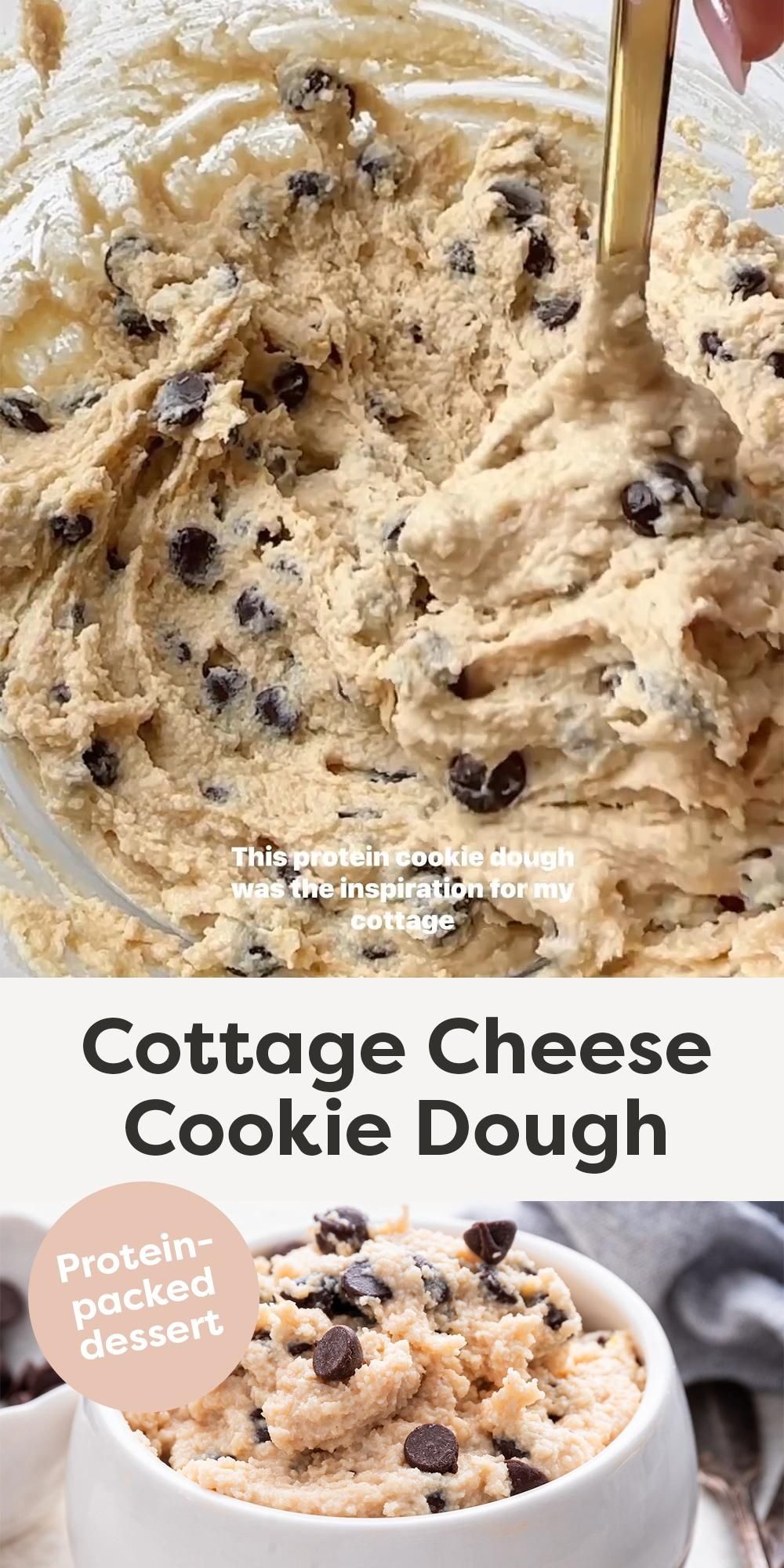
Cottage Cheese Cookie Dough
Cottage Cheese Cookie Dough turns blended cottage cheese into a thick, edible, high-protein dough with chocolate chips and no raw egg.
🧂 Ingredients
- 250 g (1 cup) full-fat cottage cheese, 4% milkfat
- 90 g (1 cup) rolled oats, ground to flour
- 40 g (3 tbsp) pure maple syrup
- 30 g (2 tbsp) creamy peanut butter
- 25 g (2 tbsp) vanilla protein powder
- 1 tsp vanilla extract
- 1/4 tsp fine sea salt
- 60 g (1/3 cup) dark chocolate chips
📋 Instructions
- 1Blend the cottage cheese — Pulse 250 g cottage cheese in a food processor for 20 seconds until curds vanish but the mixture still mounds on a spatula. Stop early; a smooth liquid means over-processing.
- 2Grind the oats — Process 90 g rolled oats for 30 seconds to a fine flour. Sift out any large flakes so the dough stays smooth.
- 3Mix the wet base — Stir the blended cottage cheese with 40 g maple syrup, 30 g peanut butter, and 1 tsp vanilla in a bowl until uniform. The mixture should look glossy and hold a ribbon.
- 4Add the dry ingredients — Whisk 80 g of the oat flour with 25 g protein powder and 1/4 tsp salt, then fold into the wet base. Stop when no dry streaks remain; the dough will look slightly sticky.
- 5Adjust the texture — Add the remaining 10 g oat flour one spoon at a time until the dough pulls clean from the bowl sides. It is ready when it holds a soft ball and does not stick to a dry finger.
- 6Fold in the chocolate — Stir 60 g chocolate chips through by hand for 15 seconds. Reserve a few chips to press on top for visible texture.
- 7Chill the dough — Cover and refrigerate 35 minutes at 4 C (40 F). The dough firms and the flavors settle; it should scoop cleanly with a spoon and hold its shape.
- 8Portion and serve — Scoop into 6 portions of about 85 g each. Serve cold; the dough softens within 10 minutes at room temperature.

Tomasz writes precise, method-first recipes for breads, ferments, and slow braises, drawing on Polish and Central European home cooking. He cares about weights, temperatures, and timing, and explains the reason behind each step so cooks can repeat results. His angle is turning fussy techniques into clear, checkable instructions.