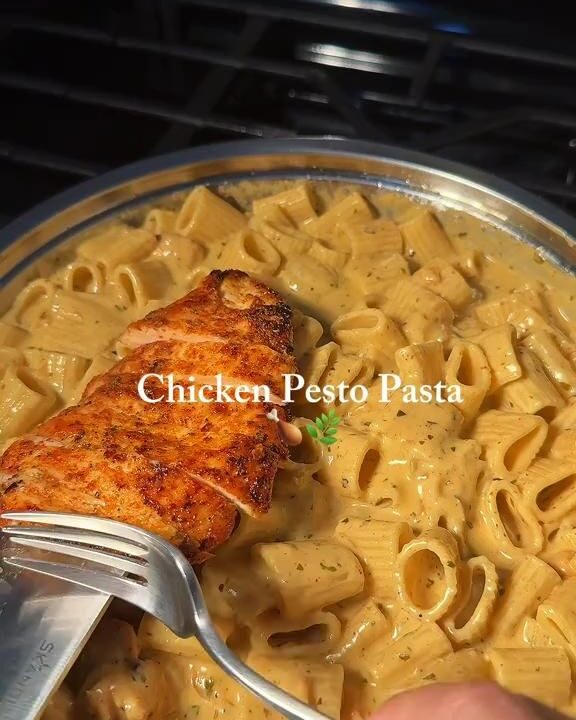
The first thing you'll notice is the smell: basil and garlic hitting a hot pan, sweet and green and loud enough to pull everyone into the kitchen. That's how this chicken pesto pasta announces itself, before you've even stirred the cream in.
You're going to sear chicken thighs until they're deeply golden, then build a silky pesto cream around them while the pasta bubbles away in salty water. The whole thing comes together in one skillet, which means the sauce gets every bit of browned flavor the chicken left behind.
It's the kind of dinner that feels like a restaurant plate but moves at weeknight speed. Grab your biggest pan and a wooden spoon, and let's get that pan singing.
Why You'll Love This Recipe
About the Ingredients
12 oz (340 g) penne or rigatoni pasta
Rigatoni's ridges trap pesto sauce better than smooth shapes. No rigatoni? Fusilli or farfalle work just as well, and gluten-free pasta is fine, just reserve extra pasta water.
1.5 lb (680 g) boneless, skinless chicken thighs
Thighs stay juicy even if you overshoot the sear by a minute. If you only have breasts, pound them to an even 3/4 inch (2 cm) so they cook through without drying out.
1 tsp kosher salt, plus more for the pasta water
Kosher salt is less dense than table salt, so if you swap in table salt, use about 3/4 tsp. Taste the pasta water; it should taste like a mild sea.
1/2 tsp freshly ground black pepper
Fresh-cracked pepper blooms in the hot pan far better than pre-ground. A pepper mill is one of the cheapest upgrades to your cooking.
2 tbsp olive oil
Regular olive oil is perfect for searing; save the fancy extra-virgin for drizzling at the end. Avocado oil works if you want a higher smoke point.
3 cloves garlic, finely minced
Fresh garlic gives a sweeter bite than the jarred stuff. Mince it right before it goes in, because garlic left sitting turns harsh and bitter.
1/3 cup (80 ml) heavy cream
Heavy cream makes the silkiest sauce; half-and-half works but can split, so add it off the heat. For dairy-free, use 1/4 cup (60 ml) full-fat coconut milk.
1/2 cup (120 g) prepared basil pesto
Refrigerated pesto from the deli case tastes fresher than shelf-stable jars. Check the label for pine nuts versus walnuts; either is delicious, but walnut pesto is a little earthier.
1/2 cup (50 g) freshly grated Parmesan
Grate it yourself off a block; pre-shredded cheese is coated in starch and clumps instead of melting. Pecorino Romano is a sharper, saltier swap, so use a bit less.
1/4 cup (10 g) fresh basil leaves, torn
Tear basil instead of chopping it so the leaves don't bruise and turn dark. Add it at the very end, because heat kills that bright aroma fast.
Tips & Tricks
Don't Crowd the Chicken
A packed pan steams instead of sears, so work in two batches if your skillet is smaller than 12 inches (30 cm).
Pull the Chicken Early
Thighs are done at 165°F (74°C), but they're juicier if you pull them at 175°F (79°C) and let them rest; they'll stay tender and slice cleanly.
Save That Pasta Water
The starchy water is what turns pesto and cream into a glossy sauce; without it, the sauce turns greasy and separates.
Add Pesto Off the Heat
Boiling pesto dulls the basil and turns it army green, so stir it in at the end when the pan is warm, not roaring.
Pro Tips
Step-by-Step Instructions
1. Boil the Pasta
Bring a large pot of generously salted water to a rolling boil and cook the pasta 1 minute shy of the package time, until it's just shy of al dente with a firm bite at the center. Scoop out 1 cup (240 ml) of pasta water and set it aside before draining.
2. Dry and Season the Chicken
While the water heats, pat the chicken thighs completely dry with paper towels and season both sides with the salt and pepper. Dry chicken is the difference between a golden crust and a pale, steamy one.
3. Sear Until Golden
Heat the olive oil in a 12-inch (30 cm) skillet over medium-high heat until it shimmers, about 2 minutes. Add the chicken and cook 5 to 6 minutes per side, until deeply golden brown and the thickest part reads 175°F (79°C) on an instant-read thermometer. You'll hear a steady, lively sizzle the whole time; if it goes quiet, the pan is too cool.
4. Rest and Slice the Chicken
Move the chicken to a cutting board and let it rest 5 minutes, then slice it into 1/2-inch (1.5 cm) strips. Resting keeps the juices in the meat instead of on your board.
5. Build the Garlic Base
Lower the heat to medium and add the garlic to the same skillet, stirring constantly for 30 seconds until fragrant and just softened, never browned. Pour in the heavy cream and 1/4 cup (60 ml) of the reserved pasta water, scraping up the browned bits with a wooden spoon.
6. Melt in the Pesto
Stir in the pesto and let the sauce bubble gently at the edges for 2 minutes, until it thickens enough to coat the back of your spoon. Turn off the heat and whisk in the Parmesan until the sauce turns glossy and smooth.
7. Toss Everything Together
Add the drained pasta and sliced chicken to the skillet and toss until every piece is coated, loosening with splashes of pasta water if it looks tight. The sauce should cling, not pool.
8. Finish and Serve
Scatter the torn basil over the top, taste, and adjust with salt and pepper. Serve immediately in warm bowls with extra Parmesan at the table.
Delicious Variations
Sun-Dried Tomato Twist
Stir in 1/3 cup (50 g) chopped oil-packed sun-dried tomatoes with the garlic for a sweeter, tangier sauce.
Lemon and Arugula Version
Swap the basil garnish for a big handful of arugula and the zest of one lemon; the pepperiness cuts right through the cream.
Spicy Pesto Rigatoni
Add 1/2 tsp red pepper flakes with the garlic and finish with a drizzle of chili oil for a version that bites back.
How to Store Chicken Pesto Pasta
Refrigerator
Store in an airtight container in the refrigerator for up to 3 days; press plastic wrap against the surface to keep the pesto from oxidizing.
Freezer
Freeze the sauce and chicken without the pasta for up to 2 months in a freezer-safe container; thaw overnight in the refrigerator before reheating.
Reheating
Reheat gently in a covered skillet over medium-low heat with a splash of water or cream, stirring until loosened, about 4 to 5 minutes; avoid the microwave, which tightens the sauce.
Frequently Asked Questions
Q: Can I use chicken breasts instead of thighs?
Yes, chicken breasts work fine, but slice them in half horizontally so they cook evenly. Cook them to 165°F (74°C) and pull them immediately, since breasts dry out faster than thighs.
Q: How do I keep pesto pasta from turning out dry?
Always reserve pasta water and add it a splash at a time while tossing. The starch emulsifies with the oil and cream, so the sauce turns silky instead of greasy.
Q: Can I make this chicken pesto pasta ahead of time?
You can make the chicken and sauce up to 2 days ahead and store them separately from the pasta. Reheat the sauce gently with a splash of water, then toss with freshly cooked pasta.
Q: Is store-bought pesto okay to use?
Absolutely, and refrigerated deli pesto tastes closest to homemade. Look for pesto with basil listed first and no added sugar, and stir in a little fresh basil at the end to brighten it.
Q: How many calories are in chicken pesto pasta?
This recipe comes in around 285 calories per serving based on the listed quantities and six servings. Portion sizes and pesto brand will shift that number slightly, so check your jar's label if you're tracking closely.
Give this chicken pesto pasta a try tonight and let the smell of garlic and basil do the inviting for you. Snap a photo of that glossy sauce before everyone digs in, and tell me which variation you're trying next. Taste as you go, then taste again.
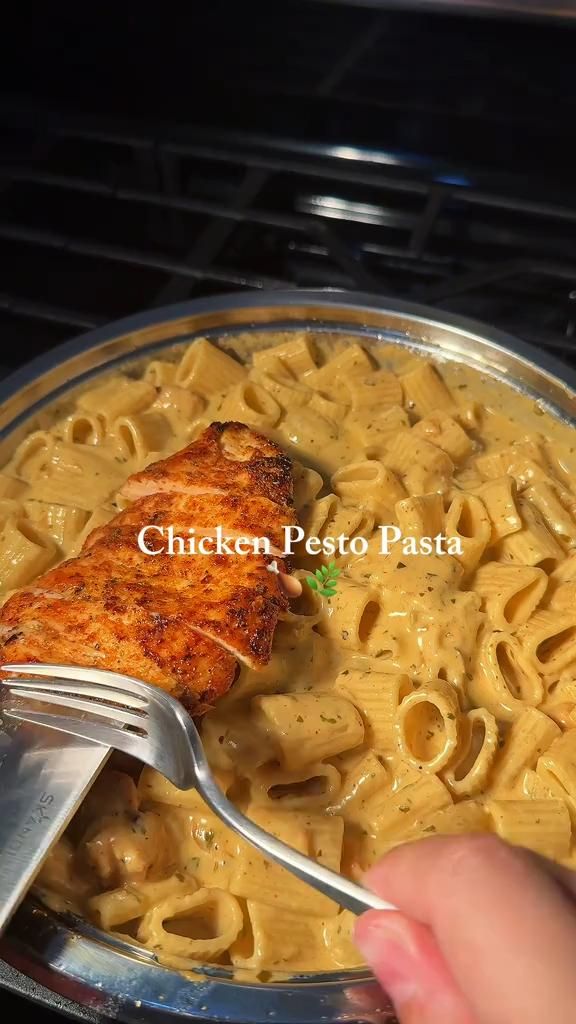
Chicken Pesto Pasta
Chicken Pesto Pasta is a creamy, garlicky one-pan dinner with golden seared chicken and fresh basil pesto ready in 30 minutes flat.
🧂 Ingredients
- 12 oz (340 g) penne or rigatoni pasta
- 1.5 lb (680 g) boneless, skinless chicken thighs
- 1 tsp kosher salt, plus more for the pasta water
- 1/2 tsp freshly ground black pepper
- 2 tbsp olive oil
- 3 cloves garlic, finely minced
- 1/3 cup (80 ml) heavy cream
- 1/2 cup (120 g) prepared basil pesto
- 1/2 cup (50 g) freshly grated Parmesan
- 1/4 cup (10 g) fresh basil leaves, torn
📋 Instructions
- 1Boil the Pasta — Bring a large pot of generously salted water to a rolling boil and cook the pasta 1 minute shy of the package time, until it's just shy of al dente with a firm bite at the center. Scoop out 1 cup (240 ml) of pasta water and set it aside before draining.
- 2Dry and Season the Chicken — While the water heats, pat the chicken thighs completely dry with paper towels and season both sides with the salt and pepper. Dry chicken is the difference between a golden crust and a pale, steamy one.
- 3Sear Until Golden — Heat the olive oil in a 12-inch (30 cm) skillet over medium-high heat until it shimmers, about 2 minutes. Add the chicken and cook 5 to 6 minutes per side, until deeply golden brown and the thickest part reads 175°F (79°C) on an instant-read thermometer. You'll hear a steady, lively sizzle the whole time; if it goes quiet, the pan is too cool.
- 4Rest and Slice the Chicken — Move the chicken to a cutting board and let it rest 5 minutes, then slice it into 1/2-inch (1.5 cm) strips. Resting keeps the juices in the meat instead of on your board.
- 5Build the Garlic Base — Lower the heat to medium and add the garlic to the same skillet, stirring constantly for 30 seconds until fragrant and just softened, never browned. Pour in the heavy cream and 1/4 cup (60 ml) of the reserved pasta water, scraping up the browned bits with a wooden spoon.
- 6Melt in the Pesto — Stir in the pesto and let the sauce bubble gently at the edges for 2 minutes, until it thickens enough to coat the back of your spoon. Turn off the heat and whisk in the Parmesan until the sauce turns glossy and smooth.
- 7Toss Everything Together — Add the drained pasta and sliced chicken to the skillet and toss until every piece is coated, loosening with splashes of pasta water if it looks tight. The sauce should cling, not pool.
- 8Finish and Serve — Scatter the torn basil over the top, taste, and adjust with salt and pepper. Serve immediately in warm bowls with extra Parmesan at the table.

Priya writes about South Indian home cooking and the improvisation that happens in real kitchens, from quick weekday tiffins to slow weekend spreads. She is interested in how a single tempering of spices changes a dish and in adapting familiar recipes to what a cook has on hand. Her angle is playful, sensory recipe writing that treats cooking as something to tinker with.