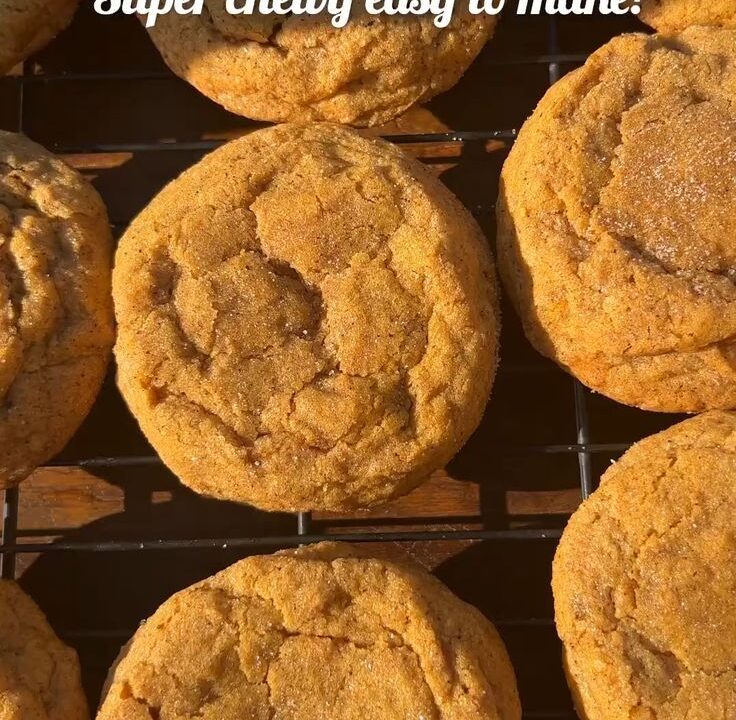
Pumpkin Snickerdoodles are a hybrid of two American classics. The dough carries 120 g (½ cup) of pumpkin purée and a full tablespoon of cinnamon, so the crumb stays soft for days instead of drying out by the second morning.
The leavening matters more than most people expect. Cream of tartar reacts with baking soda to give snickerdoodles their signature crackled top and faint tang; skipping it produces a flat, cakey cookie.
Weigh the flour. A cup scooped from the bag can weigh 150 g or 130 g, and that 20 g swing decides whether your cookies spread or stay domed. A digital scale removes the guesswork entirely.
Why You'll Love This Recipe
About the Ingredients
250 g (2 cups) all-purpose flour
Weigh it rather than scoop it; spooned flour measures lighter and gives a cakier cookie. Substitute 1:1 gluten-free baking blend if needed, but add 10 g more liquid.
6 g (1 teaspoon) cream of tartar
This is the acid that makes snickerdoodles crackle; there is no good substitute. Buy a fresh jar, since old cream of tartar loses potency and the cookies stay flat.
4 g (¾ teaspoon) baking soda
Check the date on the box; expired soda will not react with the cream of tartar. Do not swap in baking powder, which behaves differently here.
3 g (½ teaspoon) fine sea salt
Fine sea salt dissolves evenly into the dough. If using table salt, reduce to ¼ teaspoon because the crystals are denser.
115 g (½ cup) unsalted butter, softened
Pull it from the fridge 45 minutes ahead; it should dent under a finger but not look greasy. Salted butter works if you drop the added salt to a pinch.
150 g (¾ cup) granulated sugar
Standard white sugar gives the cleanest crackle. Do not substitute brown sugar in the dough, as its moisture makes the cookies spread too far.
100 g (½ cup packed) light brown sugar
Light brown sugar adds a molasses note that pairs with the pumpkin. Dark brown sugar works but pushes the flavor toward gingerbread.
1 large egg (50 g), room temperature
A cold egg seizes the butter and makes the dough curdle. If you forget, rest the egg in warm water for 10 minutes.
120 g (½ cup) pumpkin purée, not pumpkin pie filling
Pie filling contains sugar and spices and will wreck the ratios. If your purée looks wet, blot it on paper towels to remove excess water.
5 g (1 teaspoon) vanilla extract
Real extract, not imitation, carries through the bake. Bourbon vanilla adds a warmer note that suits the cinnamon.
3 g (1½ teaspoons) ground cinnamon, for the dough
Fresh cinnamon is worth the money; stale jars taste like dust. Ceylon cinnamon is milder, Cassia is bolder and more traditional here.
50 g (¼ cup) granulated sugar plus 4 g (2 teaspoons) cinnamon, for rolling
Mix these fresh in a shallow bowl. Coarse sugar gives extra crunch, but fine sugar clings more evenly to the dough ball.
Tips & Tricks
Do Not Overmix
Stop the mixer the moment the flour disappears, because extra gluten makes the cookies tough instead of tender.
Chill the Dough
Thirty minutes in the fridge firms the butter so the cookies stay thick rather than flattening into discs.
Measure the Pumpkin
Excess purée is the top cause of cakey, spreading cookies; blot it dry if it looks watery.
Cool the Tray
Never place dough on a warm baking sheet, or the butter melts before the oven does its work.
Pro Tips
Step-by-Step Instructions
1. Heat the oven
Set the oven to 190°C (375°F) and line two baking sheets with parchment. [A fully preheated oven sets the crackle in the first four minutes.] The oven is ready when the element glows dark again.
2. Whisk the dry mix
Whisk 250 g flour, 6 g cream of tartar, 4 g baking soda, 3 g salt, and 3 g cinnamon in a bowl. [Distributing the leaveners evenly prevents bitter pockets.] The mixture should look uniform with no streaks.
3. Cream butter and sugars
Beat 115 g butter with 150 g granulated sugar and 100 g brown sugar for 3 minutes at medium speed. [The sugar crystals create air pockets that lift the cookie.] Stop when the mixture is pale and visibly fluffy.
4. Add the wet ingredients
Beat in the egg, then 120 g pumpkin purée and 5 g vanilla. [Adding the egg first emulsifies the fat before the watery pumpkin arrives.] The mixture is ready when it looks glossy and smooth, not curdled.
5. Fold in the flour
Add the dry mix in two additions on low speed. [Two additions limit gluten development and keep the crumb tender.] Stop the mixer the instant the last flour streak vanishes.
6. Chill the dough
Cover and refrigerate the dough for 30 minutes. [Cold butter resists spreading, so the cookies bake thick and domed.] The dough is ready when it feels firm and slightly tacky.
7. Roll and coat
Scoop 40 g portions and roll into balls, then toss each in the cinnamon-sugar bowl. [A full coat caramelizes into the crackly shell.] Set balls 5 cm apart on the sheet.
8. Bake the cookies
Bake at 190°C (375°F) for 11 to 12 minutes, rotating the tray at 6 minutes. [The edges set before the center, which keeps the middle soft.] Pull them when the edges are golden and the centers look just underdone.
9. Cool on the sheet
Leave the cookies on the hot tray for 5 minutes before moving them. [Residual heat finishes the center without overbaking.] They are ready to move when they hold shape under a spatula.
Delicious Variations
Chai Spice Version
Swap the dough cinnamon for 4 g chai spice blend and roll in spiced sugar for a warmer finish.
Brown Butter Batch
Brown 115 g butter until nutty, then chill it solid before creaming for a deeper toasted flavor.
Cream Cheese Filling
Press 10 g chilled cream cheese into each dough ball before rolling for a soft tangy center.
How to Store Pumpkin Snickerdoodles
Refrigerator
Store baked cookies in an airtight container at room temperature for 4 days; refrigerate only if your kitchen is humid, up to 7 days.
Freezer
Freeze raw dough balls on a tray, then bag them for 3 months; bake from frozen at 190°C (375°F) for 13 to 14 minutes.
Reheating
Warm cookies at 150°C (300°F) for 3 minutes to refresh the crust, or microwave one for 10 seconds.
Frequently Asked Questions
Q: Why did my pumpkin snickerdoodles turn out cakey?
Too much pumpkin purée or overmixed flour is almost always the cause. Blot wet purée with paper towels and stop mixing the moment the flour disappears. Weighing flour at 250 g also prevents the extra 20 g that makes cookies bready.
Q: Can I make pumpkin snickerdoodles without cream of tartar?
Yes, but you lose the signature crackle and tang. Substitute 8 g (2 teaspoons) baking powder for the cream of tartar and baking soda, and expect a slightly softer, less wrinkled top. The flavor stays close, the texture does not.
Q: Do I have to chill the dough before baking?
Chilling for 30 minutes is strongly recommended but not strictly required. Cold dough holds its shape and bakes thicker; skipping the chill gives flatter cookies with wider spread. If you are short on time, chill for 15 minutes minimum.
Q: How do I know when pumpkin snickerdoodles are done?
Pull them when the edges are golden and the centers still look slightly underdone, around 11 minutes at 190°C (375°F). They finish setting on the hot tray during the 5-minute rest. An instant-read thermometer in the center should read about 95°C (203°F).
Q: Can I use fresh pumpkin instead of canned purée?
Yes, but roast and drain it first, because fresh pumpkin holds far more water than canned. Spread the cooked flesh in a sieve for 30 minutes, then purée. Use the same 120 g weight and the cookies behave identically.
Mix the dough tonight and bake a tray tomorrow morning; the chilled dough bakes better anyway. Weigh your flour, watch the edges at eleven minutes, and tell me how the crackle came out. Weigh, watch, repeat.
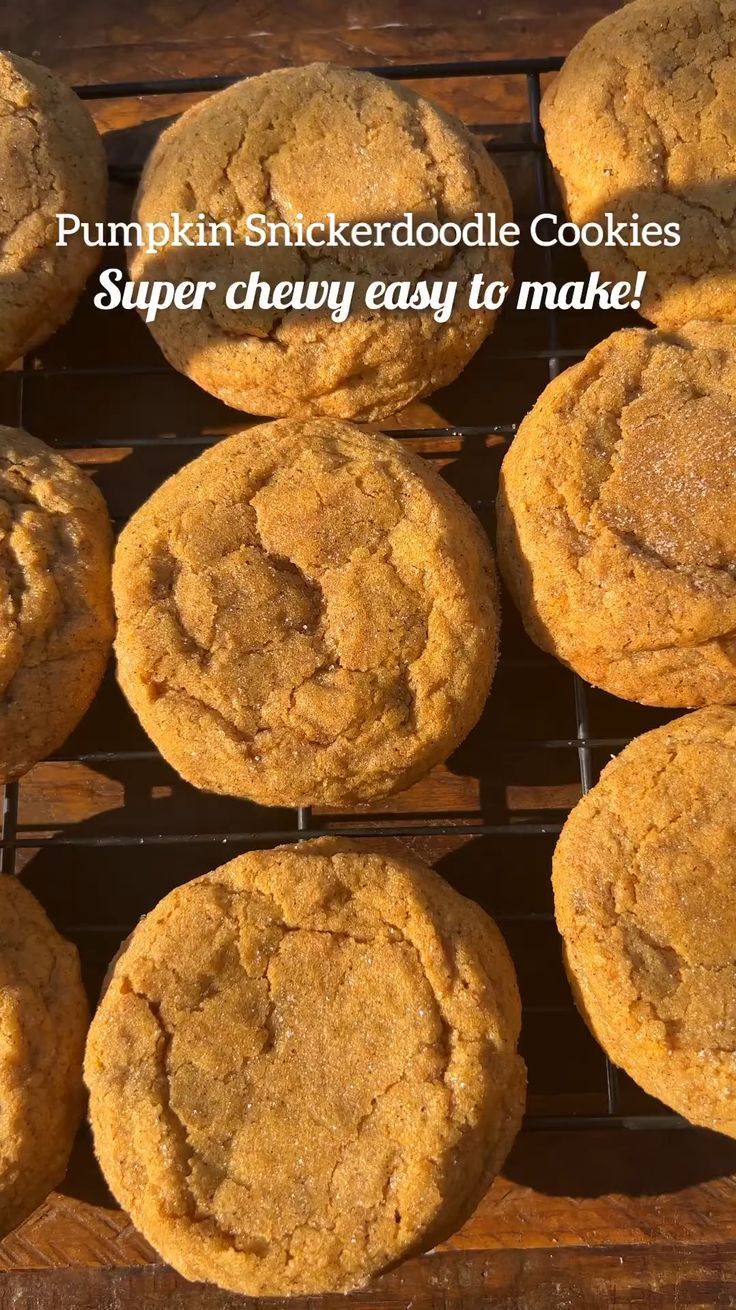
Pumpkin Snickerdoodles
Pumpkin Snickerdoodles are soft cinnamon-sugar cookies with real pumpkin and cream of tartar for a tender, crackly crumb that stays moist for days.
🧂 Ingredients
- 250 g (2 cups) all-purpose flour
- 6 g (1 teaspoon) cream of tartar
- 4 g (¾ teaspoon) baking soda
- 3 g (½ teaspoon) fine sea salt
- 115 g (½ cup) unsalted butter, softened
- 150 g (¾ cup) granulated sugar
- 100 g (½ cup packed) light brown sugar
- 1 large egg (50 g), room temperature
- 120 g (½ cup) pumpkin purée, not pumpkin pie filling
- 5 g (1 teaspoon) vanilla extract
- 3 g (1½ teaspoons) ground cinnamon, for the dough
- 50 g (¼ cup) granulated sugar plus 4 g (2 teaspoons) cinnamon, for rolling
📋 Instructions
- 1Heat the oven — Set the oven to 190°C (375°F) and line two baking sheets with parchment. [A fully preheated oven sets the crackle in the first four minutes.] The oven is ready when the element glows dark again.
- 2Whisk the dry mix — Whisk 250 g flour, 6 g cream of tartar, 4 g baking soda, 3 g salt, and 3 g cinnamon in a bowl. [Distributing the leaveners evenly prevents bitter pockets.] The mixture should look uniform with no streaks.
- 3Cream butter and sugars — Beat 115 g butter with 150 g granulated sugar and 100 g brown sugar for 3 minutes at medium speed. [The sugar crystals create air pockets that lift the cookie.] Stop when the mixture is pale and visibly fluffy.
- 4Add the wet ingredients — Beat in the egg, then 120 g pumpkin purée and 5 g vanilla. [Adding the egg first emulsifies the fat before the watery pumpkin arrives.] The mixture is ready when it looks glossy and smooth, not curdled.
- 5Fold in the flour — Add the dry mix in two additions on low speed. [Two additions limit gluten development and keep the crumb tender.] Stop the mixer the instant the last flour streak vanishes.
- 6Chill the dough — Cover and refrigerate the dough for 30 minutes. [Cold butter resists spreading, so the cookies bake thick and domed.] The dough is ready when it feels firm and slightly tacky.
- 7Roll and coat — Scoop 40 g portions and roll into balls, then toss each in the cinnamon-sugar bowl. [A full coat caramelizes into the crackly shell.] Set balls 5 cm apart on the sheet.
- 8Bake the cookies — Bake at 190°C (375°F) for 11 to 12 minutes, rotating the tray at 6 minutes. [The edges set before the center, which keeps the middle soft.] Pull them when the edges are golden and the centers look just underdone.
- 9Cool on the sheet — Leave the cookies on the hot tray for 5 minutes before moving them. [Residual heat finishes the center without overbaking.] They are ready to move when they hold shape under a spatula.

Tomasz writes precise, method-first recipes for breads, ferments, and slow braises, drawing on Polish and Central European home cooking. He cares about weights, temperatures, and timing, and explains the reason behind each step so cooks can repeat results. His angle is turning fussy techniques into clear, checkable instructions.