All Recipes Menu
20 Minute Honey Garlic Chicken – Easy Weeknight Dinner

The first thing you hear is the sizzle, a sharp, happy crackle the second the chicken hits the hot oil. Then the garlic hits the pan and the whole kitchen smells like a restaurant you never want to leave.
This is the dinner you make when the clock is mean and everyone is hungry. Twenty minutes, one skillet, and a glaze that clings to every golden edge like it was born there.
You will know it is done by sound and sight: the sauce goes from loose to syrupy and starts bubbling thickly around the chicken. That is your cue to pull it off the heat and call everyone to the table. Taste as you go, then taste again.
Why You'll Love This Recipe
About the Ingredients
1.5 lbs (680g) boneless, skinless chicken thighs
Thighs stay juicy under a hot glaze; swap in chicken breasts cut into 1-inch pieces and reduce the cook time by 2 to 3 minutes. Look for thighs with even thickness so they brown at the same rate.
1 tsp kosher salt
Kosher salt seasons more gently than table salt; if using fine table salt, use 3/4 tsp. Season the chicken 10 minutes before cooking for better absorption.
1/2 tsp freshly ground black pepper
Fresh-cracked pepper blooms in the hot pan; pre-ground works in a pinch but tastes flatter. Grind it right over the chicken for the best aroma.
2 tbsp cornstarch
Cornstarch dries the surface so the chicken browns instead of steams; arrowroot or potato starch work as 1-to-1 substitutes. Toss the pieces in a bowl so every side gets a light dusting.
2 tbsp olive oil
Use a neutral oil like avocado or canola if you prefer a higher smoke point; olive oil adds a nice fruity note. The oil should shimmer, not smoke, before the chicken goes in.
5 cloves garlic, minced (about 1 tbsp)
Fresh garlic is non-negotiable here; jarred garlic tastes bitter when fried hard. Buy firm, heavy heads with tight papery skin and mince finely so it melts into the sauce.
1/3 cup (80ml) honey
Clover honey is mild and reliable; buckwheat honey is stronger and darker, so use a little less. Runny honey measures more accurately than crystallized, so warm it briefly if needed.
3 tbsp soy sauce
Low-sodium soy sauce keeps the glaze from getting too salty; tamari is a great gluten-free swap. Taste the sauce before adding extra salt, since soy varies by brand.
1 tbsp rice vinegar
Rice vinegar brightens the honey without sourness; apple cider vinegar works but is sharper, so use 2 tsp. Add it at the end to keep the brightness alive.
1/4 tsp red pepper flakes
Optional but lovely for a gentle back-of-throat heat; Aleppo pepper gives warmth with less burn. Crush the flakes between your fingers before adding to release more aroma.
2 scallions, thinly sliced
Slice on the bias for pretty green curls; chives or toasted sesame seeds make a fine stand-in. Add them off the heat so they stay bright and crisp.
Tips & Tricks
Do not crowd the pan
Overcrowding steams the chicken instead of browning it, so work in two batches if your skillet is smaller than 12 inches.
Watch the garlic like a hawk
Minced garlic burns in seconds once the honey is in, so add it to the oil first and stir constantly for just 30 seconds.
Let the glaze reduce
The sauce is thin until it bubbles and thickens, so keep the chicken moving until it coats the back of a spoon.
Pat the chicken very dry
Moisture is the enemy of browning, so blot the pieces with paper towels before the cornstarch goes on.
Pro Tips
Step-by-Step Instructions
1. Dry and Coat the Chicken
Pat the chicken thighs completely dry with paper towels, then cut into 1-inch pieces and toss with the cornstarch, salt, and pepper in a bowl until evenly dusted. This dry coating is what gives you that crackly golden crust later.
2. Heat the Skillet
Set a 12-inch skillet over medium-high heat and add the olive oil, waiting about 2 minutes until it shimmers and moves like water, around 375F (190C). If you drop in a pinch of cornstarch it should sizzle immediately.
3. Sear Until Golden
Add the chicken in a single layer and cook undisturbed for 4 minutes, then flip and cook 3 more minutes until deeply golden brown on both sides and the internal temperature reads 165F (74C). You should hear a steady, lively sizzle the whole time.
4. Add the Garlic
Push the chicken to the edges of the pan and add the minced garlic to the center, stirring constantly for 30 seconds until fragrant and just barely golden. Do not let it brown past pale gold or it will turn bitter.
5. Pour in the Glaze
Whisk the honey, soy sauce, rice vinegar, and red pepper flakes together in a small bowl, then pour over the chicken. Toss everything to coat and let it bubble for 2 to 3 minutes.
6. Reduce to Sticky
Keep cooking over medium heat for 2 to 3 minutes, stirring, until the sauce thickens enough to coat the back of a spoon and bubbles thickly at the edges of the pan. It should look glossy and cling to the chicken, not pool at the bottom.
7. Finish and Serve
Pull the pan off the heat, scatter the sliced scallions over the top, and let it sit 1 minute so the glaze sets. Serve hot over rice, noodles, or a pile of steamed greens.
Delicious Variations
Spicy Honey Garlic
Add 1 tbsp sriracha or gochujang to the glaze for a sweet-heat version that is dangerously good over rice.
Honey Garlic Chicken Thighs Whole
Skip the cubing and sear whole thighs 5 minutes per side, then simmer in the glaze 4 minutes for a juicier, steakhouse-style plate.
Lemon Honey Garlic
Swap the rice vinegar for fresh lemon juice and add the zest of half a lemon for a brighter, springy spin.
How to Store 20 Minute Honey Garlic Chicken
Refrigerator
Store in an airtight container in the refrigerator for up to 4 days; the glaze thickens when cold, so reheat gently with a splash of water.
Freezer
Freeze in a freezer-safe container for up to 2 months, leaving a little headspace; thaw overnight in the refrigerator before reheating.
Reheating
Reheat in a skillet over medium-low heat for 3 to 4 minutes with 1 tbsp water, stirring until the glaze loosens and the chicken is hot throughout, or microwave in 30-second bursts.
Frequently Asked Questions
Q: Can I use chicken breast instead of thighs?
Yes, chicken breast works well, but cut it into 1-inch pieces and cook 2 to 3 minutes less so it does not dry out. The cornstarch coating still gives you a nice golden crust.
Q: Why did my honey garlic sauce burn?
Honey burns fast above medium heat because its sugars scorch quickly, so keep the pan at medium once the glaze goes in and stir constantly. If it starts smoking, pull the pan off the heat immediately and add a splash of water.
Q: How do I make the sauce thicker?
Simmer the glaze a minute or two longer until it coats the back of a spoon, or whisk 1 tsp cornstarch with 1 tbsp water and stir it in. Remember it thickens more as it cools.
Q: Is this honey garlic chicken gluten free?
It can be, if you use tamari or a gluten-free soy sauce in place of regular soy sauce. Check your honey and vinegar labels too, since some brands add fillers.
Q: What do you serve with honey garlic chicken?
Steamed jasmine rice is the classic pairing because it soaks up every drop of the sticky glaze. Garlic noodles, cauliflower rice, or roasted broccoli all work beautifully too.
Give this 20 Minute Honey Garlic Chicken a try tonight and listen for that sizzle, then tell me how it turned out in the comments. Taste as you go, then taste again.
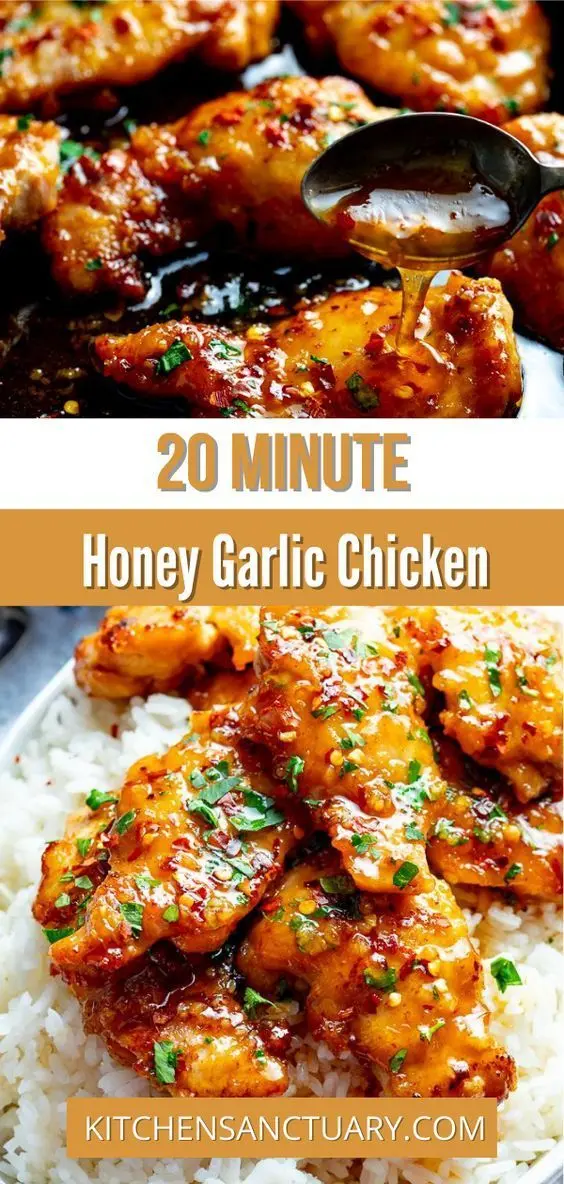
20 Minute Honey Garlic Chicken
Sticky, golden 20 Minute Honey Garlic Chicken sears in one pan and glazes in a sweet-savory sauce your family will fight over.
🧂 Ingredients
- 1.5 lbs (680g) boneless, skinless chicken thighs
- 1 tsp kosher salt
- 1/2 tsp freshly ground black pepper
- 2 tbsp cornstarch
- 2 tbsp olive oil
- 5 cloves garlic, minced (about 1 tbsp)
- 1/3 cup (80ml) honey
- 3 tbsp soy sauce
- 1 tbsp rice vinegar
- 1/4 tsp red pepper flakes
- 2 scallions, thinly sliced
📋 Instructions
- 1Dry and Coat the Chicken — Pat the chicken thighs completely dry with paper towels, then cut into 1-inch pieces and toss with the cornstarch, salt, and pepper in a bowl until evenly dusted. This dry coating is what gives you that crackly golden crust later.
- 2Heat the Skillet — Set a 12-inch skillet over medium-high heat and add the olive oil, waiting about 2 minutes until it shimmers and moves like water, around 375F (190C). If you drop in a pinch of cornstarch it should sizzle immediately.
- 3Sear Until Golden — Add the chicken in a single layer and cook undisturbed for 4 minutes, then flip and cook 3 more minutes until deeply golden brown on both sides and the internal temperature reads 165F (74C). You should hear a steady, lively sizzle the whole time.
- 4Add the Garlic — Push the chicken to the edges of the pan and add the minced garlic to the center, stirring constantly for 30 seconds until fragrant and just barely golden. Do not let it brown past pale gold or it will turn bitter.
- 5Pour in the Glaze — Whisk the honey, soy sauce, rice vinegar, and red pepper flakes together in a small bowl, then pour over the chicken. Toss everything to coat and let it bubble for 2 to 3 minutes.
- 6Reduce to Sticky — Keep cooking over medium heat for 2 to 3 minutes, stirring, until the sauce thickens enough to coat the back of a spoon and bubbles thickly at the edges of the pan. It should look glossy and cling to the chicken, not pool at the bottom.
- 7Finish and Serve — Pull the pan off the heat, scatter the sliced scallions over the top, and let it sit 1 minute so the glaze sets. Serve hot over rice, noodles, or a pile of steamed greens.

Priya writes about South Indian home cooking and the improvisation that happens in real kitchens, from quick weekday tiffins to slow weekend spreads. She is interested in how a single tempering of spices changes a dish and in adapting familiar recipes to what a cook has on hand. Her angle is playful, sensory recipe writing that treats cooking as something to tinker with.